

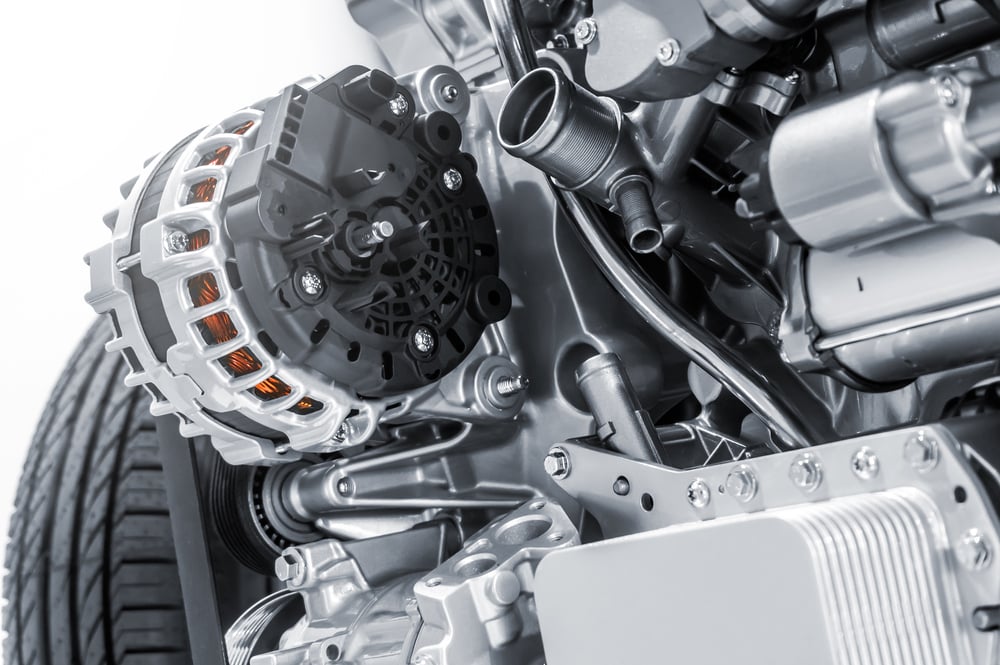
The automotive industry is quietly reshaping one of its oldest engineering standards. After relying on copper wiring for nearly two centuries, leading automakers are increasingly replacing it with aluminum, particularly in electric vehicles (EVs).
According to Reuters, Ferrari and BMW have expanded the use of aluminum wiring in their latest models, joining Tesla and several Chinese EV manufacturers. The move is driven by a combination of lower costs, lighter weight, and growing concerns over copper supply constraints.
While copper remains the preferred conductor for many automotive applications, rising prices and tightening supplies are pushing manufacturers to rethink their material choices. Analysts now believe this trend could gradually reshape global demand for both metals over the coming decade.
Copper vs. Aluminum: Rising Prices Are Changing the Equation
Copper has long been the industry standard because of its superior electrical conductivity, durability, and flexibility. However, economics are increasingly working against it.
As we have seen and read before, copper prices had climbed to nearly $15,000 per metric ton earlier this year. Supply shortages and soaring demand from clean energy projects, power grids, data centers, and electric vehicles supported it.

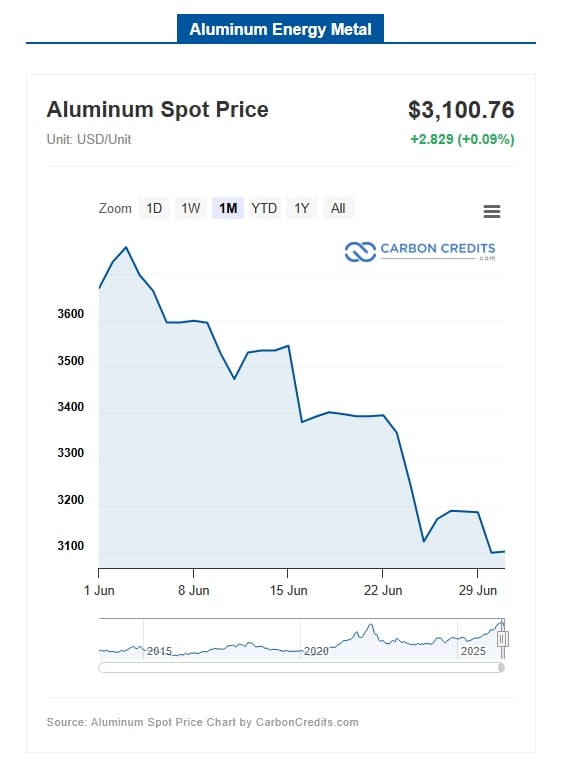
In contrast, aluminum currently trades at roughly $3,100 per metric ton, making it nearly four times cheaper. The price difference has become difficult for manufacturers to ignore, especially as EV production continues to scale.
However, apart from lower prices, the shiny white metal offers three major financial and engineering advantages:
- It is approximately 3.3 times lighter than copper.
- It costs roughly one-quarter as much as copper.
- Lower vehicle weight can improve driving range and overall energy efficiency.
The tradeoff is conductivity. Aluminum carries electricity less efficiently than copper, requiring cables with a larger cross-sectional area to deliver the same electrical performance. Engineers must also carefully design connectors because aluminum naturally forms an oxide layer that can reduce electrical contact quality if not properly managed.
Despite these challenges, advances in cable design and manufacturing have made aluminum increasingly practical for selected automotive applications.
Ferrari and BMW Expand Aluminum Wiring Across New Models
Reuters reported that Ferrari began using aluminum power cables in its 296 hybrid sports car last year before extending the technology to additional vehicles, including the newly launched Luce, the company’s first fully electric model.
According to Ferrari communications executive Dario Esposito, switching materials reduced total wiring weight by as much as 20%. Esposito told Reuters that performance and not cost was the primary motivation behind Ferrari’s decision.
The company already relies heavily on aluminum in vehicle bodies, chassis, and engines, making wiring a natural extension of its lightweight engineering strategy.
BMW has followed a similar path, although its transition began much earlier.
The German automaker first introduced aluminum conductors in the BMW 1 Series in 2011. Since then, the company has gradually expanded their use across hybrid and electric vehicles.
Today, BMW incorporates significant amounts of aluminum wiring in both high- and low-voltage systems within its latest eDrive electric vehicle platform introduced last year.
Reuters also cited an industry source indicating that Stellantis has recently started replacing copper wiring with aluminum in some applications, although the company declined to comment.
China Is Accelerating the Shift
China appears to be moving even faster.
Chinese government encouraged manufacturers to substitute copper with aluminum in a March 2025 policy paper. The recommendation reflects broader concerns over securing long-term supplies of critical industrial metals while lowering manufacturing costs.
SMM View
According to Shanghai Metals Market (SMM), the policy reflects China’s long-term strategy to transform its aluminum industry through greater recycling, resource efficiency, and green innovation.
- SMM believes the target of producing 15 million metric tons of recycled aluminum annually is both realistic and strategically significant.
The consultancy noted that expanding recycled aluminum production will help meet growing demand from sectors such as electric vehicles, renewable energy, and advanced manufacturing while reducing reliance on primary aluminum.
It will also help ease supply constraints created by China’s cap on primary aluminum production, supporting a more sustainable and circular aluminum industry over the long term.
Tesla Sets a Benchmark for Chinese EV Makers
Several Chinese EV makers have already adopted aluminum wiring.
Tesla also pioneered many of these design choices. It introduced aluminum wiring in the Model Y in 2019 and expanded its use in the Cybertruck. Woychowski noted that Tesla’s engineering decisions have become important benchmarks for Chinese automakers, many of which closely study the company’s manufacturing techniques.
The timing is significant.
China’s highly competitive EV market continues to experience intense price pressure, leaving manufacturers searching for every possible cost reduction. At the same time, lighter vehicles offer longer driving ranges without increasing battery size, creating an additional incentive for aluminum adoption.
Reuters also reported that approximately 85% of electrical busbars—the components connecting EV batteries to vehicle systems—are still made from copper, suggesting considerable room for future substitution.
Lightweight Design Supports EV Efficiency
Weight reduction has become one of the most valuable engineering strategies for electric vehicles.
Unlike conventional gasoline cars, every kilogram removed from an EV can contribute to improved efficiency, longer driving range, or smaller battery requirements.
This broader industry trend is also reflected in research from DUCKER Research and Consulting. Its report, Aluminum Content in Passenger Vehicles (Europe), projects average aluminum content per passenger vehicle will increase from 205 kilograms in 2022 to approximately 256 kilograms by 2030.

The report estimates aluminum usage will continue growing, supported primarily by electrification, battery housings, electric drive systems, high-voltage components, and large structural castings.
According to the study, reducing vehicle weight remains essential for improving driving range while lowering battery-related costs.
As manufacturers pursue greater efficiency, aluminum is becoming increasingly attractive across multiple vehicle systems beyond body structures.

Copper Demand Faces Growing Pressure
The increasing use of aluminum is beginning to influence global metals markets.
Reuters reported that analysts at JPMorgan expect aluminum substitution to affect approximately 2% of global copper demand this year.
- Looking further ahead, the bank outlined a scenario in which aluminum could replace about 6% of annual copper demand by 2030 if adoption continues across transportation, power infrastructure, and manufacturing.
- Reuters further highlighted that Chinese consultancy Zhuochuang estimates that 25% to 30% of copper components, measured by metal volume, could shift to aluminum across the automotive, power, and home appliance industries by 2030.
Although these percentages may appear modest, they represent substantial volumes within the world’s largest industrial metal markets.
Copper demand is simultaneously being supported by renewable energy installations, electricity transmission upgrades, artificial intelligence infrastructure, and rapidly expanding data centers.
As a result, substitution may help alleviate supply pressures rather than eliminate demand altogether.
Copper Still Holds Important Advantages
Despite growing momentum behind aluminum, copper is unlikely to disappear from automotive manufacturing.
Copper continues to outperform aluminum in several critical areas.
Its higher electrical conductivity allows manufacturers to use thinner cables while delivering greater power. Copper also offers superior flexibility, making it better suited for compact spaces, repeated movement, and demanding electrical systems.
For these reasons, aluminum is expected to remain concentrated in applications where weight savings outweigh conductivity advantages.
These include:
- High-voltage EV cables
- Long-distance power runs
- Battery connection systems
- Applications where reducing vehicle mass delivers measurable efficiency gains
Meanwhile, copper will likely continue dominating compact electronics, high-performance circuits, and systems requiring maximum reliability.
A Gradual Transition, Not a Complete Replacement
The growing adoption of aluminum wiring reflects a broader transformation occurring throughout the automotive industry.
Manufacturers are balancing performance, cost, material availability, and sustainability while responding to rapidly changing supply chains.
Reuters’ reporting suggests this is no longer an isolated experiment. Instead, aluminum is becoming an increasingly mainstream engineering solution across global automakers—from premium brands like Ferrari and BMW to mass-market EV manufacturers in China.
Even so, the transition is expected to remain selective rather than universal. Copper’s superior electrical performance ensures it will continue playing a central role in vehicle electrification.
Instead of replacing copper entirely, aluminum is emerging as a complementary material that helps manufacturers reduce costs, lower vehicle weight, and manage growing pressure on global copper supplies.
As EV production accelerates worldwide, the balance between these two metals could become one of the defining material trends shaping the next generation of electric mobility.