

Europe’s two largest automakers, BMW and Volkswagen, are moving in very different directions on electric vehicles and emissions compliance. One is scaling EV production at speed. The other is facing rising regulatory costs linked to carbon targets.
Together, their latest results highlight a shifting global auto industry. Growth in electric vehicles is accelerating. But so are the financial risks tied to emissions rules.
Volkswagen’s Carbon Bill Keeps Growing Under Tougher EU Rules
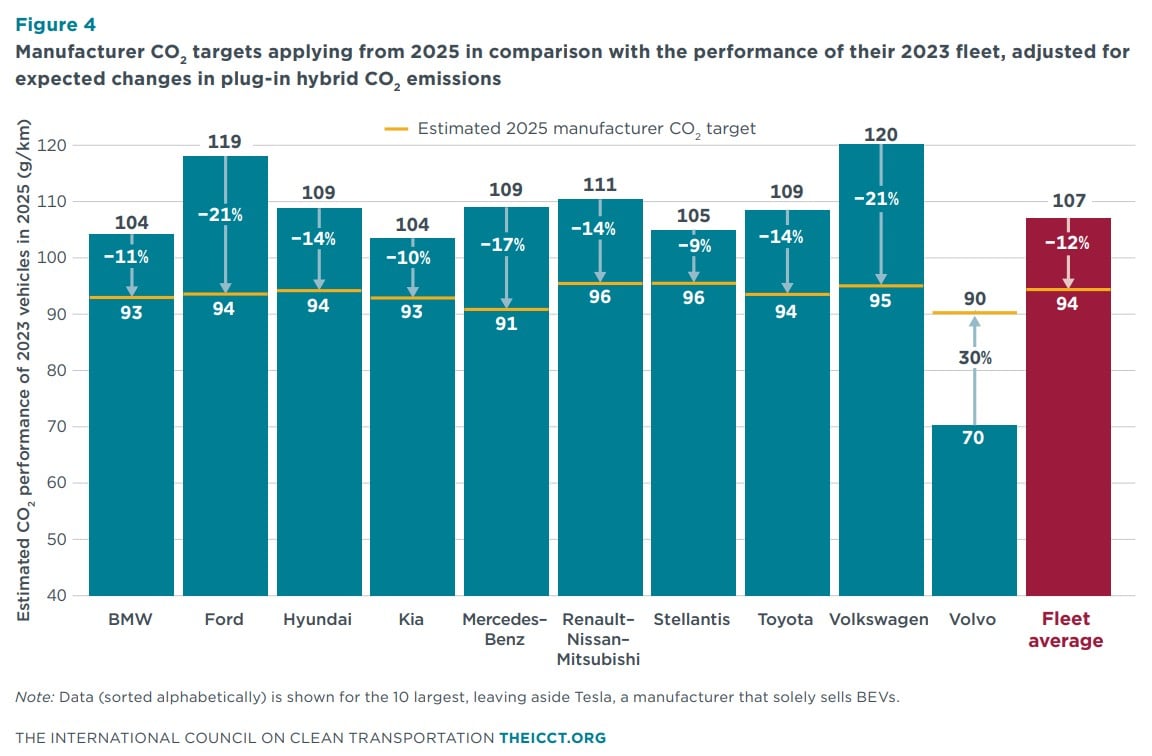
Volkswagen Group is under growing pressure from Europe’s tightening emissions rules. During its Q1 2026 earnings call, the company said it expects to pay up to €1.5 billion ($1.75 billion) in CO₂ fines between 2025 and 2027. These penalties are linked to failure to meet EU fleet-wide emissions targets.
CFO Arno Antlitz said annual costs will likely range between €300 million and €500 million per year over the compliance period. Even with new EV models coming to market, Volkswagen said it will still fall short of EU requirements.
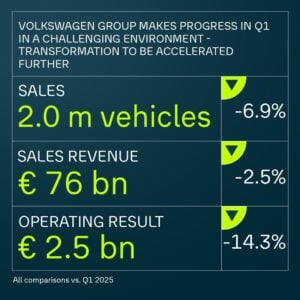
The financial impact comes at a weak earnings moment. Volkswagen’s operating profit fell 14.3% year-on-year to about €2.5 billion, while revenue came in at €75.66 billion, below expectations. Net profit also dropped 28% to €1.56 billion.
CEO Oliver Blume pointed to several pressures, including geopolitical tensions, trade barriers, and strict regulations. He also confirmed that Volkswagen is cutting costs, including plans to eliminate 50,000 jobs in Germany by 2030.
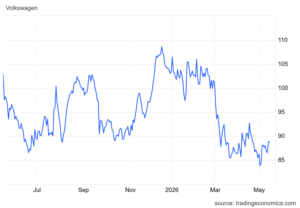
Following these results, Volkswagen’s stock price went down but started to recover in May.
The company is also facing a long-term challenge. EU rules will tighten further. By 2030, automakers must cut CO₂ emissions by 55% versus 2021 levels, and by 2035 the reduction target rises to 90%.
Even with cheaper EV models coming, Volkswagen has admitted that electric vehicles still generate up to 30% lower profit margins than combustion engines. This makes the transition financially difficult in the short term.
BMW Hits 2 Million EVs as Production Accelerates
While Volkswagen faces penalties, BMW is scaling electric production quickly.
The BMW Group confirmed it has now produced its two millionth fully electric vehicle. The milestone vehicle was a BMW i5 M60 xDrive, built at Plant Dingolfing in Germany and delivered to a customer in Spain.
BMW’s EV ramp-up has accelerated sharply. It took the company nearly 11 years to reach its first one million EVs after the launch of the i3 in 2013. The second million took just about two years.
This reflects a major shift in production speed and demand alignment.
Plant Dingolfing is now BMW’s key EV hub. Since 2021, it has produced more than 320,000 electric vehicles, including models like the iX, i5, and i7. In 2025, more than 25% of production at the site was fully electric.
BMW is also using a flexible production system. It builds electric, hybrid, and combustion models on shared production lines. This allows the company to adjust faster to market demand. The luxury carmaker also aims for EVs to make up more than 50% of total annual sales by 2030.
Mixed Global EV Demand Shapes Industry Strategy
Despite production growth, EV demand remains uneven across regions for BMW. In 2025, BMW delivered 442,072 fully electric vehicles worldwide, showing moderate overall growth.
Europe remains the strongest market. EV sales there rose 28%, and now about one in five cars sold in the EU is fully electric. But performance is weaker in other regions.
- U.S. EV sales fell 16.7% to 42,484 units
- Fourth-quarter sales dropped 45.5%, after EV tax credits were removed
- China sales also declined by double digits
At the same time, plug-in hybrid sales in the U.S. rose by more than 30%, showing that many buyers are shifting to partial electrification instead of full EV adoption.
This uneven demand is shaping automaker strategies. Companies are balancing full EV expansion with hybrid production to manage risk.
Two Auto Giants, Two Very Different ESG Paths
The contrast between BMW and Volkswagen also reflects different ESG outcomes.
Volkswagen is facing rising regulatory costs linked to Europe’s stricter emissions rules. At the same time, the company targets net-zero emissions across its value chain by 2050 and plans to become carbon neutral in Europe by 2040.
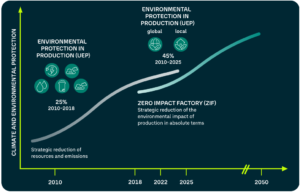
The automaker claims it cut production CO₂ emissions per vehicle by over 50% since 2018. This was achieved using renewable electricity, improving energy efficiency, and adopting lower-carbon manufacturing.
However, Volkswagen still faces pressure from slower EV profitability and the high cost of transitioning away from combustion-engine vehicles. The company has acknowledged that some EV models generate lower margins than traditional gasoline vehicles.
BMW, meanwhile, continues expanding EV production without facing similar emissions penalties. The company aims to cut lifecycle CO₂ emissions per vehicle by at least 40% by 2030 versus 2019 levels and targets climate neutrality across its value chain by 2050.
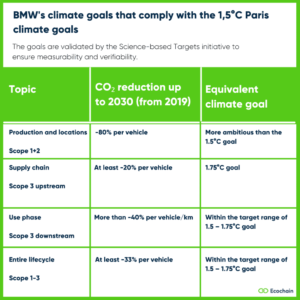
The carmaker says it has already reduced operational CO₂ emissions by more than 70% since 2006 and now sources 100% renewable electricity for its global production network.
BMW is also increasing the use of recycled materials in batteries and vehicle production. The company says its Neue Klasse EV platform will reduce production emissions by up to 40% per vehicle compared with current models.
Both automakers remain under growing pressure to decarbonize further. By 2035, Europe plans to phase out most new combustion-engine vehicle sales entirely.
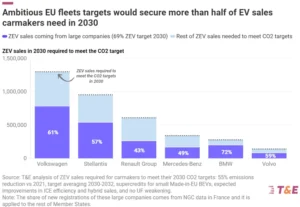
Industry Competition Intensifies as EV Transition Speeds Up
Competition across the global auto industry is increasing as EV adoption grows. Volkswagen recently reached its own milestone of 2 million EVs produced, just months after hitting its first million. This shows how quickly production is scaling across major automakers.
However, speed alone is not enough. Companies must also manage costs, margins, and regulatory compliance.
BMW’s approach focuses on gradual scaling with flexible production systems. Volkswagen’s approach is more aggressive but comes with higher financial pressure from emissions fines and restructuring costs.
Both companies now face a similar long-term challenge. EVs must become profitable while also meeting strict carbon reduction rules.
A Tale of Two EV Strategies
BMW and Volkswagen show two different paths through Europe’s EV transition. BMW is scaling production quickly and steadily increasing EV share across its plants and markets. It is avoiding major emissions penalties while gradually shifting its product mix.
Volkswagen is moving through a more difficult transition. It faces up to €1.5 billion in CO₂ fines, weaker profits, and rising restructuring costs as it adapts to EU climate rules.
Both companies are moving toward the same endpoint: lower emissions and higher EV adoption. But their financial and operational journeys are very different.
As EU regulations tighten further toward 2030 and 2035, the gap between compliance leaders and laggards may widen even more.
For the global auto industry, the message is clear. EV transition is no longer optional. It is now a regulated, high-cost transformation that is reshaping profitability, production, and long-term strategy.