

Ahead of its May 25 annual general meeting, Xpansiv released an investor update that shows where global environmental markets may be heading next.
The report highlights a major shift inside one of the world’s largest environmental commodities platforms. Carbon markets are still important, but electricity-linked infrastructure is now becoming a bigger part of the business. AI, battery storage, and cross-border clean energy trading are also reshaping demand.
The filing also shows that environmental markets are becoming more tied to financial systems. Registries, trading platforms, settlement systems, and market data tools are becoming more important. This is happening as governments and companies deal with more complex energy and climate rules.
Overall, the update points to a key shift. Carbon credits are no longer the only focus. Electricity certificates and digital energy systems are now central to future growth.
From Carbon Credits to Electricity: Xpansiv’s Market Pivot
The report shows a clear change in revenue mix. Electricity-linked products are now a major driver.
According to Xpansiv, electricity now makes up about 62% of net revenue. This is up from 57% in 2024. On a pro forma basis, including the Evident acquisition for a full year, electricity reaches about two-thirds of total revenue.
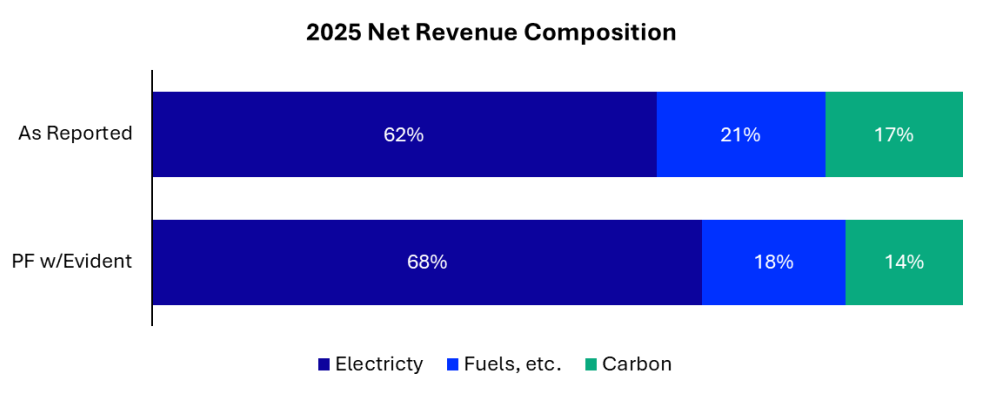
At the same time, carbon revenue fell from 21% to 17%. This reflects wider changes in energy markets.
Companies are buying more renewable electricity certificates (RECs) and clean energy attributes. They are doing this to meet climate targets and secure a stable power supply. Demand is also rising outside regulated markets.
Xpansiv’s system now tracks about 4% of global electricity generation and about 7% of global renewable electricity generation. The company serves customers in more than 90 countries.
The platform has also grown fast. After acquiring Evident, its renewable energy registry network now covers more than 300 gigawatts of capacity and over 4,000 companies.
These figures show that renewable electricity certification is becoming a large global system, not just a niche market. The report says:
“Across every major region, renewable penetration is rising while generation mixes are becoming more distributed and intermittent, which increases the importance of the market infrastructure layer between asset creation, energy attributes, trading workflows, and end-market demand. Electricity-linked products are expected to remain the primary driver of future growth.”
SEE MORE: A Record 3.5M Methane Credits Trade at Xpansiv CBL Signals New Era for Gas Markets
AI and Data Centers Are Reshaping Power Markets
The report also highlights the growing impact of artificial intelligence on electricity demand. Xpansiv said a “step-change in electricity demand from AI compute and data-center build-out has fundamentally reshaped the demand curve of modern power markets.”
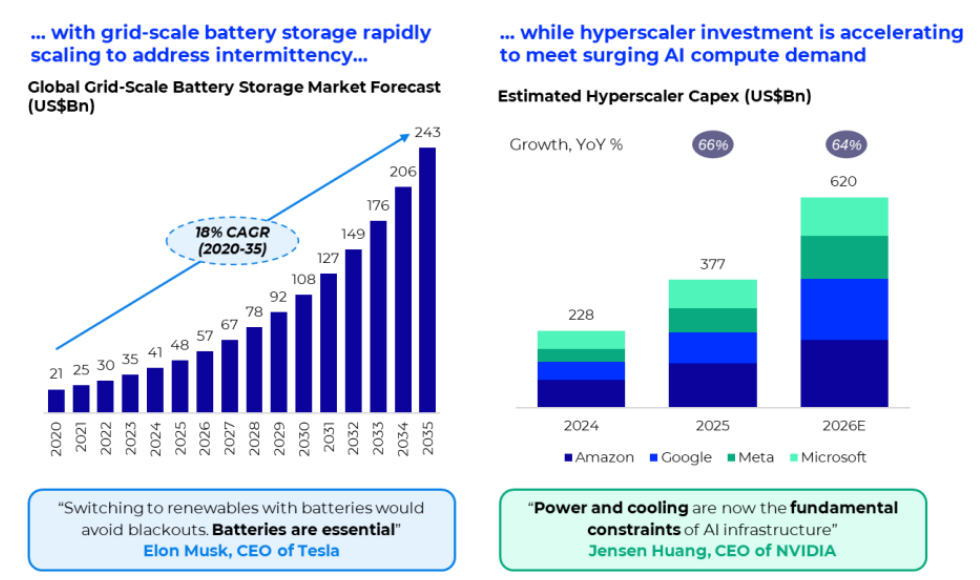
This matches wider trends in the energy sector. Big tech companies are building more AI systems and hyperscale data centers. These facilities use large amounts of electricity. They also need a stable, clean energy supply. Because of this, energy buying is becoming more complex.
Many large buyers now want electricity matched to real-time use. They no longer rely only on yearly offset systems. This is driving demand for hourly renewable energy certificates and 24/7 carbon-free energy tracking.
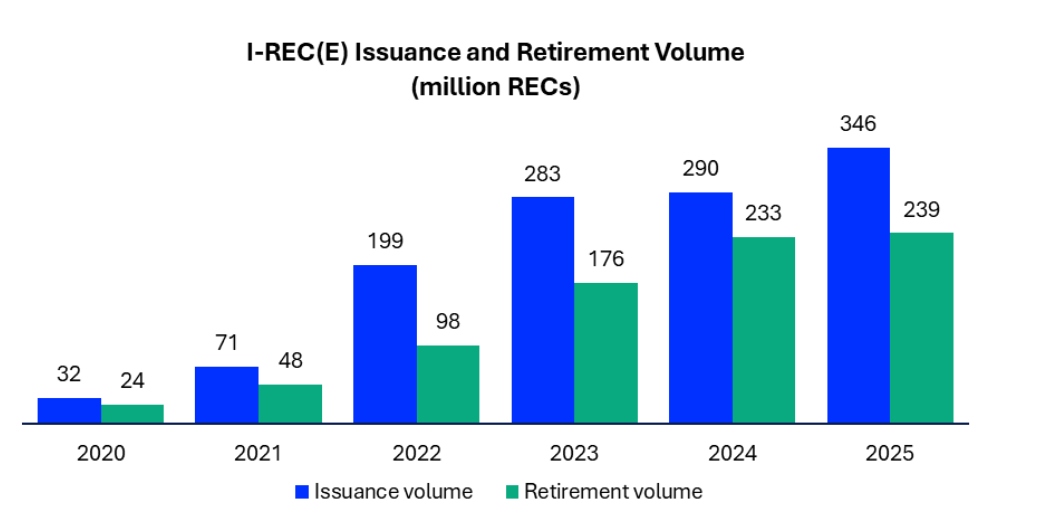
Xpansiv said it is expanding hourly RECs across its registries to meet this demand. It reported REC retirements of 239 million and 346 million issuances in 2025, both of which show increases from 2024.
It also said data-center-driven electricity demand is now a “tailwind” for its platform. This includes registries, trading systems, settlement tools, and market data services.
This trend may grow further. AI expansion is not only increasing tech demand. It is also boosting demand for renewable energy, storage systems, and energy tracking tools.
The Rise of Grid-Scale Environmental Market Infrastructure
The report shows that environmental markets are becoming more like financial infrastructure. Companies now need systems that can handle registration, tracking, verification, settlement, and cross-border transfers of environmental assets.
Xpansiv says users transfer about 1 billion environmental assets each year across its platform. The system connects more than 17 renewable energy, carbon, and environmental registries. This growing complexity is pushing governments and exchanges to work with specialized infrastructure providers.
In 2025, Xpansiv signed deals with Korea Exchange and NH Investment & Securities to support Korea’s carbon market. It also expanded work in Saudi Arabia and won a mandate from New York State for emissions reporting.
These moves show that environmental markets are becoming more institutional. Governments and companies now need central systems that can work across different regions and rules.
The company also said demand is growing for interoperability. Through its Xpansiv Connect platform, it aims to bring different systems into one workflow. This makes environmental markets look more like traditional financial markets, with shared systems for trading, clearing, and data.
Battery Storage and Nuclear Enter the Certificate Economy
The update also shows that clean energy markets are widening beyond solar and wind. Xpansiv said it now supports more than 30% of battery storage capacity in California and Texas. These are the two largest storage markets in the United States.
Overall, it supports more than 16 gigawatts of power resources across all seven U.S. independent system operators. Battery storage is becoming more important as renewable energy grows. It helps balance supply and demand on the grid.
Nuclear energy is also gaining new attention.
Through a partnership with Constellation, Xpansiv launched Emission-Free Energy Certificates (EFECs) linked to nuclear power. It said 675,000 megawatt-hours were traded in the first week. This was its strongest REC-style launch so far.
The strong demand shows a shift toward reliable clean energy sources. AI growth and rising electricity demand are increasing interest in firm power like nuclear.
Carbon Markets Go Digital: Tokenization and AI Integration
The report also points to a more digital future for environmental markets.
Xpansiv said it plans to support tokenized environmental assets using blockchain systems. These could allow digital tracking, smart contracts, and fractional ownership in the future.
It also said it is using AI across its operations. The goal is to improve speed, reduce costs, and scale its systems. This suggests environmental assets may start to behave more like digital financial products.
The company also expects more consolidation in the sector. It plans to acquire new platforms to expand into new regions and reduce fragmentation in registry systems.
A Broader Shift Is Taking Shape
Xpansiv’s update shows that environmental markets are changing quickly.
Electricity-linked products are growing. AI is driving new demand for power. Battery storage and nuclear energy are expanding. Digital systems are becoming more important.
At the same time, environmental commodities are becoming more connected to financial and energy infrastructure. As climate rules tighten and companies face more complex energy needs, the systems that track and trade environmental assets may become as important as the assets themselves.