

Xpansiv, a global provider of market infrastructure for environmental commodities, is teaming up with the Korea Exchange (KRX). They will launch a Korean Carbon Credit Market together.
The initiative will offer a trading platform for several types of credits. This includes voluntary carbon credits, Article 6 credits from the Paris Agreement, and credits linked to compliance systems like CORSIA.
This partnership is a big step for South Korea. It has run its own national Emissions Trading System (K-ETS) since 2015. It’s also significant for Xpansiv, which operates the largest spot carbon exchange in the world. Together, they aim to bring transparency, liquidity, and confidence to a rapidly growing sector.
Why Asia Matters in Global Carbon Markets: A Milestone in Seoul
Asia is emerging as the center of gravity for carbon markets. The region’s scale, economic growth, and rising emissions make it critical for the success of global climate goals. According to Xpansiv,
“Asia is home to some of the world’s fastest-growing economies and largest emitters, which makes the region critical to achieving global climate goals. Countries like Korea are setting ambitious net-zero targets, and carbon markets provide a flexible, effective tool to reach them. We’re also seeing growing demand from Asian companies, financial institutions, and investors who want credible instruments to demonstrate progress on decarbonization, making Asia a natural hub for carbon market growth.”
South Korea has pledged to cut greenhouse gas emissions 40% below 2018 levels by 2030 and achieve net zero by 2050. Its national carbon trading system already covers more than 80% of national emissions, making it one of the largest in the world.
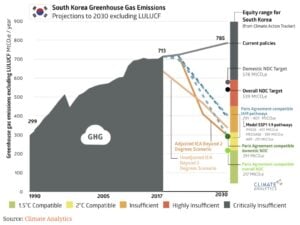
Korea plans to launch a new carbon credit market with global ties. This will give companies more ways to achieve their ambitious goals.
Infrastructure That Builds Trust
For carbon markets to work well, they need trustworthy trading systems. This builds confidence among participants. KRX is already the central platform for South Korea’s financial markets and compliance carbon allowances. By teaming up with Xpansiv, it can extend this role into the voluntary and international carbon space.
As the Xpansiv spokesperson noted,
“Exchanges such as KRX’s are trusted platforms that support liquidity, transparency, as well as operational and credit efficiencies. When you combine KRX’s established role in compliance carbon and financial markets with Xpansiv’s proven exchange and post-trade infrastructure, you get a system that can scale quickly, build participation, and accelerate time to market. Exchanges boost markets by giving commercial end users and investors confidence that transactions are effectively priced, secure, and efficiently settled. This trust and confidence are important to build participation from large companies and financial institutions.”
This model shows a global trend. Exchanges are becoming the backbone of environmental commodity markets. Linking KRX’s platform with Xpansiv’s Carbon Business Line (CBL) lets South Korean users tap into global liquidity. It also connects international players to Korean projects.
Xpansiv’s CBL exchange remains the largest marketplace for voluntary carbon credits, handling more than 250 million metric tons CO₂e since 2020. In 2025, activity remains strong, with weekly trades exceeding 300,000 tons, most from nature-based projects.
The platform also launched CORSIA-compliant GEO CP1 contracts and expanded removal-only credit listings, including 75,000 forestry credits. Since early 2023, over 3.5 million Australian ACCUs have traded on CBL. With ~25% global VCM share, Xpansiv anchors voluntary market growth in 2025.
The market is also shifting toward credits with stronger co-benefits, like biodiversity and community impact. Also, early adoption of carbon removal credits has begun, signaling an evolution in market quality and transparency.
The Broader Role of Carbon Trading: Putting a Price on Carbon Progress
Carbon trading is seen more as a market driver than just a compliance tool for climate solutions. By putting a price on carbon, trading systems create demand for projects that avoid, reduce, or remove emissions.
Xpansiv highlighted this broader role:
“Carbon markets are not necessarily an end in themselves. When implemented properly, they’re a tool and arguably a market accelerator. By putting a price on carbon and creating demand for projects that avoid, reduce, or remove emissions, markets have the potential to unlock billions in private capital to fund real-climate solutions. These funds support renewable energy, reforestation, and innovative technologies that would otherwise struggle to scale. In that way, carbon markets bridge climate ambition and real-world decarbonization, speeding up the global energy transition.”
The voluntary carbon market was valued at around $2 billion in 2024. It could grow to nearly $50 billion by 2030 if corporate demand continues to rise.

At the same time, compliance carbon markets worldwide reached a record $950 billion in traded value in 2023. This growth was led by the EU Emissions Trading System. South Korea can boost its role in carbon finance by being a hub for compliance and voluntary trading.
Xpansiv’s Global Playbook
Xpansiv partners with KRX to expand global environmental commodity markets. The company runs trading, registry, and post-trade platforms. These support carbon credits, renewable energy certificates, and digital fuels.
In their words, “Our mission is to accelerate the world’s energy transition by operating robust infrastructure for environmental commodity markets. Our technology platform makes these markets work efficiently and securely. Supporting Korea’s new market is a significant step to drive measurable and real climate impact.”
Xpansiv strengthens its global network by enabling Korea’s carbon credit market. This move helps one of Asia’s leading economies get closer to its climate goals.
The collaboration between Xpansiv and the Korea Exchange to launch a new Korean Carbon Credit Market underscores the growing importance of carbon trading in Asia. With ambitious climate goals, strong policy frameworks, and rising demand from companies and investors, South Korea is well-positioned to become a regional leader.
The new platform combines KRX’s trusted market role with Xpansiv’s global exchange. It aims to provide the transparency, liquidity, and confidence needed to grow carbon finance. The partnership shows that strong carbon markets can attract private investment. This, in turn, speeds up the global shift to cleaner energy.