


Chinese EVs now command one-third of South Korea’s electric car market. The market share of EVs made in China jumped from 4.7% in 2022 to 33.9% in 2025. Originally reported by Korea JoongAng Daily.
Korean brands lost ground fast. Domestic EV share fell from 75% to 57.2% over the same time. China-made Tesla and BYD car sales lead the charge. The shift shows China’s growing role in the global EV trade.
South Korea is one of Asia’s most advanced automotive markets and home to Hyundai Motor Group, one of the world’s largest EV manufacturers. That makes the rapid rise of Chinese-made EVs especially significant.
Korea is no longer just competing with China in export markets. It is increasingly becoming a direct battleground for EV competition inside developed economies.
Tesla Leads China-Made EV Sales Boom
Chinese EV sales in South Korea hit 25,000 units in Q1 2026, up 286% from last year. Tesla drove much of this growth. The company’s sales jumped 311% from 2022 to 59,916 units in 2025. Tesla was Korea’s best-selling import brand in Q1 2026.

Much of Tesla’s Korean inventory now comes from Gigafactory Shanghai, which has become one of the company’s main export hubs for Asia. The factory benefits from China’s large battery supply chain and lower manufacturing costs.
This allows Tesla to price more competitively in overseas markets. It also shows how China’s EV ecosystem increasingly supports even foreign automakers operating globally.

Tesla’s Model Y made history in April. The automaker delivered 13,190 vehicles in April, with the Model Y selling over 10,000 units – becoming the first import model to cross that mark. This shows Tesla’s strong appeal in Korea’s EV market.
Korean automakers felt the pressure. Korean brands sold about 51,000 EVs in Q1, growing 126% – much slower than Chinese imports. The gap keeps widening as Chinese brands gain more buyers.
BYD’s Low-Cost Strategy Is Winning Korean Buyers
BYD also saw major growth. The Chinese brand hit 10,000 total sales in just 11 months after entering Korea in April 2025, ranking fourth among imports. BYD sold 2,023 units in April 2026, crossing the 2,000 mark for the first time.
Price gives BYD its edge. The Dolphin hatchback costs about $16,513 before subsidies, well below many rivals. BYD runs over 30 showrooms and plans more expansion. The brand targets buyers who want lower-cost EVs.
BYD’s advantage goes beyond pricing alone. The company produces many of its own batteries and key components in-house, which helps lower production costs and reduce supply chain risks. This level of vertical integration has become one of the biggest competitive pressures facing traditional automakers worldwide.
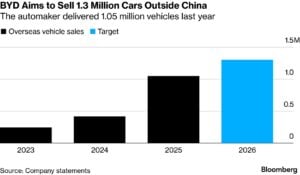
More Chinese brands plan Korea entries. Zeekr, Xpeng, and Chery are preparing to launch in the market. This could boost the Chinese EV share even more. Korean brands face growing challenges from multiple Chinese rivals.
Policy Changes Shape EV Market
Korea’s government boosted EV support in 2026. The maximum EV subsidy rose to 6.8 million won ($4,500) from 5.8 million won ($3,840). Buyers who scrap old gas cars get an extra 1 million won ($700). These policies help make EVs more affordable.
EV purchase subsidies rose over 30% to 936 billion won. The government also cut taxes on electric, hybrid, and hydrogen cars. These moves aim to boost domestic EV sales amid growing foreign competition.

Seoul faces a difficult balancing act. The government wants faster EV adoption to support climate and industrial goals. But it also wants to protect domestic automakers and suppliers that remain a major part of Korea’s manufacturing economy. New subsidy rules tied to local investment and jobs reflect that growing tension.
New rules take effect soon. Starting in July, carmakers must meet seven criteria, including R&D investment and local jobs, to get full subsidies. This may hurt Chinese brands with limited local presence.
Imported EVs Are Overtaking Gas Cars in Korea
April marked a key shift. Import EVs hit 53.9% of Korea’s import car market for the first time. Total import EV sales reached 18,319 units, crossing the 50% mark. This shows EVs taking over from gas cars in imports.
The milestone also highlights how quickly consumer preferences are changing. Lower-priced imported EVs, especially those linked to Chinese manufacturing, become more attractive as buyers look for affordable alternatives in a slowing economy.
Tesla stays on top. Tesla sold 13,190 units in April, keeping its spot as Korea’s top import brand for the second straight month, above 10,000 units. The company benefits from strong brand appeal and carbon credit revenue in Korea.
The trend extends beyond cars. Import EV sales from January to April already beat small gas cars under 2,000cc. This rapid shift shows how fast Korea’s car market is changing.
Korean Brands Fight Back
Korean automakers face tough times. Competition with low-cost Chinese EVs is getting worse, says Korea’s auto industry group. Weak finished-car production could hurt Korea’s whole manufacturing base.
Hyundai and Kia launch new models to compete. Both brands plan entry-level EVs – the EV2 and IONIQ 3 – to fight Chinese imports in Korea, Europe, and other markets. Price competition is key to winning back market share.
Korean automakers have traditionally competed through quality, reliability, and brand strength. However, Chinese firms are pushing the market toward lower-cost EV segments where margins are thinner, and competition is more intense.
Government support helps domestic brands. Korea set aside over 15 trillion won ($10.31 billion) for auto and parts makers in 2026. The money backs research, production, and worker training. Hyundai’s new battery campus in Korea shows the company’s push to stay competitive.

What This Means for EV Markets
Korea’s EV shift shows broader global trends. Chinese firms see overseas growth as key for 2026 amid slow home demand. South Korea ranks as a key target market. This pattern plays out in many countries as Chinese EVs export globally.
Tariff gaps matter for trade. The US charges over 100% tariffs on Chinese EVs, while the EU levies up to 45%. Korea only charges 8% with no major policy change expected. Lower barriers help Chinese brands compete more easily in Korea.
Chinese automakers are no longer competing only on affordability. Increasingly, they are competing on battery technology, software features, manufacturing scale, and speed of product development. That is making competition more difficult for established global brands.
The Korean market points to future EV competition worldwide. Chinese brands use lower costs and new tech to win buyers. Local brands need strong policy support and better products to compete. This battle shapes how the global EV market develops in the coming years.