

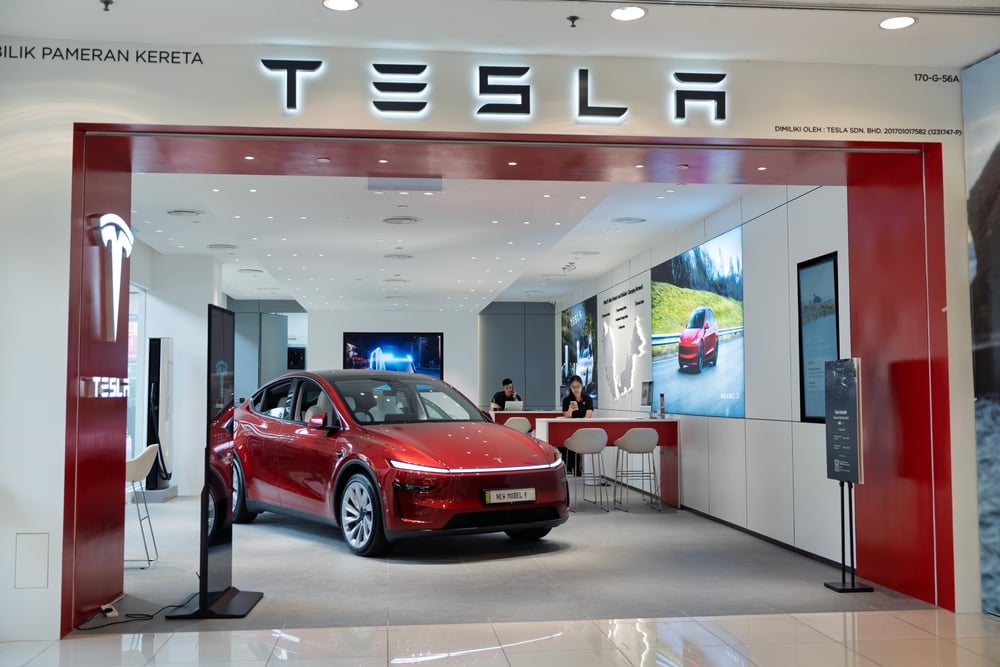
Tesla is adding a new version of its best-selling vehicle as it works toward its broader mission of accelerating the shift to clean energy. The company has begun U.S. production of the six-seat Model Y L. This gives families a larger electric SUV and expands one of the world’s top EV models.
Although many customers welcomed the launch, Tesla’s stock shares fell after the announcement as investors locked in profits. Even so, the new model could strengthen Tesla’s earnings while supporting the wider move toward lower transport emissions.
Tesla Expands Its Best-Selling EV Lineup
Tesla has officially begun producing the Model Y L, a new six-seat version of its best-selling electric SUV. The company launched the model earlier than many investors expected, with customer deliveries scheduled to begin in September.
The new EV model is for larger families and buyers who need more passenger space. It features three rows with six seats, a longer wheelbase than the standard Model Y, and a roomier cabin for improved comfort.
The SUV is powered by Tesla’s dual-motor all-wheel-drive system and could deliver up to 456 horsepower (340 kW). This design offers strong performance while maintaining the efficiency that the Model Y is known for. The larger model also provides more cargo space and is expected to support Tesla’s premium pricing strategy.
This larger SUV gives Tesla a stronger position in the growing family vehicle market. It also adds to the Model Y lineup without needing a new vehicle platform. This helps the company boost production efficiency and cut manufacturing costs.
The Model Y has already become one of the world’s most successful electric vehicles. It became the first electric vehicle to lead global sales across all powertrains. Despite rising global competition, the Model Y remains one of Tesla’s top products. It still ranks among the best-selling EVs worldwide.
The new six-seat version is expected to sell at a higher price than the standard Model Y. That could improve Tesla’s profit margins once deliveries begin later this year.
Electric Vehicles Continue to Reduce Transport Emissions
The launch comes as electric vehicles play a bigger role in cutting global emissions.
The International Energy Agency (IEA) reports that global EV sales topped 20 million in 2025. This is a 25% jump from last year. EVs accounted for more than 20% of all new cars sold worldwide, setting another record.
The IEA expects global EV sales to keep rising this decade. This growth will happen as battery prices drop, charging networks expand, and governments boost clean transport policies.
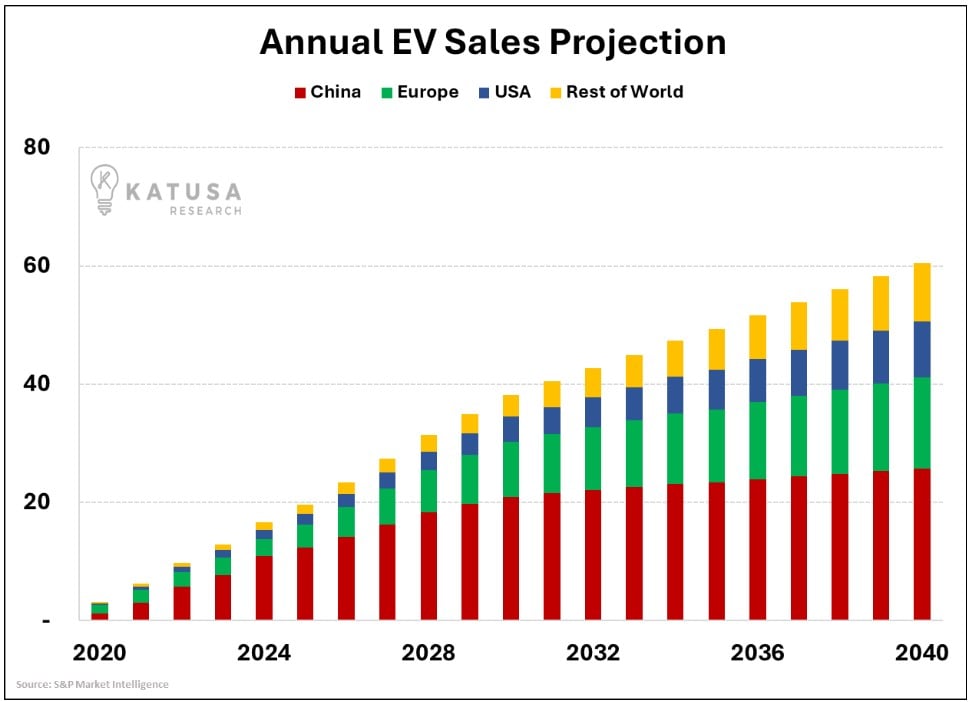
This growth matters because transport remains one of the world’s largest sources of greenhouse gas emissions. The IEA estimates that transport generates about 25% of global energy-related CO₂ emissions. Most of these come from road vehicles.
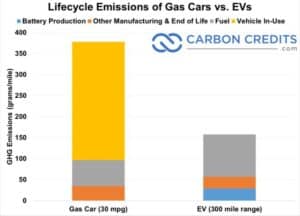
Switching from gasoline and diesel vehicles to electric ones can cut lifetime emissions. This is especially true as electricity grids get cleaner with more renewable energy.
Tesla Is Building More Than an EV Company
The EV giant says its mission is “to accelerate the world’s transition to sustainable energy.” The company views electric vehicles as only one part of that strategy.
Tesla’s latest Impact Report shows that Tesla drivers have avoided about 35 million metric tons of CO₂ emissions. This is compared to similar gasoline-powered cars.
The report notes that Tesla’s products—like EVs, solar panels, and battery storage—helped customers avoid over 20 million metric tons of CO₂ equivalent in 2024.

Tesla is also expanding its energy business. In 2025, the company deployed a record 46.7 gigawatt-hours (GWh) of battery energy storage, a 49% increase from the 31.4 GWh deployed in 2024. Its Megapack systems are now helping utilities store electricity from wind and solar farms, making renewable energy more reliable.
The company is also improving battery recycling. Tesla claims its recycling facilities recycle all retired lithium-ion battery packs. This process helps recover and reuse important materials like lithium, nickel, cobalt, and copper.
Together, these efforts show that Tesla’s climate strategy reaches well beyond vehicle sales. It is building a broader clean energy ecosystem that includes transportation, renewable electricity, battery storage, and resource recovery.
- SEE MORE: Tesla’s (TSLA stock) $557M Shanghai Megapack Project: Powering China’s Clean Energy Future
Why Investors Took Profits After the Launch
Despite the early launch of the Model Y L and another strong quarter for vehicle deliveries, Tesla shares fell about 7.5% after the announcement.
The decline appears to reflect profit-taking rather than concerns about the new vehicle itself. Many investors had already expected positive news, meaning much of the optimism was already built into Tesla’s share price.

Market analysts often call this “selling the news.” Investors buy shares ahead of an expected event, then sell once the announcement is made to lock in gains.
However, the launch could still benefit Tesla’s financial results. The six-seat Model Y L is expected to carry a higher selling price than the standard Model Y.
If demand remains strong, the larger SUV could improve vehicle margins and boost revenue when deliveries begin in September. Investors are likely to pay less attention to the product launch. Instead, they’ll focus on whether Tesla can boost earnings in the upcoming quarters.
Battery Storage Becomes Tesla’s Second Growth Engine
While Tesla remains best known for electric vehicles, its energy business is growing even faster. In fact, it will be the strongest-growing segment this year.
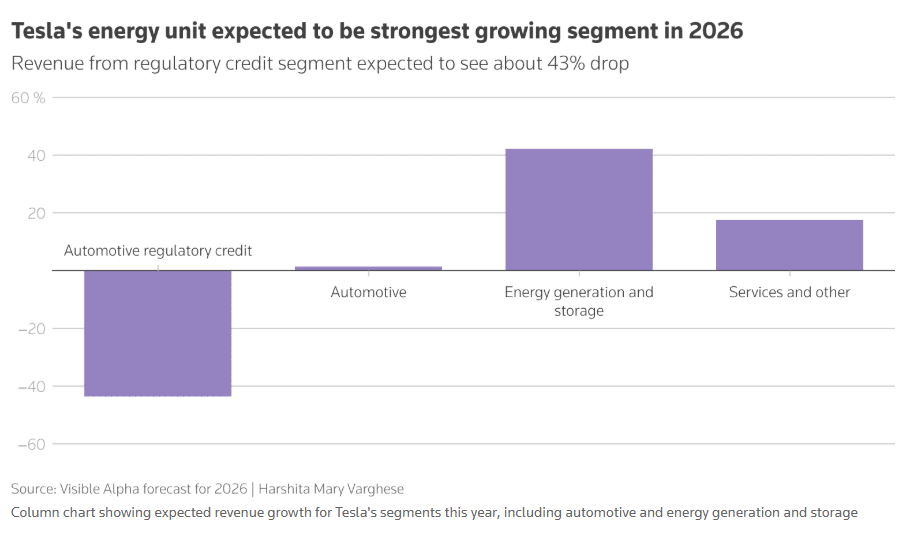
The business features Megapack utility-scale batteries and Powerwall home battery systems. These products store electricity from renewable sources.
Demand continues to rise as countries build more wind and solar projects. The International Energy Agency (IEA) says the world must add over 1,500 gigawatts (GW) of energy storage by 2030. This is crucial to meet global climate goals. That is more than six times today’s installed capacity.
Tesla is well-positioned to benefit from that trend and is boosting its Megapack production, which will help supply battery storage projects. These projects improve grid reliability and support renewable energy growth.
This gives Tesla another source of revenue beyond vehicle sales and helps strengthen its role in the clean energy transition.
Tesla’s Long-Term Bet Is on the Entire Clean Energy Ecosystem
The new Model Y L is more than another vehicle launch. It reflects Tesla’s broader strategy to expand clean transportation while building an integrated clean energy business.
Electric vehicles remain at the center of that strategy, but they are only one part of the company’s long-term vision. Battery storage, solar power, charging infrastructure, and battery recycling help cut emissions in the energy system.
Global electricity demand is rising. This growth comes from artificial intelligence, data centers, and electrification. Because of this, the need for clean transport and reliable energy storage will also increase.
Tesla’s latest product launch fits into that broader transition. The market had a quick sell-off, but the company’s long-term plan is clear. It aims to expand clean energy solutions and cut emissions in various sectors.
Whether the Model Y L becomes another sales success will become clearer once deliveries begin in September. But the launch shows Tesla is continuing to invest in products that support both its business growth and its mission to accelerate the world’s transition to sustainable energy.