

Global trade in clean energy products grew again in 2025 despite tariffs, political tensions, and unstable energy markets. According to BloombergNEF (BNEF), global clean-energy trade reached $479 billion in 2025, rising 1% from the previous year. The recovery came after a decline in 2024.
The growth is important because it happened during a difficult period for global trade. The United States and other countries expanded tariffs on clean energy products. At the same time, conflict in the Middle East pushed oil and gas prices higher and created uncertainty across global markets.
Still, demand for solar panels, batteries, electric vehicles (EVs), and power-grid equipment continued to rise.
Antoine Vagneur-Jones, lead author of the report, remarked:
“As conflict in the Middle East persists, many markets are doubling down on the deployment of clean technology to improve their energy security and resilience. This presents a huge opportunity for manufacturers to expand exports of the equipment and products required to power the energy transition.”
This shows that the global energy transition is continuing even during political and economic uncertainty.
When Oil Gets Expensive, Solar Gets the Spotlight
One major reason for the rebound is rising fossil fuel costs.
Oil and gas prices increased during the Middle East conflict. This placed pressure on countries that depend heavily on imported fuel. In response, many governments and businesses accelerated investments in solar power and battery systems.
BloombergNEF highlighted Pakistan as one of the clearest examples. After the energy crisis linked to Russia’s invasion of Ukraine, Pakistan sharply increased solar imports. The country’s solar module imports jumped by about 189% to nearly $1 billion in 2022.
That growth continued into 2025. Pakistan reportedly installed around 18.3 gigawatts of small-scale solar capacity in a single year. High electricity prices and power shortages pushed households and businesses to adopt rooftop solar systems.
Similar trends are now appearing across Southeast Asia and parts of Africa. Countries are turning to renewables because solar and battery systems can reduce exposure to volatile fuel prices.
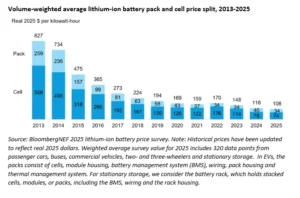
Technology costs are also improving. BloombergNEF reported that average lithium-ion battery pack prices fell from $118 per kilowatt-hour in 2024 to about $108 per kilowatt-hour in 2025.
The International Energy Agency reported that global clean energy investment hit about $2.2 trillion by 2025. That’s roughly double what’s expected for fossil fuels.
China Continues to Lead the Clean Tech Market
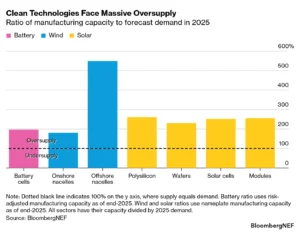
China remains the world’s largest clean-energy manufacturing hub. BloombergNEF said Chinese investment has created a major oversupply across several sectors. These include solar panels, batteries, and electric vehicles. In some industries, manufacturing capacity now exceeds 200% of expected global demand.
This oversupply has pushed prices lower worldwide. Lower prices benefit consumers and project developers. However, they make it tougher for manufacturers in the U.S. and Europe to compete.
China’s EV industry shows the scale of its dominance. Chinese EV exports reached about $69.6 billion in 2025, rising roughly 43% from the previous year. China also produced around 16 million new energy vehicles and exported about 2.6 million EVs globally.
Chinese companies are also expanding quickly into developing markets. Exports of Chinese EVs to Africa reportedly rose 189% year-on-year.
China continues to dominate solar manufacturing as well. BloombergNEF said solar cell trade made up about 44% of global solar cell and module trade in 2025, compared with 25% the year before.
This shows how global supply chains are adapting to tariffs rather than slowing down completely.
Tariffs Shift the Map, But Don’t Slow the Flow
The United States and Europe are trying to build local clean energy industries through subsidies and tariffs. However, BloombergNEF said tariffs have not significantly reduced global clean-tech trade.
Instead, companies are shifting production to other countries. Manufacturing is expanding in places such as India, Vietnam, Thailand, Turkey, and Egypt. These countries are becoming important parts of global clean energy supply chains.
India is emerging as one of the strongest new competitors. BloombergNEF said India’s growing solar manufacturing industry could help the country become a major exporter in the future.
Still, China remains dominant across most sectors. Though many factories in the United States and Europe mainly handle final assembly, they do not focus on full supply chain production. Some projects are also facing delays because of high costs and weaker demand.
As a result, China could remain the leading supplier of many clean energy products for years to come.
Battery Storage and Grid Investment Continue Rising
Another major trend is the rapid growth of battery storage and power grid investment. As more countries build solar and wind projects, they also need battery systems to stabilize the electricity supply.
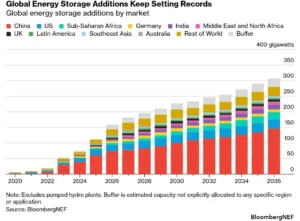
BloombergNEF said energy storage systems accounted for about 29% of global battery shipments in 2025. Shipments in this sector grew by around 64% year-on-year, showing strong demand for large-scale energy storage. It will continue to grow over the next decade, as shown below.
Countries are also investing heavily in power grids. Governments are improving transmission systems. They aim to support renewable energy, electric vehicles, and the growing electricity needs from artificial intelligence and data centers.
BloombergNEF estimated that global energy transition investment reached a record $2.3 trillion in 2025. Large clean energy companies are also expanding climate and sustainability efforts.
- Tesla continues to expand battery and renewable energy projects as part of its long-term net-zero strategy.
- BYD is rapidly growing its EV and battery production while expanding exports to global markets.
- First Solar continues to invest in domestic solar manufacturing and lower-carbon production systems.
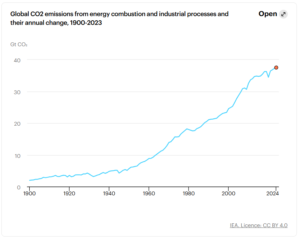
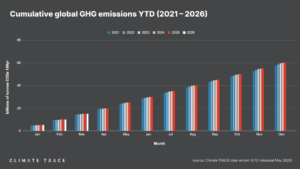
These efforts are becoming more important as investors and governments push companies to reduce emissions and strengthen energy security.
Clean Energy Is No Longer a Trend; It’s Trade Policy
The rebound in clean energy trade to $479 billion in 2025 shows that the global energy transition is still advancing. This is despite tariffs and geopolitical tensions.
Rising fossil-fuel prices are pushing more countries toward renewable energy. At the same time, demand for batteries, solar panels, EVs, and power-grid equipment continues to grow.
This points to a bigger picture: Clean energy trade is no longer only about climate goals. It is now closely tied to economic growth, industrial competitiveness, energy security, and long-term stability.
As countries continue to electrify their economies, global trade in clean energy technologies will likely remain one of the fastest-growing parts of the world economy.