

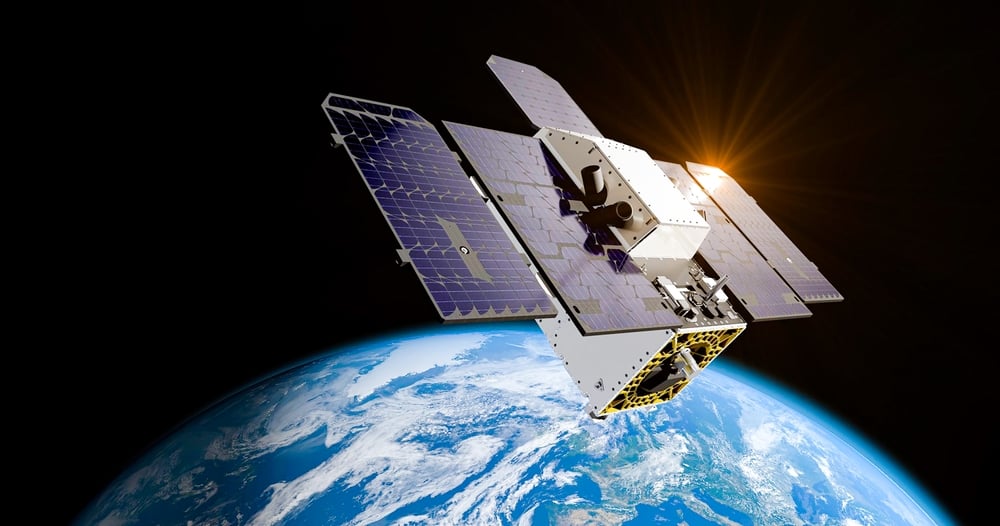
SpaceX has asked US regulators to approve a new satellite system that would act like a large, space-based computing network. Several outlets report that SpaceX filed a request with the US Federal Communications Commission (FCC) for an “orbital data center” constellation. This could include up to one million satellites in low Earth orbit, powered mainly by solar energy and connected using laser links.
The idea is simple. Instead of building more data centers on land, SpaceX would place computing hardware in orbit and run it on sunlight. The system would then handle heavy computing tasks, including AI workloads, without drawing electricity from local grids on Earth.
AI Is Pushing Power Systems to the Edge
The scale is what makes the proposal unusual. Today, there are roughly 15,000 satellites in orbit, and reports say more than 9,600 are active Starlink satellites. A one-million-satellite “data center” network would be far larger than anything proposed so far.
However, the “one million” figure appears in reporting tied to the FCC filing, but regulators have not yet approved the plan. Several analysts and engineers quoted in coverage also treat the number as a maximum request, not a final build plan.
The FCC filing stated:
“By directly harnessing near constant solar power with little operating or maintenance costs, these satellites will achieve transformative cost and energy efficiency while significantly reducing the environmental impact associated with terrestrial data centers.”
SpaceX’s proposal arrives during a period of fast growth in computing demand. The International Energy Agency (IEA) estimates that data centers consumed about 415 terawatt-hours (TWh) of electricity in 2024. This is roughly 1.5% of global electricity use. Demand has grown by around 12% each year for the last five years.
Older IEA work also highlighted how quickly demand can rise. One IEA scenario noted that data centers consumed 460 TWh in 2022. In a worst-case situation, this could exceed 1,000 TWh by 2026. The increase depends on trends in AI, crypto, and efficiency.
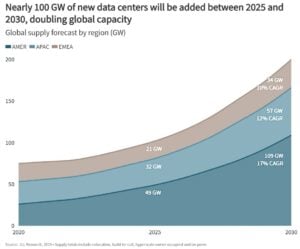
This demand growth has significant effects on power systems. Utilities, cities, and local communities often push back when new large data centers arrive. The concerns include higher power demand, water use for cooling, and land use. Thus, SpaceX and Elon Musk have framed space-based computing as a way to reduce pressure on Earth’s power grids.
That is where renewables enter the story. Globally, clean energy investment is already rising fast. The IEA said total global energy investment exceeded US$ 3 trillion in 2024, with around US$ 2 trillion going to clean energy technologies and infrastructure. BloombergNEF reported that clean energy investment reached $2.3 trillion in 2025.
Why Space Looks Tempting for Energy-Hungry AI
Space has one obvious advantage: sunlight is steady above the clouds. Solar panels in orbit can receive strong sunlight for long periods, depending on their orbit and design.
SpaceX’s pitch, as described in reporting, leans on that idea: a solar-powered platform in orbit could run without fuel deliveries and without drawing power from Earth’s grid.
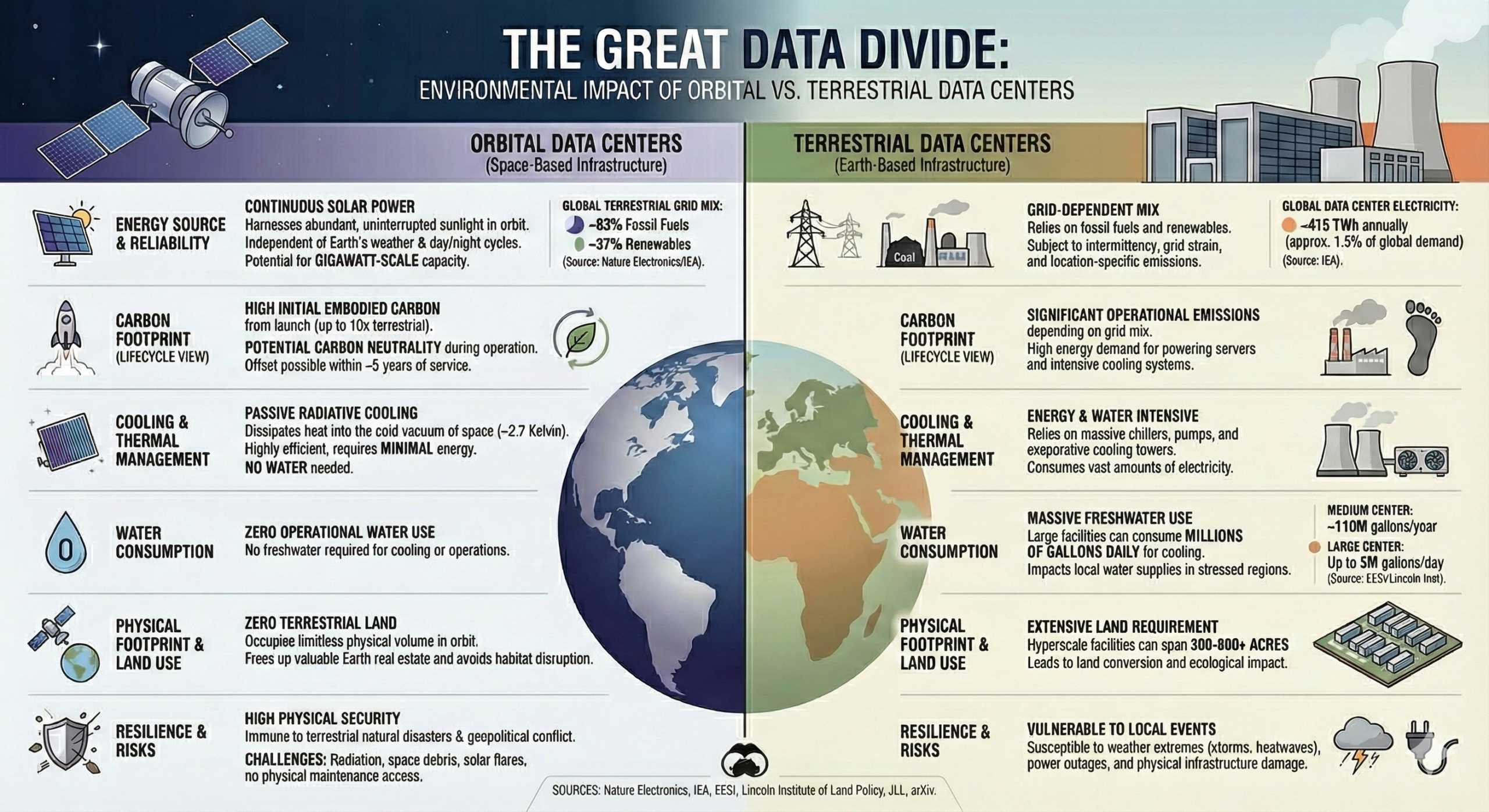
Orbital compute could also reduce “latency” for some tasks in theory. If a user needs fast responses across large regions, satellites can route data without depending on ground networks in certain cases. SpaceX already uses laser links across Starlink satellites for routing. That experience may be part of the logic for a computing-focused network.
Space also avoids some land-based constraints. On Earth, data centers need large sites, grid connections, and cooling systems. SpaceX and supporters argue that orbit may reduce some land and water issues, at least in principle.
Recent market analysis shows the orbital data center market is set for quick growth. This is due to the rising demand for AI computing and energy limits on Earth. Analysts expect the orbital data center market to rise from around US$ 1.77 billion in 2029 to nearly US$ 39.1 billion by 2035, a compound annual growth rate of about 67.4%.
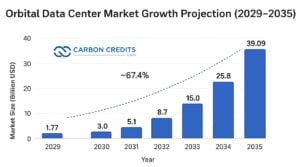
The surge comes from several factors. These include prototype satellite launches, solar-powered compute ideas, and interest from companies like Google, Nvidia, and SpaceX.
However, the advantages offered by space do not remove the biggest engineering problems.
The Hard Parts: Physics, Maintenance, and the Messy Reality of Orbit
A major challenge for computers in space is waste heat. Computer chips turn much of their electricity into heat. On Earth, air and water systems carry heat away. In space, there is no air. Objects mainly lose heat through radiation, which can require large radiator surfaces.
That is why experts have raised doubts and concerns, including:
These constraints do not mean orbital data centers are impossible. But they explain why most experts treat this as an early-stage concept rather than a near-term build plan.
A Signal of Stress in the AI–Energy Equation
Even if SpaceX never launches a million satellites, the proposal highlights a key issue. The AI boom is driving up electricity demand. Energy planners are now looking for new ways to supply and use energy more efficiently.
- SEE MORE: AI Drives a Transformative Wave in Global Data Centers – and Energy Is the Real Bottleneck
The IEA’s data shows the scale of the challenge. With data centers already at about 415 TWh in 2024, even modest growth adds large new loads to power systems.
On the supply side, the global investment trend favors clean energy. The IEA expects clean energy technologies and infrastructure to take over US$ 2 trillion of global investment in 2025, larger than total spending on oil, gas, and coal.

This sets up two parallel paths:
- First, most near-term data center growth will stay on Earth. That means grids, renewables procurement, storage, and efficiency standards will do the bulk of the work.
- Second, a smaller group of companies may test space-based power or computing systems.
Beyond SpaceX, several other firms are exploring solar-powered orbital computing. Starcloud has already launched a satellite with an NVIDIA GPU to test high-performance computing in orbit, backed by seed funding and solar panel grids to power large data loads.
Axiom Space plans to send orbital data center modules to the ISS by 2027, while Google’s Project Suncatcher aims to power AI workloads via solar satellites. China’s ADA Space is developing a constellation of thousands of AI-enabled satellites.
SpaceX’s filing has also drawn attention to other efforts and interest in space-based energy and computing concepts, even if the timelines remain uncertain.
For now, its proposal highlights how quickly the search for new computing and energy models is expanding beyond Earth. Orbital data centers remain early in development, but they reflect growing interest in pairing constant solar power with high-density computing at scale.
As launch costs drop and space technology improves, orbital systems may become a good alternative to ground-based data centers. This is especially true for energy-heavy tasks. The idea signals a longer-term shift in how and where digital infrastructure may be built.