


Logitech is expanding its efforts to cut supply chain emissions with a new program that will help manufacturing partners switch to cleaner energy and improve factory efficiency.
The company announced Chain Reaction, a global supply chain decarbonization program. It will begin with 17 key suppliers and give them access to renewable energy purchasing, factory assessments, technical support, and new business incentives.
The program supports Logitech’s science-based target to halve its Scope 3 greenhouse gas emissions by 2030. It also aims to help suppliers lower operating costs, reduce energy waste, and build their own plans to cut emissions.
The launch comes as Logitech reports progress on its climate goals. In fiscal year 2026, the company reduced its total Scope 3 emissions by 33% compared with its 2021 baseline. The reduction was third-party verified and calculated under the Greenhouse Gas Protocol.
Elaine Laird, chief people and sustainability officer at Logitech, remarked:
“Real value-chain decarbonization happens directly on the factory floor. Our suppliers understand their operations best. Chain Reaction helps our manufacturing partners access the practical tools, technical evaluations and clean energy solutions they need to optimize their operations and lead their own decarbonization roadmaps.”
Logitech’s Four-Part Program Targets Supplier Emissions
Chain Reaction will work with an initial group of 17 suppliers. Logitech will support them through four main areas.
- The first is access to affordable clean energy. Suppliers will combine their purchasing power to buy renewable energy instruments as a group. This approach can help them secure clean electricity at competitive prices and reduce exposure to energy price changes.
- The second area focuses on factory energy use. Suppliers will carry out factory assessments to find ways to improve energy, heating, cooling, and mechanical systems. These reviews can help identify where facilities waste energy and where equipment or processes could work more efficiently.
- Third, Logitech will provide technical support. Suppliers will have access to workshops, expert advice, roundtable discussions, and innovation sessions. The company will also develop reporting tools with suppliers to make carbon accounting easier and reduce paperwork.
- The fourth part links climate progress to business opportunities. Logitech plans to include carbon transparency and emissions reductions in regular supplier reviews and decisions on new business awards.
This means suppliers’ progress on climate action will become part of their commercial relationship with Logitech, rather than remaining a separate sustainability activity.
Why Supply Chain Emissions Is Crucial for Logitech Climate Goals
Scope 3 emissions come from activities across a company’s value chain, both before and after its own operations. They can include emissions from purchased materials, manufacturing by suppliers, transportation, product use, and disposal.
Scope 3 reporting helps companies measure emissions across their supply chains, from raw materials and manufacturing to transport and product use. The OECD’s 2025 Global Corporate Sustainability Report found that, in 2024, 7,712 listed companies disclosed at least one Scope 3 category, representing 76% of global market capitalization. This shows growing recognition of value chain emissions, but reporting gaps remain.
The GHG Protocol says measuring these emissions helps businesses identify reduction opportunities and manage climate risks, while ISSB’s IFRS S2 includes relevant Scope 3 disclosure requirements.
For a hardware company such as Logitech, these emissions can arise from many activities outside its direct control. This makes supplier cooperation important to meeting its climate targets. The company has the following climate targets:
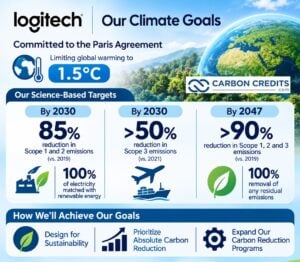
Under the Greenhouse Gas Protocol, Scope 3 emissions cover indirect emissions linked to a company’s upstream and downstream activities. Reducing them often requires businesses to work with suppliers, customers, and other partners.
Logitech’s new program focuses on manufacturing partners. The company helps suppliers boost factory efficiency and use renewable electricity, with the aim of cutting emissions from product production.
The approach also gives suppliers a reason to take action. Improving energy efficiency can cut electricity and operating costs. Moreover, buying renewable energy helps manage fluctuating energy prices.
Logitech Reports 33% Cut in Scope 3 Emissions
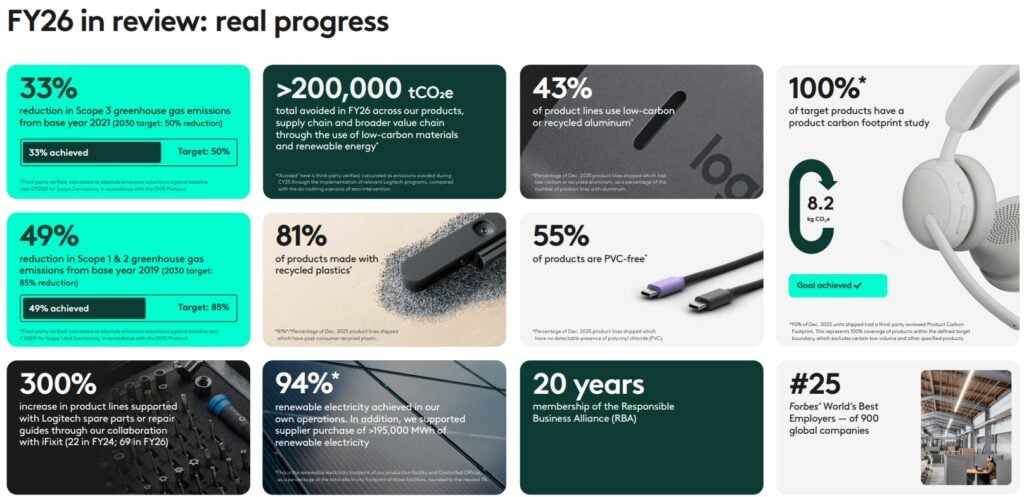
Chain Reaction builds on progress reported in Logitech’s Fiscal Year 2026 Impact Highlights Report, released in July 2026. The company said it reduced Scope 3 emissions by 33% compared with its 2021 baseline. It also reported a 49% reduction in Scope 1 and Scope 2 emissions against its 2019 baseline.
Scope 1 covers direct emissions from sources a company owns or controls. Scope 2 covers emissions from the electricity and other energy it buys. Scope 3 covers the wider value chain.
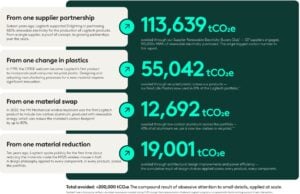
Logitech also reported more than 200,000 metric tons of carbon dioxide equivalent in avoided emissions during calendar year 2025. This figure was calculated against a scenario in which the company took no action.
Other progress included the use of post-consumer recycled plastic in 81% of its products. Logitech also said it removed 2,500 metric tons of packaging material over the three years from 2023 to 2025.
These figures show that the company is working on several parts of its environmental footprint. However, the 33% Scope 3 reduction is a company-wide result. Logitech has not said how much of that reduction came from supplier energy projects alone.
Chain Reaction Builds on Earlier Renewable Energy Work
Logitech has worked with suppliers on renewable electricity for several years. In 2020, the company launched the Logitech-Suppliers Renewable Electricity Buyers Club. The initiative helps major suppliers access and bulk-buy third-party certified renewable electricity.
Logitech says it has continued to support the buyers club through a shared purchasing portal. Its Fiscal Year 2025 sustainability update also reported that 64 suppliers had purchased renewable energy in 2024. These purchases addressed more than 90,000 metric tons of carbon dioxide equivalent linked to supply chain manufacturing.
Chain Reaction expands this work. In addition to clean energy purchasing, it adds factory assessments, technical guidance, shared reporting tools, and commercial recognition for supplier progress.
The wider approach is designed to help suppliers identify emissions sources and make changes within their own facilities. It also gives them tools and knowledge that may support their work with other customers, not only Logitech.
Suppliers Could Gain Cost and Business Benefits
Logitech says cutting emissions can also improve factory operations. More efficient equipment and processes can reduce energy waste and lower operating costs. Access to renewable electricity can also help suppliers manage long-term energy risks.
The program’s commercial recognition is another important feature. By including carbon performance in supplier reviews and new business awards, Logitech is making emissions progress more relevant to future business opportunities.
Elaine Laird, Logitech’s chief people and sustainability officer, said suppliers understand their own operations best. The program aims to give them the tools and technical support to lead their own emissions-reduction plans.
Sree Chenincherry, the company’s chief supply chain operations officer, added that lower energy use and cleaner power can create cost savings while strengthening the wider supply chain.
However, Logitech hasn’t shared details about expected emissions cuts from Chain Reaction. They also haven’t revealed how much renewable electricity suppliers will buy or when the program will grow beyond the initial 17 participants.
Supplier Progress Will Shape Logitech’s 2030 Climate Goal
Logitech’s Chain Reaction program puts suppliers at the center of its next phase of climate action. It combines cleaner energy purchasing with factory improvements, technical support, and business incentives.
The company has already reported a 33% reduction in Scope 3 emissions from its 2021 baseline. But reaching its goal of cutting these emissions in half by 2030 will require continued progress across its value chain.
The new program could help suppliers make that progress while improving their own energy use and operating costs. Its impact will depend on how many suppliers take part, how much emissions they reduce, and whether the approach can grow beyond the initial group.
For now, Chain Reaction marks a further step in Logitech’s effort to make supply chain decarbonization part of its business operations and supplier relationships.