

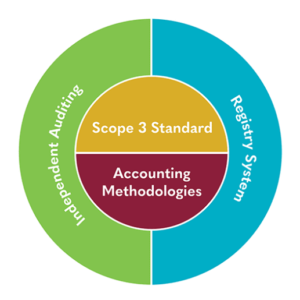
Verra has launched a new Scope 3 Standard (S3S) Program that allows project developers to list climate projects linked to corporate value chains. The program, which started on September 15, helps companies measure, verify, and report emissions reductions.
This is important for projects that impact their supply chains or products. It also creates a new system for issuing Scope 3 Units (S3Us) tied to those outcomes.
The launch happens as companies feel more pressure to cut Scope 3 emissions. These emissions come from activities beyond their direct control. They include suppliers, purchased materials, product use, and other value chain activities.
Verra says Scope 3 emissions typically account for more than 75% of a company’s total carbon footprint. More than 40% of the world’s largest public companies have net-zero targets that include Scope 3 emissions. The new program aims to turn that large emissions challenge into a more structured market for investment in value chain projects.
Project Developers Can Now Join the Program
The first version of the S3S Program is now live, but it is being introduced in stages. At launch, project developers can pipeline-list projects on the Verra Registry using two approved methodologies:
- S3S-VM0042 Improved Agricultural Land Management
- S3S-VM0043 CO2 Utilization in Concrete Production
Future updates will allow projects to move through full registration, validation, and verification, after which Verra will issue S3Us.
This phased approach is important. Projects entering the program today are not automatically receiving Scope 3 Units.
Instead, Verra is first creating a pipeline of projects that meet the new framework. The next stages will add the systems needed to verify project results and issue units.
Project proponents can include project developers, companies reporting Scope 3 targets, government entities, and financial institutions. They must demonstrate the right to operate the project and the right to the resulting greenhouse gas reductions or removals.
What Are Scope 3 Units?
Under the new system, an S3U represents one tonne of carbon dioxide equivalent reduced or removed compared with a baseline scenario. Verra writes:
“S3Us represent the climate impact of projects’ emission reduction and removal activities. Companies that can demonstrate a credible value chain connection to the goods or services affected by the project can then request reportable S3Us that are designed for use toward their Scope 3 net zero claims.”
Each unit will also carry information about the project and its climate outcome. This can include the affected product, baseline type, leakage emissions, and reversal risk. The outcomes must be checked by an independent third-party validation and verification body.
This creates an important difference from a conventional carbon credit.
S3Us are designed around a specific company value chain rather than simply representing a tonne of emissions reduced somewhere in the economy. In the future version of the program, a company will need to show a verified connection to the good or service affected by the project. Verra will then use a verified allocation method to issue reportable S3Us to that company.
Those reportable units will be non-transferable between companies. That structure is designed to reduce the risk that several companies claim the same emissions reduction.
Agriculture and Concrete Get First-Mover Status
The two methodologies available at launch target areas with significant emissions reduction potential.
S3S-VM0042 covers improved agricultural land management. The methodology measures emissions reductions and soil carbon removals. It considers practices like reduced tillage, improved fertilizer use, residue management, water management, and cover crops.
Agriculture is key to corporate Scope 3 emissions. Food, agricultural goods, and raw materials often produce significant emissions in supply chains.
The second methodology, S3S-VM0043, covers the use of CO2 in concrete production.
The method can account for projects that use captured or waste CO2 in concrete and permanently embed it in the material. It can also recognize emissions reductions from using less cement, which is important because cement production is highly carbon-intensive.
The two methodologies, therefore, target very different value chains while using the same broader framework.
Why Scope 3 Is So Difficult to Cut
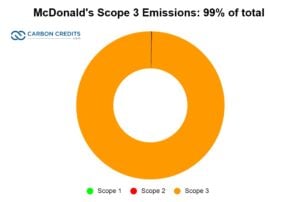
Scope 3 emissions are difficult because companies often have limited direct control over them. A manufacturer can improve the efficiency of its own factories, for example, but it cannot directly control how its suppliers produce raw materials. That makes supply chain projects important. And the fact that these emissions are often the largest, as the case with w2xw below.
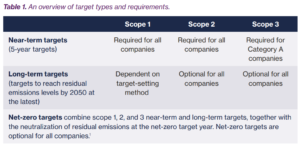
The Science Based Targets initiative (SBTi) requires companies with significant Scope 3 emissions to set targets covering their value chains. Companies with Scope 3 emissions over 40% of total Scope 1, 2, and 3 emissions must set Scope 3 targets. These targets should cover at least 67% of those emissions using supplier engagement or reduction goals.
SBTi’s new Corporate Net-Zero Standard Version 2.0, released in June 2026, focuses more on how companies implement it. This includes operations, value chains, and capital allocation. It requires companies to apply integrity criteria to actions and market instruments used to support target implementation.
That creates a growing need for tools that can show whether investments in suppliers and value chain projects actually deliver measurable emissions reductions.
Verra Wants to Connect Climate Action With Finance
Verra says the new program is intended to help unlock investment in projects inside corporate value chains. The idea is simple: a company must reduce its Scope 3 emissions. At the same time, project developers need funding to carry out emissions reduction efforts.
A common measurement and verification system can help connect the two.
For example, a food company could support improved farming practices that reduce emissions linked to the agricultural products it purchases. A construction company could invest in a process that uses captured CO2 in materials that enter its supply chain.
The S3S framework aims to measure those results and provide a transparent record of the climate impact. That could create a stronger business case for projects that directly reduce a company’s own value chain emissions.
S3Us Are Not Your Typical Carbon Credits
The launch also comes with an important limitation. An S3U is not simply a standard voluntary carbon credit that any company can buy and use for any purpose.
The program is built around a verified value chain connection. Verra says Version 2 will establish the process for companies to prove that connection and receive reportable S3Us for Scope 3 reporting.
This distinction is important as companies face growing scrutiny over climate claims.
The SBTi’s 2026 net-zero standard stresses that companies should focus on cutting direct emissions. They should use market tools as part of a broader strategy, not as a substitute for reducing their own emissions.
A Digital System Could Lower Project Costs
Verra is also taking a digital-first approach. Project processes will be managed through the Verra Project Hub and Registry.
The organization says streamlined requirements and, where appropriate, more focused verification could allow faster reviews and more frequent issuance at lower cost.
Lower verification costs could make small projects easier. Also, digital records help companies track projects and climate outcomes over time.
Scope 3 Enters a New Market Phase
Verra’s launch comes as companies face growing pressure to reduce and report Scope 3 emissions, which often make up most of their total carbon footprint. The new program gives developers a structured way to finance projects tied directly to corporate supply chains.
The launch is still an early step. Only two methodologies are available, while full registration, verification, and S3U issuance will be added through later updates. The program’s success will depend on whether companies use it at scale and whether projects deliver measurable emissions cuts.
For now, the Scope 3 Standard offers new infrastructure for value-chain climate action. Its long-term value will depend on strong measurement, clear links between companies and projects, and safeguards against double counting or overstated climate claims.