

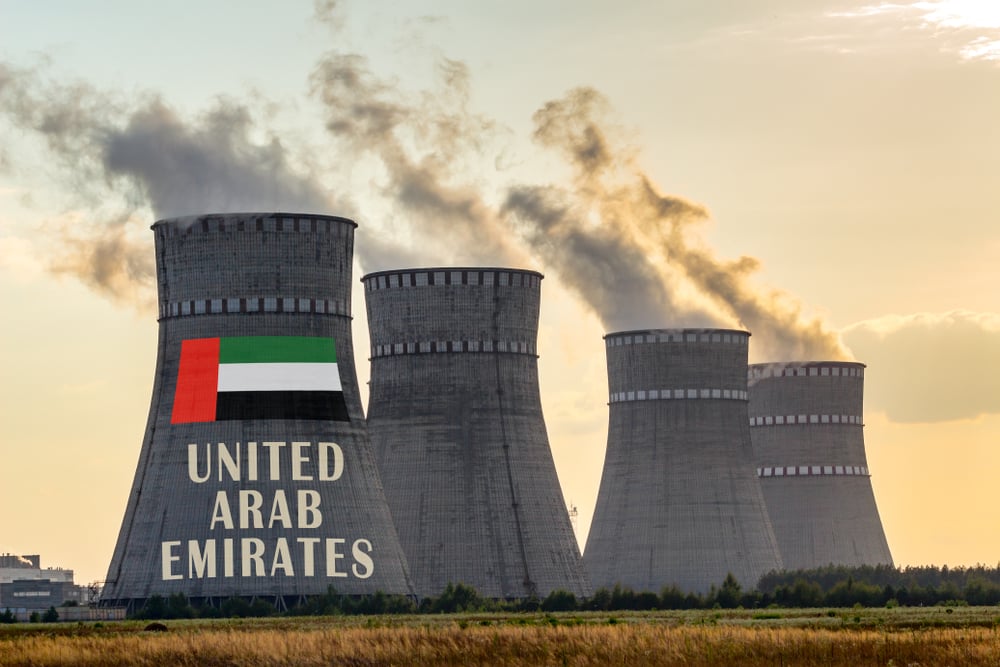
The DOE announced on 22nd July that the United States and Saudi Arabia have signed a significant civil nuclear cooperation agreement. This deal could change Saudi Arabia’s energy future and raise questions about nuclear non-proliferation.
U.S. Energy Secretary Chris Wright and Saudi Energy Minister Prince Abdulaziz bin Salman signed the agreement, known as a 123 Agreement. This agreement, under the U.S. Atomic Energy Act of 1954, sets up a legal framework for decades of peaceful nuclear energy cooperation. It also includes a bilateral safeguards agreement governing the transfer of U.S. nuclear technology and expertise.
Countries around the world are trying to secure reliable, low-carbon electricity. This demand is driven by needs for artificial intelligence (AI), data centers, electric vehicles, and industrial growth. Nuclear energy, once in decline, is now seeing a global revival.
Why the 123 Agreement Matters
A 123 Agreement is essential for the U.S. to export nuclear reactors and related technologies. The Department of Energy calls this a foundation for a “decades-long, multi-billion-dollar partnership.” It aims to expand U.S. involvement in Saudi Arabia’s civilian nuclear program while promoting safety and non-proliferation.
Saudi Arabia states that the agreement will boost cooperation in peaceful nuclear energy use, enhance technology exchanges, and support sustainable development under international safety standards.
For the U.S., the deal opens up commercial opportunities for companies involved in advanced nuclear technologies. It also strengthens its position in the competitive global nuclear market.
Uranium Enrichment Raises Concerns
While both governments frame this as a peaceful partnership, one issue has drawn significant attention.
Reports suggest this agreement might allow Saudi Arabia to enrich uranium for civilian nuclear fuel under specific conditions. Enrichment of 3-5% uranium-235 is typical for reactors, but the same technology could be used for higher levels suitable for nuclear weapons. This possibility raises concerns among non-proliferation experts.
Past U.S. agreements have generally had stricter rules. For example, the 2009 U.S.-UAE agreement, known as the “gold standard,” required the UAE to permanently give up domestic uranium enrichment.
Critics worry that allowing enrichment could weaken U.S. non-proliferation policy. Supporters argue the agreement has safeguards and keeps Saudi Arabia aligned with U.S. technology and oversight.
The agreement still needs U.S. Congress approval before it can take effect.
Saudi Arabia’s Nuclear Ambitions
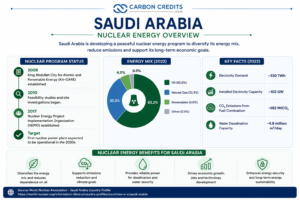
Saudi Arabia views nuclear energy as key to its Vision 2030 economic diversification plan.
The Kingdom currently relies on oil and gas for electricity. Developing nuclear power could cut domestic oil use, lower emissions, and improve energy security. It would also support electricity for industries and seawater desalination.
Over the last decade, Saudi Arabia has signed nuclear cooperation agreements with countries like France, South Korea, and China. The U.S. agreement could give American vendors access to a large nuclear market.
Nuclear Is Becoming Essential for Net Zero
This agreement comes as nuclear energy sees a global resurgence.
- The World Nuclear Association reports over 440 nuclear reactors worldwide, generating nearly 400 gigawatts (GW). More than 70 reactors are under construction, with many more planned as countries seek reliable, carbon-free electricity.
The renewed focus on nuclear energy links closely to rising electricity demand. The IEA forecasts global electricity use to grow by about 3.6% annually through 2030. This growth is driven by electrification, industrial expansion, air conditioning, electric vehicles, and the rapid rise of AI and data centers.
The IEA also predicts that renewables and nuclear will together generate about half of global electricity by 2030. This shows nuclear’s growing role in achieving net-zero emissions while ensuring grid reliability.
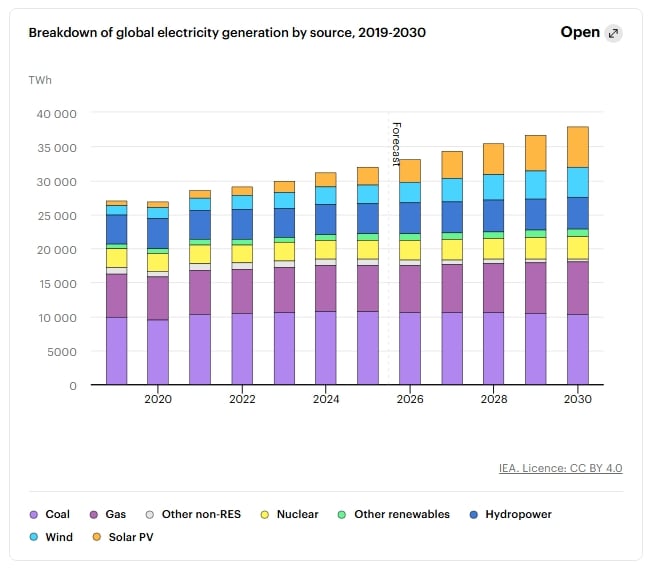
Nuclear power currently generates about 9% of global electricity and nearly a quarter of low-carbon electricity, making it a major clean power source along with renewables.
Countries like China, India, and the U.S. are investing in both large reactors and next-generation small modular reactors (SMRs) to enhance energy security and cut emissions.
What It Means for the Uranium Market
The agreement may also boost long-term uranium demand.
Global uranium use is expected to rise as new reactors come online and existing ones are extended. Analysts predict tighter uranium supplies in the next decade as countries prioritize energy security alongside climate goals.
Strategically, if Saudi Arabia builds commercial reactors, it will join other countries expanding nuclear power, creating more demand for uranium. For U.S. companies, this agreement offers more than just reactor exports. It can create opportunities in engineering, fuel services, maintenance, training, and advanced technologies, solidifying America’s role in a changing global market.
A Strategic Energy Partnership
The U.S.-Saudi nuclear agreement is more than a simple deal. It highlights how energy security, climate goals, and geopolitical strategy are increasingly interconnected.
Saudi Arabia sees nuclear energy as a way to diversify its electricity mix and support long-term economic growth. The United States gains stronger commercial ties while expanding its influence in one of the world’s most important energy regions.
However, the debate over uranium enrichment means the agreement is likely to face close scrutiny. As Congress reviews the deal, policymakers must balance economic opportunities with the need to prevent the spread of sensitive nuclear technologies.