

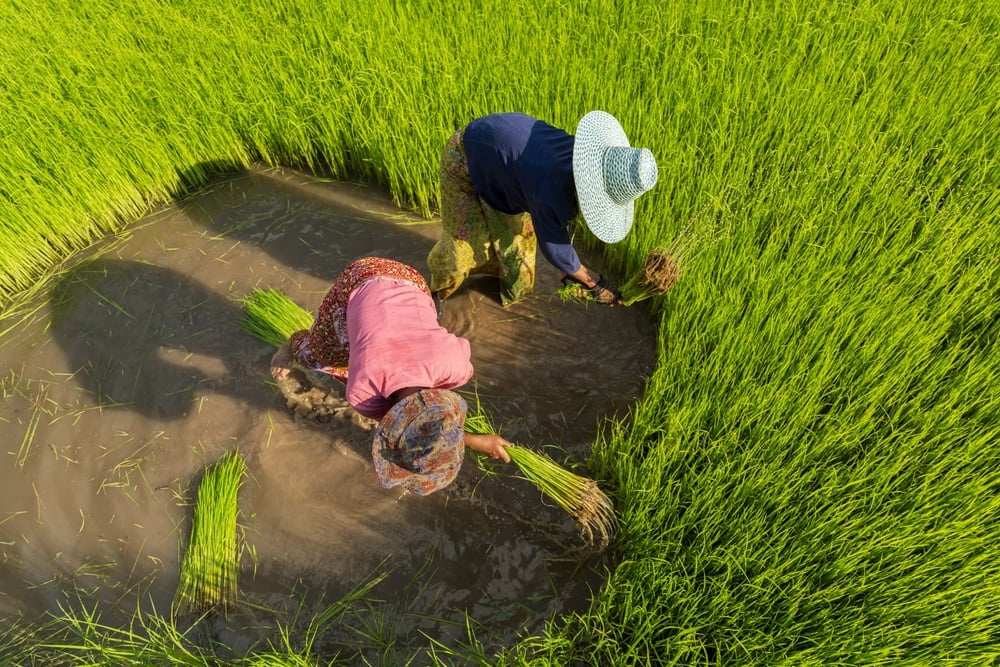
Verra has approved the first carbon credits under its methodology for improved rice production, opening a new opportunity to finance farming practices that reduce methane emissions. The credits come from an Indian rice cultivation project developed by Core CarbonX Solutions, which has avoided more than 210,000 tonnes of carbon dioxide equivalent (tCO2e) through improved water and crop management.
The project, called Core Carbon Sustainable Rice Productions 01, is registered under Verra Project 3243. It operates in the Suryapet district of Telangana, a major rice-producing state in southern India.
The milestone comes as carbon markets place greater emphasis on measurable emission reductions and high-quality credits. Rice cultivation offers an opportunity to address methane emissions while helping farmers access additional income from sustainable agricultural practices.
How Rice Farming Can Generate Carbon Credits
Flooded rice fields create conditions that encourage microorganisms to produce methane as they break down organic matter without oxygen. Methane is a potent greenhouse gas that contributes significantly to near-term global warming.
- The Food and Agriculture Organization (FAO) estimates that flooded rice systems account for around 8% of human-caused methane emissions. Reducing these emissions is therefore an important part of efforts to limit global warming. FAO
How Core CarbonX Helps Farmers Cut Rice Methane Emissions
The Core CarbonX project tackles this problem through alternate wetting and drying (AWD), a water management technique that allows rice fields to dry periodically before farmers irrigate them again.
Under conventional rice cultivation, farmers often maintain standing water throughout much of the growing season. AWD introduces controlled periods of drainage, allowing oxygen to enter the soil and reducing the conditions that support methane-producing microbes.
Core CarbonX Solutions supports participating farmers with water-monitoring tubes, training and technical assistance. The company also shares revenue from carbon credit sales with farmers, providing an additional financial incentive to adopt improved cultivation practices.
The project demonstrates how agricultural emission reductions can create value beyond the farm. Farmers can contribute to climate mitigation while potentially improving water management and earning additional income.
However, the effects on crop yields and other greenhouse gases can vary with local conditions and how farmers implement AWD. Appropriate irrigation schedules and reliable monitoring remain important for achieving environmental benefits without compromising rice production.
- FURTHER READING: Can Verra’s New Carbon Standard Make Rice Farming More Sustainable?
What Verra’s VM0051 Methodology Means
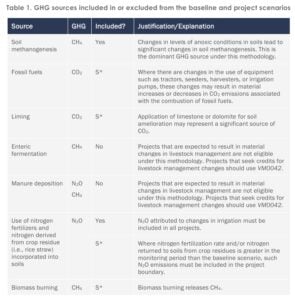
The press release highlights that the project uses Verra’s VM0051 Improved Management in Rice Production Systems methodology. Introduced in 2025, the framework establishes requirements for measuring emission reductions from improved water and crop management in flooded rice systems.
The methodology provides a standardized approach to quantifying the difference between emissions under conventional farming practices and emissions after farmers adopt improved techniques. This helps carbon credit buyers assess the reductions associated with a project.
Beyond water management, VM0051 can support practices such as cultivating improved rice varieties and using methanotrophic bacteria, which consume methane. These options can broaden the range of interventions available to project developers.
Verra revised the methodology in July 2026, releasing version 1.1 to align it with updated program requirements and clarify monitoring and quantification procedures. Projects using the earlier version must follow the applicable transition deadlines.
VKU Certification Private Limited served as the validation and verification body for the Core CarbonX project.
The methodology also has potential relevance for aviation-related carbon markets. In April 2026, Verra announced that the International Civil Aviation Organization’s technical advisory body had included eligible VM0051 credits from projects in qualifying REDD+ countries in the first and second phases of the Carbon Offsetting and Reduction Scheme for International Aviation (CORSIA). Eligibility depends on the project meeting applicable requirements, including host-country authorization.
This could expand the pool of potential buyers for qualifying rice methane credits, although approval of the methodology does not automatically make every project or credit eligible for CORSIA.
Rice Methane Credits and the Carbon Market Opportunity
Agricultural projects remain a relatively small part of the voluntary carbon market despite their potential to reduce emissions across food production systems.
A 2025 assessment by the FAO Investment Centre found that agrifood systems accounted for more than 10% of projects in the voluntary carbon market but generated only around 1% of issued credits. The gap highlights the challenge of scaling projects in a sector where emissions measurement, farmer participation, and implementation can be complex.
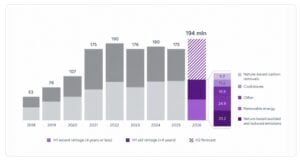
Meanwhile, demand for carbon credits is increasingly focused on quality and credible climate benefits. Climate Focus reported that carbon credit issuances fell to their lowest levels in years during the first half of 2026, while retirements remained resilient. The firm reported approximately 98 million credits retired during the period, compared with issuance of just under 100 million credits.
Carbon credit demand remained robust, led by retirements of nature-based credits
For rice methane projects, this market environment creates an opportunity to attract buyers seeking measurable emission reductions. However, demand will depend on credit quality, pricing, project performance, and the eligibility requirements of different purchasing programs.
Verra lists 13 other projects using VM0051 that are under development or undergoing validation. These projects span countries including India, Brazil, Vietnam, the Philippines, Indonesia, Thailand, Malaysia, Myanmar and Madagascar.
The growing project pipeline suggests that rice methane reduction could become a more established segment of agricultural carbon finance. Yet, projects must demonstrate that their claimed reductions are real, measurable, and supported by reliable monitoring.
For Core CarbonX, the first approved credits provide a starting point for bringing improved rice cultivation practices into carbon markets. The broader opportunity will depend on scaling farmer participation, maintaining robust verification, and ensuring that carbon revenue delivers meaningful benefits to farming communities.