

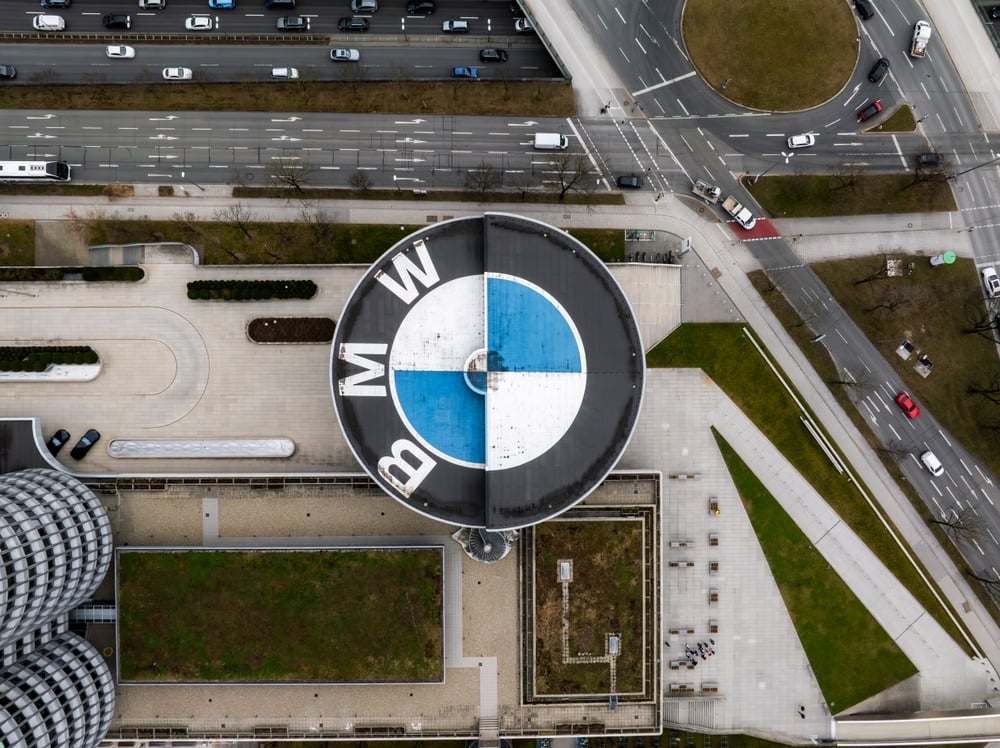
BMW is ramping up its electric vehicle (EV) business in the U.S. with a big investment in battery manufacturing. In December 2026, the company will start mass production of high-voltage battery packs for the all-electric BMW iX5 at its new Plant Woodruff in South Carolina. This project supports BMW’s growing EV lineup and strengthens local battery production and supply chains.
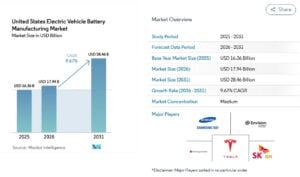
This investment comes as the U.S. battery industry grows, even with slower EV sales. According to Mordor Intelligence, the U.S. electric vehicle battery manufacturing market is valued at $17.94 billion in 2026.
It is set to rise to $28.46 billion by 2031, showing a 9.67% compound annual growth rate (CAGR).
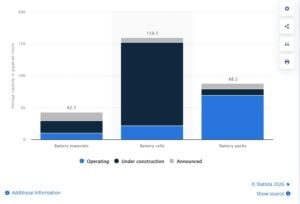
Data highlights the key role of battery production. Statista reports that battery cells and packs represented the largest operating capacity in the U.S. energy storage supply chain as of April 2026.
Battery storage supply chain manufacturing capacity in the United States as of April 2026, by status and component
BMW’s investment shows a trend among automakers to produce batteries close to assembly plants. Local production shortens supply chains, cuts transport costs, boosts efficiency, and supports regional manufacturing.
Plant Woodruff Anchors BMW’s U.S. EV Strategy
Plant Woodruff will make BMW’s sixth-generation (Gen6) high-voltage batteries for the fully electric iX5. Its location near BMW’s Spartanburg plant allows easy transport of battery packs for vehicle assembly.
Raymond Wittman, BMW AG Board Member for Production, said that Plant Woodruff is vital for expanding electromobility in the U.S. He noted that the Gen6 battery is a major technological advancement, using advanced production methods, artificial intelligence, and skilled workers for high-quality manufacturing.
The close link between battery production and vehicle assembly helps BMW improve efficiency and strengthen its presence in South Carolina.
AI Drives Smarter Battery Manufacturing
BMW designed Plant Woodruff as a smart factory. Artificial intelligence monitors production stages in real time, helping engineers maintain quality and boost efficiency.
Over 300 employees work with 250 robots during battery assembly. AI assistants analyze production data, enabling BMW to fix issues quickly and aim for zero-defect manufacturing.
Before production starts, engineers use digital twins to simulate manufacturing lines. This helps optimize layouts and spot potential bottlenecks.
Employees also undergo virtual reality (VR) training, mirroring the production floor. Workers practice procedures and equipment operation in a virtual setting, boosting safety and confidence before they hit the real assembly line.
Rapid Construction Supports Faster EV Growth
The company finished the project in just three years. Construction began in 2023, equipment installation started in 2024, and the plant produced its first test batteries in 2025. Commercial production will begin in December 2026.
Rich Everly, Vice President of Production at Plant Woodruff, said the project shows BMW’s ability to quickly scale new battery technologies by using experienced teams and expertise from its global network.
Gen6 Battery Technology Brings More Recycling and Lower Emissions
BMW is also focused on reducing emissions from battery manufacturing. The Gen6 batteries include significantly more recycled cobalt, lithium, and nickel. The company uses renewable electricity to produce battery cells and materials.
- These efforts cut carbon dioxide equivalent (CO₂e) emissions by about 28% per watt-hour compared to BMW’s previous Gen5 battery.
- Plant Woodruff further lowers emissions by using hydrogen-powered trucks instead of diesel for material transport.
Beyond South Carolina, the company is building battery plants near vehicle factories in Germany, China, Mexico, and Hungary under its “local for local” strategy. This approach reduces transport needs and strengthens local supply chains.
Why Battery Manufacturing Still Matters for Climate
While EVs lower emissions during use, making lithium-ion batteries poses a significant environmental challenge.
Battery production requires large amounts of lithium, nickel, cobalt, graphite, and other minerals. Mining and processing these materials consume significant energy, mainly from fossil fuels. Battery manufacturing can produce substantial greenhouse gas emissions before an EV hits the road.
Research from MIT shows the scale of this issue. Producing an 80-kWh lithium-ion battery, like the one in a Tesla Model 3, can emit between 2.5 and 16 metric tons of CO₂, depending on the energy source. Making a new EV can generate about 80% more emissions than building a gasoline vehicle.
MIT found that producing battery materials requires temperatures between 800°C and 1,000°C, making it energy-intensive. They concluded that sourcing minerals like lithium and nickel can impact a battery’s carbon footprint even more than where it’s assembled.
The same report also highlighted that EVs still offer significant climate benefits over their lifetime. Cleaner electricity, lower-carbon raw materials, and better battery recycling are key to cutting manufacturing emissions.
McKinsey Highlights the Biggest Source of EV Emissions
- A report from McKinsey & Company supports these findings. The firm estimates that lithium-ion batteries account for 40% to 60% of an EV’s total production emissions, making them the largest source of embedded carbon.
McKinsey notes that mining and refining lithium, cobalt, nickel, manganese, and graphite create significant greenhouse gas emissions. Battery chemistry, supplier choices, and transportation also affect the carbon footprint. However, factories that use renewable energy can greatly lower battery-related emissions compared to those that rely on fossil fuels.
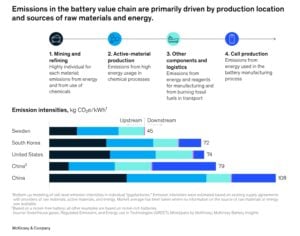
However, BMW’s Gen6 battery program reflects these recommendations by increasing recycled materials, using more renewable energy, and cutting fossil fuel use during manufacturing.
The Bottom Line
BMW’s new Plant Woodruff is not just an expansion of battery production. It shows how automakers blend artificial intelligence, advanced manufacturing, and cleaner methods to strengthen domestic EV supply chains.
Research from MIT and McKinsey shows that cutting emissions from battery manufacturing is a big challenge. Cleaner electricity, responsible sourcing of minerals, and better battery recycling are key as the industry grows.
As battery demand increases, investments like BMW’s can help build a stronger U.S. battery industry while supporting the shift to lower-carbon transportation.