

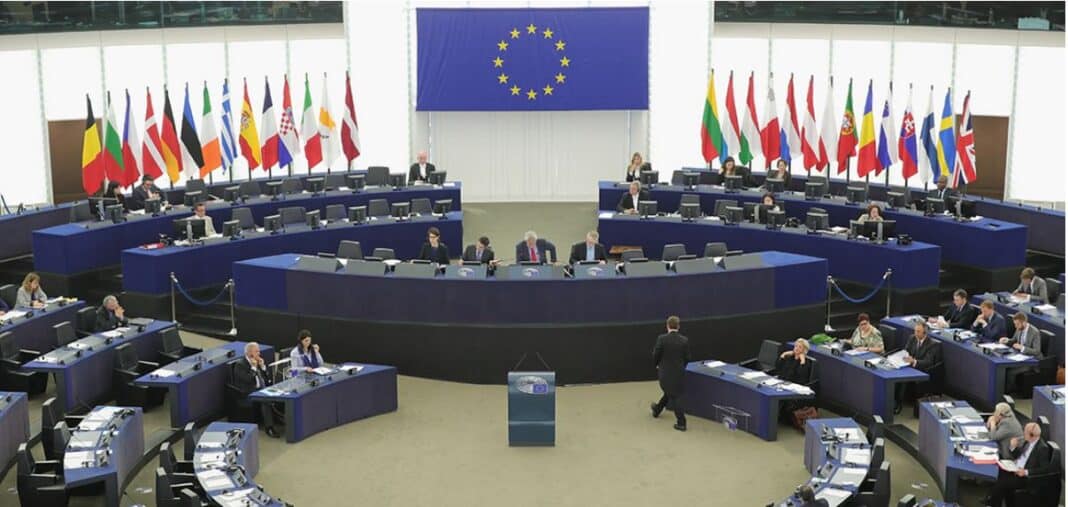
The European Parliament voted down the biggest reform bill of the European Union Emissions Trading System (EU ETS) after a surprising series of votes that blocked its passage.
The “Fit for 55”, part of the European Commission’s Green Deal, aims to bring EU legislation in line with the new goal of reducing GHG emissions by at least 55% by 2030.
It’s a set of proposals to revise and update the current EU legislation. It will also put in place new initiatives to ensure that EU policies are aligned with the EC’s climate goals.
The reform of the EU ETS was first revealed in July last year. It’s meant for aligning the EU’s cap-and-trade system with the “Fit for 55” program.
MEPs believe that the ETS is at the core of the European climate policy and initiated significant emissions reductions. Specifically, the reform will include:
- New ETS II for buildings and road transport (individuals not to be included before 2029)
- Phase-out of free EU allowances from 2026 and be fully gone by 2030
- EU ETS revenues will be used for climate actions in the EU and its member states.
Why EU ETS Reform Bill Was Rejected
The EU ETS is a system that puts a price on GHG emissions by energy-intensive industries. It’s also thought of as a key tool for cutting emissions cost-effectively. Plus, the fact that it’s also the world’s first major carbon market and is the most liquid carbon futures exchange globally.
In the last 5 years, the EU carbon allowance (credit) futures are up over 1,400% and up ~270% in the last 3 years alone. As such, it’s one of the top-performing asset classes worldwide.
- The ETS covers over 11,000 industrial sites, as well as aviation. Together they account for 45% of the EU’s GHG emissions which is equal to about 2 billion tonnes of CO2.
But the European Parliament rejected the bill to reform the ETS with 340 votes against and 265 votes in favor.
The initial proposal is to increase the cap or allowed emissions for the covered sectors to 67% (up from 43%) by 2030. But the conservative lawmakers pushed it back down to 61% in the final reform bill.
According to the Greens and Social Democrats, the “watered down” target wasn’t good enough. It won’t help ensure that heavy-emitting industries will be forced to reduce their emissions in line with the EC’s 55% reduction by 2030.
A spokesperson from the Progressive Alliance of Socialists and Democrats said:
“It wasn’t ambitious enough… We need a solution that will achieve our climate goals and, at the same time, is fit for the industry, for workers, and for European citizens.”
Likewise, Greens MEP Rasmus Andresen noted that the weakened draft law signaled a “black day” for climate protection.
The weakening claim implies a slower reduction of carbon credits, removing 70 million from the market in 2024 instead of the EC’s aim of 117 million in 2024.
On the other side, the right-wing parliamentarians from the European Conservatives and Reformists argued that 67% was far too ambitious. That’s in light of the increasing inflation and surging energy costs.
The rejection of the EU ETS reform bill also postponed votes on two other linked climate proposals. This includes the EU’s Carbon Border Adjustment Mechanism (CBAM), a carbon border levy. It’s an ambitious plan to tax the carbon content of imported goods coming to the EU.
Another climate law that was postponed is a climate fund called the Social Climate Fund. It will be for supporting measures and investments in increased energy efficiency and decarbonization of heating and cooling of buildings.
The Fund particularly includes the integration of energy from renewable sources, and granting improved access to zero- and low-emission mobility and transport.
The Approved Proposals
The EU Parliament did agree on one major legislation that’s part of the Fit for 55. The lawmakers passed the revised CO2 emissions standards for new passenger cars and light commercial vehicles.
The agreement was to completely ban the sale of new diesel or petrol vehicles from 2035. The aim is to speed Europe’s shift to electric vehicles and force carmakers to invest in full electrification.
As per Green Party EU lawmakers:
“15% of the EU’s total greenhouse gas emissions come from road transport. Cutting these emissions is vital if we’re going to reach our climate goals.”
As for the EU ETS and aviation, the passed legislation proposes that the ETS will apply to all flights departing from an airport in the European Economic Area (EEA). It also stated that free allocations to the aviation sector will phase out by 2025.
The legislation also proposes that 75% of the ETS revenues “generated from the auctioning of allowances for aviation are used to support innovation and new technologies.”
For the European Green Deal Frans Timmermans:
“The climate crisis is here, and no EU citizen needs to be convinced of this. We need to put in place measures to uphold our climate targets.”
The proposals in the Fit for 55 package need approval by both the parliament and member states in the EU Council to take effect. The next EU Parliament meeting is this June or July.