

Europe’s climate transition is entering a new phase. In the space of a few weeks, three major developments have emerged across the continent: the launch of the first commercial robotaxi service, a historic surge in electric vehicle (EV) sales, and another drop in carbon emissions under the EU’s flagship trading system.
Each story is different, but together, they point in the same direction. Europe is rapidly reshaping how people move, how energy is consumed, and how emissions are controlled. At the same time, the pace and stability of this transition remain uneven.
Robotaxis Arrive: Europe’s First Commercial Deployment
Europe has officially entered the autonomous mobility era. In Zagreb, the Croatian company Verne launched the first robotaxi service in Europe. This service uses the seventh-generation system from the Chinese firm Pony.ai. The service allows the public to book and pay for fully autonomous rides using the Verne app.
The launch marks a shift from testing to real-world deployment. The service operates in a defined zone of around 90 square kilometers across central Zagreb, including the airport. It runs daily from 7:00 a.m. to 9:00 p.m., according to company disclosures.
The fleet uses Arcfox Alpha T5 electric vehicles, built by BAIC and equipped with Pony.ai’s Gen-7 autonomous driving technology. For safety, trained operators stay in the front seat during this early rollout. The system is fully autonomous for passengers in the back.
Each vehicle carries up to two passengers per trip, reflecting the controlled nature of this early deployment stage.
Verne, a spin-off from Rimac Group, operates the fleet. The company was originally planning a custom-built robotaxi but has now launched using existing vehicle platforms. It has already tested dozens of prototype vehicles and is preparing for scale-up.
This launch is significant for Europe. Until now, autonomous ride-hailing has been largely concentrated in the United States and China. Europe has been slower due to stricter safety rules and regulatory frameworks.
But the commercial rollout changes that narrative. As Verne’s leadership noted, Europe now needs autonomous systems that move beyond pilots into real services.
Expansion is already planned. Partners plan to expand to thousands of robotaxis in over 20 cities worldwide. Uber will also help with future deployments and investment talks. This suggests Zagreb is not the endpoint, but the starting point.
EV Sales Break Records as Fuel Prices Surge
At the same time, Europe’s electric vehicle market is accelerating at an unexpected pace.
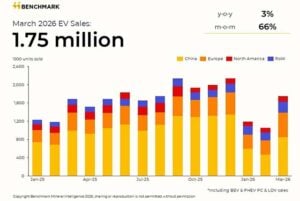
In March, the region hit over 500,000 monthly EV sales for the first time. Registrations jumped about 37% from last year, reaching nearly 540,000 units, based on data from Benchmark Mineral Intelligence. The region’s EV sales reached 1.2 million units in the first quarter, up 27% year-on-year.
This surge is not happening in isolation. Rising fuel costs are tied to geopolitical disruptions that have increased global oil prices. As petrol and diesel became more expensive, consumers increasingly shifted toward electric alternatives.
The response has been immediate in major markets.
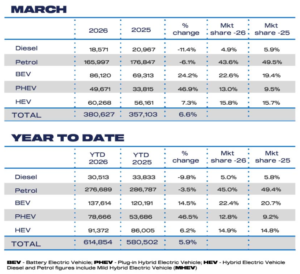
In Germany, the biggest car market in Europe, battery electric vehicle registrations soared 66.2% from last year. In March alone, over 70,000 units were registered, as reported by the Federal Motor Transport Authority (KBA). EVs now account for roughly 24% of all new car registrations in the country, overtaking petrol in monthly sales for the first time.
This is a major shift for a market that struggled just a year earlier. Germany cut subsidies in 2024, leading to a sharp drop in demand. Then, in 2026, it reversed the policy and reintroduced incentives of up to €6,000 for each electric vehicle. At the same time, fuel prices surged. Diesel crossed €2.50 per litre, one of the highest levels on record.
Elsewhere in Europe, similar trends are visible.
The UK saw 86,120 new battery electric vehicle registrations in March. This is a 24.2% increase compared to last year, according to the Society of Motor Manufacturers and Traders. EVs now represent over 22% of the UK market, although still below mandated targets for 2026.
Across the continent, fuel prices have become a key driver of change. Gasoline prices jumped about 17% in key EU countries. Diesel surged up to 30% in some areas. This followed supply issues tied to geopolitical tensions and unstable oil routes.
Even after oil prices eased from earlier peaks near $120 per barrel, they remain significantly above pre-crisis levels, keeping pressure on consumers.
Online car platforms show how quickly sentiment is shifting. EV searches and inquiries have surged in Germany, the UK, and Spain. This shows a rising consumer urgency, not just slow adoption.
But questions remain about durability. Previous fuel-driven EV surges have faded once prices stabilized. This time, however, structural forces are stronger: tighter EU emissions rules, more affordable EV models, and expanding charging infrastructure are reinforcing demand.
A key economic factor is running cost. In markets like Belgium, driving an EV now costs 45–56% less per kilometre than petrol or diesel vehicles when charged at home.
Emissions Continue to Fall—but Progress Is Uneven
While transport electrification accelerates, Europe’s emissions trend continues downward.
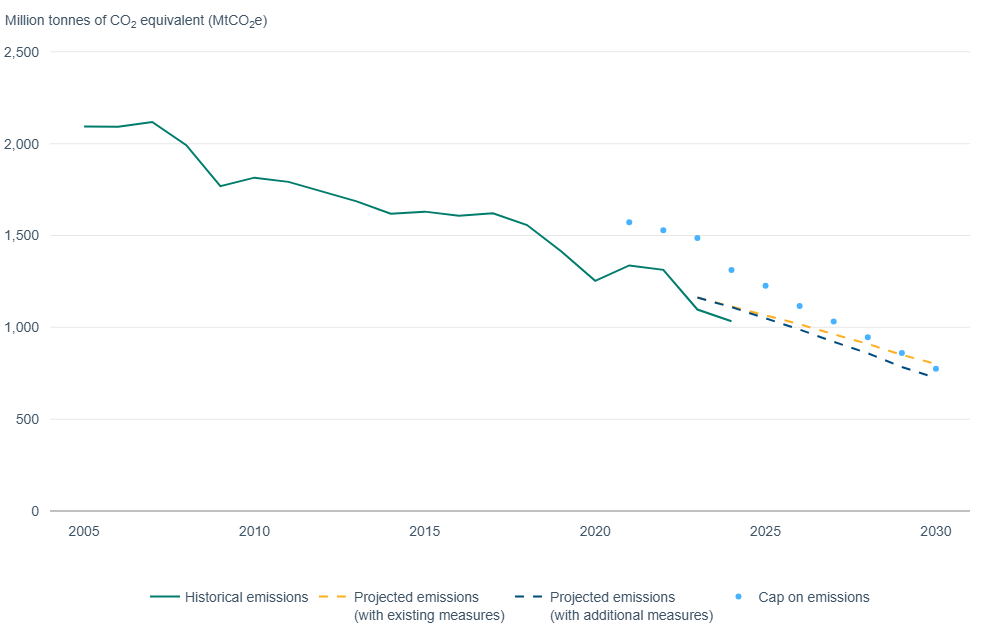
The European Commission reports that emissions under the EU Emissions Trading System (EU ETS) dropped by 1.3% in 2025. This decline continues a long-term trend in the bloc’s industrial and energy sectors.
The EU ETS covers around 45% of total EU greenhouse gas emissions, including power generation, heavy industry, aviation, and maritime transport. It operates under a declining cap system designed to force emissions reductions over time.
Since 2005, emissions in covered sectors have fallen by roughly 50%, placing the EU broadly on track toward its 2030 target of a 62% reduction.
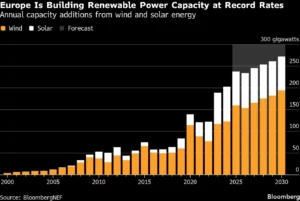
A major driver of recent progress is the power sector. Renewables continue to expand rapidly. Solar generation rose over 20% in 2025. Together, wind and solar made up about 30% of EU electricity. This marked the first time they surpassed fossil fuels in total share.
Overall, renewables supplied roughly 48% of Europe’s electricity in 2025, compared with declining fossil fuel contributions. Coal has seen the sharpest decline, falling to just 9.2% of electricity generation, down from nearly 25% a decade ago.
However, the transition is not linear.
Natural gas usage has remained volatile, and in some cases increased, as it continues to play a balancing role in the energy system. Aviation emissions have also risen as travel demand recovered after the pandemic, highlighting one of the hardest sectors to decarbonize.
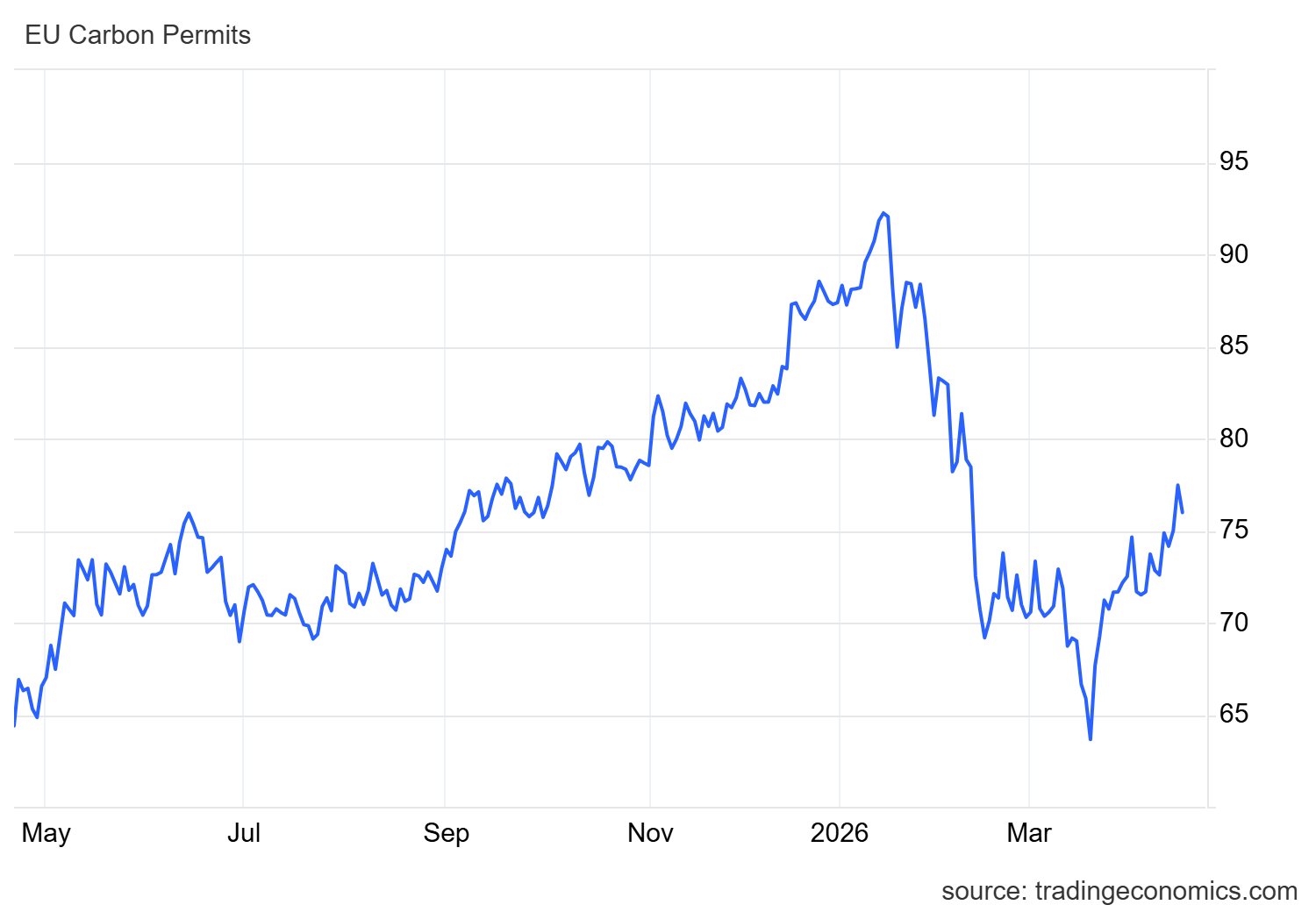
Carbon markets reflect this mixed picture. EU carbon allowance prices have remained around €70–75 per tonne, supported by steady demand but influenced by shifting energy dynamics.
A Transition Moving at Uneven Speeds
Taken together, these three developments reveal a Europe that is transforming quickly—but not evenly. Robotaxis in Zagreb show how fast mobility innovation is moving when regulation, technology, and investment align.
Record EV sales show how sensitive consumer behaviour is to energy prices, incentives, and infrastructure. And falling emissions show that policy frameworks like the EU ETS are still effective in driving long-term reductions.
But they also show limitations. Electrification is rising, but unevenly across countries. Emissions are falling, but not fast enough in harder sectors like aviation and gas-heavy power systems. And innovation is advancing, but still constrained by regulation and scale.
Europe’s climate transition is no longer theoretical. It is visible in cities, car markets, and industrial emissions data. The path forward may be complex, and there are constraints; still, progress is real.
Europe is not just decarbonizing but is redesigning how mobility, energy, and industry interact. And that process is only just beginning.