


The International Organization for Standardization (ISO) has made a big move after years of debate on the meaning of “net zero.” They are working to create a single global net-zero framework.
This week, ISO launched a public consultation on ISO 14060, the world’s first international standard designed specifically for net-zero-aligned organizations. The standard aims to help companies create credible, verifiable, and science-based transition plans as they work toward net-zero emissions.
The move comes at a critical time. Net-zero commitments now cover 77% of global GDP, 74% of global emissions, and 79% of the world’s population, according to the Net Zero Tracker. Yet, many of these commitments vary widely in scope, reporting methods, and accountability mechanisms.
ISO hopes the new standard will help close that gap. The organization states that ISO 14060 will give a clear framework that will help all businesses align their strategies with net-zero goals. It will also boost transparency and accountability.
Noelia Garcia Nebra, Head of Sustainability and Partnerships at ISO, said:
“ISO 14060 has been developed to provide a globally agreed framework that helps organizations build credible transition plans while supporting resilience, innovation and long-term growth.”
The draft standard is now open for consultation across ISO’s network of more than 170 national standards bodies.
The Growing Demand for Credible Net Zero Claims
Net-zero commitments have expanded rapidly over the past decade. According to the Science-Based Targets initiative (SBTi), more than 12,000 companies worldwide have either set science-based emissions reduction targets or committed to doing so.
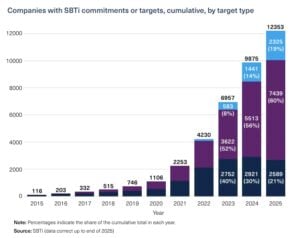
Together, these companies represent over $80 trillion in market capitalization. They also cover the vast majority of global GDP and greenhouse gas emissions.
However, climate experts have long warned that not all net-zero claims are equal. At the same time, concerns about greenwashing have increased.
A 2025 review by Net Zero Tracker found that while 63% of major firms have set net-zero targets, 31% lack public transition plans, interim targets, or clear disclosures on the use of carbon credits and offsets. And only 4% of those relying on nature-based removals have set transparent targets.
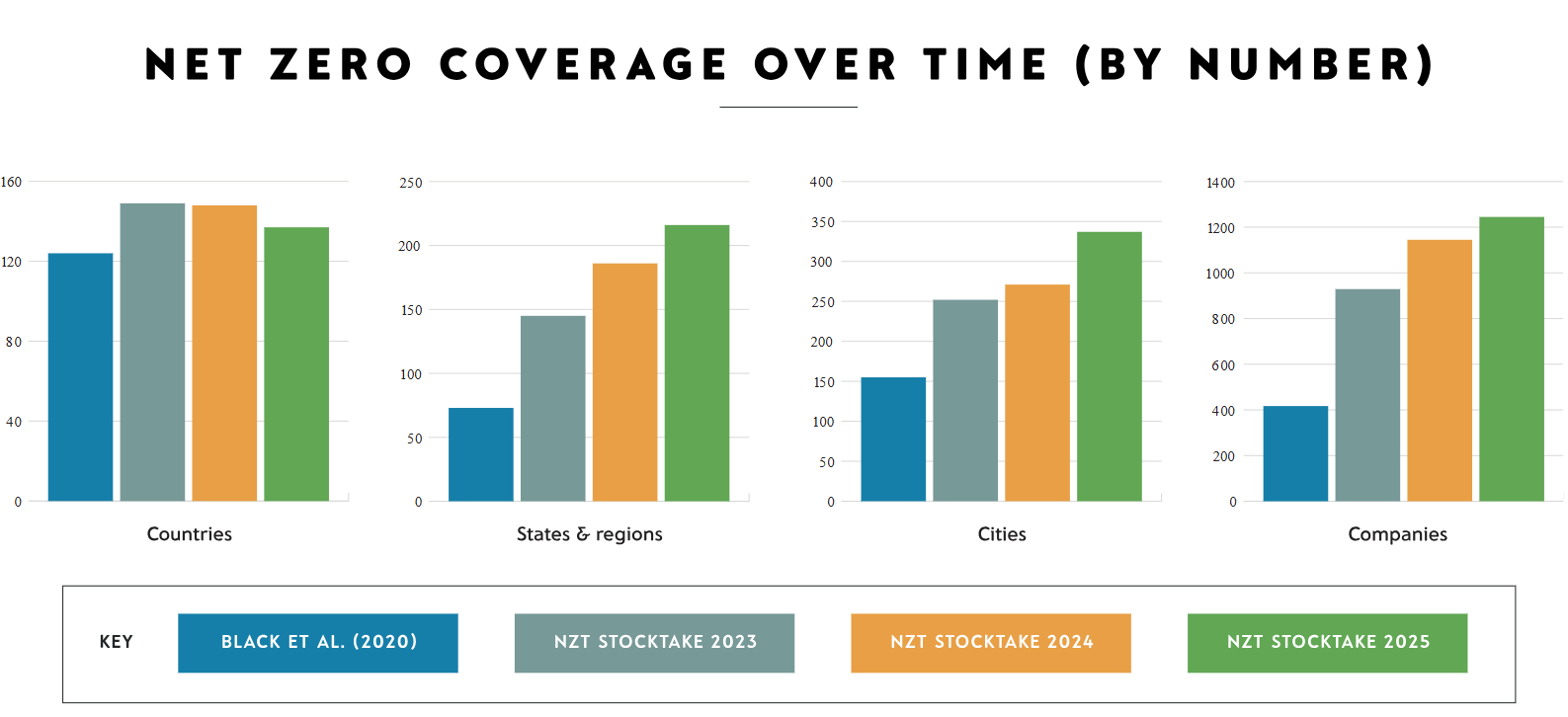
Despite more companies having pledges, the findings highlight a persistent gap in minimum integrity standards and clear, actionable roadmaps.
ISO says one of the main goals of the new standard is to create a common understanding of what credible net-zero action looks like. The framework is expected to address emissions reductions, transition planning, reporting, governance, carbon removals, and verification.
The standard builds on ISO’s earlier Net Zero Guidelines (IWA 42). These guidelines were launched at COP27 in 2022. They were developed with input from over 1,200 experts in more than 100 countries.
The Shift From Climate Promises to Climate Plans
The timing of the new standard reflects a broader shift in the climate world. For years, organizations focused on announcing long-term targets.
Today, investors and regulators increasingly want evidence that those targets can actually be achieved. This has increased attention on transition plans.
- A transition plan shows how a company will cut emissions, handle climate risks, invest money, and change its business model over time.
The new ISO standard helps organizations go beyond general climate promises. It guides them to create clear, structured plans that can be verified by others. The goal is to turn ambition into measurable action.
The pressure is growing. Companies face increasing disclosure requirements from regulators in Europe, North America, and Asia. Investors are also paying closer attention to climate-related risks and transition strategies.
As a result, many organizations are looking for frameworks that provide consistency and credibility in setting and tracking net zero. Below is a quick historical illustration of how net zero came about. 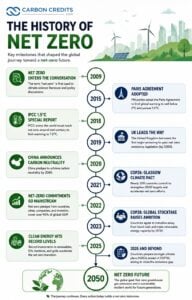
Can ISO Bring Order to a Fragmented Climate Landscape?
One reason ISO 14060 is attracting attention is the growing complexity of the net-zero landscape. Today, organizations can follow guidance from:
- Science-Based Targets initiative (SBTi),
- Greenhouse Gas Protocol,
- UN High-Level Expert Group,
- CDP,
- Voluntary carbon market (VCM) standards, and
- Various national regulations.
These sources help shape their sustainability efforts. While these frameworks often share similar goals, differences in definitions and reporting requirements can create confusion.
The reporting burden continues to grow. The International Federation of Accountants (IFAC) says companies now deal with many climate-related disclosure rules. These rules vary by location, standards, and frameworks.
ISO developed its Net Zero Guidelines to help unify the fragmented landscape. They offer a common reference for organizations around the globe. The new standard is expected to build on that foundation and create a framework that can be independently verified.
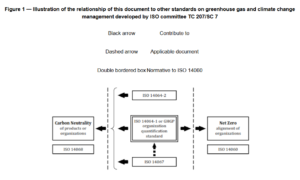
This is especially important for multinational companies. They operate in various countries and must follow different climate reporting rules.
A common global standard may help simplify compliance while improving confidence in corporate climate claims.
What ISO 14060 Could Mean for Carbon Markets
The new standard could also influence carbon markets. A major challenge for carbon credits and carbon removals is the uncertainty about their use in net-zero strategies.
Many organizations support the idea that emissions reductions should come first. However, there is ongoing debate about the role of carbon credits, removals, and offsets in reaching climate goals.
ISO’s earlier Net Zero Guidelines included guidance on emissions reductions, removals, offsets, credits, and claims. The new standard should clarify how these tools align with credible net-zero pathways. That could have important implications for VCMs.
The voluntary carbon market has faced scrutiny in recent years over quality concerns and inconsistent standards. This led to a decreasing volume of transactions in the market, as seen below. Greater alignment around net-zero planning may help improve confidence among buyers and investors.
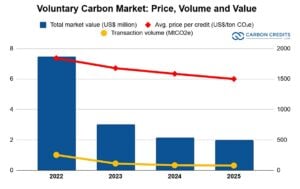
It can also meet the rising need for high-quality carbon removal projects as organizations search for ways to tackle emissions that are hard to cut.
The Hard Reality Behind Corporate Decarbonization
The need for credible climate action remains urgent. According to the International Energy Agency (IEA), global energy-related carbon dioxide emissions reached a record 37.4 billion metric tons in 2024 and rose to 38 billion metric tons in 2025.
At the same time, global temperatures continue to rise, and climate-related risks are increasing across many sectors.
Notably, many companies have already made progress. Major corporations such as Microsoft, Google, Apple, and Unilever have invested heavily in renewable energy, energy efficiency, supply chain decarbonization, and carbon removal initiatives. Yet, reducing emissions across complex global operations remains difficult.
For many organizations, Scope 3 emissions from suppliers, transportation, and product use account for the majority of their carbon footprints. This is why businesses are looking for clear and practical climate planning frameworks.
ISO believes the new standard helps organizations face those challenges. It also strengthens resilience, manages risks, and supports long-term growth.
A New Chapter for Global Net Zero Governance
The launch of ISO 14060 marks an important moment in the evolution of corporate climate action. It shows that climate conversation is shifting from ambition to execution. Investors, regulators, customers, and employees increasingly want proof that net-zero commitments can be achieved.
ISO’s new standard aims to provide a common language and a shared framework for organizations around the world. If widely adopted, it could help bring greater consistency, transparency, and credibility to climate action at a time when accountability matters more than ever.
The consultation process is expected to continue over the coming months before the standard moves toward final approval. Once completed, ISO 14060 could become one of the most influential climate standards ever developed.