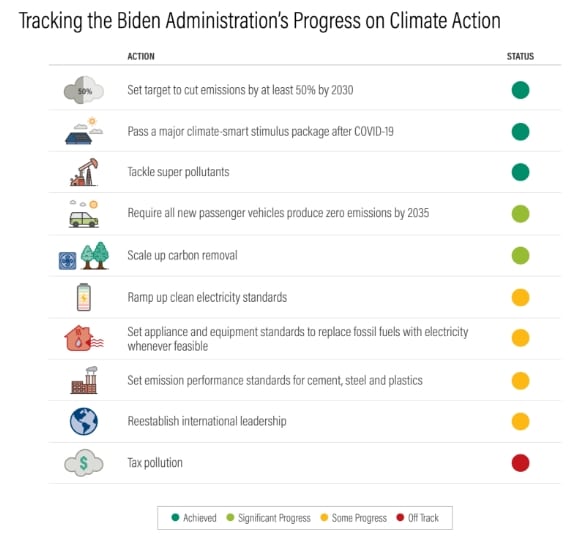
Top Achievements in Joe Bidenโ€™s Climate Agenda for America

President Joe Biden’s decision to withdraw presidential election this Sunday marks a significant turn in American politics. During his tenure, the country has seen the introduction, establishment, and amendment of numerous climate policies involving massive investments. The past four years under the Biden administration have been eventful from a climate change perspective. Let’s refresh our memory on the climate agendas rolled out by this government.

Key Highlights of Bidenโ€™s Climate Change Plan

“Thatโ€™s why, when people talk about climate, I think jobs.ย  Within our climate response lies an extraordinary engine of job creation and economic opportunity ready to be fired up.ย  Thatโ€™s why Iโ€™ve proposed a huge investment in American infrastructure and American innovation to tap the economic opportunity that climate change presents our workers and our communities, especially those too often that have โ€” left out and left behind.”

-Remarks by Presidentย Biden at the Virtual Leaders Summit on Climate Openingย Session (source: The White House)

Rejoined the Paris Agreement

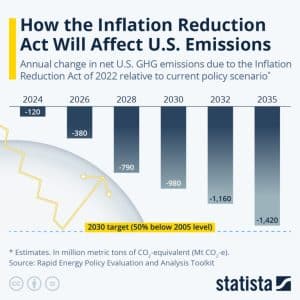
From day one, Biden initiated the process for the U.S. to rejoin the Paris Agreement. The U.S. officially re-entered the agreement shortly after. Biden issued an executive order on tackling the “Climate Crisis at Home and Abroad”, creating the position of Special Presidential Envoy for Climate and announcing several high-level climate summits. Later, he set a target to reduce carbon emissions by at least 50% below 2005 levels by 2030. Thatย was a historic announcement!

Signed the Inflation Reduction Act

He signed the Inflation Reduction Act in August 2022. Notably, itโ€™s one of the most critical climate agendas of America. It includes significant investments in climate protection, such as tax credits for households to reduce energy costs, funding for clean energy production, and incentives to lower carbon emissions. The administration concentrated on creating tax credit guidelines and initiating programs to execute its various clean energy measures. To achieve excellence in climate action, they needed to maintain prompt and fair implementation of the legislation while also filling policy gaps.
inflation reduction act

ย Climate-Smart Stimulus Package to Revive from COVID-19.

Biden proposed a $2 trillion climate-smart stimulus package to boost the domestic economy, create jobs, and expand Americaโ€™s clean energy sector. It surpassed the investments made in the 2009 economic recovery package. He prioritized modernizing the electricity grid, electrifying schools, and transit buses, enhancing the transportation system, upgrading public schools, boosting industrial innovation, and restoring trees to the landscape.

Biden committed to ensuring that at least 40% of the funding benefits go to the less-privileged communities. These investments targeted both short-term and long-term emissions-reduction goals. They installed solar, wind, heat pumps, and electric vehicles to cut costs. At the same time, they invested in future technologies which included the heavy emission sectors like steel, geothermal systems, and clean hydrogen.

Curb Hydrofluorocarbons (HFCs) and Methane Action Plan

The President ratified the Kigali Amendment to reduce hydrofluorocarbons (HFCs) in September 2022. The EPA issued regulations to phase down HFCs under the American Innovation and Manufacturing Act of 2020.

In November 2022, the Biden administration updated the Methane Action Plan with 50 measures supported by $20 billion from various laws. The Inflation Reduction Act introduced a methane emissions fee for oil and gas facilities, starting in 2024 and increasing to $1,500 per metric ton by 2026. At the 2023 UN climate summit (COP28), the administration announced strict standards to reduce methane emissions from the oil and gas sector. On January 12, 2024, the EPA proposed rules to enforce this fee.

Biden helped launch the Global Methane Pledge at the 2021 UN Climate Summit (COP26). By December 2023, 155 countries had committed to cutting their methane emissions by at least 30% by 2030.
JOE BIDEN

source: World Resources Institute

Bidenโ€™s Milestones for the Energy Sector

Offshore wind was a crucial part of Bidenโ€™s promise to combat climate change that would generate jobs and enhance the economy. Biden approved the first U.S. offshore wind project and set new standards to cut methane emissions, which will prevent the equivalent of 1.5 billion tons of CO2. The American Clean Power Association (ACP) projected around 14 GW of offshore wind capacity along U.S. coastlines by 2030. This fell short of the 30 GW goal set by President Joe Bidenโ€™s administration in 2021 to boost the domestic energy industry.

Biden and the EPA introduced national carbon pollution standards, mandating a 90% reduction in emissions from coal and new gas plants. They also modernized the federal environmental review process under the National Environmental Policy Act (NEPA). The rule introduces a new permit for efficiencies from the Fiscal Responsibility Act of 2023.

Biden also transformed the energy-efficiency standards for residential water heaters. These standards cut energy waste and carbon pollution. He envisioned that this would save nearly $1 trillion over 30 years and reduce utility bills by $100 or more per year for the average family.

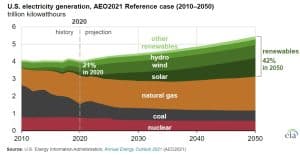
Image: EIA projects renewables share of the U.S. electricity generation mix will double by 2050
EIA JOE BIDEN

Finally, Biden signed the ADVANCE Act in July this year to support advanced nuclear technologies and the continued operation of existing nuclear plants. Recently, President Biden signed The Prohibiting Russian Uranium Imports Act to strengthen Americaโ€™s energy and economic security, and eventually eliminate reliance on Russia for nuclear power.

Investments in CDR projects

On May 19, 2022, the U.S. Department of Energy (DOE) announced a $3.5 billion funding opportunity from the Bipartisan Infrastructure Law to capture and store CO2 directly from the air. The Regional Direct Air Capture Hubs program supported four large-scale hubs with carbon dioxide removal (CDR) projects. These hubs created jobs, engaged communities, and advanced environmental justice. Alongside other decarbonization efforts, this technology played a key role in achieving President Bidenโ€™s net-zero economy goal by 2050.

Curbing Transport Emissions

During his early tenure in 2021, Biden signed the bipartisan Infrastructure Act, allocating over $100 billion for rail, mass transit, charging stations, and zero-emission ferries and buses.

On March 29, 2024, the Biden-Harris Administration finalized the historic greenhouse gas standards ever for heavy-duty vehicles. This action protects public health, addresses the climate crisis, and keeps the American economy moving. The EPA adopted new emission rules for cars, aiming to cut 50% of CO2 emissions by 2032 and mitigate 7 billion tons of CO2 in the next 30 years. This rule can eliminate more GHG emissions than any other climate rule in U.S. history.

This year EPA also issued carbon emissions limits for heavy trucks, estimating a prevention of 1 billion tons of CO2 emissions. It introduced 3,400 electric school buses, and Biden released $1.7 billion for electric vehicle manufacturing. Additionally, the government released new standards for biofuels.

Despite global challenges, the U.S. has set strong examples in tackling climate change. President Joe Bidenโ€™s groundbreaking initiatives have significantly transformed the climate landscape. As America approaches a new presidential term, we hope the new leader continues to take responsible actions and drive further progress in combating climate change.

New Bacteria Turns Methane Into Carbon Negative Plastics

What if the world can capture methane, a powerful greenhouse gas emitted by industries such as agriculture and wastewater treatment, and turn it into a useful product? That’s exactly whatย Mango Materials, a California-based biomanufacturing company, is innovating.ย 

Mango Materials employs methane-eating microorganisms to transform methane emissions into polyhydroxyalkanoate (PHA), a biodegradable polymer. This polymer is used to create 100% biodegradable polyester pellets for making durable goods, fabrics, and flexible films.

A Methane-Eating Bacteria Advances Sustainable Technologies

Unlike conventional plastics, PHA materials decompose significantly fasterโ€”within weeks or months. Better yet, they turn back into methane and carbon dioxide when disposed of properly.

Allison Pieja, Mangoโ€™s co-founder and Chief Technology Officer, emphasizes the massive benefits of their technology, saying:

โ€œOur analyses show it should be carbon negative when running at full scale.โ€ย 

Mango recently completed a PHA production facility at a wastewater treatment plant in Vacaville, California. Here, they capture methane from microbes that clean the public water supply and channel it into bioreactors with their methane-consuming bacteria.ย 

The bacteria convert methane into chains of PHA to store energy, akin to how plants store energy in starches by linking carbon dioxide-based sugars. These PHA molecules accumulate inside the bacterial cells for later use.

The company is already producing enough PHA for demonstration products, including a soap dish for sale, net zero sneakers by Allbirds, and sustainable sunglasses designed by Stella McCartney.

Mango Materials aims to scale up production to supply PHA pellets for a broad range of eco-friendly products. CEO and co-founder Molly Morse said that thereโ€™s a huge market opportunity for bio-based plastics with the same biodegradability profile as PHA combined with its mechanical properties.

Collaborating for Scale Up

Transitioning from lab-scale research to a commercial process took time. The Advanced Biofuels and Bioproducts Process Development Unit (ABPDU) at Lawrence Berkeley National Laboratory played a crucial role.

Funded by the U.S. Department of Energy’s Bioenergy Technologies Office, ABPDU specializes in scaling up bio-based technologies. Mangoโ€™s team, founded in 2012, worked with ABPDU to optimize their bacterial culture and the conditions for high PHA yields.

ABPDU, led by Ning Sun, tested industrial-scale equipment with Mango scientists to refine the extraction of PHA from microbial broth. Sun noted that theyโ€™ve received broth from Mango at various scales and tested different recovery unit operations to enhance yield and purity.ย 

The collaboration resulted in a successful process that Mango is confident will be profitable. It was crucial for the biomanufacturing company to access a downstream processing facility and expertise.

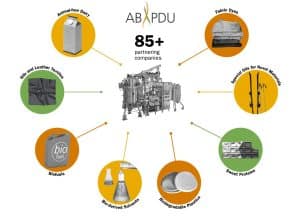
Mango Materials partner industries
Image from Berkeley Lab website

The ABPDU team also gained expertise in intracellular biopolymer extraction. To date, the ABPDU has assisted 85 industry partners and 20 national laboratories in scaling up innovative biology-based products.

Mango Materialsโ€™ work was supported by Department of Energy grants. The ABPDU helps early-stage biofuels, biomaterials, and biochemicals scale from research to commercial applications, advancing sustainable technologies.

The company’s innovative use of bacteria to turn methane into biodegradable PHA offers a promising solution to both plastic waste and greenhouse gas emissions. Excitement is high when this technology is scaled for widespread impact.

Brew Green: Nestlรฉ Boosts Arabica Supply Chain to Lower Carbon Footprint

For more than two decades, Nestlรฉ through its “Sustainable Agriculture Initiative” (SAIN) has empowered farmers to adopt sustainable practices in coffee production. This time, the company is enhancing its Arabica variety supply chain to mitigate the carbon footprint of coffee production. So, whatโ€™s brewing in here? Letโ€™s find out.

Introducing Arabica Star 4: Nestlรฉโ€™s Sustainable and High-Yielding Coffee Variety

Nestlรฉ has developed a new high-yielding Arabica coffee variety calledย Star 4ย to strengthen its coffee supply chain. As global coffee demand is growing significantly, irrespective of climate changes, Nestlรฉ has innovated its coffee variety with a reduced carbon footprint. The news release highlighted that the company was very concerned about the shrinking of Arabica cultivation areas due to climate change. Thus, this prompted Nestlรฉ to leverage its agricultural expertise to overcome environmental concerns while ensuring a steady supply chain.

Nestlรฉโ€™s team of scientists, technologists, and agronomists hail that the Star 4 is a โ€œnovel high-yielding Arabica varietyโ€ selected in Brazil. It is highly resilient and has a unique Brazilian coffee flavor.

Jeroen Dijkman, Head of Nestlรฉโ€™s Institute of Agricultural Sciences remarked,

ย “Ensuring resilient coffee supply chains is crucial for future generations to enjoy exceptional coffee. Star 4, with its larger bean size and resistance to coffee leaf rust, demonstrates significantly higher yields compared to Brazil’s predominant local varieties, thereby reducing its environmental footprint.”

Notably, Marcelo Burity, Nestlรฉโ€™s Head of Green Coffee Development has emphasized the importance of optimizing farming practices to minimize greenhouse gas (GHG) emissions associated with coffee cultivation. He added,

“Optimizing cultivation practices remains vital as they are the primary factor contributing to the environmental impact of a cup of coffee.โ€

Nestlรฉ strengthens its commitment to sustainable farming by partnering with the Brazilian foundation Procafรฉ to register Star 4, aligning with its Agriculture Framework for responsible sourcing.

Other Sustainable Coffee Varieties of Nestlรฉ

In addition to Star 4, Nestlรฉ has introduced Roubi 1 and 2, Robusta varieties in Mexico, showcasing its ongoing commitment to innovative solutions in coffee cultivation. In the year 2021, the company added a new generation of carbon coffee using non-GMO breeding techniques. These two Robusta coffee varieties increase yields to 50% per tree compared to standard varieties. They cause a 30% reduction in the carbon dioxide equivalent (CO2e) footprint of green coffee beans.

The basic idea of sustainable coffee production is to produce more coffee per unit of land, fertilizer, and energy input. Reducing the carbon footprint of green coffee beans is crucial, as they contribute significantly to the total CO2e emissions of a cup of coffee, ranging from 40% to 80%. Nestlรฉ’s new Robusta varieties achieve up to a 30% reduction in CO2e, marking a substantial environmental breakthrough in coffee production.

Transforming Coffee Production with 100% Sustainable Agriculture

The coffee giant aims to remove 13 MMT CO2e from the atmosphere through its dedicated sustainability initiatives by 2030. It further wants to achieve 100% certified sustainable cocoa and coffee by 2025, ensuring that every step of the production process contributes to a healthier planet. Hereโ€™s how Nestlรฉ is making its coffee farming and operations eco-friendly.

Planting More Shade Trees

Various initiatives focus on integrating shade trees within farming systems. This approach particularly benefits crops like cocoa and coffee, which thrive under shaded conditions. By encouraging farmers to plant more shade trees, the initiative aims to shield these crops from heat stress and other environmental threats such as heavy rainfall. Moreover, shade trees play a pivotal role in improving water management, enhancing biodiversity, and sequestering carbon dioxide from the atmosphere, thus contributing significantly to emission reduction efforts.

Boosting Soil Health

A critical component of sustainable agriculture involves improving soil health to maximize land productivity. Nestlรฉ has adopted many eco-friendly practices such as no-tillage, cover cropping, crop rotation, and organic fertilizers. Additionally, composting agricultural waste essentially fosters a robust carbon cycle for sustainable farming practices.

Agroforestry in Border Areas

Another important criterion is optimizing the surrounding areas of the main farmland. Some such practices involve restoring forests and peatlands and implementing strategic projects like windbreaks. These efforts mitigate carbon emissions and protect the biodiversity of that agricultural land.

Some other significant technological advancements to enhance cocoa and coffee supply chains and restore carbon sinks involve:

  • farm-level assessments
  • sustainability certifications
  • satellite monitoring systems
  • 100% renewable energy

Nestlรฉ’s Emission Reduction Strategies

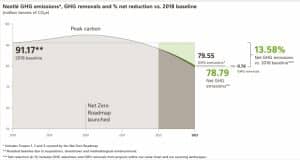
According to its current sustainability report, Nestlรฉ achieved a 13.58% GHG emissions reduction in 2023 as compared to its 2018 baseline.

Nestlรฉ

source: Nestlรฉ

Nestlรฉ has pledged to curb their emissions by 20% by 2025. By 2050, the organization aims to achieve net zero emissions by implementing regenerative agricultural practices. Furthermore, it is transitioning its logistics and operations to zero emissions. This ensures all facets of the organization contribute to environmental sustainability.

It will use high-quality natural climate solutions, benefiting communities and ecosystems to offset residual emissions. This approach balances environmental impact with societal well-being, supporting a sustainable future for all.

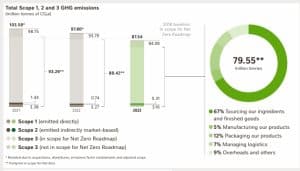
Nestlรฉ

source: Nestlรฉ

DID YOU KNOW?

Here’s a cool fact! Nestlรฉ clinched the top spot for “coffee sustainability” in the 2023 Coffee Brew Index, as highlighted in the latest Coffee Barometer report. The accolade reflects Nestlรฉ’s robust coffee sourcing strategy, which integrates social, environmental, and economic dimensions.

David Rennie, Head of Coffee Brands at Nestlรฉ, emphasized,

“This recognition underscores our ongoing dedication to responsible coffee sourcing. Through initiatives like the Nescafรฉ Plan and Nespresso AAA Sustainable Qualityโ„ข Program, we collaborate closely with coffee farmers to promote sustainable and inclusive farming practices. Our commitment remains steadfast in innovating and advancing coffee farming for the better.”

With these science-backed coffee varieties and a strategic focus on sustainability, Nestlรฉ is sure to achieve its net zero goals. Until then, let’s wait for the moment to savor a fresh cuppa as it hits the stores.

Tesla Signs A Landmark Multi-Billion Dollar 15 GWh Megapack Deal

While Tesla’s energy storage segment is smaller than its automotive business, it has been experiencing significant growth. This segment has rapidly accelerated and expanded after maintaining consistent growth over the years, with recent massive Megapack contracts secured.ย 

Tesla and Intersect Power have signed a contract for 15.3 GWh of Megapacks, Teslaโ€™s advanced battery storage system, for the latterโ€™s solar and storage projects through 2030. This deal, along with previous agreements, positions Intersect Power as one of the top global buyers and operators of Megapacks. It has nearly 10 GWh of large-scale storage expected by the end of 2027.

Though the contractโ€™s cost wasnโ€™t disclosed, the massive energy involved says it’s a multi-billion dollar deal, depending on pricing.ย 

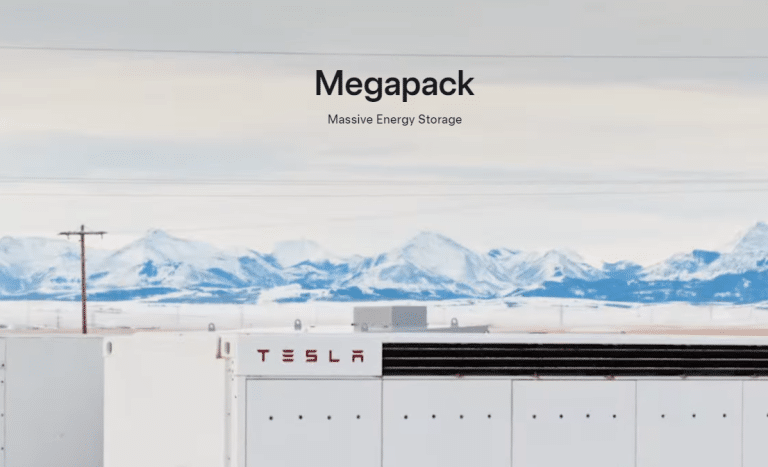
Teslaโ€™s Megapack is a large-scale lithium-based battery energy storage system aimed at improving grid stability and preventing outages. Each unit has a storage capacity of over 3 MWh, sufficient to power 3,600 homes for 1 hour.

Teslaโ€™s Battery Energy Storage Crazy Growth

Despite a decline in automotive revenues, Tesla has seen growth in other business segments, particularly in energy storage, which is becoming increasingly profitable. With the rising number of Megapack installations and an expanding fleet, Tesla expects consistent profit growth in this segment.

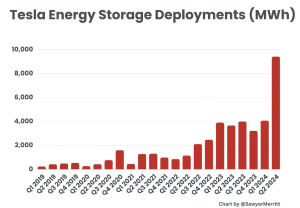
In Q1 2024, Tesla’s energy storage deployments hit a record high of 4.1 GWh. Revenue and gross profit from the Energy Generation and Storage segment also reached all-time highs.

In Q2 2024, Tesla Energy deployed 9.4 GWh of energy storage products, including Megapacks, Powerwalls, and solar products. Thatโ€™s more than double the Q1 2024 deployment (132% increase) and up 157% year-over-year.

Tesla energy storage deployments Q2 2024

Tesla has previously supplied 2.4 GWh of Megapacks for Intersect Powerโ€™s solar and storage facilities, which are either operational or under construction.

The new agreement will see more than half of the Megapacks used for 4 major battery installations in California and Texas.ย They will begin operations by the end of 2027, including some of the biggest battery installations in the U.S. The remainder will be allocated to future solar and storage projects coming online between 2028 and 2030.

Mike Snyder, Senior Director of Tesla Energy, stated,ย 

โ€œIntersect continues to be an exceptional partner, and their development expertise combined with the plug-and-play nature of Teslaโ€™s vertically integrated technology enables the speed and scale needed to enhance grid resilience and support greater renewables integration.โ€

Amplifying Intersect Powerโ€™s Leadership in Clean Energy Storage

Intersect Power is a clean energy company focused on innovative, scalable low-carbon solutions. Established in 2016, the company develops, owns, and operates some of the worldโ€™s largest clean energy resources, delivering low-carbon electricity, fuels, and related products for both domestic and international markets.

Intersect Power is committed to advancing grid-tied renewables and large-scale clean energy assets, including battery storage, data centers, and green fuels. It has a portfolio of 2.2 GW of operating solar PV and 2.4 GWh of storage.

The energy company is known for its large and adaptable Battery Energy Storage Systems (BESS) at its solar and storage facilities in Texas and California. The Megapacks are set for delivery in 2025 and 2026 and will be produced at Teslaโ€™s Megafactory in Lathrop, California.

Currently, Intersect Power has 2.4 GWh of Tesla Megapacks either operational or under construction. These include the 1 GWh at the Oberon solar and storage facility and 448 MWh at the Athos III solar and storage facility in California. An additional 1 GWh of Megapacks is being installed at the Radian and Lumina solar and storage facilities in Texas. Their full operational status are expected within the year.

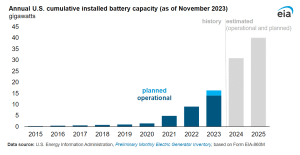
According to the U.S. Energy Information Administration, battery storage capacity in the country has been on the rise since 2021. It is projected to increase by 89% by the end of 2024, provided that developers bring all planned energy storage systems online as scheduled.

US battery installed capacity 2024Current plans indicate that U.S. battery capacity could exceed 30 gigawatts (GW) by the end of 2024, surpassing the capacities of petroleum liquids, geothermal, wood and wood waste, and landfill gas.
Developers anticipate bringing over 300 utility-scale battery storage projects online in the United States by 2025. And about 50% of these planned capacity installations are in Texas.

Tesla Energy’s Power Gain Major Boost with Megapacks

Tesla Energy has also signed a $375 million contract to provide Megapacks for a major battery project in Australia. The agreement will support the construction of a 415 MW/1660 MWh battery, one of the world’s largest four-hour duration batteries.

The Megapacks will be used for Akaysha Energyโ€™s Orana Battery Energy Storage System (BESS), located in New South Wales within the Central West Orana Renewable Energy Zone (REZ).

Tesla Megapacks have been making notable strides in Australiaโ€™s energy market. In October 2023, a 150 MW/300 MWh Tesla Megapack system was commissioned in New South Wales.ย 

Earlier this year, a 250 MW/500 MWh project broke ground in Queensland. Additionally, in April 2024, Tesla Energy was awarded a contract by Neoen to expand the Collie Battery, aiming to transform it into the largest battery in Australia, with a final capacity of 560 MW/2,240 MWh.

This Megapack agreement, alongside Tesla and Intersect Powerโ€™s significant deal underscore the growing demand for advanced energy storage solutions. These partnerships are set to enhance grid stability and support the transition to a low-carbon economy worldwide.

Nickel Market in Turmoil: BHP to Halt Operations Due to Price Plunge

In recent developments within the global nickel market, the trajectory of prices has undergone a significant downturn.ย Consequently, nickel prices have plummeted from the highs recorded in recent years, primarily driven by a global oversupply.ย 

This has led BHP Group to suspend its operations in Western Australia, reflecting the economic challenges within the industry.

BHP’s Bold Move

BHP Group Ltd., one of the largest mining companies, announced the suspension of its Nickel West operations and West Musgrave nickel project in Western Australia. This decision was attributed to the inability to overcome economic challenges posed by the global oversupply of nickel.ย 

From October, BHP will halt mining and processing operations at several key sites, including the Kwinana refinery, Kalgoorlie smelter, and Mt. Keith and Leinster mines. The development of West Musgrave will also be suspended as the company begins its care and maintenance program.

Geraldine Slattery, BHP’s Australia president, cited substantial economic challenges driven by the oversupply of nickel as the reason for the suspension. BHP has flagged an underlying EBITDA loss of approximately $300 million for its Australian nickel operations for the financial year ending June 30, 2024.

Despite the suspension, BHP plans to continue supporting its workforce and local communities during the transition. The company will invest about $300 million annually in its Western Australian nickel facilities, enabling a potential restart of operations. BHP will review its decision to halt operations by February 2027.

Australia’s resources minister, Madeleine King, expressed disappointment over BHP’s decision, highlighting its substantial impact on the workers and communities of Kwinana, Kambalda, and Kalgoorlie. Western Australian Premier Roger Cook echoed these sentiments, noting that the move would affect thousands of workers. Cook emphasized the importance of diversifying the economy to build resilience in the resources sector.

The Rapid Growth Shaking Up the Nickel Market

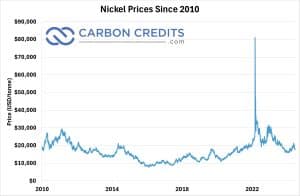
The rapid expansion of Indonesia’s nickel industry has led to a market oversupply, resulting in significant price declines from the highs of 2022 and 2023.

In 2022, nickel prices peaked at $48,241/t on March 10 due to a historic short squeeze and remained volatile, often exceeding $30,000/t. The current price is down 65.6% from the 2022 high.

nickel prices

Seizing Opportunity in a Challenging Market

While expected, BHP’s decision to suspend operations at its nickel assets in Western Australia is a significant blow to the local mining industry. This suspension will result in 1,600 employees being either redeployed or offered redundancies. Although nickel exploration and development will continue, Australia’s nickel mining industry is effectively coming to a halt.

While the market remains in oversupply, some industry players see opportunities amid the challenges.ย 

The adversity presents an opportunity for Lunnon Metals, which is eyeing the mothballed Kambalda nickel concentrator.

With BHP’s suspension of Nickel West operations and the West Musgrave project amid the global nickel downturn, Lunnon is now exploring other processing options for its Baker and Foster nickel deposits. The company is considering a larger role in the district.

Lunnon sees potential in capitalizing on the mothballed Kambalda nickel concentrator by “either purchasing, leasing or otherwise making use of” the plant and its associated infrastructure and utilities. Additionally, the company envisions the possibility of jointly or solely building a new concentrator in the future to “meet the needs of various local stakeholders in Kambalda or further afield.”

Despite the challenging sentiment surrounding nickel, Lunnon Metals remains optimistic about the future of the commodity in Australia and is charting a path forward. Market analysts also share the same sentiment.

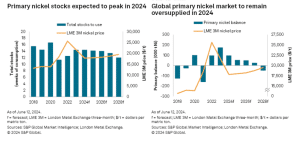
nickel market outlook 2028

While short-term price movements are driven by speculative activities and immediate market conditions, the long-term outlook for nickel remains positive, primarily due to its critical role in the energy transition. Increasing demand from renewable energy technologies, EVs, and energy storage solutions will drive long-term demand growth for nickel.

As the nickel market grapples with oversupply and declining prices, BHP’s suspension of operations marks a significant impact on the industry. However, companies like Lunnon Metals are exploring new opportunities to navigate this challenging landscape. This highlights the sector’s resilience and adaptability.

HSBC Opens New Unit For Low-Carbon Finance, Alongside $1 Trillion Pledge

Global financial services group HSBC is launching a new business unit, HSBC Infrastructure Finance (HIF), to focus on infrastructure financing and project finance advisory opportunities tied to the transition to a low-carbon economy. The bank has appointed former UK Member of Parliament Danny Alexander as CEO of the new unit.

HIF aims to secure a significant share of deals in major markets. It will also integrate elements from the bankโ€™s Global Banking Real Asset Finance team.

Taking the Helm and Driving Infrastructure Finance in Transition Markets

The new unit plans to expand HSBCโ€™s debt origination and distribution businesses by building new relationships with both public and private sector entities.

Greg Guyett, CEO of Global Banking and Markets at HSBC, remarked on the announcement, noting that:ย 

โ€œWe have a leading presence in the regions where infrastructure needs to be developed and financed to enable a just transition to a low carbon economy. We also look to support the UK governmentโ€™s program to build critical infrastructure in Britain to grow the economy whilst decarbonizing it.โ€

Danny Alexander, currently the vice president for policy and strategy at the Asian Infrastructure Investment Bank (AIIB) and a former UK government minister, will lead the division.ย 

Alexanderโ€™s appointment is intended to accelerate collaboration with governments, multilateral development banks, and companies, including supporting the UK governmentโ€™s new initiatives.

In his post announcing the appointment, Alexander expressed his excitement about leading HIF and pursuing significant infrastructure financing and advisory opportunities related to the low carbon transition in strategic markets.

HSBC’s Net Zero Plan

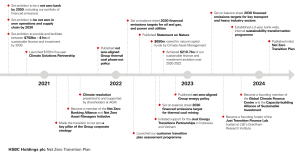
The launch of HIF follows HSBC’s release of its first Net Zero Transition Plan earlier this year, detailing its strategy to finance and support the transition to net zero. The bank set a 2050 net zero target in 2020, committing to align its financing activities with the Paris Agreement’s goals.ย 

In 2021, HSBC made the transition to net zero one of the 4 key pillars of our corporate strategy. Since 2020, the global financier has taken several steps to begin executing its net zero ambition and managing climate risks. The banking companyโ€™s net zero journey is below.

HSBC NET ZERO JOURNEY

HSBC net zero journey to 2050

The bankโ€™s transition plan covers the HSBC Group and it focuses primarily on the sectors and customers where they anticipate making the most significant impact on emissions reductions.ย 

For each sector, the bank describes the necessary technologies, investment needs, and external dependencies for a viable net zero by 2050 pathway, and identifies where a 1.5ยฐC-aligned 2030 pathway is most at risk. The company also outlines its related portfolio, aims, targets, and actions to support sector decarbonization.

HSBC’s emissions from its own operations and supply chain are relatively small compared to its financed emissions, but reducing them is crucial for becoming a net zero bank.ย 

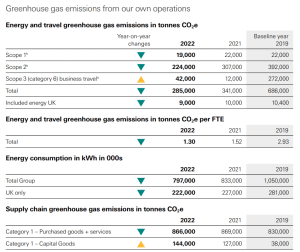
HSBC Greenhouse Gas Emissions from Own Operations

HSBC GHG carbon emissions or footprint
Source from HSBC Net Zero Transition Plan

The bank aims to achieve net zero in its own operations and supply chain by 2030, including 100% renewable electricity and minimizing its direct impact on nature. This involves cutting emissions across energy consumption, travel, and supply chains.

In 2022, HSBC exceeded targeted reductions by achieving a 58.5% decrease in energy and travel emissions compared to 2019 levels. This accomplishment was driven by the bank’s three key efforts:

  1. A 24% reduction in energy consumption achieved through optimizing building use and strategically reducing office space and data center operations.
  2. Purchasing 48% of energy from renewable sources by leveraging renewable tariffs and engaging with landlords.
  3. An 85% reduction in business travel, primarily attributed to Covid-19-related international travel restrictions.

Looking forward to 2030, HSBC aims for a further 50% reduction in energy consumption. High-quality carbon removal or offsets will be used only for residual emissions that cannot be otherwise reduced from 2030 onwards.

The financier engages with market participants to develop carbon credits and support initiatives for a credible carbon market. Climate Asset Management, HSBC’s joint venture, is sourcing high-quality carbon removals.ย The bank also participates in HKEXโ€™s International Carbon Market Council and advocate for integrity in the voluntary carbon market through initiatives like the Integrity Council.

It’s important to note that HSBC does not plan to use carbon offsets to meet its net zero by 2050 portfolio financed emissions target or related interim 2030 sectoral financed emissions targets.

The bank will regularly review emerging guidance from standard setters like the Greenhouse Gas Protocol and the Science Based Targets Initiative (SBTi) to assess and incorporate customersโ€™ use of carbon credits into its customer transition plan assessment process.

Aligning Financing with Global Climate Goals

To achieve GHG emissions reduction targets and reach net zero, HSBC is implementing a plan, focusing on these three areas:

  1. Supporting Customers

HSBC is prioritizing the transition of its customers to net zero by providing finance, services, insights, and tools. The bank is engaging with corporate customers on their transition plans and offering products and services to facilitate this shift.

  1. Transforming Operations

In 2021, HSBC made the “transition to net zero” one of the four pillars of its corporate strategy. This integration into the corporate strategy has led to embedding net zero considerations into sustainability risk policies, risk evaluation, decision-making tools, and processes. The bank aims to be net zero in its own operations and supply chain by 2030.

  1. Partnering for Systemic Change

HSBC is engaging with stakeholders across geographies to support policies, regulations, and partnerships that facilitate the transition to net zero. The bank is a signatory of the Taskforce on Climate-related Financial Disclosures (TCFD) and advocates for climate risk disclosures.

The bank also pledged to prioritize financing and investment that contributes to the low carbon transition, aiming to support customers with $750 billion to $1 trillion in finance and investment by 2030.

HSBC’s launch of Infrastructure Finance underscores its commitment to supporting the transition to a low-carbon economy through strategic infrastructure investments. With a robust net zero strategy in place, HSBC aims to play a pivotal role in shaping sustainable finance globally.

Sungrow and Algihaz Join Forces for 7.8 GW Energy Storage in Saudi Arabia

Sungrow Power Supply, a Chinese photovoltaic inverter manufacturing giant recently announced to partner with Saudi Arabiaโ€™s Algihaz Holding for a massive energy storage project. In this project, Sungrow will build a 7.8 GW energy storage system to boost Saudi Arabia’s power grid stability and reliability. Media reports that this will be the largest off-grid energy storage project in the Middle East.

Sungrow’s Ambitious Timeline: Powering Saudi Vision 2030

Saudi Arabia, the world’s largest crude oil exporter, is committed to expanding its renewable energy sector under Crown Prince Muhammad bin Salman bin Abdel Aziz Al Saud’s Vision 2030 plan proposed in 2016. By 2030, Saudi Arabia aims for solar and wind energy to make up 50% of its energy mix, totaling 58.7 GWh.

Sungrow has outlined the project timeline and many other significant attributes. It will span three sites in Najran, Madaya, and Khamis Mushait of Saudi Arabia comprising ~ 7.8 million battery cells.

Furthermore, the project is intended to last more than 15 years, with prominent challenges including climatic conditions, massive scale, critical logistics, and tight delivery schedules. Product delivery will start this year, with a full grid connection expected to be completed by next year.

Sungrowโ€™s representative on addressing some leading media agencies noted that the company will deliver over 1,500 units of its latest Power Titan 2.0 liquid-cooled storage system. The integrated AC storage design and high energy density can reduce operation area by 55%. Furthermore, Sungrowโ€™s preliminary technical and financial involvement will ensure on-time on-site installation and grid connection, meeting all deadlines.

For operations and maintenance, it will deploy an intelligent energy management system (EMS). This modern technology will monitor real-time levels and ensure safety and efficacy during production. However, neither of the parties disclosed the deal value.

Sungrow Charging toward Net-Zero

The 2023 sustainability report reveals,

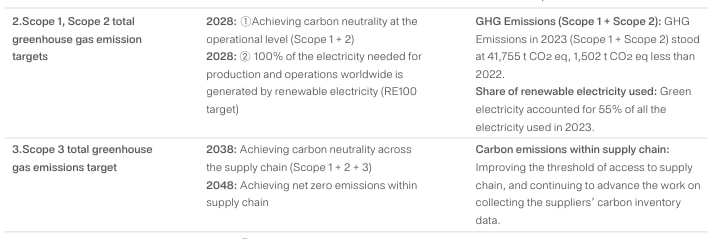
“Sungrow has pledged to achieve carbon neutrality on the operational level by 2028, carbon neutrality across the supply chain by 2038, and net zero emissions across the supply chain by 2048.”ย 

Renewables andย Revenue

They offer solutions for utility-scale, commercial, industrial, and residential applications, including floating PV plants, NEV driving solutions, EV charging, and renewable hydrogen production.

The power titan installed rooftop PV power stations with a total capacity of nearly 13 MW. This saved over 1,300 MWh of electricity annually and raised green electricity consumption to 55%. They reduced energy consumption per unit product by 6.8% compared to 2020.

Sungrow’s operating revenue surged by 79.5% in 2023, reaching $10.2 billion. Meanwhile, its net profit attributable to shareholders soared by 162.7% to $1.3 billion.

Carbon Footprint:

For 2023: The proportion of green electricity use reached 55% in 2023. Greenhouse gas emissions (scope 1 and scope 2) were reduced to 41,755 tons of CO equivalent, which is a decrease of 1,502 tons compared to 2022.

Sungrowsource: Sungrow 2023 Sustainability Report
Algihaz Holding: Innovating for Vision 2030’s Energy Goals

Algihaz Holding, a Saudi company with a diverse portfolio, operates primarily in the power and energy sector, using both conventional and renewable sources.

Like Sungrow, Algihaz is actively driving the energy transition as its commitment to Saudi Vision 2030. The company invests in innovative projects to deliver solutions across the Arab Kingdom and globally. Its partnership with Sungrow exemplifies this commitment.

Middle East’s Renewable Energy Scenarioย 

Saudi Arabia is actively transitioning from fossil fuels to renewable energy as part of its Vision 2030 initiative. A few years back, Saudi Aramco’s collaboration with Huawei, focused on integrating advanced technologies to enhance the efficiency and sustainability of energy production. The news of Huawei constructing the worldโ€™s second-largest off-grid battery energy storage project in Saudi Arabia has made headlines recently. This project has now achieved an energy storage capacity of 1.3 GWh.

The Kingdom is investing heavily in renewable energy. The $500 billion NEOM city will run entirely on renewable energy. The Sakaka Solar Power Plant is another crucial project. It is the countryโ€™s first large-scale solar initiative, reducing reliance on oil.

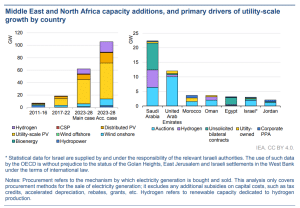
IEA has highlighted that even though clean energy investment in the Middle East is rising, it is still dominating as a supplier of oil and gas.

IEA Middle East Renewable Energysource: IEA

Overall, the Middle East’s renewable energy landscape looks promising in the coming years, with global companies eager to invest. Furthermore, China’s leading PV inverter company, Sungrow exploring the Saudi market, which will open numerous opportunities for the future.

Canada Carbon Rebate to Offset Carbon Pricing Costs For Millions of Canadians

Canada’s Prime Minister, Justin Trudeau, recently announced the rollout of the carbon rebate, now known as the Canada Carbon Rebate. This rebate is designed to offset the expenses Canadians incur from carbon pricing when purchasing gasoline and is distributed quarterly on the 15th of each month, starting from April.ย 

The Canada Carbon Rebate Program

The Canada Carbon Rebate (CCR), formerly known as the Climate Action Incentive Payment (CAIP), is a tax-free amount designed to help eligible individuals and families offset the cost of federal carbon price. It includes a basic amount and a supplement for residents of small and rural communities.

The amount Canadians receive from the carbon rebate varies depending on their province of residence and household size. Each year, the rebate is determined based on the anticipated revenue collected by the federal government from carbon pricing in each province.ย 

For instance, a single taxpaying adult in New Brunswick can expect to receive approximately $95 in each quarterly payment. In contrast, a family of four in Alberta is likely to receive $450 per deposit.ย 

Provinces where fossil fuels contribute more to electricity generation receive higher rebates due to the higher carbon pricing costs borne by consumers. Starting from the last payment of the year, a 10% increase in the rural supplement acknowledges the greater energy needs of rural residents and their limited access to cleaner transportation options.ย 

This initiative is a cornerstone of Canadaโ€™s strategy to reduce emissions and build a sustainable future, as emphasized by Steven Guilbeault, Minister of Environment and Climate Change. He highlights that pricing pollution is an effective method to cut emissions while ensuring all revenues are returned to Canadians.ย 

The Canada Carbon Rebate aims to provide households with extra income every three months, supporting essential expenses such as groceries and rent.ย 

  • Canadians can use an online estimator tool to gauge their potential rebate, ensuring transparency and clarity in the process.

Here are the key details to keep in mind:

Distribution and Eligibility:

The Canada Carbon Rebate returns 90% of the revenue collected from the carbon levy to households in eight provinces where it is applicable. Provinces like British Columbia and Quebec, with their own carbon pricing systems, do not receive federal rebates.

Installments and Amount:

The rebate is distributed in four instalments annually, tailored to household size and province of residence. Families of four can expect to receive between $190 and $450 in this instalment.

Factors Affecting Rebates:

Provinces where fossil fuels contribute more to electricity generation receive higher rebates, reflecting higher carbon pricing costs borne by consumers in those regions.

The announcement also marks the deadline for small businesses to file tax returns to qualify for the new automatic refundable tax credit aimed at offsetting carbon pricing costs. This initiative replaces a previous grant system that saw limited success, returning only $35 million of an owed $2.5 billion from April 2019 to March 2024.

There have been challenges with bank deposits failing to clearly identify the rebates as intended by the government. This causes confusion among recipients.ย Recent legislative changes now mandate banks to use the label “CdaCarbonRebate” for these deposits, aiming to enhance clarity and transparency for recipients.

These developments underscore Ottawaโ€™s ongoing efforts to manage carbon pricing impacts on both households and small businesses. Overall, it reflects broader strategies to address climate change while supporting economic resilience.

Eureka Moment! Amazon Hits 100% Renewable Energy Goal 7 Years Ahead

July 10 marked an extraordinary moment for Amazon, reaching its 100% renewable energy goal a stunning seven years ahead of schedule. Originally set for 2030, the rapid transition across all operations surprised the world. So how did Amazon achieve this moment of massive success? Let’s discover…

Decoding Amazonโ€™s Journey to 100% Renewable Energy

Bloomberg NEF reported that Amazon has invested billions in installing 500 solar and wind projects globally. This is enough to power 7.6 million U.S. homes. The retail giant has been the world’s top corporate buyer of renewable energy in the last four years. They have set an example by adapting to the growing demand for AI while exploring new energy sources and approaches for achieving carbon neutrality.

Amazon’s Chief Sustainability Officer Kara Hurst has elaborately said,

โ€œReaching our renewable energy goal is an incredible achievement, and weโ€™re proud of the work weโ€™ve done to get here, seven years early. We also know that this is just a moment in time, and our work to decarbonize our operations will not always be the same each yearโ€”weโ€™ll continue to make progress, while also constantly evolving on our path to 2040. Our teams will remain ambitious, and continue to do what is right for our business, customers, and the planet. Thatโ€™s why weโ€™ll continue investing in solar and wind projects, while supporting other forms of carbon-free energy, like nuclear, battery storage, and emerging technologies that can help power our operations for decades to come.โ€

Once all projects are operational, theyย can remove approximately 27.8 MMT CO2 annually. Here are some remarkable achievements driving Amazon’s transition to 100% renewable energy:

Mississippi’s Wind Farm Powering Amazon Data Centers

Delta Wind, one of the Mississippi’s largest wind farms supplies carbon-free energy to power Amazonโ€™s local operations and data centers. Apart from this, Amazon has also partnered with Entergy to develop 650 MW of new renewable energy projects in Mississippi over the next three years. It aims to reach 1.3 GW of clean energy through solar and wind farms in the state.

Amazon Leads in Offshore Wind Projects in Europe

Currently, Amazon supports 1.7 GW capacity across six offshore wind farms in Europe. It expects to power 1.8 million average European homes once they become 100% operational. This makes Amazon the top corporate purchaser of offshore wind globally. ย The 750 MW Amazon-Shell HKN Offshore Wind Project which began operations last year, provides renewable energy across the Dutch coast.

Expanding Renewable Energy in Asia Pacific

Amazon has a robust grip over the Asia Pacific region. Its portfolio includes 80 renewable energy projects throughout India, Australia, China, Indonesia, Japan, New Zealand, Singapore, and South Korea. The company invested in 50 wind and solar projects with a total capacity of 920 MW in India, alone.

As the largest corporate purchaser in Japan, Amazon has enabled 20 projects, including 14 onsite solar installations and six offsite wind and solar projects. Amazon has helped Japan overcome its energy challenges. It works closely with industry groups and policy stakeholders to expand renewable energy procurement in the corporate sector.

AI Powers Solar Storage for 24/7 Energy

Energy demand for decarbonizing the grid is unstable when reliant on solar and wind power. Amazon believes incorporating AI and ML in carbon-free energy (CFE) can be a game-changer for grid stability. The company has developed a unique formula for installing battery storage systems with solar projects to ensure an uninterrupted CFE supply. A recent blog post highlights the significance of the Baldy Mesa solar farm, operated by AES, where machine learning models from Amazon Web Services (AWS) predict optimal times for the battery to charge and discharge energy. This innovation enhances the efficiency of solar-powered projects, even when sunlight is limited.

According to the International Energy Association (IEA),

โ€œThe global fleet of wind turbines generates over 400 billion data points annually. AI and ML models can use this data to enhance the efficiency of carbon-free energy projects.โ€

Amazon’s Net Zero Strategy and Carbon Footprintย 

Amazonโ€™s goal is to achieve net zero carbon emissions by 2040. This is a decade ahead of the Paris Climate Agreement timeline. By joining the Climate Pledge, Amazon believes in regularly measuring and reporting their GHG emissions, implementing decarbonization strategies, and using credible carbon offsets to neutralize any remaining emissions.

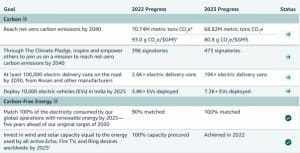
Amazon carbon footprintsource: Amazon 2023 sustainability report
According to its annual sustainability report, Amazon reported a 3% reduction in overall emissions in 2023. Its total emissions fell from 70.74 MMT CO2e equivalent in 2022 to 68.82 MMT CO2e in 2023, with meeting the target of 100% renewable electricity globally.

Wood Mackenzie Predicts $196 Billion Investment in CCUS by 2034

Wood Mackenzie, the global leader in providing data analytics and solutions in sustainability and renewable energy has recently rolled out a media statement on cost brackets for expanding CCUS, worldwide. It has predicted an investment of around $196 billion in 2034.

What Does Wood Mackenzieโ€™s 10-Year CCUS Market Forecast Say?

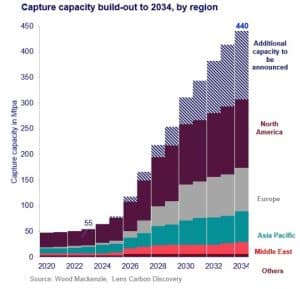
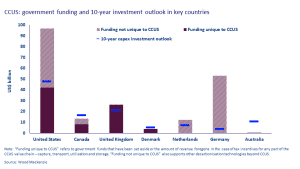
In this analysis, Wood Mackenzie has estimated that global carbon capture capacity can surge up to 440Mtpa and storage capacity will go up to 664 Mtpa. The combined process will require $196bn of total investment by 2034 out of which USD 80B is expected to come from the North American and European Governments.ย 

We have discovered from the report that nearly half of global investment focuses on CO2 capture. The remaining half will be distributed between the transport and storage sectors at $53B and $43B, respectively. Plans are underway to allocate 70% of the total value chain investment in North America and Europe. The report has further emphasized that increasing production projections does not mean that Wood Mackenzie expects carbon capture supply to meet immediate demands. Long-term projects anticipated for 2034 need up to 640 Mtpa of CO2 storage, but expected commissions are lacking by 200 Mtpa.

Hetal Gandhi, APAC CCUS lead with Wood Mackenzie has put her insights in the press release.

She said out of the total announced projects, 71% are in North America and Europe, backed by government incentives. The US Inflation Reduction Act, UK business models, Canadaโ€™s Investment Tax Credit, and the Netherlands SDE++ scheme are key contributors. The new EU Industrial Carbon Management Strategy is also expected to boost European projects. She highlighted that China and India are the largest emitters in the Asia-Pacific region but lack proper CCS infrastructure.

Her predictions say that the power and chemical sectors will face significant gaps between demand and supply until 2034. This region needs utmost CCUS upgradation. Notably, China, India, Latin America, the Middle East, and Africa face development constraints due to a lack of policy, regulatory frameworks, and funding support. Government funding for CCUS in key countries totals around $80 billion. The US leads with 50% of the total, followed by the UK at 33% and Canada at 10%.

Wood Mackenziesource: Wood Mackenzie

Using the Investment Effectively, A Wood Mac Study

Following the previous analysis, WoodMac has deep-dived into the role of CCUs in global decarbonization. The research wing has analyzed that some countries are investing in CCUS to decarbonize tough sectors like cement, chemicals, steel, refining, and power. On the other hand, some view CCUS as a long-term decarbonization tool.

ย Hetal has schemed out some important points to effectively utilize the investment. She believes that CCUS can be most effective when the technology is affordable and sustainable infrastructure is in place for carbon capture and storage. The key focus should be on heavy emitters.

CCUS has garnered significant attention for addressing climate change. Currently, the global CCUS capacity is around 63 Mtpa, which might surge to 1,700 Mtpa by 2050. However, to keep global warming within 1.5 degrees above pre-industrial levels, capacity would need to reach 7,750 Mtpa. Presently, most CCUS projects are targeting the power and gas sector. In the future, CCUS will be crucial for the cement and steel industries, which have limited alternatives to fossil fuels. The production of blue hydrogen will also benefit significantly from CCUS.

Click here to know what 2024 looks like for CCUS, as per Wood Mac.

Wood Mackenziesource: Wood Mackenzie

CCUS Future: Challenges Amid Opportunities

Wood Mac has also outlined some of the challenges of CCUS. The team analyzed that despite progress, CCUSย uptake remains limited. Fauzi Said, senior research analyst at Wood Mackenzie, has developed one solution focusing on hub-based storage ecosystems. He said,

โ€œWith storage capacities more concentrated than the spread-out capture capacities, hub-based storage ecosystems will evolve especially in Europe and APAC.โ€

CO2 sequestering costs are high compared to current carbon prices and practically no revenue is in it. Successful projects have managed costs with incentives, but future success relies on effective policies and well-structured carbon pricing schemes. Furthermore, amine-based processes dominate CCUS, which is not enough. They need more advanced technology to capture CO2 cheaply and with scarce carbon concentration. Another challenge is carbon dioxideโ€™s corrosive nature which makes transportation costly and storage challenging. Thus, cost is a significant factor driving the process.

CCUS Wood Mackenzie

source: Wood Mackenzie

However, in last monthโ€™s Wood Mac’s report, we discovered that ExxonMobil has established a strong position in the US CCUS. Wood Mackenzie made a detailed study that figured out, โ€œThe companyโ€™s US portfolio achieves a weighted average return of 20% in their base case. Some projects yield even higher returns.โ€

We hope Wood Mackenzie will come up with more updates on global CCUS status and developments very soon.