The Fault in Our Air

0
Anti-nuclear activists love to complain that there’s no known solution for nuclear waste. 

Here’s what they’re not considering: fossil fuels produce two-thirds of electricity in the world.

And it has waste, too. Only it’s not measured in mere tons, like nuclear waste.

  • The waste from coal and oil electricity is measured in giga tons— that’s billions of tons.

And its waste is far more harmful to the environment on a mass scale than nuclear waste.

In fact, the waste from oil and coal is causing the single greatest existential threat of our time: climate change.

CO2 emissions have turned our earth into a hothouse—one from which we might not escape.

Heat waves are hotter, happen more often, and last longer than they used to.
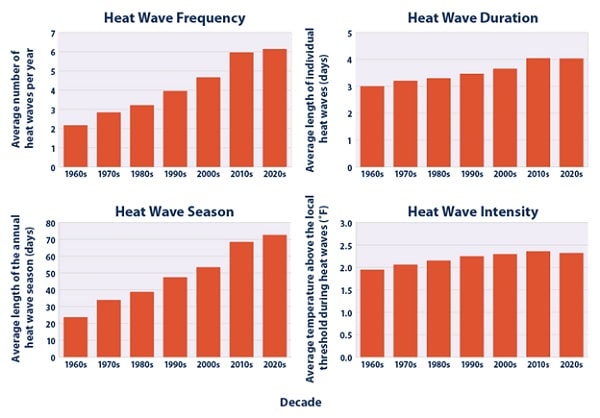
heat wave

Fires are roaring across countries… rivers are drying up… hurricanes and floods are levelling cities.

This climate change crisis will lead to the loss of lives and is costing trillions.
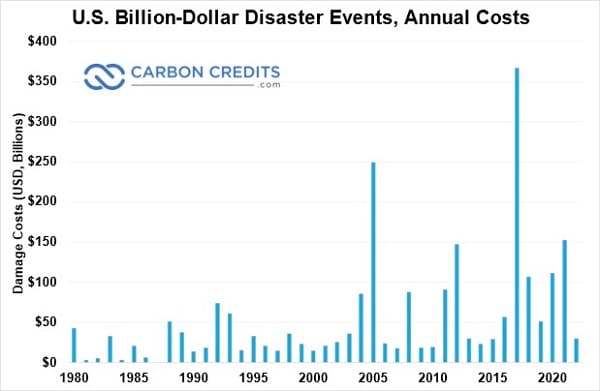
US billion dollar disaster events, annual costs

To avoid the worst effects of climate change, like the disappearance of sea ice, the collapse of ecosystems, and global weather refugees, it’s going to take more than just a decrease in emissions.

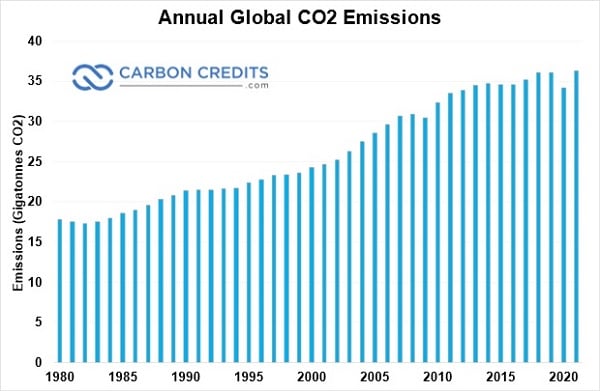
We must fully decarbonize the entire global electricity sector, eliminating the 36 GT of CO2 spewed into the atmosphere every year.

And we’ve got less than three decades to do it before a reversal becomes impossible.

To achieve complete decarbonization, countries have spent the last decade “going green”, targeting “net zero” and slashing carbon-emitting sources.

Yet despite the efforts of most of the developed world, CO2 emissions have stubbornly kept increasing.

Emissions By Any Other Name

In fact, in the past forty years, we’ve only seen three years with emissions decreases:

  • once during the Global Financial Crisis,
  • once during COVID,
  • and a tiny 0.1 GT decrease in 2015.

annual global carbon emissions

In 2021, immediately following the pandemic, global CO2 emissions snapped back to their highest level in history… with the biggest emissions increase in history.

Scenarios from the Intergovernmental Panel on Climate Change (IPCC) show that the chances of limiting the global temperature increase to 1.5 degrees are getting extremely slim.

How did we get so far off track? One simple reason:

  • The world is playing a massive cup-and-balls trick that nets the world zero gains in the fight on climate change.

Take California, for example.

It’s requiring 100 percent of all energy sold to be clean by 2045. And to get there, and to a net zero target, it’s cutting a perfectly good carbon-free source of energy: nuclear.

In fact, it’s cut nuclear power by 50 percent over the past decade. Guess what made up a large chunk of the difference…

Natural gas.

Now—by its own estimate—California needs to deploy wind and solar at five times its average pace… for the next twenty years straight, just to meet its 2045 goal.

Here’s the thing. Nuclear electricity production is already emissions free. So even if California successfully replaced all of its carbon-free nuclear energy with wind and solar, there would be zero emissions reduction.

It’s not just California. Michigan shuttered a huge nuclear plant, killing with it the hopes of a net zero or zero-carbon state economy by 2050.
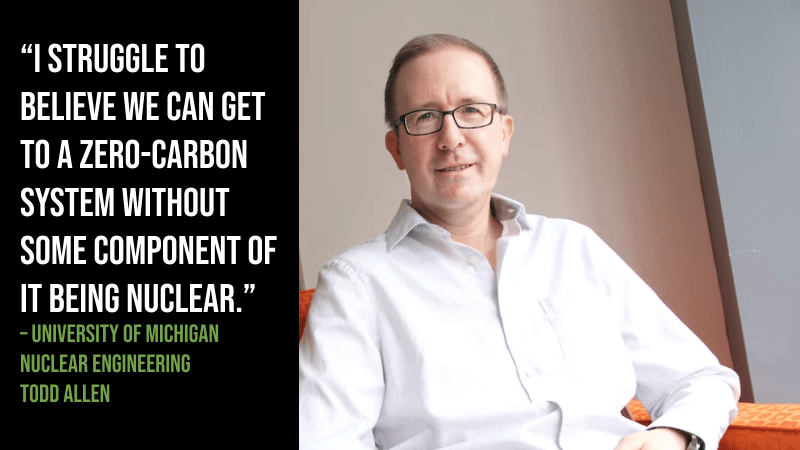
todd allen achieving net zero with nuclear
It’s a trend around the world, spurred on by Fukushima in 2011.

Before the incident, Japan planned to reduce its emissions by 20 percent from 1990–2020.

Instead, it nearly doubled its use of coal and natural gas from 2009–2013—using it for more than 90 percent of its electricity generation. As a result, Japan’s CO2 emissions shot up 15 percent.

Germany followed Japan’s lead, announcing in 2011 that it would shut down all of its nuclear plants and replace them with renewables.

It was a lie. Germany’s nuclear power has been almost entirely replaced by natural gas.

And that’s why emissions refuse to fall…

“We’re Cooked”

Far from reducing emissions—or even keeping them the same—for every reactor that is forced to shut down, CO2 emissions rise by 5.8 MT a year.

  • That’s the equivalent of filling an NFL stadium to the brim with gas, and setting it on fire.

We’d need to install solar panels on one million homes just to make up for shuttering a single reactor.

Nuclear reactors are extremely efficient, low-carbon sources of energy. In fact, it doesn’t matter whether it’s replacing coal or natural gas…

  • Nuclear is nearly 100 percent more effective than any other energy technology at reducing CO2 emissions.
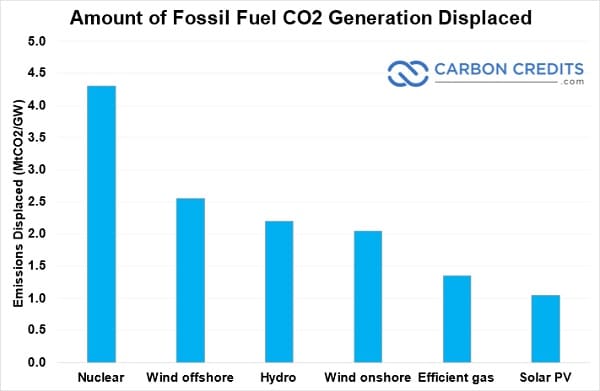
amount of fossil fuel CO2 generation displaced

There is simply no achieving net zero without nuclear.
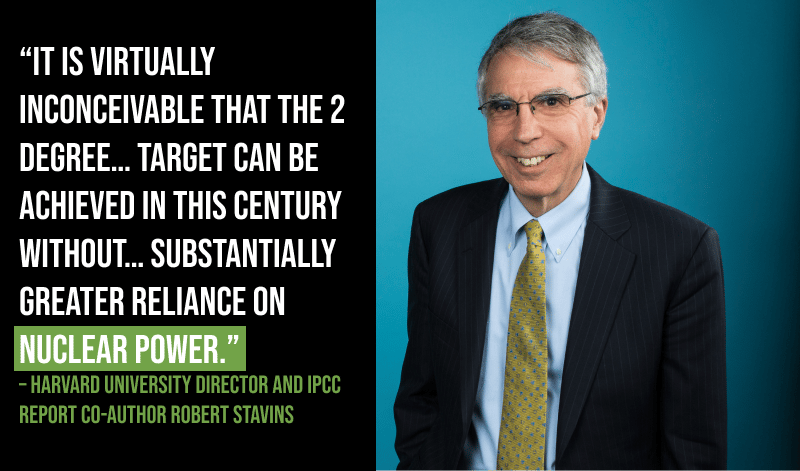
robert stavins
That’s why a letter from scientists at Carnegie, MIT, and Columbia said:

“Continued opposition to nuclear power threatens humanity’s ability to avoid dangerous climate change.”

Or MIT scientists and NASA researchers…

Nuclear “will make the difference between the world missing crucial climate targets or achieving them.”

A report from the United Nations Economic Commission for Europe made it as clear as possible:

“International climate objectives will not be met if nuclear power is excluded.”

Here’s the reality:

  • The only countries in the world that have broken the fossil fuel addiction and transitioned to low-carbon power have done so with the aid of nuclear.

That’s why more than a dozen countries have said that nuclear power will play a crucial role in reducing their emissions.

Right now, a giant U-turn is happening around the world to add nuclear—fast—to achieve net zero by 2050.

The question is: How much nuclear does the world need to stay alive?

Nuclear Civilization, or No Civilization

The International Energy Agency says global nuclear capacity needs to increase by 130 percent by 2050 to meet climate change goals.

Their net-zero emissions scenario sees one new plant being added every ten days within a decade.

In today’s context . . . nuclear power has a unique opportunity to stage a comeback.”
– IEA Executive Director Fatih Birol

The IPCC goes even further. In the eighty-nine scenarios they considered, nuclear generation increases by an average of 250 percent.

That means roughly 1,000 new nuclear plants built in the next twenty-five years.

The Harmony Programme proposes about 1,250 new nuclear plants, to allow for retirements. That would provide 25 percent of electricity around the world, all carbon-free.

Some say we don’t have time for nuclear anymore—”It takes too long to build.” They’re wrong.

South Korea is building plants in four years, and they’ve got eight under construction right now.

If a tiny country can do that, imagine what a mobilization of the entire world would bring about.

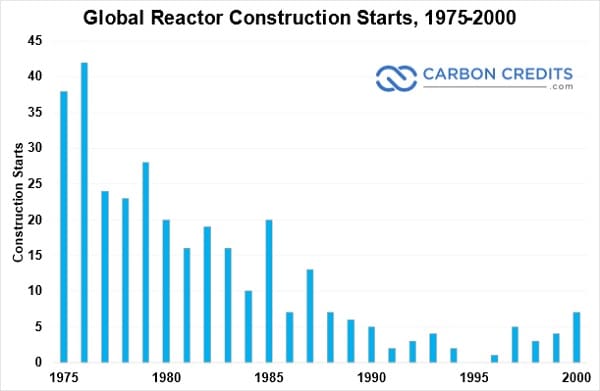
An average of twenty reactors per year started up globally from 1975–1985.

A single nuclear reactor produces about 9 TWh of energy a year, and the world uses about 24,000 TWh of energy a year.

  • That means if we had kept building the same old plants at the same old pace . . . we would have hit net-zero around 2000.

As it stands, we have thirty years left. And right now, fifty-six reactors are under construction.

For context, that’s more than the net addition of nuclear power since 1985.

More than 300 reactors are planned—and counting.

Avoiding a total climate meltdown is the hardest challenge the world has ever faced.

But with nuclear, we’ll beat it.
Go to next chapter >

Canada Launches Carbon Pricing Initiative at COP27

Canada is challenging all countries during the COP27 summit to adopt carbon pricing as the key element of their climate strategies.

Pricing emissions is widely known as the most efficient way to reduce greenhouse gas (GHG) emissions. Carbon pricing is putting a cost on pollution while adding value to desirable things such as clean air and clean energy.

Canada is recognized as a climate leader, mainly due to its robust domestic carbon pricing. The government approach allows jurisdictions to implement their own carbon pricing systems that best meet their needs while aligning with national standards.

Canada is one of the few countries to set a long-term carbon price trajectory up to 2030. This sends a strong signal to pursue low-carbon investments and help reach net zero emissions by 2050.

The Global Carbon Pricing Challenge by Canada

According to the World Bank, 68 carbon pricing initiatives are currently in place across the globe. These initiatives cover 23% of global GHG emissions.

Canadian Prime Minister Trudeau issued a challenge to triple the global coverage of carbon pricing by 2030 at COP26 last year. But in the year since, the total emissions covered by a carbon price have not changed.

At COP27, the Global Carbon Pricing Challenge was launched. It’s an initiative led by Canada calling on all nations to expand the use of pollution pricing in fighting climate change. Guilbeault said that:

“Countries around the world are realizing that pricing carbon pollution can reduce emissions and fight climate change at the lowest cost while also spurring clean innovation. Working together with like-minded nations, we can triple the global coverage of carbon pricing as an important step toward achieving net zero by 2050…”

8 other countries and the European Commission are already on board the challenge. Yet, most of them already have carbon pricing in place or have a program planned.

Joining the panel discussion at COP27 are the U.K., New Zealand, and Sweden. These carbon pricing champions will strengthen existing systems and support new ones.

The Global Carbon Pricing Challenge will create a forum for dialogue and coordination to make pricing systems more effective and support other nations when adopting carbon pricing. It aims to cover 60% of global emissions by 2030.

Each year, the participants will come together to track their progress toward meeting the goals of the Challenge. They’ll also report new actions and share best practices. By cooperating internationally, they can signal to investors that pollution can’t be free.

How Carbon Pricing Works

Basically, carbon pricing works because there is a financial incentive for entities to pollute less. Its purpose is to send a clear message that carbon-intensive products are costly. It also gives consumers and industries the flexibility they need to look for the lowest-cost solutions.

  • Carbon pricing holds the biggest emitters accountable for their pollution. That’s because the more they pollute the air, the more it will cost them.

Pollution pricing varies based on the regions, businesses and individuals covered. So there are different types of carbon pricing.

For instance, a cap-and-trade system sets a cap on emissions for high emitters while allowing low emitters to sell their extra emissions allowances, also known as carbon credits. Last July, Canada explored options to cap oil and gas industry emissions.

The most common type of this pricing is a carbon tax. It charges a direct price per unit of GHG emissions. Some carbon pricing systems combine elements of both cap-and-trade systems and carbon taxes.

Canada’s carbon pricing system is a mix of federal and provincial policies. Together, they cover over 80% of the country’s total emissions but at varying costs per tonne.

Canada continues to be a global innovator in effective carbon pricing. Its recent initiative on establishing carbon contracts will ensure that entities can plan for their long-term decarbonization and clean technologies investments. And that becomes possible with a predictable price on pollution and carbon credits.

This Ain’t Your Grandpa’s Nuclear

0
Imagine using computer knowledge from 1978 to argue that streaming video could never work. 

The internet didn’t exist back then.

Even computer screens had barely been invented.

The instant you began arguing, Netflix’s massive multi-billion market cap would laugh you out of the room.

Yet that’s precisely the situation today for nuclear.

When a researcher at The Breakthrough Institute started investigating arguments against nuclear based on price, she discovered something interesting.

The majority of the research was based on nuclear construction… from the ‘70s.

So she decided to do her own study—and unsurprisingly found that construction costs are extremely different now.

Same goes for safety and waste figures. The numbers used to argue against nuclear are all from the ‘70s—with predictably inaccurate results.

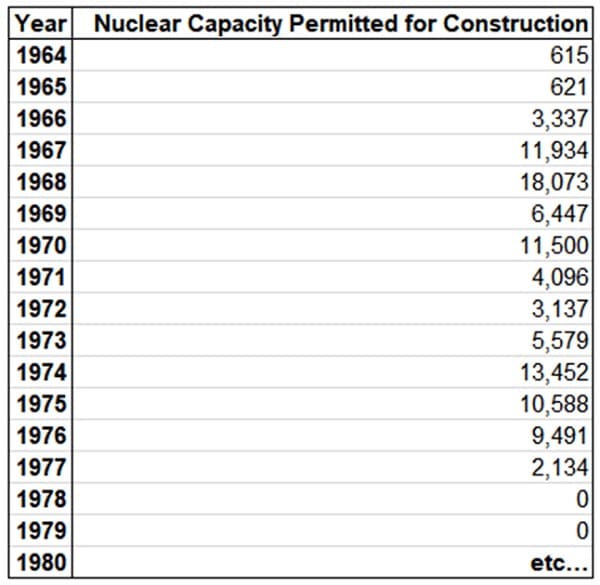
Here’s the problem: a grand total of zero nuclear reactors currently operating in the U.S. started construction after 1978.

Meanwhile, nuclear has evolved just as much as computers have in the past fifty years.

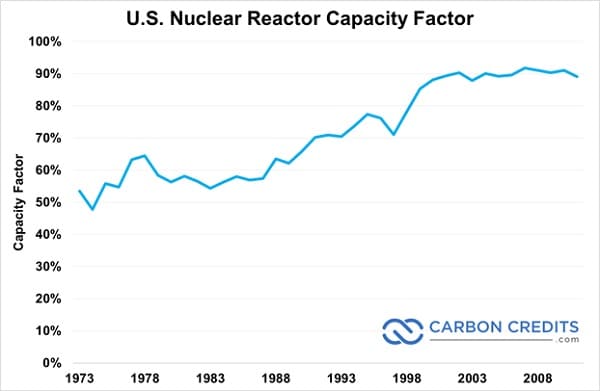
Take something called “capacity factor,” for example. It measures uptime for energy sources.

A capacity factor of 100 percent means a nuclear plant is generating energy 24/7.

In the ‘70s, nuclear was just starting up. Operational difficulties that caused unplanned outages were common.

The capacity factor was about 50 percent—so that’s the number often used to compare nuclear to energy sources like wind and solar.

Guess what it is now…

  • In 2021, U.S. nuclear capacity factor was 93 percent.

nearly double what it was thirty years ago.

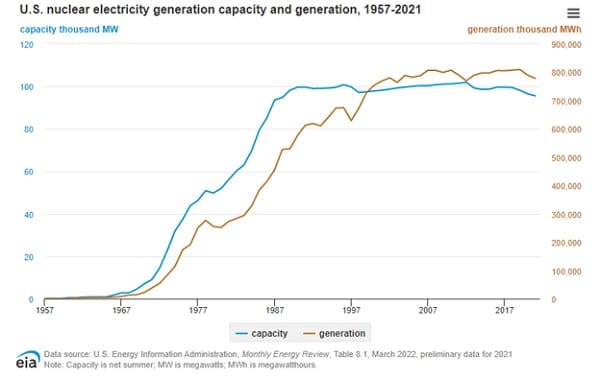
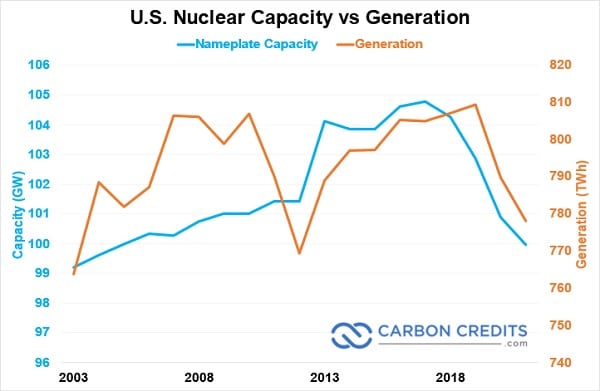
In fact, the capacity factor has increased so much over the past thirty years, that even though fifteen nuclear reactors have shut down in the U.S….

The total power produced annually by nuclear has increased by nearly 25 percent.

The other contributor to total power generated from nuclear is “uprating”—adding additional capacity to existing reactors.

Here’s how powerful that can be:

  • Two reactors in Finland started in 1978 and 1980 at 660 MWe.
  • Thirty years later, they were rated at 880 MWe—a 30 percent increase.
  • The operator, TVO, is planning to uprate them again, this time to 1,000 MWe.

In fact, TVO uses uprating to always have forty years of remaining lifetime on their plants.

And that’s another major evolution of nuclear power no one saw coming…

Rise of the Planet of the Octogenarians

When nuclear reactors were just getting traction in the ‘60s, they needed investors. And investors needed to know how long these plants would be pumping out energy.

So for amortization purposes, they chose… say, forty years.

Around the turn of the century, nuclear plants started to hit their fortieth birthdays.

And in March 2000, the Calvert Cliffs plant received the first twenty-year license extension.

Since then, 96 percent of the fleet in the U.S. has been granted extensions to operate sixty years.

Now they’re hitting the sixty-year mark… and they aren’t slowing down.

So in 2021, the Nuclear Regulatory Commission (NRC) approved a second twenty-year extension for the Surry plant in Virginia built in 1972.

It will now be able to operate until 2052—a lifetime of eighty years.

Fifteen more reactors have applied for extensions, with more expected.

  • Extremely long-term nuclear plant operations are not the exception. They’re the norm.

There’s no limit to the number of times a license can be extended, provided the NRC decides the reactor is safe to continue operations.

And the NRC is now preparing to authorize nuclear plants for up to 100 years.

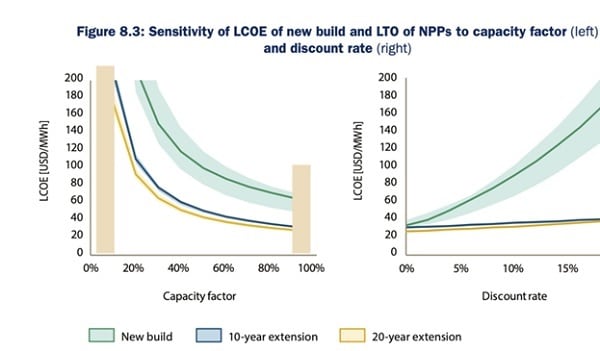
Why are license extensions so important? It’s because nuclear is compared to other forms of energy using a levelized cost of energy (LCOE).

  • Since the costs of nuclear power are front-loaded, a mere twenty-year extension means the LCOE of nuclear drops 50 percent.

Add in capacity factor increases…

And the LCOE drop is more like 65 percent.

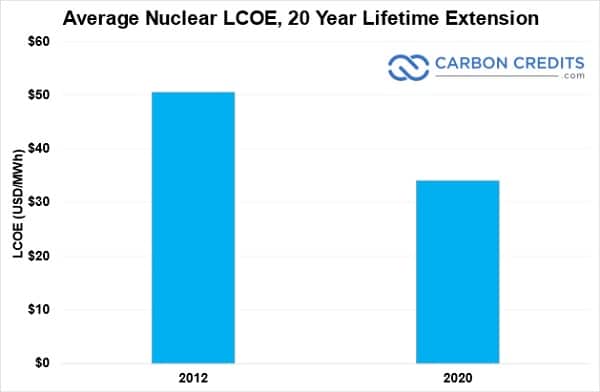
The past ten years have brought another 35 percent drop in nuclear LCOE for a twenty-year extension:

That brings the LCOE down to near $30/MWh.

  • In other words, nuclear operations in the U.S. are 30 percent cheaper than wind is now.

Here’s the thing:

The increased capacity, the increased output, and the increased longevity is all on Generation II reactors.

And those aren’t the ones being built today.

Gen 2 Nuclear

The Gen III Max Plus

In the late ‘90s, Japan built the first Generation III reactor, beginning a new era for nuclear.

Gen III reactors carefully incorporate lessons from Fukushima, Three Mile Island, and Chernobyl. That makes them safer, stronger, cleaner, less expensive, and easier to build than Gen II reactors.

For example, if a station completely blacks out, “passive nuclear safety” takes over, ensuring the fuel remains cooled.

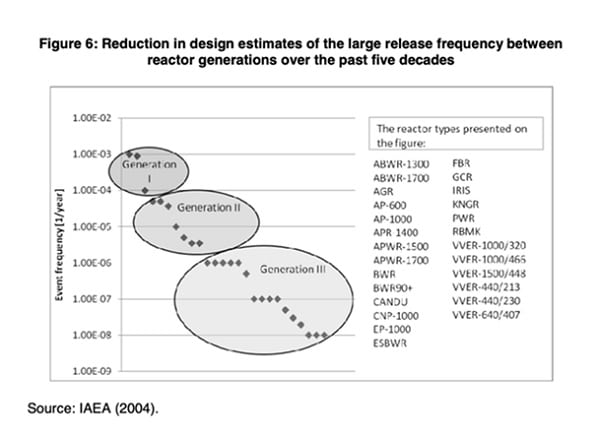
These improvements make Gen IIIs 1,600 times less likely to experience a severe accident than previous reactors.

Another technology turns potentially explosive gases into water without using electricity—which helps keep radioactivity in the reactor in case of a meltdown.

So even if there is core damage, the probability of a severe radioactivity release is 10 times less than it used to be…

  • Studies have found that Gen III nuclear reactors are so strong that they could withstand being rammed into by a fully fueled Boeing 767.

European manufacturers have now created a reactor design called the EPR—or Evolutionary Power Reactor.

It’s one of the first Generation III+ designs, and it’s built to be indestructible.

It has:

  • F that can provide cooling for up to three years after shutdown.
  • A “core catcher” that traps and cools the hot core if it escapes the reactor.
  • Two layers of concrete walls that are a total of eight feet thick.

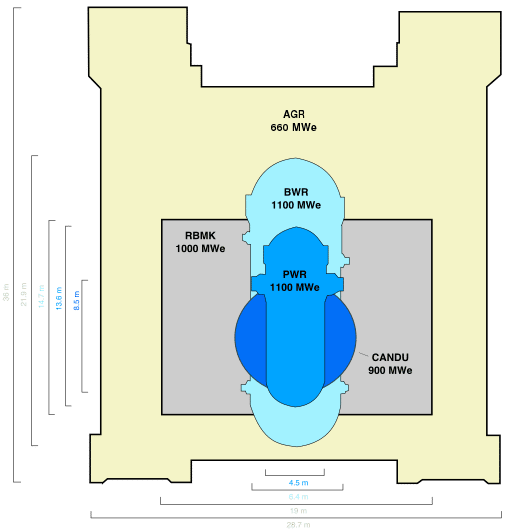
EPRs are hugeoutput is up to 1,650 MWe, or 70 percent more than most U.S. reactors.

Oh, and they use nearly 20 percent less uranium per MW than older reactors.

The first Gen III+ started up operations in 2017, followed in rapid succession by reactors in China, Finland, France, and the UK.

From Evolution to Revolution

A group of fourteen countries around the world are already developing advanced Gen IV reactors.

If Gen III+ reactors are evolutionary, Gen IV reactors are nothing short of revolutionary.

For example, American companies are working on “walk away” safety: nuclear reactors that need zero backup power or external cooling in case of an accident.

And Gen IV isn’t a pipe dream.

China’s already started up the first Gen IV reactor—a model that can’t melt down.

More than a dozen other large reactor designs are being developed.

More importantly, more than seventy reactor designs are under development for SMRs—Small Modular Reactors.

“Modular” means that the components can be built in a factory, instead of on-site.

  • SMR production is easily scalable, and costs plummet as production rises.

In the future, SMRs could be produced at the same scale as airplanes.

The reactor is small enough to be brought to the nuclear plant on a truck.

They produce about ¼ as much power as a regular reactor, and some are designed to operate for thirty years before refueling.

  • A 300 MWe SMR plant can be built in under four years.

Once built, it can follow electricity demand, cutting from 100 percent power to 40 percent in just twenty minutes.

SMRs are currently being licensed or constructed in five of the six top nuclear-producing countries in the world.

TerraPower, a company founded by Bill Gates, is installing its first SMR in a small Wyoming coal town.

Why there?

Because it can use the existing infrastructure and workforce of the coal plant that’s retiring in 2025. The same land, the same connections, the same office buildings—saving up to 35 percent of the cost.

  • In just a couple years, that single SMR is set to provide enough carbon-free energy to power 345 small towns.

Today’s nuclear is worlds apart from the nuclear of fifty years ago.

Old plants have improved. New designs have been built. New moonshot approaches are actually working.

Waste is dropping, reactors are becoming safer, and the price is going down.

Around the world, rapid learning is taking place that will enable nuclear to radically expand.

All the industry needs to blow up is a catalyst.

And that catalyst…

It’s here.

Go to next module >

The World’s Shrinking Wasteline

0
Contrary to how it’s portrayed by the Simpsons, nuclear waste is not a highly toxic, neon-green sludge. It doesn’t ooze out of leaky barrels stashed on playground slides and in public parks…

… and it’s not haphazardly stored or tossed into rivers because there’s no other place to put it. The truth is, there’s not even that much of it.
The amount of nuclear waste generated in the entire U.S. each year is less than half the volume of an Olympic swimming pool. And that fuel provides power to more than seventy million homes while avoiding 400 million tonnes of CO2 emissions.
 

Even long-term, there’s just not much radioactive waste to worry about—especially compared with other forms of electricity generation.

  • All civilian nuclear waste produced in the U.S. since 1950 would fit on a football field at a depth of thirty feet.

The coal used by the U.S. would fill that same space 2.5 times, every day.

The world generates about 8,000 tons of nuclear waste annually. That’s only 1/10 the weight of the Washington Monument.

As little as there is however, it still needs a safe, long-term solution.

You see, high-level nuclear waste—the really dangerous stuff—is extremely hot and radioactive. And the only way it becomes harmless to humans is time. Lots of time.

Which means countries need to take their time to get waste storage right—the first time.

rodney mccullum
That’s why countries like China, Finland, Sweden, and the U.S. have spent the last forty years studying disposal methods. And they’ve figured it out.

Waste Not, Want Not

The first problem with nuclear waste is cooling it down and keeping it away from people.

Spent nuclear fuel comes conveniently in the form of thin, solid rods that are relatively easy to store.

After being removed from a reactor, these rods are placed in giant, steel-lined concrete pools that provide cooling and shielding. A few years later, much of the heat and radioactivity has dissipated.

The used fuel can then be moved to dry storage in welded, steel-reinforced concrete above-ground canisters.

After about fifty years there—by which time the radioactivity has declined—the canisters can be easily transferred to a permanent storage site.

Dry storage in the U.S. did not begin until 1986.

That means it has another fifteen years or so until a permanent solution needs to be ready.

  • Fortunately, the country found the solution has already been found: in the earth itself.

In the far, far north of Canada lies the Athabasca Basin. It’s one of the biggest and highest-grade uranium deposits known to man.

Most of it is UO2—uranium dioxide—which serves as nuclear reactor fuel. The ultra-high-grade ore is safe from water by a “dome” of clay.

Even though the deposit has been in permeable sandstone for more than 100,000 years… it’s gone nowhere.

Multiple ice ages, continental drift, and even mountain formation have come and gone.

Its chemical or radioactive signature is undetectable from the surface.

In other words, it’s the perfect solution for long-term waste disposal: a deep geological repository (DGR). Already, more than a dozen countries have chosen it as their nuclear waste management solution.

The First Reverse Mine

Onkalo—meaning “pit” in Finnish—is scheduled to begin operations in Finland in 2024.

It will be the first permanent disposal site for high-level civilian nuclear waste in the world.

Tunnels got dig one-third of a mile into the earth’s surface, all the way down to the bedrock.

  • The used fuel are in boron steel canisters.
  • Those canisters will be enclosed in copper capsules.
  • The copper capsules will be buried in the tunnel floor.
  • The holes dug will be plugged with a water-absorbing clay.
  • Then the tunnels will be filled with bentonite and sealed with concrete.

Come global warming or another ice age, it will be the fuel’s final resting place.

Now you might be thinking…

Easy for Finland—they must have only a small amount of waste!

  • But Finland will get 60% of their power from nuclear—second only to France.

Even so, the single new DGR is not expected to be filled until 2120, a century after operations begin.

Sweden is next in line, and they’re following the exact pattern set by Finland.

8,000 tonnes of nuclear waste—everything Sweden has generated since the 1970—will be underground, one-third of a mile into the earth.

The final project will cost only $2 billion.

This is the result of 40 years of research and it will be safe for 100,000 years.”
– Sweden Environment Minister Annika Strandhall

Just like how a large company would do it, Sweden let communities compete for the chance at the jobs and money that follow large construction projects.

France has already selected a suitable site for a DGR, and the UK and Canada are in the process of doing so.

The United States, however, is a different story.

Reduce, Reuse, Recycle Nuclear Waste

Most of the spent fuel in the United States is in dry casks or pools at more than seventy nuclear reactors across the country.

The Department of Energy is considering consolidating all of it into a federal short-term storage facility.

They’d use consent-based siting, just like Sweden.

In late 2021, the Office of Nuclear Energy took a first step toward establishing such a repository.

The NRC found that either nuclear reactors or a federal facility will provide safe storage for waste for at least the next century.

The Department of Energy found that a permanent nuclear waste disposal facility would cost a staggering $31 billion.

Fortunately, the government has been collecting money from consumers just for that—since the ‘80s. And so far, they’ve got $44 billion.

Now it’s just a matter of identifying a place. But they might not have to, because there might not be any waste remains to store.

Here’s why…

Current nuclear facilities use only about 1 percent of the energy stored in the uranium.

  • Reprocessing the fuel enables it to be used again. And again.

That means much of the used fuel currently in storage is not actually waste.

Canadian reactors, for example, can actually burn spent fuel from U.S. reactors. And once used, fuel from the Canadian reactors is only dangerous for about a thousand years—not 100,000.

France has taken it a step further, and nearly closed the fuel cycle. Their reprocessing of spent fuel results in only 4 percent waste.

The other 96% is reused in the reactor.

Anti-nuclear activists love to say that nuclear has no long-term solution to its waste.

In fact, nuclear may be the only energy technology on the planet with a complete long-term solution for every. last. molecule.

Go to next chapter >

The Safest Deadly Poison in the World

0

Fukushima is the BEST Possible Advertisement for Nuclear Power and its Safety.

About a decade ago, the Union of Concerned Scientists broadcasted an urgent request to U.S. citizens.

They were to write their governors and congress people to demand one thing: improved nuclear safety.

Sounds like a noble pursuit, in theory.

Except that in all of U.S. history…

The recorded number of deaths due to nuclear power is zero.

In fact, nuclear is the safest industry in the entire United States. Working in a nuclear plant is safer than working in a library.

That’s not particularly easy to improve on.

Yet there remains a widespread misconception that nuclear plants are ticking time bombs, just waiting to level an entire city.

Nothing could be further from the truth.

Large-scale nuclear accidents generally involve a nuclear meltdown, which safety is simply due to damage to a nuclear reactor core from overheating.

Two really improbable things have to happen for a meltdown to occur:

  • A loss of coolant or coolant pressure to the core, allowing it to heat up.
  • A complete failure of both Emergency Core Cooling Systems (ECCS).

In the nearly 20,000 years of combined nuclear operations, there have only been three core meltdowns.

When a meltdown occurs, the danger is not from the core itself. No, it’s not going to melt all the way through to China.

The real danger is from radioactive particles escaping from the reactor.

Fortunately, the release of radioactive matter is generally reduced by the nuclear infrastructure that remains after the meltdown. Except, of course, if the infrastructure that should be there – isn’t.

That’s exactly what happened at the most famous (and worst) nuclear meltdown in history: Chernobyl.

A Rocket without a Windshield

In early 1986, inexperienced personnel attempted an experiment at the Chernobyl nuclear plant in Ukraine.

The plant itself was a particularly cheap, shoddy design.

All other reactor types have a crucial containment dome. It’s a massive, thick steel-and-concrete “lid” that keeps radioactive material inside the nuclear plant if anything goes wrong.

Not having one is like building a rocket that doesn’t have seatbelts, or a windshield.

The perfect combination of untrained personnel, shoddy design, and deliberate violation of safety rules meant that the nuclear experiment went very, very wrong.

The meltdown it triggered caused a chain of explosions—then a massive fire. The fire spewed at least five percent of the reactor core into the surrounding countryside.

It was the largest uncontrolled civilian release of radioactive material in history.

Unlike the nuclear plant, the Soviet Union kept a tight lid on what was happening.

It wasn’t until nuclear workers all the way in Sweden identified high levels of radiation that the Soviet Union was forced to admit the accident had happened.

By then, ten days had passed.

  • By every measure, it was the worst possible handling of a nuclear accident.

While what happened was horrible, the official number of deaths directly attributed to the accident is about thirty.

But what about radiation exposure for people near the plant?

More than 200,000 “liquidators,” Soviet citizens, helped with recovery and cleanup of the accident site.

Those who were exposed to 100 millisieverts of radiation—the average for a Chernobyl liquidator—saw their mortality risk increase by 0.4 percent.

If you live with someone who smokes cigarettes, you increase your mortality risk by 1.7 percent.

unsc

Even today, the people living around Chernobyl get about as much radiation exposure as people in Colorado, where there’s low-level radiation from granite.

“Where Probability Says We Shouldn’t Be”

A quarter-century after Chernobyl, an 8.9 earthquake struck off the coast of Japan, shifting the entire country a dozen feet east.

Many Japanese nuclear plants had only been built to handle an earthquake with only one-fifth of that magnitude.

Yet none of the eleven reactors in the region suffered any damage.

And in Fukushima, Japan, everything functioned perfectly as planned. Systems detected the earthquake and shut down the reactors. When the power went out, diesel generators kicked in to keep the cores cool.

Soon after the earthquake, a forty-two-foot wave slammed into the coast of Japan. It swept over the sea wall in front of Daiichi, killing the emergency generators… and the backup generators.

A second tsunami hit eight minutes later.

Fortunately, the battery-powered backup of backup generators at Fukushima kicked in, and the cores remained cool—all according to plan.

Eventually, they also failed, resulting in the first and only triple nuclear meltdown in history: All three cores rapidly overheated.

Due to the containment domes, fallout from the accident remained limited.

  • There were no reported deaths or cases of radiation sickness in the immediate aftermath of Fukushima.

And of the more than 200 workers who continued to mitigate damages on the site, not a single one died from radiation.

Overall, the loss of life expectancy in the town most affected by Fukushima… was less than that experienced by a London resident from air pollution.

To Sum It All Up…

A crumbling, outdated nuclear plant with poor safety features was hit by the fourth-largest recorded earthquake, then a forty-foot wall of water.

  • The electricity supply
  • The cooling system stopped functioning.
  • The reactors melted down and exploded.

And it killed fewer people than operations at an average coal plant does every single year—when everything goes according to plan.

Fukushima is the best possible advertisement for nuclear power.

Scrams Go Away

The only civilian nuclear meltdown on U.S. soil was at Three Mile Island in Pennsylvania in early 1979. The ECCS was turned off, which led to a partial melting of the core—almost no radioactive material escaped.

While the accident destroyed a billion-dollar reactor, it did not harm people nearby, either during the incident or in the aftermath.

  • Total number of deaths from Three Mile Island: zero.

More than a dozen studies conducted since the accident have shown that the amount of radiation released was too small to even measure the health effects.

But just to be safe, the Nuclear Regulatory Commission (NRC) quickly established the Institute of Nuclear Power Operations (INPO). Its job was to help provide training for nuclear plant operators.

The efforts of the INPO have steadily made nuclear energy safer and more reliable for the past forty years.

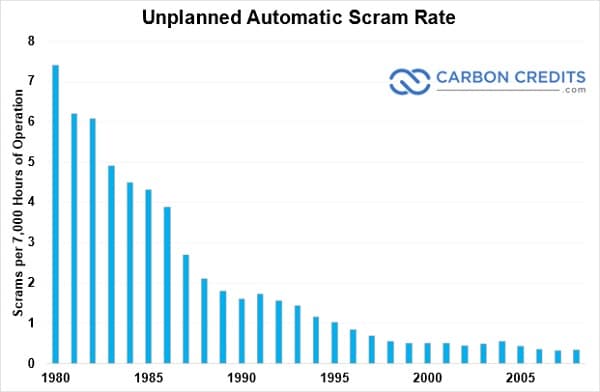
One of the best measures of nuclear safety is called a “scram.” A scram is an automated shutdown that occurs if necessary to prevent damage to the core.

Control rods are inserted into the core, causing all nuclear reactions to stop.

A scram takes a total of about three seconds.

In 1985, there were 530 scrams in U.S. nuclear reactors.

By 2021, there were only 37—a 93 percent decrease.

unplanned automatic scram rate

Nuclear By Any Other Name

But that’s not important. Because the question is not whether nuclear reactors have a perfect safety record.

Like every source of energy, nuclear is dangerous, and it can cause injury or death.

But are other sources of energy safer?

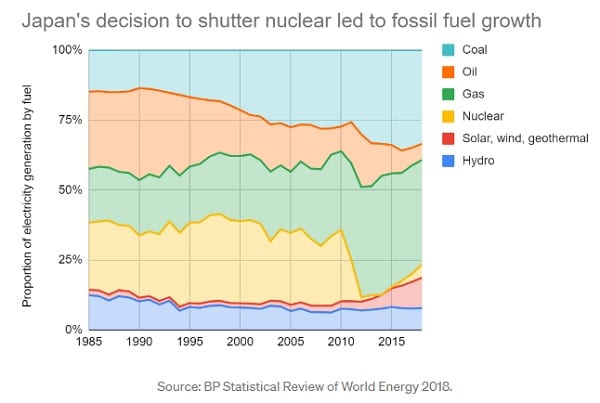
When Japan halted nuclear production after Fukushima, guess what replaced it.
Not renewables.

Mostly coal and gas.

Japan shutter nuclear led to fossil fuel growth

In two years, Japan started eight new coal-fired power plants, with plans for the biggest coal-power expansion in any developed nation.

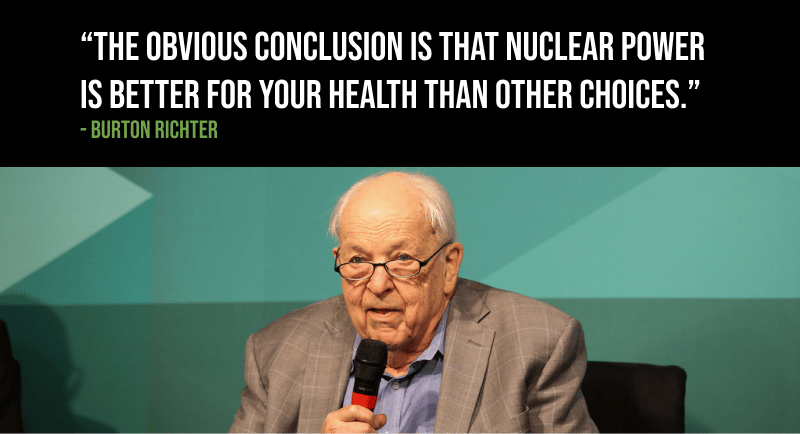
Nobel Prize physicist Burton Richter estimated t he years of life lost due to energy sources in Japan.

For nuclear—including the losses attributed to the Fukushima accident—it’s 30 years per TWh.

For coal? 142.

Burton Richter on nuclear safety
About 20,000 premature deaths are expected over the seventy years following Chernobyl. Compare that to the estimated number of deaths each year from fossil fuel pollution, as identified by Harvard researchers: 8 million.

  • Burning fossil fuels creates another Chernobyl—every single day ad. space

The fact is that even first-generation nuclear reactors are an order of magnitude safer than every other fuel source.

Americans will write their congress people, certainly.

But they’ll be begging for nuclear.

Go to next chapter >

The Nail in the Nuclear Coffin

0
Many people believe that Three Mile Island is what killed nuclear in the United States. It may have dealt the fatal blow, but nuclear was dying years before the accident occurred. And for a reason that had nothing to do with nuclear itself.
 
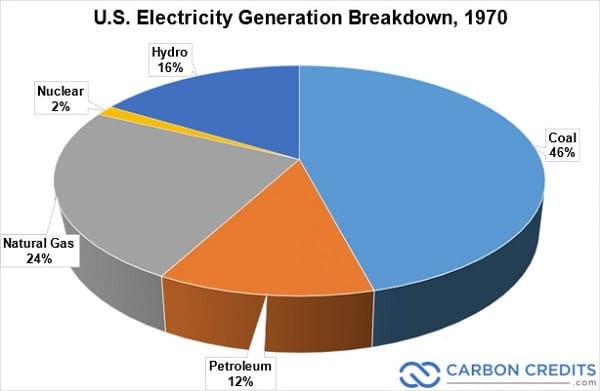
You see, it doesn’t matter how expensive nuclear is; it matters how cheap other energy is. When the oil crisis of the early 1970s hit, 82% of electricity was generated using either fossil fuels such as coal.US electricity generation breakdown, 1970Overnight, the price of both oil and coal increased by 100 percent.The new kid on the block, nuclear, was suddenly far cheaper than gas- and coal-powered electricity and other clean energy sources. 

Utilities eagerly placed orders for turnkey nuclear plants.

It seemed to be the answer to all their problems.

And it was, for a while.

When fossil fuel prices were sky-high, nations were rationing oil, and coal was outrageously expensive, the nuclear power buildouts paid off handsomely.

Only the utilities didn’t count on the oil crisis causing electricity demand growth to slow sharply. At the same time they had to increase prices, no one wanted their product.

That’s the same time as when nuclear construction prices started to spiral out of control due to new regulations and ways looking for clean energy. Utilities found themselves stuck between a rock and a very hard place:
  • Go bankrupt due to high fuel prices, or
  • Go bankrupt due to high nuclear construction costs.

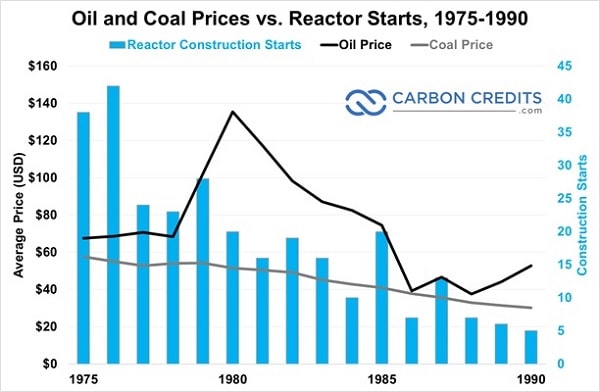
Then the prices of oil and coal started to fall, and fall some more—from 1980 all the way through 1985.

oil and coal prices vs. reactor starts, 1975-1990

Utilities quickly switched to building fossil fuel plants again.

Not a single new reactor began construction in the United States from 1980–2010.

Instead, coal and natural gas dominated—and CO2 emissions were off the charts and the option for a clean energy like nuclear melts into thin air.

The world built a decades-long addiction to cheap, dirty energy that became nearly impossible to break.

Freaking Fracking

In the mid-2000s, natural gas prices were rising. Popular opinion held that the U.S. was going to severely limit CO2 emissions.

And all those nuclear plants built in the ‘70s suddenly looked appetizing again.

Their operating costs averaged only $0.02/kWh.

An efficient combined-cycle plant was running four to five times as much… just for the fuel.

In that market, nuclear was king.

  • Every GW of capacity—about the size of a single reactor—was spinning out up to half a billion every year.

That lasted for four glorious years, from 2004–2008.

Utilities took note.

From 2007–2009, thirteen companies applied to the Nuclear Regulatory Commission for construction and operating licenses to build twenty-six new nuclear reactors.

For context, that’s 25 percent of the U.S. current nuclear reactor base in just two years.

Then it was de ja vu all over again. The Global Financial Crisis reduced the demand for natural gas, causing prices to plummet.

Then in the early 2010s, a new technology called “fracking” made natural gas much cheaper than nuclear. This forced plants offline.

By 2013, most of the new nuclear applications had been abandoned. Natural gas electricity was about 4 cents per kwh, versus 10 cents for nuclear.

In the northeastern United States, electricity prices fell more than 50 percent from 2008–2016.

A study by MIT in 2015 showed that the current price trajectory of electricity made about two-thirds of nuclear power in the U.S. uneconomical—forcing about 20 percent into early retirement.

In 2019, Exelon announced that it would close one of its nuclear reactors in Pennsylvania unless it received subsidies. Why?

Because cheap natural gas sliced regional electricity prices in half. That meant Pennsylvania’s nine nuclear reactors (which power 33 percent of the state) were quickly becoming unprofitable.

Natural Gas Is Out; Nuclear Is In

The subsidy request is not far-fetched.

Wind and solar already received massive federal subsidies, which is part of what makes them competitive with nuclear.

Nuclear is the only form of energy that is not being valued by the market for its low emissions and extreme reliability. Fortunately—despite the best attempts of oil and gas companies at stopping them—politicians in several states are rewriting the rules.

  • “Zero-emission credits” are being created so the market accounts for the value of carbon-free, clean energy like nuclear.

And the federal government created a $6 billion Civil Nuclear Credit Program last year to help preserve the existing nuclear infrastructure in the U.S.

In the end, the subsidies might not even be necessary.

In the last three years, natural gas has spiked 400%—most of that before 2022. It’s at its highest level in thirteen years.

It was at $8 when all those applications were filed, then dropped as low as $2 in 2019.

Now natural gas is back at $8.

Meanwhile, coal has risen from $50 a ton to $400 a ton in just two years.

Energy prices in the EU are already far beyond extremely expensive nuclear plants.

In fact, natural gas increases have pushed prices in the UK to $225 per MWh for the first time in fifteen years. And that’s in the summer, when energy demand is about 50 percent lower than the winter.

That’s about double the price the UK government guaranteed to pay a French company building a reactor in England.

  • In other words, they’d get an immediate discount on energy just by building more nuclear reactors.

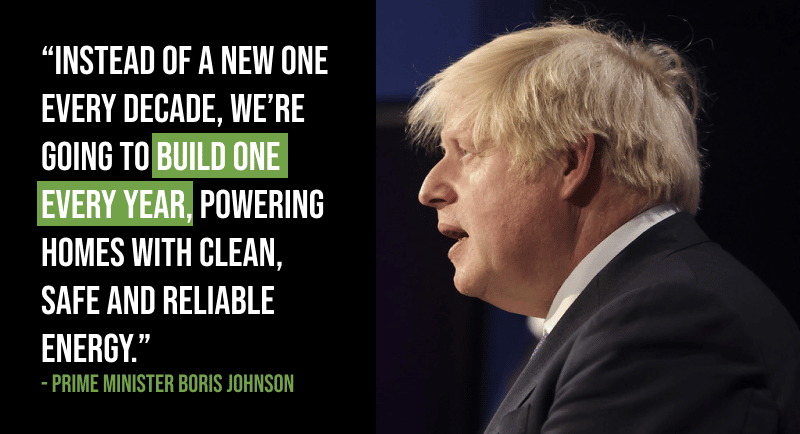
So that’s exactly what they’re going to do.

Boris Johnson on clean energy nuclear
In 2000, nuclear power supplied about 10% of the U.K.’s electricity. It was 20% in 2020 and they’re going to take it to 25%.

They’ve set up a new organization called Great British Nuclear. Its purpose is to ensure every new nuclear plant is built faster than the last.

In the future, it won’t matter how cheap other energy is.

Nuclear will be even cheaper than any clean energy.

And best of all, it will be carbon-free.

Go to next chapter >

Why the Great Nuclear Bandwagon Crashed and Burned

0
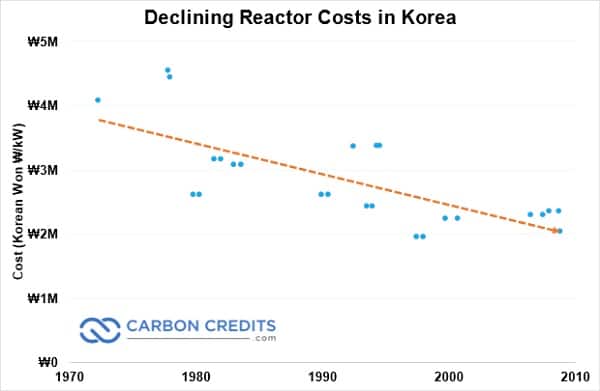
Most people know that nuclear power is extremely expensive to develop—and getting worse. And most people are flat-out wrong. In South Korea, prices have constantly dropped for nearly fifty years.

  • Over the course of building twenty-eight reactors from 1971–2008, the average cost decreased by 50 percent.

In fact, that decline is similar to Germany’s experience with solar panel pricing over the same period.

France experienced a similar performance, with nuclear construction costs dropping from 1960–1970.

After that, costs remained relatively level as they built out a nuclear fleet that powers more than 70 percent of the country.

So the United States—the nuclear power pioneer—should be building nuclear plants cheaper than anyone else, right? Also wrong.

In fact, a few years ago, two reactors in South Carolina were cancelled after their estimated price tag skyrocketed from $9.8 billion to $25 billion.

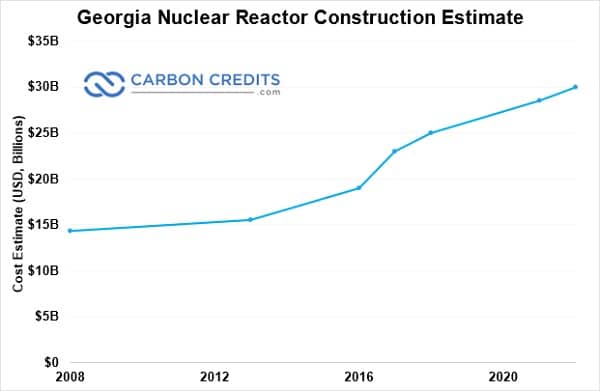
This year, two reactors under construction in Georgia saw their expected costs pushed once again—this time, to $30.3 billion.

The massive amounts of carbon-free electricity generated by nuclear power is coveted by utilities, just not with massive price tags attached. They believe that nuclear energy and net zero are so compatible. And they seemed to be right.

But here’s the thing: even the starting price tags on those U.S. nuclear reactors have risen by hundreds of percent over the past few decades.

Now, nuclear is not expensive on its own. And most of the plants that are in operation now were relatively cheap when they were built. In fact, in the early days of nuclear, prices were on a steady downward trend similar to that of wind and solar.

As each successive nuclear reactor was built, the price naturally dropped.

That’s due to a natural phenomenon known as the “learning rate.”

First-Mover Disadvantage

A learning rate is the rate at which a technology decreases in cost as it increases in use.

For example, a learning rate of 10% means that every time installed capacity doubles, the price drops by 10%.

Until 1970, the learning rate for nuclear in the United States was a fantastic 23 percent. In other countries, it was high as 35%.

  • If those learning rates had continued through 2015, nuclear reactors would be less than one-tenth of their current cost.

And if the accelerated deployment of nuclear through the mid-‘70s had continued…

  • Nuclear would have replaced the U.S.’s entire coal and gas-powered electricity by 2015 and help the country’s race to net zero.

It also would have avoided more than 150 GT of CO2 emissions, as well as about ten million deaths from that pollution.

Only it didn’t. Because sometime around 1970, the learning rate broke. And the price started to rise for every additional reactor built.

Suddenly, learning rates around the world became negative—the United States dropped to – 94%.

Part of the problem was that too many nuclear plants were being built at once.

Demand for nuclear plants skyrocketed in the late ‘60s, causing supply chain issues for both skilled craftsmen and huge, complex nuclear reactor components.

Prices on even simple parts and labor skyrocketed.

More importantly, if a part or worker was unavailable when they were needed, construction was delayed. And since utilities were financing the debt, every additional day meant additional millions of dollars in interest.

But that’s only part of the picture.

A New Expensive Point of View

In the early days of nuclear, every project was “First of a Kind”—or FOAK.

No manufacturer or developer had experience building new nuclear reactors.

  • In fact, the first nuclear reactors in Israel and Pakistan were built by a manufacturer of bowling equipment.

So with dozens of plants being brought online all at once, it was a time of learning the wrong way to do things. Then implementing insanely expensive fixes to plants still under construction.

For example, tectonic plates weren’t even discovered until 1967. Suddenly, dozens of plants under construction had to be retroactively earthquake-proofed.

Reactors being built in the 1970s in the U.S. were in an environment of constant change that made controlling or even knowing costs impossible.

Each new snag or accident at an operating reactor introduced a new regulation or standard.

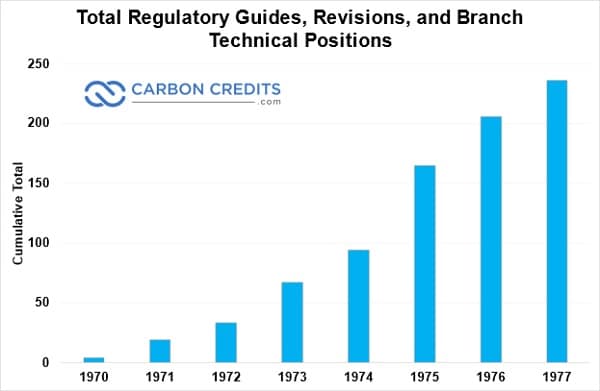
  • Between 1970 and 1978, the number of engineering standards nuclear plants had to abide by soared from 400 to more than 1,800.
  • During the same time period, regulatory guides and positions from the Nuclear Regulatory Commission increased from 4 to… 304.

Every time a new guide or standard was released, every reactor under construction had to be brought up to code.

And every minor change risked a “ripple effect” that could force an overhaul of entire related systems.

For example, the David-Besse reactor was budgeted for $136 million when construction started in 1967; when it was finished a decade later, the price tag was $650 million.

A study found that modifications (and their chain effects) forced by the Nuclear Regulatory Commission were responsible for more than $400 million of that cost.

While the learning curve may have broken, this was the system working.

As operating experience built up, reactors became insanely safe—in fact, the safest form of energy on the planet.

The Nuclear Bomb for Nuclear Power

Then the real bomb dropped.

A partial meltdown of a reactor at the Three-Mile Island (TMI) plant in 1979 threw the entire nuclear industry and its net zero potential into disarray.

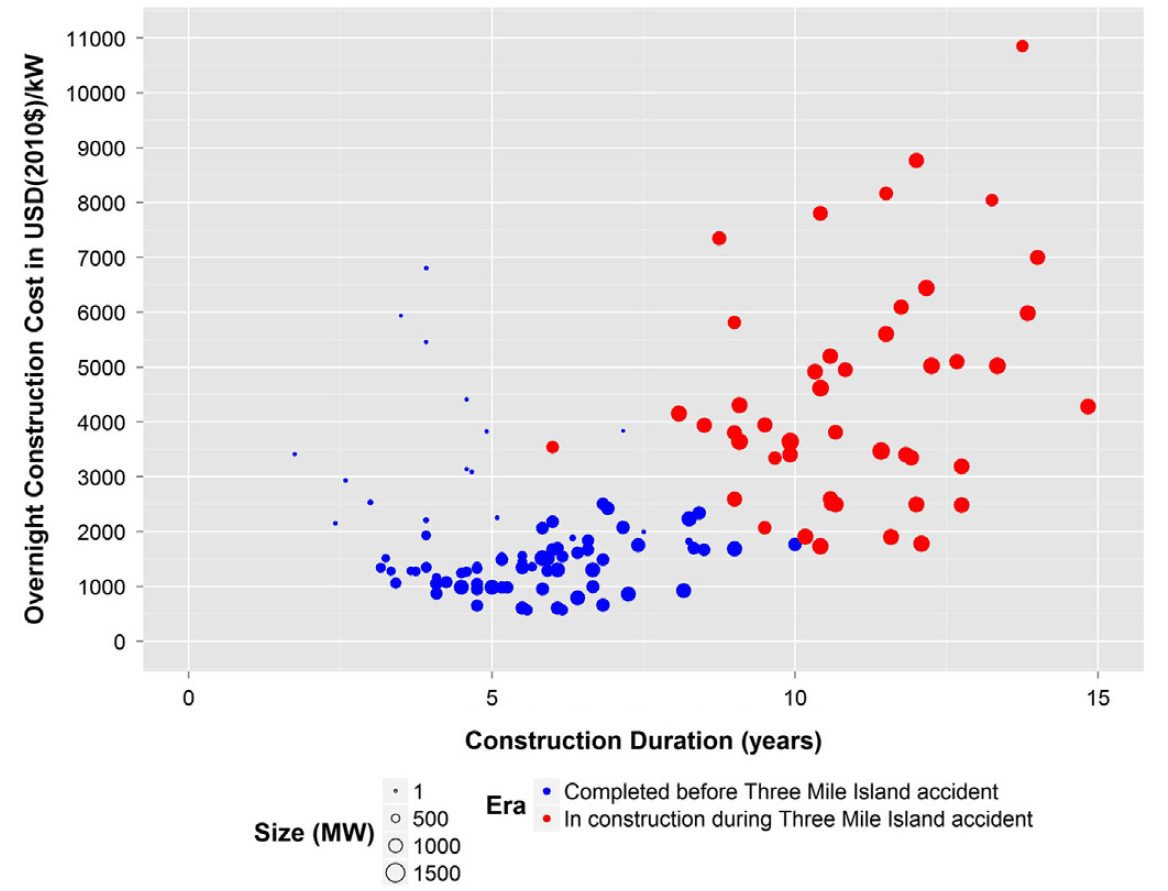
Overnight, the construction costs and timelines of nuclear plants spiraled out of control.

nuclear reactor construction cost and duration

For the fifty-one reactors under construction when TMI occurred, regulatory delays and retrofit requirements were everywhere.

Median costs soared nearly 300 percentmore than $7,000/kW for some reactors.

Applications for new nuclear reactors evaporated instantly.

And more than 120 reactor orders were cancelled—more than the entire current U.S. nuclear fleet.

With no new reactors being built, the learning rate was completely dead.

And the price of nuclear construction had no way of going down.

From the mid-‘80s until now, every nuclear project has been another ultra-high-cost FOAK.

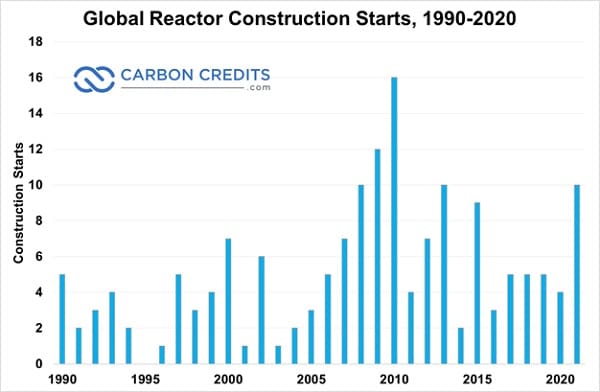
But here’s the good news: The United States is beginning to return to its pre-disruption deployment and learning rates.

  • And the learning curve is quickly restarting in the United States.

Global nuclear reaction construction starts

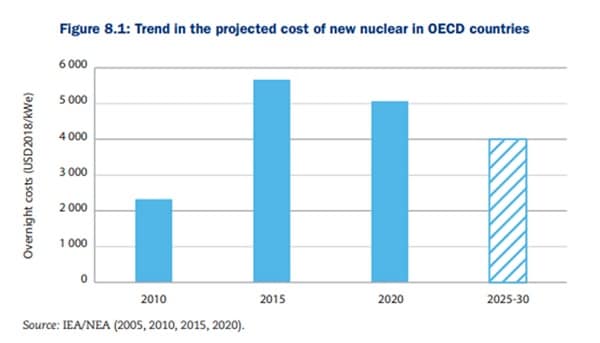
As new constructions rise, the cost is already dropping and is set to drop more than 30 percent from 2015–2030.

If the U.S. invests about $1 trillion into nuclear energy by 2050, it could supply more than 3,500TWh of energy per year.

  • Nuclear would provide 85 percent of current energy consumption—all carbon-free—for less than half of the CARES Act stimulus.

And the cost of nuclear per MWh would drop by about 60 percent, which would have been great for the clean energy and net zero transition.

Projected cost of new nuclear in OECD countries

Studies have found that there is nothing inherently expensive about nuclear.

And as the learning curve comes alive again, nuclear is set to get much, much cheaper.

Go to next chapter >

The Anti-Human Environmentalist Who Nearly Exterminated Nuclear

0
On May 7, 1966, Martin Litton voted against the construction of a nuclear plant in Diablo Canyon, California.

Martin was on the board of directors of the Sierra Club, an influential environmentalist group. And although no one knew it that day, his vote marked the beginning of the end for nuclear power. 

Most of the Sierra Club board voted for the nuclear plant. After all, nuclear was (and still is) the safest, cleanest, most reliable energy on the planet. Environmentalists and lobbyists at the time gave full-throated endorsements of the new technology:

Nuclear energy is the only practical alternative that we have to destroying the environment with oil and coal.”
– Sierra Club Director Ansel Adams


But Martin was hell-bent on making sure that plant wasn’t built…

You see, he believed that California didn’t need any new power plants—period.

You don’t need power… you can go back to using a spear and picking berries.” – Martin Litton

In fact, California didn’t need any more people.

You see, for Martin and two other directors of the Sierra Club, nuclear plants presented a problem:

They brought humans with them.

And Martin wanted a drastic reduction in population to keep California wild. “There are too many people anyway,” he said.

Along with two other directors of the Sierra Club, he fought for years—tooth and nail—against the construction of the Diablo Canyon nuclear plant.

They quickly decided playing fair was optional. They’d lie, cheat, and steal to keep nuclear from blowing up.

martin litton

But their radical anti-growth, anti-human message was never going to work on Californians.

So these environmentalists and other anti-nuclear activists changed their tactics.

Instead of persuading the public, they would prey on their ignorance—and scare the fire out of them.

The Day Nuclear Died

Their first objective became to get people to confuse nuclear energy with nuclear bombs.

Since atomic energy had first been used to level cities at the end of World War II, it was child’s play. Millions became convinced that a nuclear meltdown was the same as a nuclear bomb.

Then, they fed generations of people the lie that radioactivity from nuclear energy could kill them.

The logic was sound: When people thought nuclear was a threat to their lives, they’d regulate it out of existence.

Our campaign stressing the hazards of nuclear power will supply a rationale for increasing regulation… and add to the cost of the industry.”

– Sierra Club Executive Director Michael McCloskey, 1974

The campaign was wildly effective. Due to new regulations, parts of plants that had already been built had to be ripped out and rebuilt—leading to absurd cost increases.

The DC Circuit Court handed the environmentalists a gift on a silver platter. They opened the door for citizen lawsuits to intervene in the licensing and construction process.

That slowed construction even further, causing costs to skyrocket and nuclear plans to be abandoned.

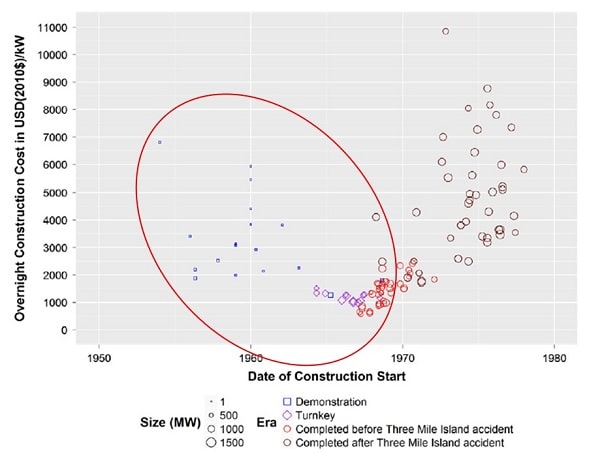
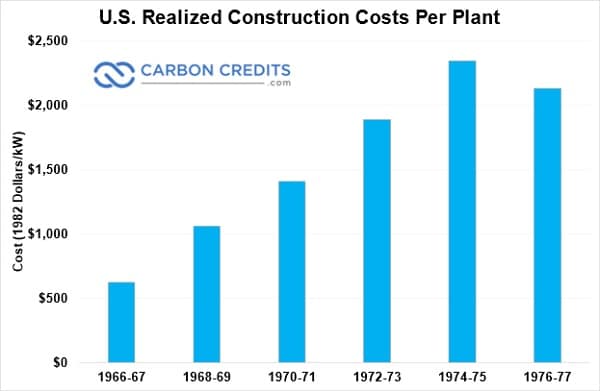
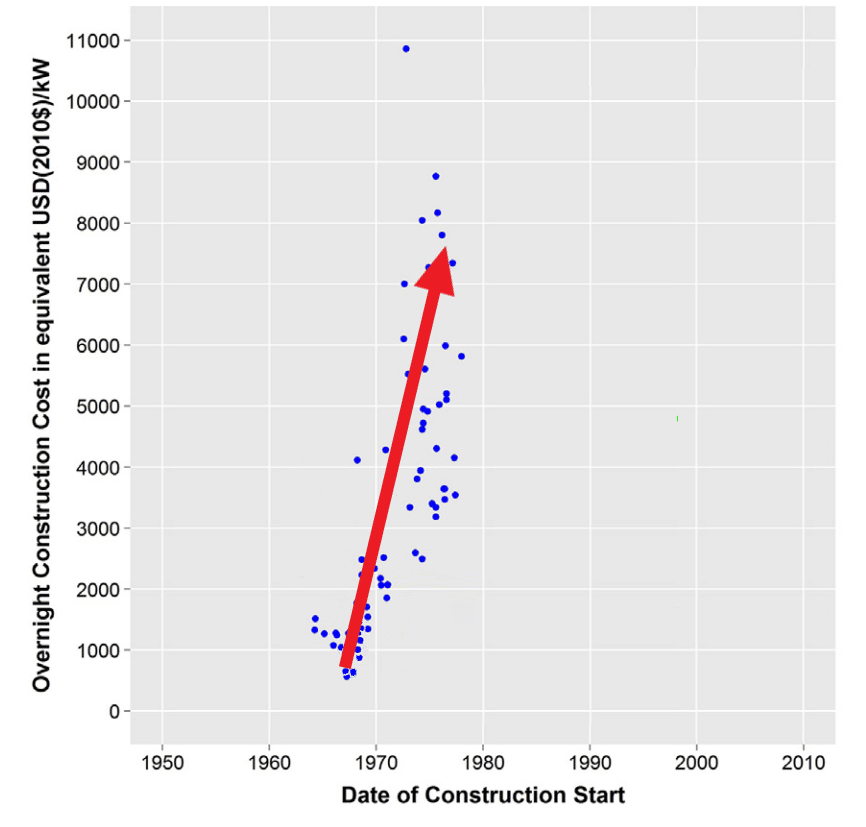
For any nuclear plant started in the U.S. in the early ‘70s, the price of construction skyrocketed.

Date of construction start of nuclear power plant

Two nuclear reactors, Vogtle 1 and 2, were proposed in 1971 for $660 million. They opened in 1987 and 1989 for a total cost of nearly $9 billion.

In 1974, activists were successful in getting the Atomic Energy Commission abolished.

It was replaced by the Nuclear Regulatory Commission (NRC), which became responsible for licensing new nuclear reactors.

  • Since the NRC was formed, the number of new nuclear plants that have broken ground in the United States is zero.

Two years later, the California Energy Commission decided it only approve nuclear plants if the developers could give precise fuel and waste disposal costs for the lifetime of the plant—a deliberately impossible task.

As goes California, so goes the nation. And more than 30 states followed suit.

In 1978, Kern County voters rejected a nuclear power plant for the first time in U.S. history—with 70 percent voting against. It would have been the highest-capacity nuclear plant in the world.

  • Radical regulations, rising costs and a scared public caused more than 60 nuclear units to be canceled between 1975 and 1980.

Thanks to the help of Martin Litton and the Sierra Club, nuclear was dead on arrival.

When the Rubber Meets the Rolling Blackouts

Two plants, Diablo Canyon and San Onofre, barely made it out alive.

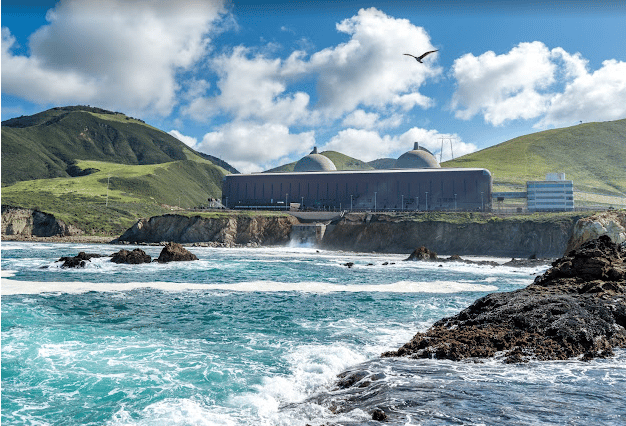
Diablo Canyon nuclear plant
Diablo Canyon

For decades, they provided more than 20 percent of California’s energy consumption.

In other words, just 8 more plants would provide California with 100 percent carbon-free energy for the entire 21st century.

It was exactly that massive amount of clean energy from nuclear that became its undoing.

You see, figuring out how to shut down nuclear would create a profitable billion-dollar business for solar, wind, and natural gas companies overnight.

When renewable lobbyists caught wind of the opportunity, they went into hyperdrive. No need to play clean for this round, either.

And they very nearly succeeded in killing off nuclear for good.

They started with San Onofre, which was forced to close in 2012.

Its main energy replacement? Carbon-heavy natural gas.

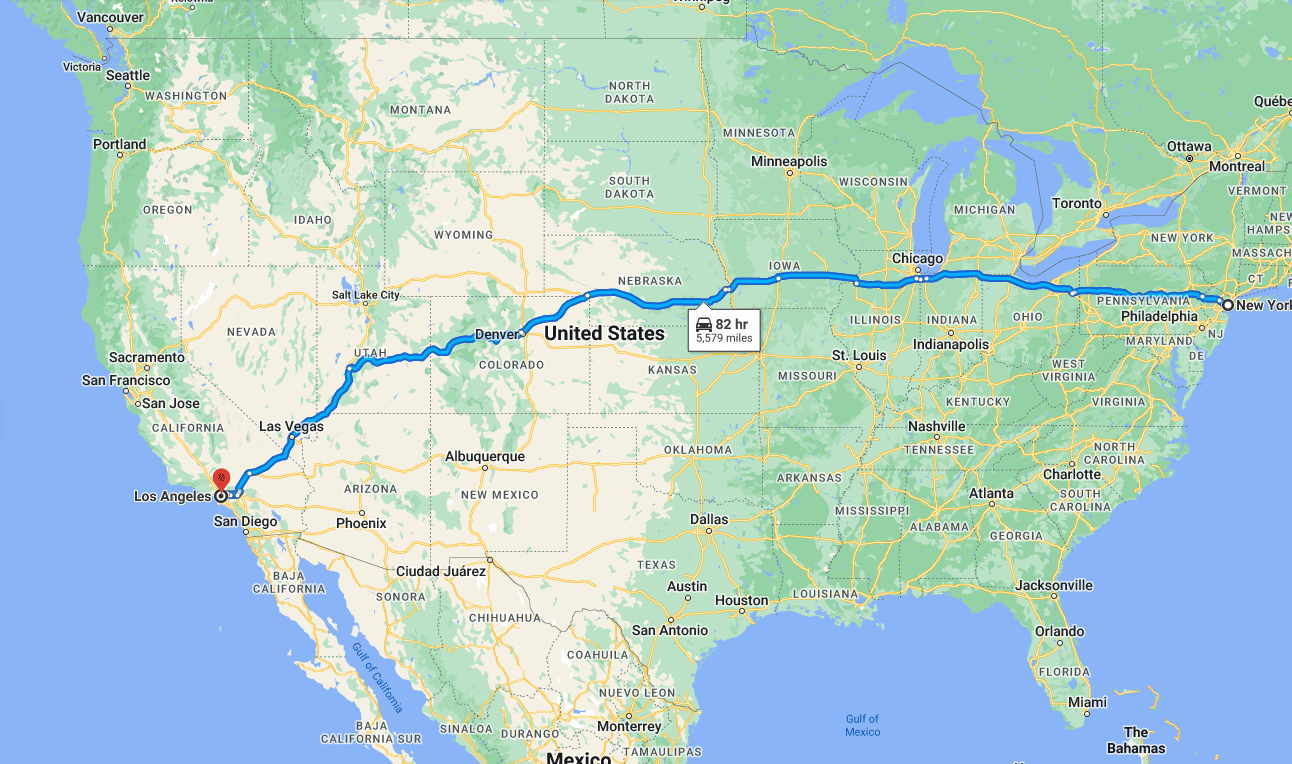
  • Shutting down San Onofre was the equivalent of putting two million cars on the road.

Those two million cars lined end to end would make a convoy from Los Angeles to NYC (and back again).

LA to NYC

Then the lobbyists moved on to Diablo Canyon, forcing PG&E to agree to shut it down by 2025.

They claimed it would be cheaper to shut it down and replace it with other sources of energy than to continue operations.

Here’s the kicker.

That claim is based on a single study, funded by Friends of the Earth—whose founder was the executive director of the Sierra Club.

And it flat out lies about everything . . .  from fuel costs to capital costs to the cost of energy.

In fact, a report from MIT and Stanford says that keeping Diablo Canyon running until 2035 would reduce California’s carbon emissions by 11 percent.

It would also save the state $2.6 billion—or $21 billion if it stays open until 2045.

(Or they could decommission the plant, which would cost nearly $4 billion.)

Fortunately, the side playing dirty is going to lose this time.

Because hundreds of thousands of Californians are already experiencing rolling blackouts—during triple-digit heat waves.

“We are in a very bad situation compared to even the worst case that we anticipated.
– California Energy Commission vice chair Siva Gunda

One politician put it simply: If the plant gets decommissioned, “we don’t have enough juice to keep the lights on and keep air conditioners working and keep people’s EVs charged.”

Shutting down the cleanest, most readily available form of energy is political suicide.

The last time widespread outages occurred, the governor was kicked out of office.

And everyone knows it.

So at 1 a.m. on the last day of session, the state legislature voted to keep Diablo Canyon open.

For a half-century, Diablo Canyon has predicted the fate of nuclear.

And now, it’s a signal of a broad revival of nuclear power across the country.

Go to next chapter >

The True Story of Nixon’s Nucleargate

0
In 1973, President Nixon seized on the nuclear frenzy with a new program he dubbed “Project Independence”.

Calling to mind the Manhattan Project, Nixon wanted 1,000 nuclear plants to be built by 2000.

  • Those 1,000 plants would have provided 200% of the U.S.’s power needs… in 2022.

No coal, no wind, no solar, no natural gas, no hydro. No carbon emissions. Just 100-percent-clean, made-in-America nuclear power.

Like others of his time, President Nixon saw the incredible promise held in the atom.

Nuclear power plants use tiny amounts of uranium, an abundant natural resource, as fuel. That means they only have to be refueled every 1.5 years.

And because uranium is extremely energy-dense, the mining impacts are minimal compared to coal, oil… even wind power.

Nuclear produces zero pollution from operations. It doesn’t care if it’s windy or sunny or rainy. It just goes—operating more than 90 percent of the time.

Best of all, nuclear provides massive amounts of baseload power—about 1GW per reactor. That makes a single two-reactor plant capable of powering more than one million homes.

By every possible metric, nuclear is the best, most reliable source of carbon-free energy on the planet.

It should be powering much more of the planet. But it isn’t.

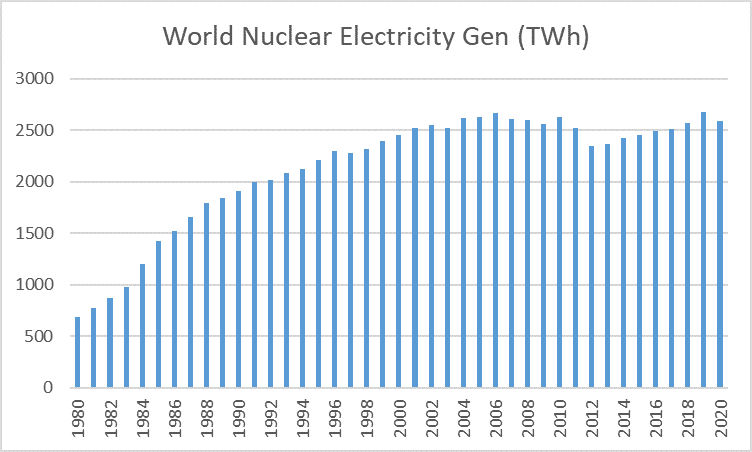
In fact, nuclear power has been stagnant for the past thirty years… and declining for the past decade.

World Nuclear Electricity Gen TWh

In the United States, zero nuclear power plants ordered since 1972 have been completed. And nuclear provides only 20 percent of electricity in the United States.

As nuclear power plants reach the end of their forty-year lifespans, one by one, the lights are going out all around the world.

Which begs two questions:

  • If nuclear power is so star-spangled awesome, then how exactly did it end up on life support? And when—if ever—is that going to change?

The Nuclear Boom That Went Out with a Bang

Twenty-five years before Nixon famous speech, the Atomic Energy Commission (AEC) had funded four different types of “atomic piles,” as experimental nuclear reactors were then called.

Their purpose was not to generate massive amounts of power. The AEC was just throwing atoms at the wall to see what would stick.

Because of World War II, AEC worked mostly in secret—few in the outside world had even heard of nuclear power.

That changed suddenly in 1953. President Eisenhower decided the world needed to know the vast energy potential held by the atom.

It was time for the U.S. to reorient its research efforts from using atomic energy for destructive purposes and toward generating electricity.

So Eisenhower went before the United Nations in New York City and delivered a powerful speech titled “Atoms for Peace.”

When he finished, the entire chamber leapt to its feet, giving Eisenhower a 10-minute standing ovation.

  • In just a few moments, the President had set in motion decades of civil nuclear energy development in the U.S.

It was an Atomic Race of sorts, with the U.S. vying with other countries to create a civilian nuclear power sector as quickly as possible.

The following year, the AEC announced a government-sponsored five-year plan to explore various types of commercial nuclear reactors to find the best one. Every configuration of coolant and fuel and system had to be tried in order to identify a safe, economical nuclear system.

Early projects were extremely expensive.

But within a decade, GE and Westinghouse, figured out how to build giant, economical light water reactors (LWRs).

That move kicked off what is now known as “The Great Nuclear Bandwagon.

GE and Westinghouse sold dozens of turnkey plants in just four years—without any subsidy from the government.

It was a daring effort to jumpstart a global commercial nuclear power market.

And it worked.

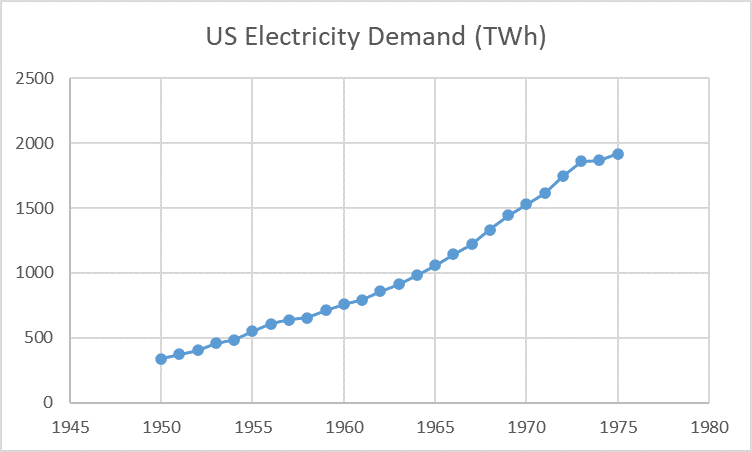
More than 100 reactor orders were placed to meet the growing electricity demand.

US Electricity Demand TWh

And two years later, nuclear power plants were being sold at costs that were competitive with fossil-fuel plants.

Construction costs for new reactors dropped to $600–$900/kW in today’s dollars.

  • For context, that’s cheaper than modern gas plants.

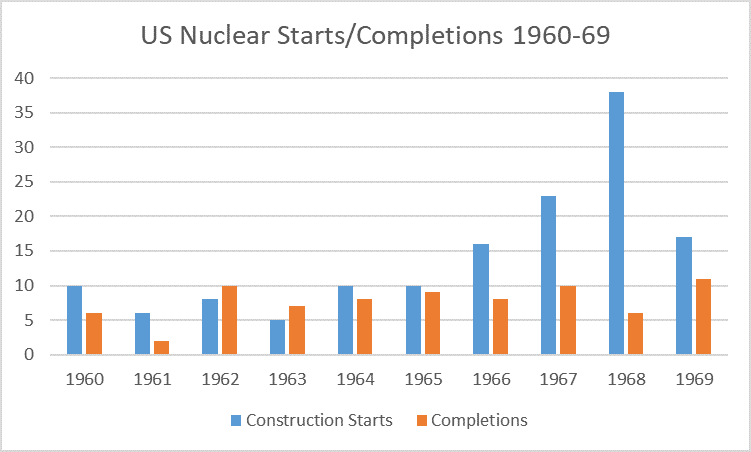
With energy that cheap, nuclear business boomed, spreading across the U.S.—and the world—like wildfire.

US Nuclear Starts Completions 1960

Just as soon as it started, it was over. By the early ‘70s, many utilities stopped ordering new reactors and cancelling in-progress projects.

By 1980, nuclear plant orders had come to a dead halt.

The Four Bogeymen of the Nuclear Boom

On its rocket-ship trajectory from Eisenhower’s speech to executing Nixon’s Project Independence, nuclear power faced five major problems.

The first of those was public perception. Nuclear’s initial downfall was orchestrated by radical environmentalists who stirred up hysteria against nuclear plants.

Starting in the ‘60s, they waged a well-funded, well-organized War on Nuclear.

Their work caused strict regulations to be passed. The resulting high prices—especially compared to other forms of energy—caused nuclear projects to be cancelled or decommissioned.

They were benefited by declining energy costs from other forms of energy like coal and gas, which made nuclear uneconomical.

Then there was the problem of waste management. There was no federal program for storing the small amounts of radioactive waste created by nuclear power.

Then, two high-profile nuclear accidents—Three Mile Island and Chernobyl—confirmed the public’s safety concerns with nuclear energy.

With public support plummeting, countries like Austria made nuclear power illegal.

But over the past few decades, the real horseman of the apocalypse has come riding in: climate change.

While countries like Austria and Germany are struggling to meet carbon emissions reduction targets with intermittent wind and solar, the wind is shifting in another direction.

  • Public perception toward nuclear is rising just as fast as the temperature
  • The price of new nuclear reactors is dropping thanks to modular innovations
  • The price of natural gas has more than quadrupled in one year
  • Several countries have figured out efficient, long-term waste storage solutions
  • And nuclear reactors have become the safest form of energy on the planet.

It’s not a moment too soon.

The International Energy Agency says that the nuclear industry will need to double in size over the next two decades for us to meet net zero emissions targets.

There are just over 400 nuclear reactors in operation around the world right now.

Looks like Eisenhower made the right move.

And Nixon might have been ahead of his time when it comes to nuclear power.

Go to next chapter > 

Carboncredits.com receives compensation for this publication and has a business relationship with any company whose stock(s) is/are mentioned in this article.

Additional disclosure: This communication serves the sole purpose of adding value to the research process and is for information only. Please do your own due diligence. Every investment in securities mentioned in publications of carboncredits.com involves risks that could lead to a total loss of the invested capital.

Please read our Full RISKS and DISCLOSURE here.

India Unveils Long-Term Strategy to Reach Net Zero at COP27

0

India submitted its long-term climate strategy at the COP27 summit underway in Egypt, joining a selected list of countries that have clear pathways on how to achieve their net zero goals.

Under the Paris Agreement, all countries have to submit by 2020 a climate strategy to the UN Framework Convention on Climate Change (UNFCCC) detailing how they’ll help fight global warming. These plans are called the Long-Term Low Emissions and Development Strategies (LT-LEDS).

So far, only 57 nations have submitted their LT-LEDS and India is the last of the biggest emitters to do so.

Unlike Nationally Determined Contributions (NDCs), LT-LEDS focus on a longer time horizon. Countries don’t have to report progress on their long-term climate plans as the case with NDCs.

The world’s second-largest consumer of coal aims to prioritize a phased transition to cleaner fuels. It will also reduce household consumption to reach net zero emissions by 2070, according to its 100-page low-carbon strategy.

Minister for Environment, Forest and Climate Change Bhupender Yadav launched the country’s LT-LEDS, saying that:

“This is an important milestone. Once again, India has demonstrated that it walks the talk on climate change… India’s LT-LEDS articulates India’s vision and action plan for achieving its NDC goals and the target of net zero emissions by 2070. And we are placing before all, the key elements of India’s transition to a low-carbon development pathway.”

What’s New in India’s Climate Plan?

India updated its NDC last August with these two major climate goals:

  • Slash emissions intensity of its Gross Domestic Product (GDP) by 45% from 2005 levels by the year 2030
  • Achieve about 50% cumulative electric power installed capacity from non-fossil fuel-based energy resources by 2030

The country’s updated climate plan said India is on track to meeting its NDC commitment. That involves 2.5 – 3 billion tonnes of carbon sequestration in forest and tree cover by 2030.

The document also noted that the update will help the nation achieve its long-term decarbonization. It further states that climate finance estimates needed to hit net zero vary. But for India, it’s “in the order of tens of billions of dollars by 2050 and around ₹85.6 trillion ($1B) by 2030”.

Noting this, the Indian delegate at COP27 summit raised the issue of climate finance once again. Yadav said that the provision of climate finance by developed countries will play a very significant role and that:

“needs to be considerably enhanced, in the form of grants and concessional loans, ensuring scale, scope, and speed, predominantly from public sources, in accordance with the principles of the UNFCCC.”

The 3rd largest emitter has been pledging to phase down coal use. It has also become a big consumer of renewable energy such as solar.

  • It achieved its goal of having 40% of its electricity capacity come from renewable energy in 2021. 

But what’s new in India’s climate strategy is its focus on slashing consumption at the household level and the inclusion of carbon capture, use and storage (CCUS).

CCUS includes technology that can capture carbon from polluting industries so it never enters the atmosphere. The Indian government will focus on the economic, technical, and political feasibility of CCUS while advancing its technologies.

Focus Areas of India’s Net Zero Strategy

India’s long-term low-carbon strategy is based on four key considerations.

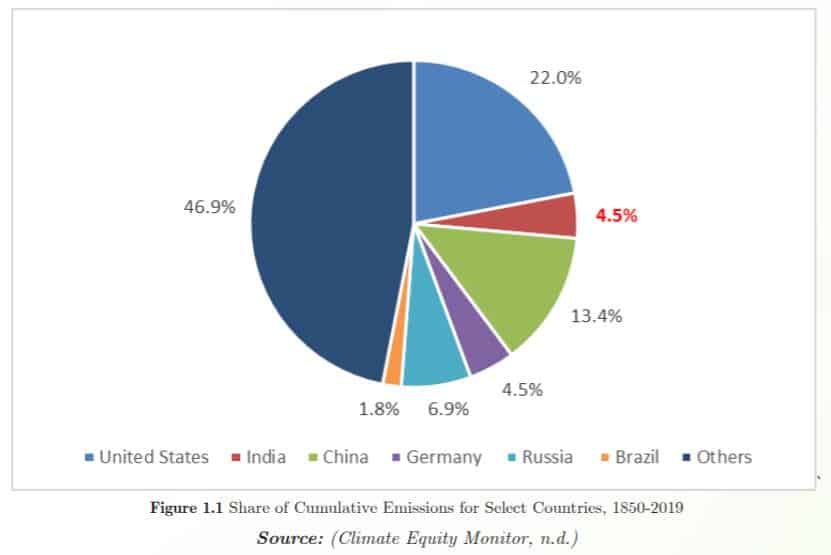
  • The country has contributed little to global warming, as shown in the chart.

India emissions global contribution

  • It has significant energy needs for development.
  • It commits to pursuing low-carbon strategies for development.
  • India needs to build climate resilience.

The nation’s LT-LEDS zooms in on 6 key areas to reduce emissions: electricity, urbanization, transport, forests, finance, and industry.

For instance, the government plans to increase the use of biofuels, particularly ethanol blending in petrol. This will help boost the number of electric vehicles in the country. This aligns with India’s aim to expand public transport networks and use more green hydrogen fuel.

In particular, India seeks to maximize the use of EVs and ethanol blending to be at 20% by 2025. Its net zero strategy also aims to achieve a 3x increase in nuclear capacity by 2032 to boost the power sector.

The government also announced a push on industrial development, aiming for energy efficiency improvements. These are especially in the sectors of steel, cement, and aluminum.

More importantly, the net zero strategies of India will center on the rational use of national resources with regard to energy security.

While its LT-LEDS outlines an ambitious plan, the COP27 delegate said the nation could not “have a situation where the energy security of developing countries is ignored in the name of urgent mitigation.”

On top of it all, the transition from fossil fuels will be done in a just, smooth, sustainable, and all-inclusive manner, India’s long-term plan said.