Bluesource’s Carbon Credit Strategy: An Easement Debate Shaping New Hampshire’s Forests

The Attorney General’s office in New Hampshire is examining a plan proposed by Bluesource Sustainable Forest Company regarding the reduction of logging activities on a significant portion of the state’s forests as policymakers are working on bills associated with the use of carbon credits.ย 

The area, covering 146,000 acres, was initially safeguarded for logging and recreational purposes through a conservation easement. The plan did not anticipate revenue generation through carbon credit markets, a recent development in the industry.

Bluesource, the new owner, aims to curtail logging by around 50% on this massive tract of land in 2024. That area represents about 3% of the stateโ€™s landmass.

Though the plan’s intent is to increase forest carbon sequestration, it affects local mills, loggers, the region’s economy, and potentially taxpayers.ย 

The Value of Keeping Trees Standingย 

The shift towards less logging is due to the increasing value of preserving trees for carbon credits. It is a market-driven initiative aimed at reducing carbon emissions.

According to Energy Transitions Commission (ETC)’s report, theย current price of carbon credits for avoiding deforestation isn’t enough to cover the marginal cost of avoiding commodity-driven deforestation.
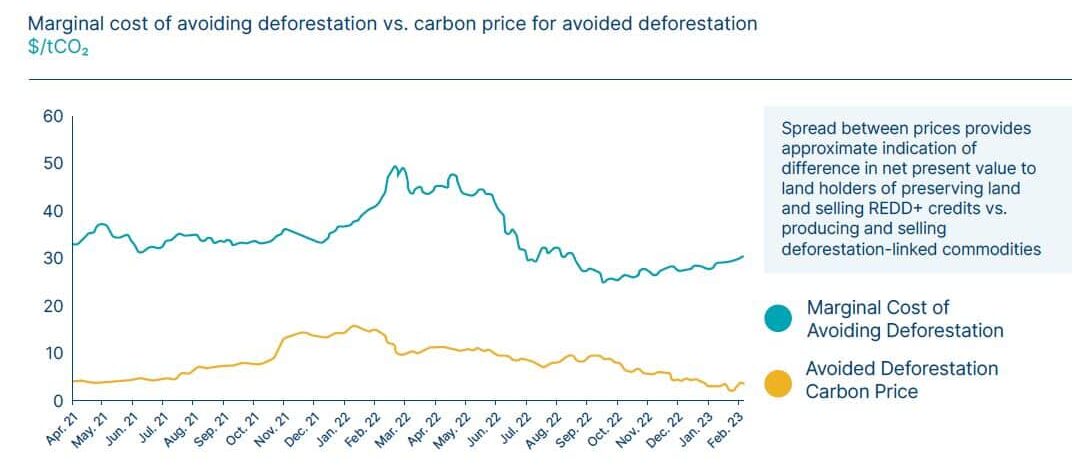
cost of deforestation vs. carbon credit price avoided deforestationThe Attorney General’s office is assessing whether Bluesource’ planned reduction aligns with the original agreement established to protect the land.

  • The plan outlines the companyโ€™s goals, which are subject to the easement.

The easement acts as a safeguard, ensuring that the land remains protected from development. It also dictates how it should be utilized while outlining the responsibilities of both the state and the landowner.

From the original 171,500 acres, 25,100 acres were allocated to the state. Out of this, 25,000 acres were set aside for wildlife habitat management, while an additional 100 acres were allocated to expand the Deer Mountain Campground.

The easement guarantees public access for various traditional recreational activities such as hiking, hunting, fishing, trapping, snowmobiling along designated trails. However, it limits “non-forest activities” to a maximum of 10% of the property.

In addition to preserving open spaces, protecting natural resources, and nurturing wildlife habitats, the primary objective of the easement is to maintain the property as a financially sustainable land area for timber, plywood, and other forest product production. It explicitly permits “forest management activities,” including various methods of cultivating, harvesting, and removing forest products.

Bluesourceโ€™s move to participate in the carbon credit market wasnโ€™t foreseen when the conservation easement was formulated two decades ago.

Promoting Forest Carbon Credits in the US

For ages, forests have been valued mainly for the timber they provide. However, efforts to combat climate change have given them an additional value by recognizing their ability to absorb and hold carbon.ย 

Forests can trap nearly double the amount of carbon they release, acting as significant carbon storage.ย 

In 2020, the U.S. Forest Service calculated that per acre in New Hampshire, forests held around 87 tons of carbon by 2018. Approximately 42% of this was in above-ground growth, with 38% stored in the forest soils.ย 

When trees are cut down, processed, and used to create solid wood products like furniture or building materials such as plywood, their carbon remains stored within these products for potentially hundreds of years.

In 2003, there was no established carbon market in the US. Hence, the easement related to the Connecticut Lakes forest didn’t address managing the forest for carbon sequestration, storage, or carbon credit trading.

In 2022, Bluesource Sustainable Forest Company (BFSC) acquired the Connecticut Lakes Headwaters Working Forest, totaling a million acres managed. Thus, BFSC positions itself as “the largest private forestland owner entirely focused on addressing climate change.”

In 2021, Bluesource partnered with Oak Hill Advisors, a subsidiary of T.Rowe Price managing $500 billion in assets, to acquire forest lands, including those in New Hampshire.ย 

BFSC’s president, Roger Williams, said that the collaboration would transition the company from developing projects generating carbon credits to becoming a forest land asset manager.

Additionally, last year, BFSC merged with Element Markets, a majority-owned entity of TPG Inc., an alternative investment manager. Element Markets describes itself as the primary creator and promoter of carbon and environmental credits across North America.

Companies that want to reduce their carbon emissions can buy the credits to offset their footprint. Each credit corresponds to one tonne of reduced or removed carbon from the air.ย 

The Debate Goes On

Bluesource intends to reduce timber harvests by over half of what has been cut in recent years, particularly between 12,000 and 14,000 cords for the year ending April 2024.

Meetings, discussions, and proposed legislative actions are underway to address the broader consequences of the plan on the local economy. The potential outcomes could have a profound impact on the logging industry, the local community, and the areaโ€™s fiscal landscape.

In response to concerns, Bluesource is engaging with legislators and stakeholders, offering expertise and collaboration to deal with the situation.ย 

According to Patrick D. Hackley, director of the state Division of Forests & Lands, Bluesource had submitted its revised Annual Operating Plan, noting that:

โ€œWe are now in the review process… to ensure the new harvesting plan, based on the companyโ€™s participation in Californiaโ€™s Air Resource Board Compliance (Carbon) Offset Program, complies with the purpose and all provisions of the conservation easement.โ€

Bluesource’s initiative to reduce logging for carbon credit generation within a preserved land area is raising debate in New Hampshire. The company’s move intersects with the long-standing conservation easement, provoking discussions on economic impact and forest carbon credit strategies.
CCUS Capacity Grows 50% in BNEF 2023 Market Outlook

This year has seen the rapid growth of the carbon capture, utilization, and storage (CCUS) industry, owing to strong global policy support for projects and initiatives increasing capture capacity.ย 

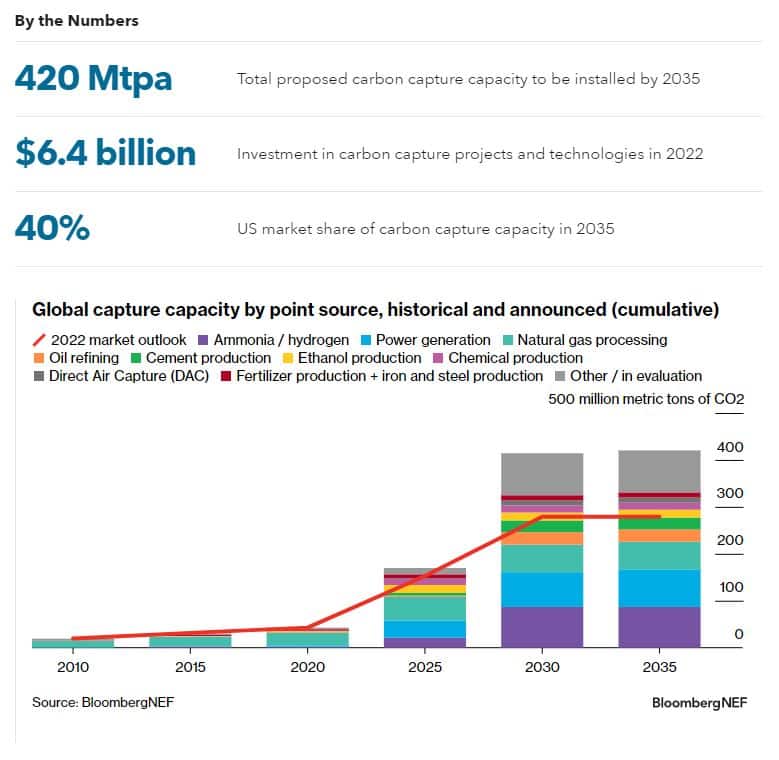
According to research company BloombergNEF (BNEF), the industry will see a 50% increase by 2025. It will reach 420 million metric tons a year by 2035.ย 

Investments in CCUS infrastructure amounted to $6.4 billion in 2022, while funding this year will reach $5 billion.ย 

CCUS Growth and Expansionย 

The CCUS market has initially focused on natural gas processing. But as decarbonization efforts intensify, it is expanding into carbon-intensive sectors, including power, cement, iron and steel.ย 

BNEF reported that the industry captured over 140 million metric tons per annum (mtpa) from 2022. It is forecasted to grow at a 18% compound annual growth rate and capture 420 mtpa by 2035. This represents 1.1% of current global annual emissions.ย 

The major sectors that will drive CCUS expansion include ammonia or hydrogen production and power generation. Together, they will account for 33% of announced carbon capture capacity.ย 

Carbon capture CCUS capacity BNEF market outlook 2023It is interesting to note that the cement sector has experienced a massive increase in proposed carbon capture capacity – 175%.

Startups are also developing innovative technologies that can capture CO2 from the atmosphere and lock it away for good by injecting it into the cement.

The BNEF market outlook further noted that the US will remain the leader in deploying carbon capture. It will keep 40% in market share in 2035, followed by the UK at 16% share.

Canada ranks third at 12% while other large country emitters, including Australia, the Netherlands, and China will take 3-4% share.ย 

The Setbacks

While the future of CCUS looks promising, some challenges are just around the corner.ย 

The major hurdle is the lack of transport and storage capacity in deploying carbon capture projects. One solution to this challenge is commercialization as what some national governments and companies are promoting.ย 

Yet, the high costs in constructing storage are not acknowledged by policies such as the EUโ€™s Net Zero Industry Act.ย 

In the US, permits for transport and storage were denied. Recently, the Environmental Protection Agency (EPA) called on states to have their own regulatory frameworks for CCUS. This followed when policymakers questioned the agencyโ€™s limited permit issuances.ย 

In the private sector, oil majors aiming to be first movers in advancing carbon capture and storage turn to mergers and acquisitions. For instance, ExxonMobil acquired Denbury, a small-scale oil business running an extensive CO2 pipeline transport network across the Gulf Coast.ย 

In a similar move, Occidental Petroleum also bought Carbon Engineering, a Canadian Direct Air Capture (DAC) supplier for >$1 billion.ย 

Remarkably, the BNEF highlights that DAC is far more costly than previously thought. This carbon capture technology costs up to $1,100 per ton but can potentially drop to $400/ton by 2030. This decrease would be possible if the industry can develop enough supply chains to scale the technology.ย 

The cost of capturing carbon differs across industries. In facilities where CO2 concentration is high, the cost ranges from $20-$28 per ton while for industrial sources, it can go up to $80 a ton of CO2.ย 

Total costs for CCUS can increase to $92-$130 per ton of CO2, and it can swell 2-4x more for transporting liquid CO2.ย 

Industries like cement, iron and steel, and power, which emit a lot of CO2, are using carbon capture methods more. This is driven by the incentives provided by the government in the US and EU, making CCUS more practical.ย 

For instance, building new gas power plants with carbon capture may be less expensive than making power without capturing carbon in Germany by 2024, especially when factoring in carbon price.ย 

The CCUS industry is experiencing rapid growth and diversification across sectors due to strong global policy support. Although promising, challenges such as transport and storage capacity constraints, high construction costs, and regulatory hurdles pose significant barriers. Addressing these challenges will be crucial for CCUS to play a substantial role in global emissions reduction.

Decoding the Climate Giants: Top Carbon Emitters Race to Net Zero and Renewable Future

With the worsening impacts of climate change, countries around the world are up to their heels to find solutions that can significantly reduce carbon emissions.ย 

The top three major emitters – China, United States, and India – are responsible for emitting over 50% of global carbon emissions.ย 

How Much CO2 Does Each Country Emit?

Burning too much fossil fuels intensifies the greenhouse effect, which is essential for keeping the Earthโ€™s temperature suitable for life. This change is causing major shifts in the planetโ€™s climate system that also led to worsening natural disasters.ย 

As this yearโ€™s UN climate summit, COP28, is approaching, itโ€™s important to know how much each country contributes to global carbon footprint. The COP28 in Dubai also represents a great opportunity to assess the progress of countries toward achieving their climate goals.

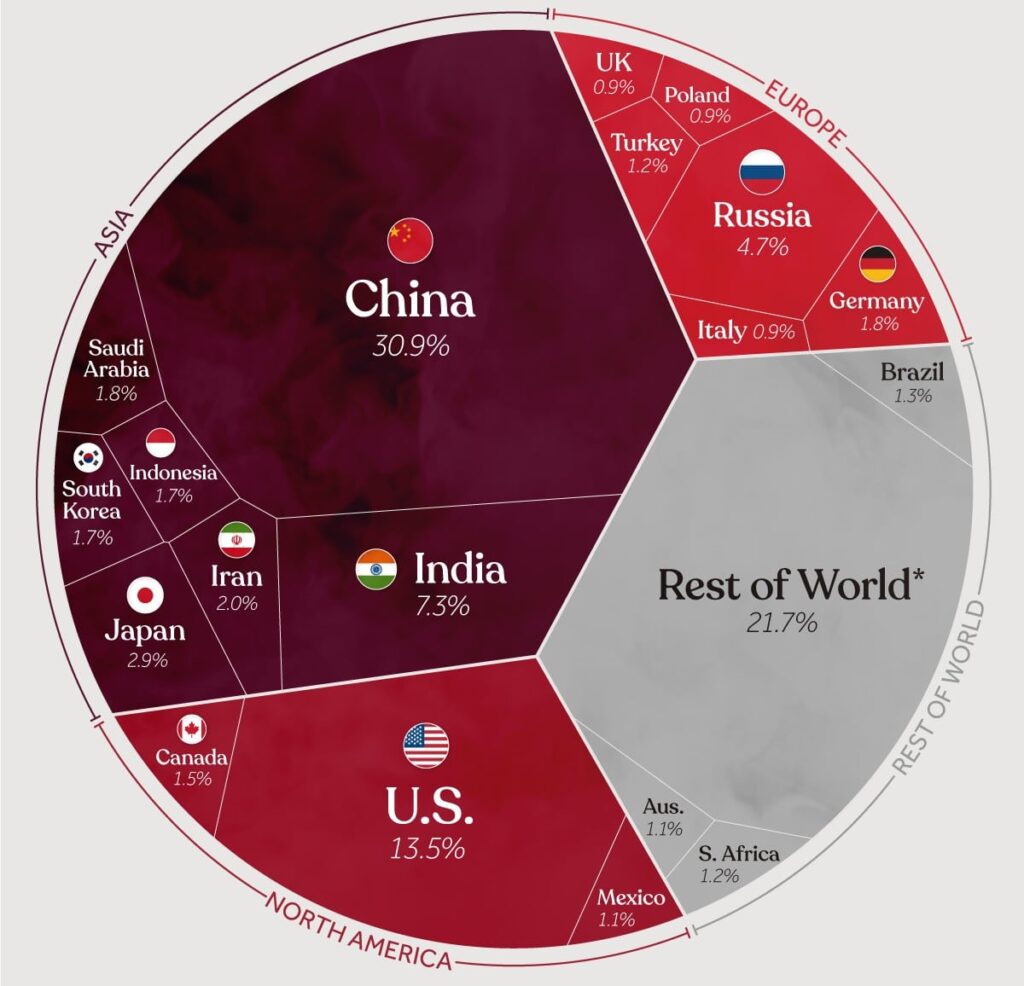
As per the Global Carbon Atlas data, interpreted by Visual Capitalist, 52% of the worldโ€™s carbon dioxide emissions in 2021 was caused only by three countries: China, U.S. and India. Apart from contributing the most to global emissions, they also have the highest number of population.ย 

global carbon emissions by country 2021
Source: Visual Capitalist

As shown above, China is the top carbon polluter (almost 31%) compared to the rest of the world (around 22%).

When it comes to carbon emissions per capita, the US tops the rank with around 15 (metric tons). China comes second with 7 Mt CO2 per capita while India has only around 2 Mt CO2.ย 

All these three top carbon emitters have pledged to cut their footprint and reach net zero emissions. But they donโ€™t share the same net zero target.

China targets to achieve net zero by 2060 while India plans to reach it ten years later, by 2070. Only the USโ€™ net zero target is in line with the Paris Agreement objective of hitting net zero by 2050.ย 

According to a World Bank Group Report, China needs as much as $17 trillion in investments to meet its net zero targets and transition to a low-carbon economy. Thisย  particularly involves investments in the power and transport sectors for green technologies and infrastructure.

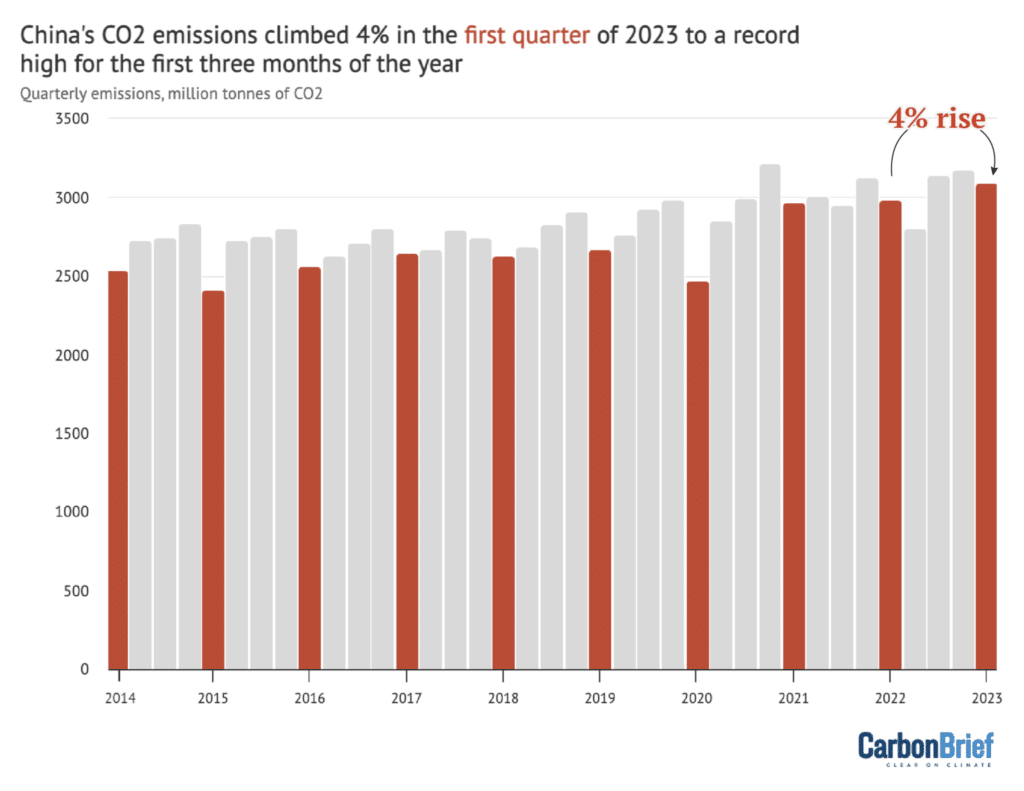
As the biggest emitter focuses on economic growth, its carbon footprint will most likely hit an all-time high in 2023. Its CO2 emissions increased 4% in the Q1 this year, hitting a record high, according to the Carbon Brief report.ย 

China emissions 4% increase Q1 2023Meanwhile, the US has seen a significant increase in clean energy investments, showing its commitment to decarbonization. The country has been pouring billions of dollars into clean technologies and infrastructure to lower its carbon footprint.
According to the Clean Investment Monitor database, clean energy is becoming one of the biggest industries in the U.S. In 2022, investments made in the sector reached a total of $213 billion.

Unlike China, India aims to hit net zero by 2070. To reach this, the third emitter will focus on the use of electric vehicles and achieve 3x more nuclear capacity by 2032.ย 

However, as India becomes more developed, its carbon emissions may also continue to grow more. According to the International Energy Agency (IEA), its share of global emissions would go up to 10% by 2030.

How Much Renewables Must Be Achieved by 2030?

The IEA also projected that to reach global net zero target, renewable energy capacity installed must be 3x more the current level by the decadeโ€™s end.ย 

As per the agencyโ€™s updated Net Zero Roadmap, renewables capacity should be at 11,000 GW by 2030. Reaching that capacity will achieve the largest emissions reductions.

The major polluters have also set ambitious targets for increasing their renewables by 2030, focusing on solar and wind power generation. The UK and the EU also have done the same.ย 

Unfortunately, reports show that most of the countries are facing major hurdles to achieve their annual capacity targets.

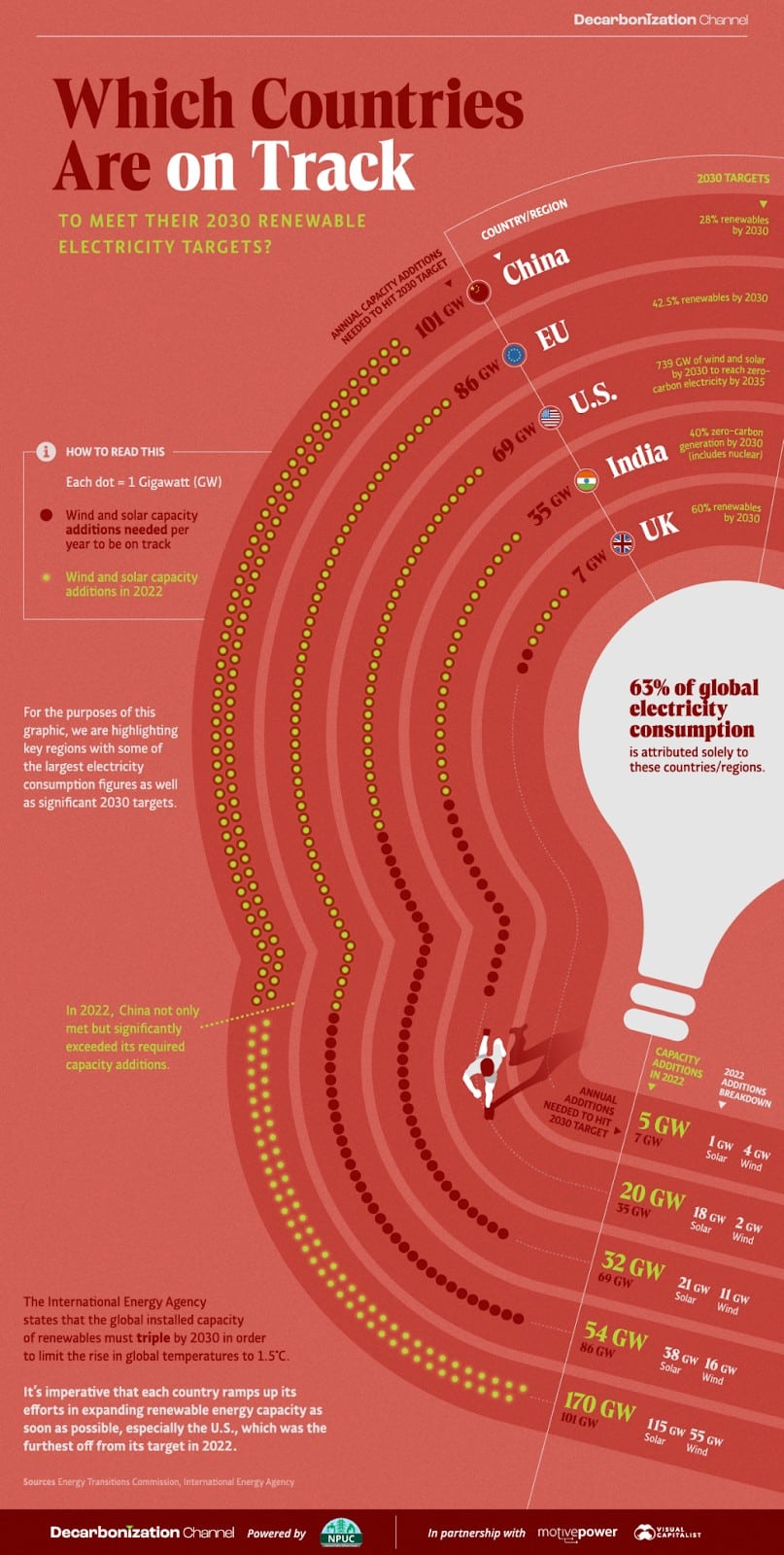
Data from Visual Capitalist illustrates how each of the nations are progressing towards their 2030 renewables targets. The chart also shows how much they performed in 2022.ย 

2030 renewable energy capacityOf the major carbon emission contributors, China is the only country on track to achieving its 2030 renewables goal. In fact, the top CO2 polluter exceeded its required renewable capacity for new installations, adding 168% more (101 GW).

In contrast, the US and India were the furthest off the track from reaching their 2022 targets. They were able to add only 46% and 57% of what is required, respectively. Other countries in Europe successfully made some progress but still have to add more installations to hit their 2030 goals.ย 

Together, China, US, India, EU, and the UK accounted for >60% of the world’s total electricity consumption. This underlines their big responsibility in decarbonizing the power sector.

As the global community grapples with the escalating impacts of climate change, attention turns to the top carbon emitters. The challenge extends beyond emissions, with hurdles evident in meeting renewable energy goals by 2030, emphasizing the critical role these major emitters play in the urgent shift toward greener and more sustainable practices.

What Is COP28? Key Issues to Watch Out at 2023 Climate Summit

0

After a record-breaking year of devastating effects of climate change, from record wildfires in Greece and Canada to floods in Libya, the United Nations COP28 conference comes at a decisive moment for international climate action to put us on a safer path.

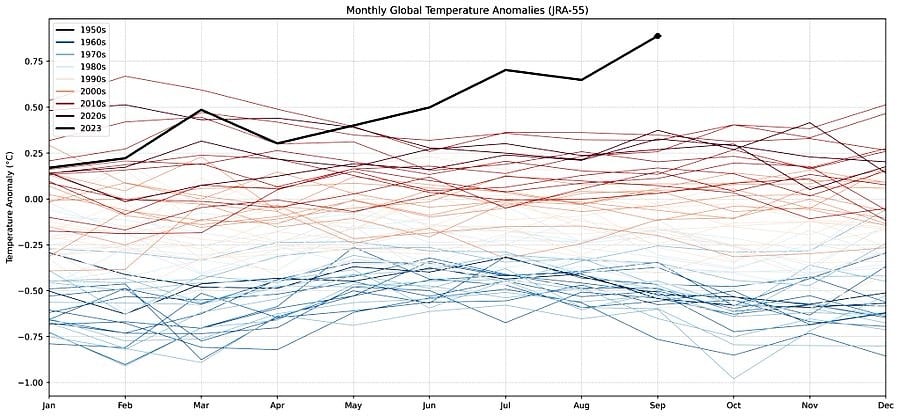
Temperature records are being beaten and climate effects are felt worldwide. As climate scientist Zeke Hausfather described global temperature data for September, itโ€™s โ€œabsolutely gobsmackingly bananasโ€.

Monthly global temperature anomaly Zeke Hausfather
Source: Zeke Hausfather

As seen in Hausfatherโ€™s chart, last monthโ€™s temperature beat the prior monthly record by over 0.5ยฐC, and was around 1.8ยฐC warmer than pre-industrial levels.

So, what is the world doing about it? How do national governments tackle the climate crisis? The UN COP28 summit will show humanity’s progress in meeting the climate goals first set at the landmark Paris Agreement. Representatives from around 200 countries will come together to talk about it and agree on crucial climate actions.ย 

In case youโ€™ve never heard of COP28 or you most likely have if youโ€™re following the climate change conversation but need a fresher, this comprehensive article will tell you the things you need to know about this defining climate summit.ย 

First, let’s talk about the COP.

What is COP?ย 

The Conference of the Parties to the Convention or COP is the product of the Rio Summit and the launch of the United Nations Framework Convention on Climate Change (UNFCCC).ย 

Every year since the creation of the COP, member countries meet to agree how to deal with climate change. Tens of thousands of delegates from around the world gather together at the climate conference. Head of states, government officials, and representatives from international organizations, private sector, civil society, nonprofits, and the media are attending.ย 

The COPโ€™s 21st session led to the birth of the Paris Agreement, a global consensus to collectively achieve three important goals:

  • Limit global temperature rise to 1.5ยฐC above pre-industrial levels by 2100,
  • Act upon climate change, adapt to its impact, and develop resilience, and
  • Align financing with a โ€œpathway towards low greenhouse gas emissions and climate-resilient developmentโ€.

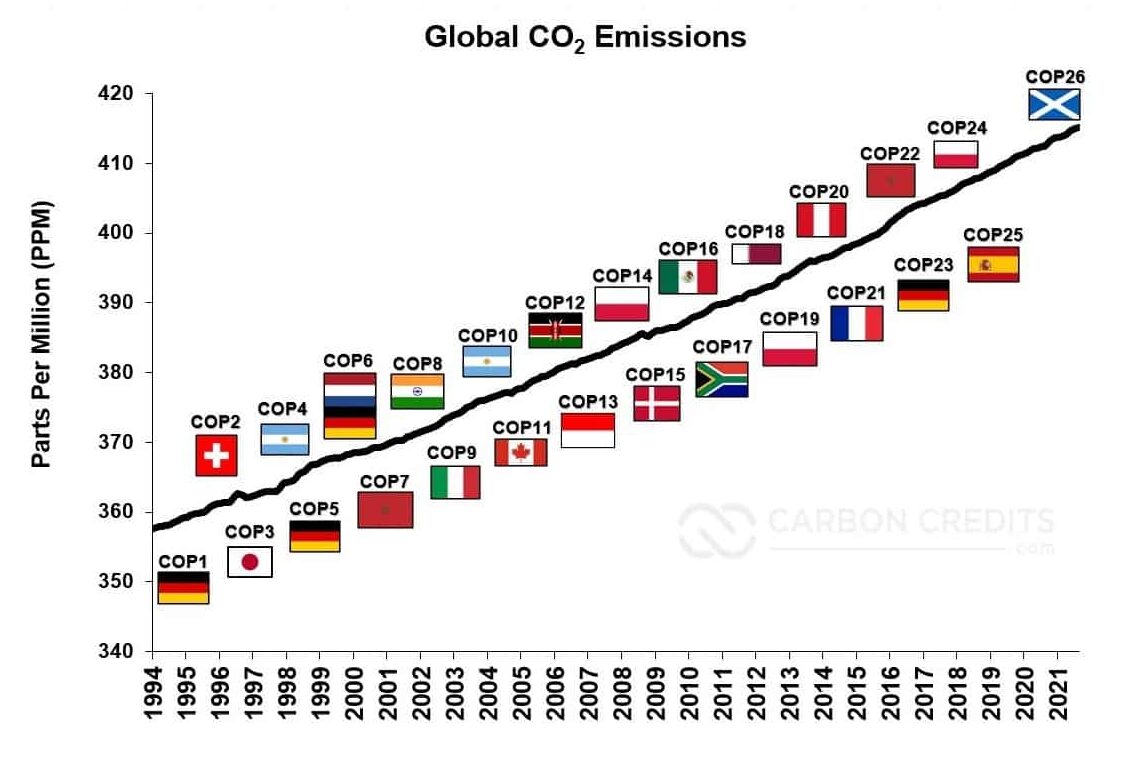
Here’s the COP in a timeline, alongside global carbon emissions record.

Conference of Parties COPThis yearโ€™s UN climate convention is the 28th session of the parties or simply COP28.

How Important is COP28?

So what makes this COP session significant and different from the previous climate talks? The Global Stocktake.ย 

The GST is the first ever report card on the worldโ€™s climate progress. It shows exactly how far we are in achieving the Paris Agreement goals set in 2015. Are we on or off track?ย ย ย 

Though the details wonโ€™t be in until COP28 takes place in November 30 – December 12 inย  Dubai, United Arab Emirates (UAE), thereโ€™s a hunch that we need rapid climate actions and have to act now. COP28 is our chance to do that.ย 

Plus the fact that UAE is a major oil producing country makes COP28 quite different and controversial. Many are raising concerns that the agenda doesn’t match well with the host countryโ€™s plan to increase oil production.ย 

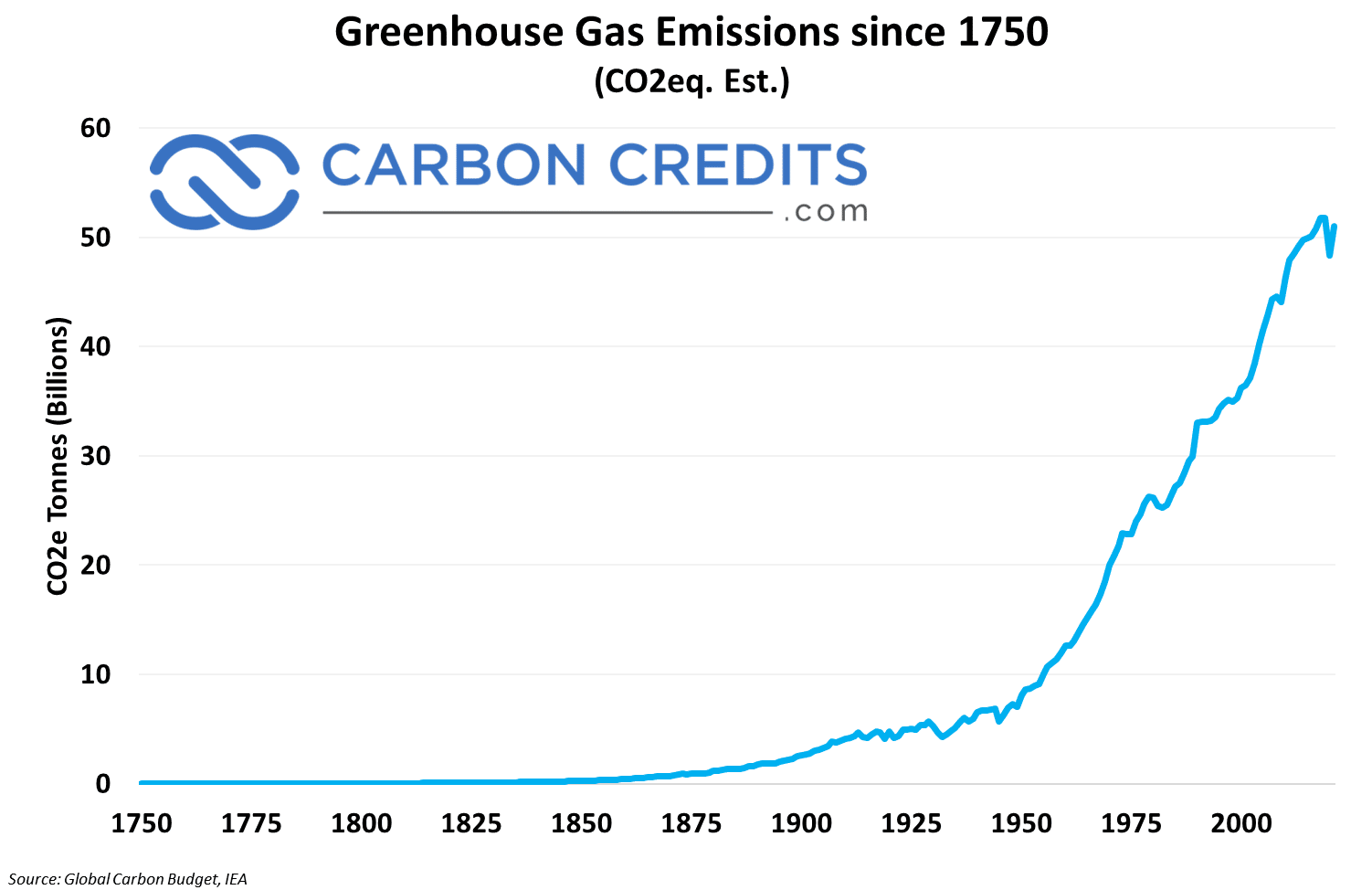
Some environmental groups noted that it could result in weak results leading to a point where curbing fossil fuels has to be ratcheted up rapidly to make the 1.5ยฐC achievable. Their point is valid. About 100+ years ago, there was far less carbon released into the atmosphere than there is today.

GHG emissions since 1750The designation of Sultan al-Jaber as COP28 president-designate incited a furious backlash from climate activists and civil society groups. They warned that there could be a conflict of interest and that protesters would be restricted.ย 

Dr. Sultan al-Jaber is a managing director and CEO of the Abu Dhabi National Oil Company (ADNOC). As appointed president, he would lead the talks, consult with stakeholders, provide leadership roles, and broker any agreements produced.ย 

Given his position within the fossil fuel industry, it raised concerns about impartiality in the climate talks.

But putting aside these controversies, it’s more important to know what would be the specific talking points for this year’s climate summit.ย 

What Are the Focus Issues to Watch at COP28?

Similar to previous sessions, the host nation sets the tone and direction of discussion for the conference. For this yearโ€™s COP28, here are the major areas to be deliberated.

Money Matters

As the case with the rest of the COPs, climate finance is one of the key issues. More so, if the money involved is worth $100 billion annually which was pledged by developed nations to developing countries.ย 

Climate finance is critical because developing nations need resources, financial and technological, to enable them to adapt to climate change.ย 

It was back in 2009 when rich countries promised to provide $100 billion from 2020 onwards to help poor nations in dealing with the impacts of climate change. However, until now that pledge has never been met, stirring frustrations for many developing countries.ย 

The potential consequences of failing to meet the promised target in a timely manner could extend to the broader negotiations. It heavily affects the trustworthiness of governments to fulfill their commitments.

At COP28, governments will persist in their discussions on a fresh climate finance objective, aiming to supplant the existing $100 billion commitment. Though the deadline for reaching an agreement is 2024, substantial progress in Dubai remains pivotal to establishing a foundation for next yearโ€™s COP.ย 

Moreover, financial matters will prominently feature in talks on the Green Climate Fund and on loss and damage.ย 

Ultimately, deliberations and pledges related to the amplification and execution of climate finance may impact various other areas of negotiation. It may also help propel more climate actions or impede progress.ย 

Whereโ€™s the โ€˜Loss and Damageโ€™ Fund?

The concept of โ€˜loss and damageโ€™ compensation isnโ€™t new; it has been around for some time. Itโ€™s an arrangement wherein rich nations should pay the poorer ones that have suffered the brunt of climate change.ย 

It differs from the funds to help poor nations adapt to the effects of climate change. While it gives hope for low-income countries heavily impacted by the climate-related disasters, it left several unanswered questions.ย 

Unsurprisingly, one big question is:

  • Whoโ€™s going to pay into the fund and who deserves to get it?ย 

This issue has been unresolved for some time and was also discussed in COP27 at Egypt last year. Different organizations have different suggestions as to how much the fund needed to pay for the loss and damage.

  • For one study, the funding can be as high as $580 billion each year by 2030, going up to $1.7 trillion by 2050.ย 

Matter experts noted that the fund has been the โ€œunderlying climate finance discussions for a long timeโ€. But after years of stalemate, the question hasnโ€™t been resolved still.ย 

Governments decided and agreed to form a โ€˜transitional committeeโ€™ at COP27. At COP28, they expect to come up with the recommendations on how to operationalize the fund.ย 

Putting Food on the Table

Leading up to COP28, there’s been growing attention on food systems and agriculture in global discussions.

The current food systems are failing us; over 800 million people face hunger right now. Climate-related droughts and floods are destroying farmersโ€™ crops and livelihoods. At COP28, world leaders must devise a plan that changes the ways the world produces and consumes food.

The COP28 presidency and the UN Food Systems Coordination Hub launched the COP28 Food Systems and Agriculture Agenda in July. It urges nations to align their national food systems and agricultural policies with their climate plans.ย 

The agenda emphasizes the inclusion of targets for food system decarbonization in national biodiversity strategies and action plans.

Like the other issues above, food systems were also part of the COP27 summit. But there was also still some resistance to fully adopting a holistic approach to them.ย 

Sultan al-Jaber is encouraging both private and public sectors to contribute funds and technology to transform food systems and agriculture. He also emphasized that food systems contribute to a significant portion of human-generated emissions. In line with this, the UAE and the US team up to promote their Agriculture Innovation Mission for Climate (AIM4C).

The increased focus on food at COP28 has been well-received. The GST synthesis report even stresses the need to address interconnected challenges, including demand-side measures, land use changes, and deforestation.ย 

It’s important that actions to change food systems work together with efforts to speed up the transition to cleaner energy. Transformations in both sectors are crucial to meeting climate goals.

Moving Cities At the Frontย 

For many years, UN climate summits have historically concentrated solely on national-level climate action, overlooking a crucial aspect.ย 

Urban centers, responsible for around 70% of global CO2 emissions, face heightened vulnerability to climate change impacts, too. To restrict warming to 1.5C, all cities must achieve net zero emissions by 2050.ย 

Research indicates that existing technologies and policies can cut urban emissions by 90% by 2050. But cities alone can realize only 28% of this potential.ย 

Full decarbonization requires robust partnerships between local and national governments, along with engagement in international climate initiatives.

At COP28, itโ€™s crucial for national, regional, and local governments to intensify partnerships, accelerating progress toward climate goals.

Moreover, national governments should also integrate urban areas more effectively into their climate plans. This includes reinforcing city-centric targets in their NDCs and National Adaptation Plans, expanding public transit, enhancing building energy efficiency, and ensuring that subnational actors have easy access to climate finance.ย 

COP28: The Deciding Moment for Climate Actionย 

Leaders at the national, corporate, and municipal levels must not only showcase progress in fulfilling previous commitments but also unveil new, ambitious plans. These plans are vital to curbing the worsening impacts of climate change, safeguarding both people and the environment.

The Global Stocktake was established to reach the objectives of the Paris Agreement. It also particularly highlighted the need to phase out unabated fossil fuels, which are the major culprit in releasing carbon. It will face its inaugural evaluation at COP28, presenting a crucial assessment of decision-makers’ commitment to its goal.ย 

The report card of the worldโ€™s collective climate action was out. And the data isn’t good. COP28 is our best chance to make a critical course correction. It isn’t just a conference; it’s a decisive moment for leaders to demonstrate commitment to curbing harmful emissions.ย 

6 Carbon Credit Standards Approved Under CORSIA’s Phase 1 Updates

CORSIA, managed by the International Civil Aviation Organization (ICAO), requires airlines to monitor and report their emissions, allowing them to purchase emission reduction units, also called carbon credits, if they exceed a set baseline.ย 

The program updates impact both airlines and the carbon market, signalling which credits are eligible and influencing future market purchases.

What Are the New CORSIA Updates?

Recently, CORSIA reviewed and approved six carbon credit standards for its first phase. These include Winrock International’s American Carbon Registry and Architecture for REDD+ Transactions, which were approved without exclusions.ย 

The Climate Action Reserve (CAR), Global Carbon Council (GCC), the Gold Standard, and Verra’s VCS program, were conditionally approved while CDM didn’t qualify for Phase I.

CORSIA allows credits from 2021 onwards with a corresponding adjustment to avoid double counting. This adjustment ensures that credits used for CORSIA don’t overlap with a country’s emission reduction goals under the Paris Agreement.

The mechanism ensures that the allocation of the credits represents real carbon reduction activity and sales, boosting carbon market integrity.ย 

The CORSIA’s Technical Advisory Body (TAB) recommendations from the review influence the market by increasing demand for approved credits. This doesnโ€™t only cover the airlines but also signals other buyers to consider the credits โ€œbest-in-classโ€.ย 

This will affect credits currently available and the future ones, driving up demand in both cases. However, some high-quality credits endorsed by ICROA are not accepted under CORSIA, affecting their eligibility.

Apart from the reassessment, the TAB will also assess any new applications for standards that hadn’t already been approved. The ICAO Council will officially take into account TABโ€™s recommendations this fall after assessing new credit standard applications.

How Should Airlines Take The Changes?ย 

For airlines preparing for CORSIAโ€™s upcoming phases, itโ€™s important to align their credit strategy with the TAB recommendations for compliance. They need to ensure they make CORSIA-compliant purchases before the true-up deadlines.

For the pilot phase (2021-2023), airlines donโ€™t need to show compliance until January 31, 2025. For phase I (2024-2026), the deadline is January 31, 2028. To meet these deadlines, airlines should plan credit purchases well ahead to avoid any risks.

Due to CORSIAโ€™s multi-year requirements, airlines might consider multi-year purchasing agreements to secure their credits. These agreements should align with both the pilot phase and phase I standards.

While some standards are conditionally approved for phase I, like VCS and Gold Standard, theyโ€™re likely to receive full approval.

Itโ€™s important to note that credits meeting post-2021 criteria are not yet available. Airlines can fulfill pilot phase purchasing requirements under the existing standards but need to wait for phase I eligible credits. Any long-term deals should consider these factors and specify the qualifying years.

To effectively implement a credit purchasing strategy, clear communication and internal education within airlines are crucial. Airlines should anticipate delays in the availability of Phase I credits, likely not until 2024 at the earliest.ย 

Additionally, CORSIA eligibility rules may increase demand and prices for these credits, so airlines should budget accordingly.

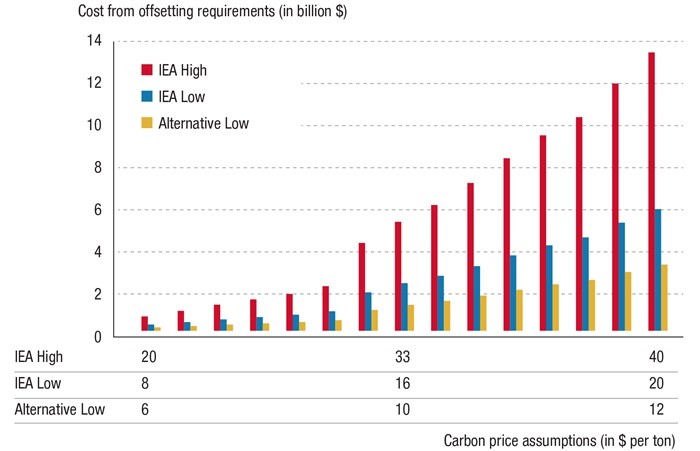
The ICAO estimated the costs from CORSIA offsetting for airline operators as shown in the following chart. This is under the assumption that carbon prices range from a low of $6 โ€“ $12ย to aย high of $20 โ€“ $40 per tonne of CO2.

what is CORSIA offsetting cost

What Are the Effects on Non-Airline Credit Buyers?

Airlines arenโ€™t the only ones affected by CORSIA – the program also impacts those buying carbon credits beyond airlines.ย 

As airlines rush to buy these credits, the limited market will see growing demand, leading to higher prices. Non-airline buyers might also view TAB recommendations as a sign of credit quality, increasing demand for CORSIA-eligible credits and their prices.

For those using CORSIA-approved credits in their carbon strategy, itโ€™s smart to watch these market changes. Adjusting budgets, keeping stakeholders informed, and buying credits well ahead of deadlines can help prepare for these shifts.

While some high-quality credits aren’t eligible under CORSIA, they might meet other standards like the ICVCMโ€™s Core Carbon Principles. These principles are still new but more information will be available on this framework and how the CORSIA credits will be aligned under it.ย 

Balancing CORSIA-eligible credits with quality non-CORSIA ones (like Plan Vivo or Puro.earth credits) can help manage budget and availability issues caused by CORSIA. This mix allows better predictions of availability and less impact from price changes.

Stakeholders who value CORSIA credits might face increased demand and prices. To manage this, they might buy CORSIA credits being assessed by the ICVCM early. This way, they can avoid potential demand impacts caused by meeting the Core Carbon Principles’ criteria.

  • Itโ€™s important for credit buyers to discuss how they see CORSIA’s impact on credit quality with stakeholders.

Some might follow CORSIAโ€™s lead strictly, so itโ€™s wise to avoid buying CDM credits to match their preferences. Others might be more flexible, choosing more non-CORSIA credits to reduce risk when buying.

CORSIA’s latest review of carbon credit standards signifies a pivotal moment for airlines and non-airline buyers alike. Credit buyers should adapt their strategies to account for increased demand, pricing shifts, and explore a balanced mix of CORSIA-eligible and other high-quality credits to show commitment to real carbon reduction.ย 

The Race to Sustainability: Formula 1’s Carbon Footprint and Net Zero Pledge

Famous for its luxurious fun and glitz, Formula One, also called F1, has been notorious in single-seater motorsports. But as the conversation around climate change has intensified, Formula 1 is in the spotlight with concerns about its carbon footprint and what the sports company is doing to reduce it.

As Formula 1 goes to Las Vegas for the first time this Friday, more eyes are prying into the companyโ€™s sustainability efforts.ย 

How Much Does F1 Contribute to Global Warming?

Given how much carbon dioxide cars emit each year, itโ€™s not surprising that F1 has been heavily scrutinized by environmentalists.ย 

So, how much carbon dioxide does the car racing company release to the atmosphere?ย 

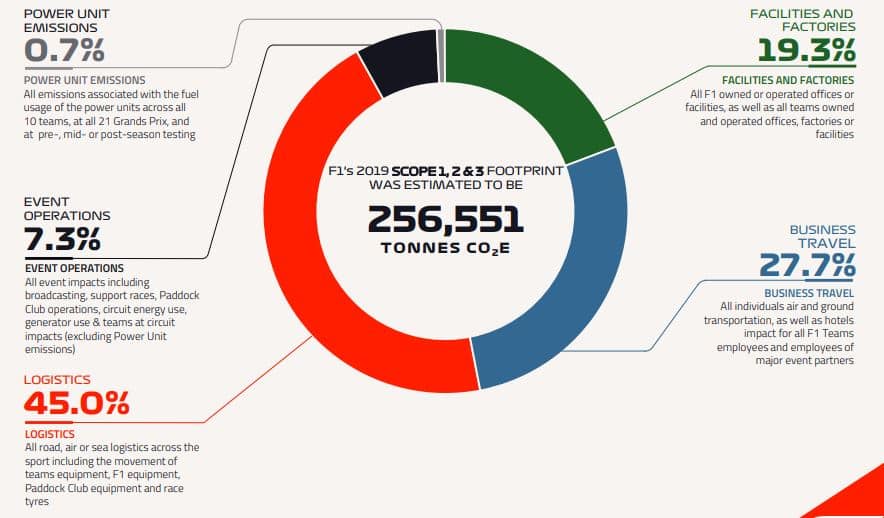
According to F1โ€™s 2019 sustainability report, when it first announced its 2030 net zero emissions target, the company emitted 256,551 tonnes of CO2. This carbon footprint is emitted by 10 teams, 20 car units, and 23 racing events in various locations.ย 

Formula 1 carbon footprint 2019Interestingly, a very small amount of its total carbon emissions, less than 1%, came from the use of F1 cars. It refers to the emissions associated with the fuel usage of F1โ€™s power units (racing cars).ย 

As seen above, the bulk of the footprint (45%) came from logistics or emissions from air, sea, and road transportation. This is the same with other popular sports where the majority of the pollution is from players and fans traveling.ย 

Similarly, up to 85% of emissions by professional sports events come from the travel and accommodation of fans.

Another major contributor to F1โ€™s emissions is the energy needed to power its race tracks, particularly for events at night. Add to this the emissions associated with car production and track maintenance, which have been increasing over the years.ย 

Formula 1โ€™s environmental impact is undeniable. As F1 race carsโ€™ engines burn massive amounts of fossil fuels, the company is keen to lower its emissions.ย ย ย 

To address its huge CO2 footprint, Formula 1 pledged to reach net zero emissions by 2030. The company also aims to make each race sustainable by 2025.ย 

What is F1 Doing to Hit Its Net Zero Destination?

Same as Formula 1, the International Automobile Federation (FIA) also aims to be net zero by 2030. But compared to F1, its carbon footprint of 18,910 tonnes of CO2e in 2019, is far way lesser.ย 

Still, motor car racing doesnโ€™t bode well for the planet and the sport company knows this for sure. For years, F1 has been looking for ways to reduce its carbon emissions through using different means.

Ross Brawn, the companyโ€™s Managing Director of Motorsports, said that:

โ€œAs always, there is never one silver bullet to these challenges. There are a whole array of changes we have to make, from on the track to where we work.โ€

The company was able to reduce its footprint by 17% over the first 2 full years since 2019. Such reduction is achieved through a combination of various initiatives.

  1. Use of sustainable fuelsย 

Formula 1 has successfully introduced E10 fuel, composed of 10% ethanol, to its power units, reducing total carbon emissions. With that, the sports company intends to run its cars on 100% sustainable fuels in partnership with Saudi Arabian Aramco and other major fuel companies.ย 

The new engine formula will be available by 2026. Itโ€™s a drop-in fuel as it is ready for use in the same formula in internal combustion engines (ICE). Formula 1 plans to partner with F2 and F3 to test the cleaner fuel.ย 

The sustainable fuels will use a carbon capture technology or municipal wastes to further reduce CO2 emissions. These alternative fuels can offer up to 96% carbon emission reductions.

  1. Use of renewable energy

F1 garnered the topnotch sustainability management accreditation awarded by the motorsport governing body FIA for using 100% renewable energy in its offices.ย 

Also under this means, the company turns to solar panels for powering up some venues. Other circuits are 100% renewable powered, too.ย 

  1. Other sustainability measures

  • Standardizing cars using V6 engines: The V6 engines are much smaller, designed for fuel efficiency and promoting environmentally-friendly car motor racing.ย 
  • Single-use plastics
  • Incentives for fans to use greener ways to go to events
  • Re-using and recycling wastes in events
  • Recycling tires as fuel for cement manufacturing

The Race to Sustainability is On

Some F1 drivers are also contributing individually to the companyโ€™s sustainability and climate actions. For instance, world champ Sebastian Vettel has been opting out of air travel going to racing events. Instead, he drove to races to reduce his travel emissions.ย 

The professional motorsport company is also supporting climate projects, including Rimba Raya Biodiversity Reserve in Indonesia and renewable energy generation projects in Zambia and India.

To meet the company’s minimum 50% emissions reduction commitment, they’re engaging with key stakeholders across the sport to materially change their operations and reduce emissions that the sportโ€™s company has direct control.

Any remaining unavoidable emissions will be offset using credible programs that are certified by international standards, tracked on leading registries, and in line with latest best practice guidance.

Looking ahead, Formula 1 is planning to further improve logistics to the Grand Prix to cut the sportโ€™s CO2 footprint. As the Las Vegas Grand Prix is around the corner, fans (and critics) are on the move to witness F1โ€™s biggest best ever.ย 

F1 Las Vegas GP ticket prices are going down significantly. Friday prices dropped by 62% (from $825 to $312) while Saturday prices decreased 34% (from $1,645 to $1,087).

The sportโ€™s sustainability efforts are promising, but theyโ€™re just the beginning of the race. With seven more years to go until 2030, Formula 1 is racing towards its net zero goal.ย 

Manulifeโ€™s Forest Carbon Credit Fund Closes $224 Million

Manulife Investment Management, the world’s largest manager of natural capital, overseeing almost $15 billion in assets involving timberland and agriculture, has revealed the initial close of its Forest Climate Fund or FCF.ย 

Manulifeโ€™s FCF, launched last year, is a strategy that involves producing carbon credits through natural carbon sequestration. It is a closed-end fund intended to provide U.S. investors and select institutional investors an opportunity to champion climate change mitigation through the stewardship of sustainably managed forests.

Around 70% of the fund will be invested in carbon projects.

The goal is to prioritize carbon sequestration over timber harvesting. Alongside its affiliated offshore entities, the fund has garnered commitments amounting to around $224.5 million. The fund aims to reach its targeted offering of $500 million.ย 

Generating High-Quality Carbon Credits

The strategy’s investment goal centers on enabling investors to engage in timberlands managed to produce high-quality carbon credits through enhanced sustainable forest management practices.

By increasing the amount of carbon stored in forests, the projects not only generate credits but also mitigate global warming. The strategy also includes establishment of new forests through afforestation or reforestation, generating high-quality credits while securing sustainable timber value.ย 

By leveraging carbon credits, conservation easements, and limited timber harvests, the fund aims to capture potential climate benefits while ensuring competitive financial returns for investors.ย 

The financial success of carbon projects like these hinges on future predictions of carbon prices. And estimations often show an optimistic outlook in this regard.ย 

Historically, forest carbon credits have faced notable pricing fluctuations, particularly within voluntary carbon markets, often characterized by relatively low prices. However, the scenario has been shifting due to the surge in net zero commitments made by both companies and investors.ย 

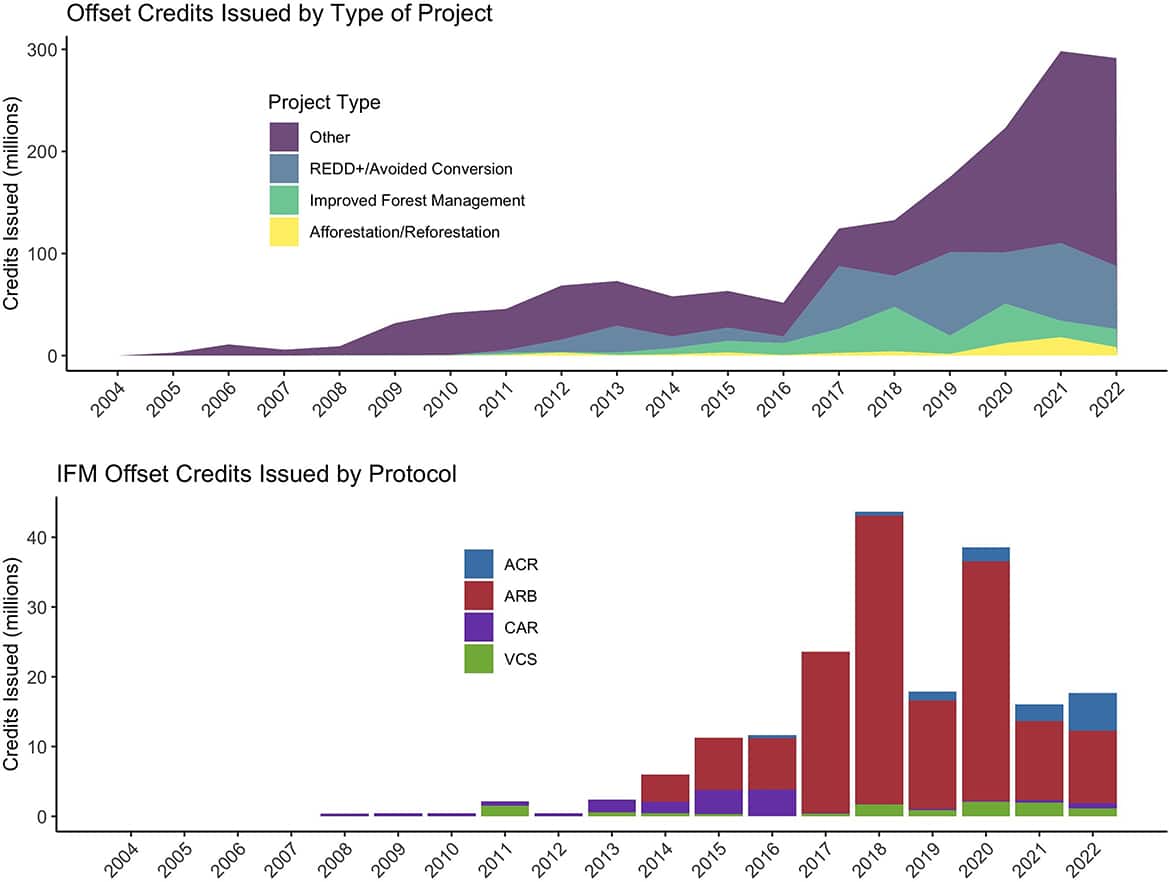
Forestry projects accounted forย 30% of the total carbon offset credits issued by voluntary registries in 2022. These projects come in various types including improved forest management (IFM) and afforestation/reforestation.

According to an analysis byย Haya et al. (2023), IFM projects have produced 193 million carbon offset credits since 2008. That amount accounts for 28%ย of the total credits from forest projects andย 11%ย of all credits generated in voluntary markets.

forest carbon offset credits from IFM

Moreover, thereโ€™s also a growing perception of natural climate solutions as having high value. These factors contribute positively to the upward momentum in carbon pricing.ย 

FCF and the Voluntary Carbon Market

Despite a number of investigations revealing the weakness of forest carbon sequestration, investors are still interested in natural climate solutions. In fact, projections show that carbon reductions initiatives involving forests and other natural environments will continue to expand.ย 

Highlighting their expertise and experience in sustainable forest management, Eric Cooperstrom noted that:ย 

โ€œThe Manulife Forest Climate Fund expands on our decades of sustainable timberland management experience and is one of the natural climate solutions we have developed to sequester carbon more intensively and drive broader impact.โ€ย 

Manulife plans to allocate the carbon credits to investors via direct in-kind transfers. This will allow them to use the credits to fulfill their individual climate objectives or potentially monetize them in voluntary carbon markets through offset sales to attain financial value.

Carbon offsets are sold through various exchanges, online marketplaces, and directly via carbon projects that reduce or remove emissions.ย 

Manulifeโ€™s current portfolio of sustainably managed forestry assets cover the U.S., Canada, Australia, New Zealand, and South America. Overall, it oversees around 5.5 million acres of timberland, with majority in the U.S., representing over 95% of improved forest management carbon credits issued and retired.ย 

Forestlands are one of the most valuable nature-based solutions to fight climate change. Climate investors find that protecting forests (REDD+) is important to win the fight against the climate crisis.ย 

Manulifeโ€™s Forest Climate Fund is a carbon-focused impact investment strategy. Itโ€™s the companyโ€™s first natural capital fund recognized under Article 9 of the European Commissionโ€™s Sustainable Finance Disclosure Regulation (SFDR).ย 

Natural capital strategies that produce carbon credits have expanded recently. But the way they distribute the credits differ.ย 

Stafford Capital Partners also launched its own forest carbon credit fund early this year, the Carbon Offset Opportunity Fund. The fund raised $242 million in investor commitments from three UK local government pensions schemes.

By prioritizing carbon sequestration over timber harvesting, Manulife IM’s Forest Climate Fund exemplifies a commitment to carbon reduction and sustainable forest stewardship. Manulife’s innovative approach aims to generate high-quality carbon credits while ensuring both environmental impact and financial returns for investors, bolstering the fight against climate change.

Manta Ray-Inspired Plane Could be the Next “SpaceX of Aviation”

0

JetZero Inc., a pioneering aviation startup, is boldly redefining the blueprint of commercial passenger aircraft by introducing a revolutionary low carbon, triangle-shaped design, resembling an enormous manta ray soaring through the skies.

JetZero‘s groundbreaking aircraft departs from the century-old norm of elongated tubes with wings and tail stabilizers. Instead, it boasts a shorter fuselage with more width, contributing substantially to its lift capabilities.ย 

The elimination of the traditional tail is compensated by two engines mounted on the rear. This new design provides both power and stability to this innovative flying machine.ย 

Introducing JetZeroโ€™s Flying Manta Ray

The distinct advantages of JetZero’s design, Blended Wing, become apparent when considering its notable features. It shows no clear dividing line between the plane’s wings and fuselage.ย 

The aircraft’s triangular cabin accommodates three aisles, streamlining the boarding process and optimizing use of interior space. The aircraft also boasts a quieter fly, more stable flight, and a lighter overall structure.ย 

JetZero blended wing airplane designThe Southern California company said that its blended wing design could transport up to 250 passengers, equivalent to the capacity of current widebody jets like Boeing’s 767, while consuming only half the fuel.

With its more aerodynamic shape, it reduces drag and increases lift, which further burns less fuel.ย ย 

This concept traces its roots back over a century when Germany’s Hugo Junkers conceptualized a flying wing. The designer recognized that traditional fuselages and tail fins donโ€™t contribute to lift. Similar designs were explored during World War II but aviation industry leaders have been cautious in adopting such innovations.

Boeing and Airbus have explored futuristic designs embedding the cabin into the wings, but neither plans to implement it yet. JetZero, however, is willing to challenge the status quo.ย 

The startup aims to initiate test flights of one-eighth-scale prototype in December. Then it will develop a full-scale version within four years.ย 

JetZeroโ€™s innovation received a rejection from major airliners, saying that itโ€™s not yet the right time for that. But the company believes that the time is now, with their CEO Tom Oโ€™Leary noting that theyโ€™re โ€œhappy to pave the wayโ€.ย 

Clearing the Path to Zero

The airliner market has been getting used to having just Boeing and Airbus in its wings. Plus, changing how planes fly and how things work on the ground is both time-consuming and expensive. Some companies attempted doing so, including Brazilโ€™s Embraer, Chinaโ€™s Comac C919, Russiaโ€™s Sukhoi Superjet, and Bombardier Inc.ย 

But they all failed.ย 

Still, the aviation industry has to change its old ways to reach net zero emissions by 2050. More so that the industry emits increasing amounts of carbon dioxide annually. In 2022, aviation is responsible for emitting about 900 million tons of CO2.

Without changing the course with todayโ€™s aircraft, aviation will release more CO2 than Germany, U.K., and South Korea combined by 2040, at 1.8 billion tons.ย 

JetZero aims to make the first move in changing that course with its Blended Wing aircraft. It can potentially cut planet-warming fuel consumption by half. It also reduces the cost barrier to entry for new propulsion technology, accelerating adoption while clearing the part to zero emissions.ย 

Aviation carbon emissions per year
Source: JetZero website

The aviation company has formed partnerships to advance its mission of creating jets with low carbon emissions. It works with a renowned maker of B-2 bomber Northrop Grumman Corp. and Virgin Galacticโ€™s WhiteKnightTwo. They will provide designing and constructing assistance in creating JetZeroโ€™s prototype.

Reshaping the Future of Flying

The startupโ€™s ambitious initiative received a significant boost from the US Air Force with a commitment of $235 million.ย 

If the roadmap unfolds as planned, JetZero will engage with regulatory bodies to secure certification for a midsize airliner by the early 2030s. Its passenger plane may pave the way for versions fit for military cargo transport and aerial refueling.ย 

With that, Pentagon leaders find JetZeroโ€™s design concept to offer a potential to outpace China in technological advancements. Its low noise profile and extended range would be an advantage in future battles. Air Force Assistant Secretary Ravi Chaudhary emphasized the importance of supporting this innovation swiftly today.

Other aviation startups are also seeking to reshape commercial passenger jetliners to reduce emissions, including Archer Aviation and Joby Aviation. They are innovating small electric aircraft called โ€œair taxisโ€ that are in trials.ย 

Other industry players are promoting the use of hydrogen for low carbon emission and sustainable aviation like the case of ZeroAvia. While major airlines are supporting sustainable aviation fuel to slash the industry’s emissions.

These innovative startups, including JetZero are facing a couple of challenges. These include limited government funding, unconvinced airlines and flyers, airport infrastructureโ€™s conventional design, and changing passengersโ€™ taste.ย 

But the California-based startup believes that once their jets are flying up in the air, people will change their minds. Oโ€™Leary particularly said that:ย 

โ€œThey need to see it at full scale, proving that there is this incredible reduction in fuel burn and emissions that can come from this airframe. To us, thatโ€™s everything.โ€

For one of JetZeroโ€™s investors and a strategic advisor, Build Collective, the triangle-shaped airplane is the โ€œSpaceX of aviationโ€.

JetZero’s visionary approach underscores a commitment to reshape the future of air travel. It offers not just a novel design but a paradigm shift that could lead the aviation industry into a new era of efficiency, sustainability, and low carbon emissions.

Canada Faces 2 Carbon Issues: Shaky Carbon Tax and Missed Emissions Goal

0

Canada’s NDP Leader Jagmeet Singh advanced a motion in the House of Commons, keeping the carbon pricing debate alive by urging Prime Minister Justin Trudeau to permanently remove the GST (Federal Goods and Services Tax) from all forms of home heating.ย 

Meanwhile, concerns were also raised about missing Canadaโ€™s emission reductions target as revealed by a recent audit. The debate between the two parties on carving-out the carbon tax seems to impact the nation in reaching its climate goals.

A ‘Flip-Flop’ Stance

NDPโ€™s move, focused on affordability, aligns with the New Democratsโ€™ ongoing advocacy but has gained renewed attention. That is due to the recent controversies surrounding the Liberalsโ€™ exemptions for home heating oil and rural rebate enhancements.ย 

Singh’s proposal is non-binding, meaning it won’t compel the government to act even if it passes. It aims to achieve three major objectives:

  • Remove the GST from all home heating forms,
  • Ensure easy access to eco-energy retrofits and heat pumps for low-income and middle-class Canadiansย 
  • Fund these initiatives through a tax on the excess profits of major oil and gas corporations.

The motion was debated with the vote expected later in the week.ย 

Despite the NDP’s support for the Conservative carbon tax motion, there’s uncertainty about the reciprocity of support from the Conservative caucus for the NDP’s current motion.

During the House debate, Conservative Leader Pierre Poilievre criticized the NDP for โ€œyet another flip-flopโ€ in their stance on the tax issue.ย 

Singh responded by challenging the corporate-controlled Conservatives to support the motion. He further highlighted their priorities in protecting big oil and gas profits over helping Canadians lower their costs and combat the climate crisis.

The Liberals have consistently advocated for carbon pricing based on its universal application. The purpose of the tax is to discourage planet-warming emissions by making them more costly to bear. This policy would allow Canadians only to pay based on how much carbon theyโ€™re releasing into the air.

The current administration, for example, charges $65/tonne of CO2. That translates to 14 cents for each liter of gasoline, 10 cents for propane, and $145/tonne of high-grade coal.ย 

โ€˜Ax The Taxโ€™

The tax exemption, a.k.a. โ€˜carve-outโ€™, further complicated the Liberalsโ€™ established stance that any inequalities resulting from the tax could be corrected with targeted rebates.ย 

The concept means that all Canadians would face the same fuel prices. However, those with lower incomes or residing in rural areas without public transportation would receive a proportionately larger portion of the refund.

With the exemption, the Liberals provided a pardon for an exceptionally polluting fossil fuel that could predominantly benefit the wealthy. Thatโ€™s according to the findings of an economist, noting that it would favour โ€œhouseholds with large houses MORE than low-income households living in higher density homesโ€.

As for the Conservatives, abolishing the tax is one of their major lobbies. The party has mentioned the never-heard-of phrase in over 150 years in the House of Commonsโ€™ transcripts – โ€˜ax the taxโ€™ – more than 100 times.ย 

Meanwhile, the Senate also advanced Bill C-234, suggesting further exemptions in the carbon price for specific fuels used in farming. The bill, if passed, would create exemptions for natural gas and propane as qualifying farming fuels from the carbon tax.ย 

Sen. Pat Duncan particularly noted by asking that:ย 

โ€œWill allowing this rebate and passing Bill C-234 make a tremendous difference to Canada reaching the climate change goals?โ€

That question points to another significant result of the federal environment commissionerโ€™s recent audit. That is Canada’s plan to achieve its 2030 greenhouse gas emissions targets falls short of the mark.

Missing The Target

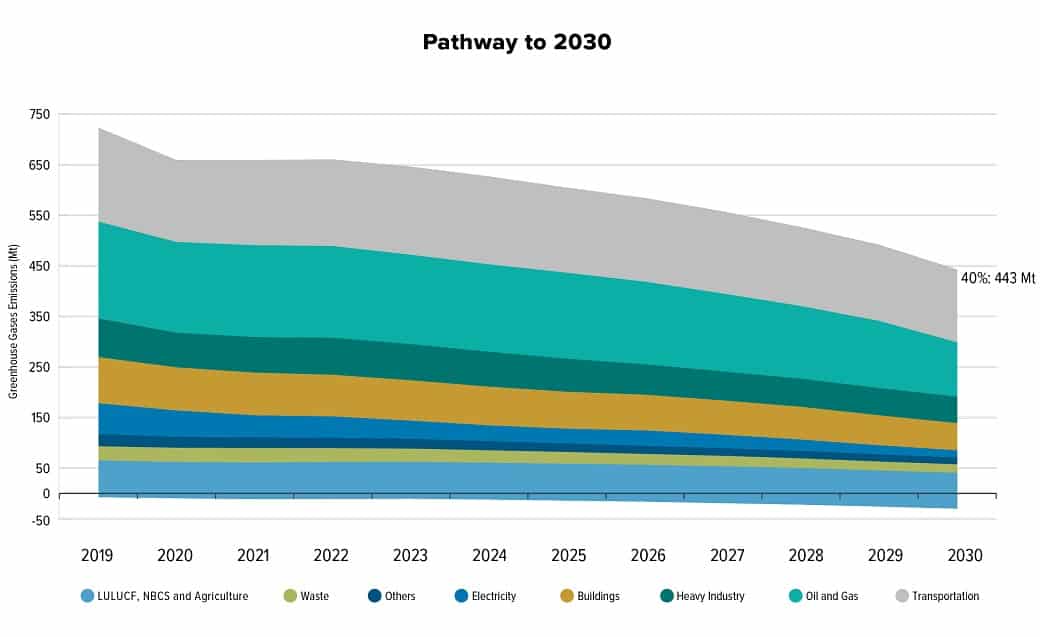
Canadaโ€™s emission reductions plan, published last year, is a requirement under the federal net zero accountability law passed in 2021. The following chart shows Canadaโ€™s 2030 Emissions Reduction Plan per sector.

Canada 2030 Emissions Reduction Plan According to the audit, while the plan represents an improvement over previous versions, it still lacks in critical areas. Key policies have experienced delays, the functionality of established measures remains unclear, and the country is several million tonnes away from its emissions goal.


The auditor, Jerry DeMarco, emphasized the urgency of reversing Canada’s GHG emission trajectory, stressing that the issue demands immediate attention.ย 

  • The nation aims to reduce emissions by 40% – 45% from 2005 levels by 2030. That calls for a โ…“ reduction in Canadaโ€™s current emissions by the same period.ย ย 

However, the measures outlined in the plan are projected to achieve just a quarter of the reduction by decadeโ€™s end. That happens due to relying on government modelling which DeMarco referred to as โ€œoverly optimistic assumptionsโ€.

Though the plan identifies more than 80 policies and programs, less than 50% have set timelines for implementation. In fact, only 4 of them have specific targets for emissions reduction.ย 

  • In comparison with other G7 nations, Canada’s emissions have only decreased by around 8% compared to 2005 levels. As such, the country is the least successful in cutting emissions within the group.ย 

In response to the findings, Environment Minister Steven Guilbeault acknowledged the existing gap between the target and necessary policy actions. He pledged the government’s commitment to accelerating efforts and improving transparency in its modelling to show how it intends to achieve the 2030 target.ย 

Guilbeault also hinted at positive developments in the upcoming progress report due before the year’s end.

The NDP’s motion to scrape the tax from home heating intensifies the debate on carbon pricing and emission reductions in Canada, underscoring the challenges faced in meeting the nation’s climate goals.

Market-Based Vs Location-Based Emissions: Whatโ€™s The Difference?

The calculation of emissions, particularly in the realm of energy consumption, is a complex process that requires careful consideration of various factors. Two primary methods, location-based and market-based emissions reporting, play a critical role in understanding your company’s carbon footprint.ย 

This article delves into the intricacies of both methodologies, offering insights into their distinct calculations and implications for businesses.

Both location and market based emissions reporting applies to two emission categories: scope 2 or purchased electricity and scope 3 or fuel and energy related emissions. Letโ€™s break down each method starting with location-based emissions.ย 

Understanding Location-Based Emissionsย 

Location-based emissions refers to what you physically consume at your operations site or business facility. Itโ€™s calculated using solely the average emission intensity of the local grid where you source power.ย 

power grid for location based carbon emissions accountingThat means a location-based method doesnโ€™t factor in any green measures youโ€™re adopting such as renewable energy credits (RECs). So, location-based emissions would be the same regardless if you use RECs but would be different vs. your market-based emissions.ย 

For a clearer understanding in determining your location-based emissions, letโ€™s use an example of a business in L.A., California. You can find the actual emission factors for your local power grid from the International Energy Agency (IEA) database.

Now, letโ€™s calculate. First step is to get the emissions factor for the average CO2 or GHG intensity of the LA power grid, expressed in kg of CO2e per kWh. Then letโ€™s multiply that emissions factor by the buildingโ€™s electricity consumption to get Scope 2 emissions.ย 

  • Hereโ€™s the formula to keep in mind: kWh of electricity usedย  xย  local grid emissions factor = Location-based Scope 2 Carbon or GHG Emissions

To get location-based emissions for your Scope 3, simply do the same with the upstream emission factor.

The idea behind calculating and reporting Scope 2 location-based emissions is that everyone in the same power grid is equal. Nobody gets exception and everybody shares the same emissions of the grid based on the amount of electricity they consume.ย 

Given the formula above, one option to reduce your location-based emissions is to just decrease overall energy use. Or you can increase on-site renewable energy generation used directly by your office building or production facility.ย 

Understanding Market-Based Emissionsย 

Unlike location-based methods, the calculation for market-based emissions focuses on the individual company and its contract agreements in the market. Market-based emissions are associated with energy a company purchases, which is different from the power the local grid generates.ย 

There are various instruments or contracts involved in getting market-based emissions. These include these common ones:

  • Renewable Energy Contracts (RECs)
  • Direct contractsย 
  • Supplier-specific emission ratesย 
  • The residual mixย ย 

Calculating for these energy contracts or instruments should adhere to the GHG protocol Scope 2 emissions quality criteria. If they donโ€™t, the company may still opt to report them separately for transparency. But they canโ€™t be included in calculating market-based Scope 2 emissions.

So how does getting market-based vs. location-based Scope 2 emissions differ?ย 

As mentioned, market-based emissions take into account energy purchase agreements. So, taking the example provided above for location-based emissions, the California company is taking its electricity from the local grid. But they want to buy RECs from a renewable energy developer.ย 

While that company still connects with and consumes power from the grid, the market-based method requires them to factor in emissions of the RECs. By doing that, the company can claim the emission reductions from the renewable energy supply instead of applying the emissions factor of the grid as the case with the location-based method.

Here are the steps to calculate market-based emissions using this formula:ย 

  • kWh consumedย  xย  Contract source emissions factor (EF) = Market-based Scope 2 CO2e GHG Emissions
  1. Get the emissions factors for energy sources specified in the contracts (refer to GHG protocol quality criteria)
  2. Multiple the power bought from a source by its specific emission factor. Do the same for all the sources in energy contracts and sum them all up.ย 
  3. For electricity use emissions thatโ€™s included in your contracts, use the residual mix emission factor.ย 

Residual mix refers to the emission factor for the grid that excludes electricity generation claimed by your electricity contracts.

  • A quick tip: choose higher precision EF wherever applicable when calculating market-based emissions as the GHG Protocols Hierarchy suggests.

This approach of measuring emissions is attributed to the same energy consumed used in calculating location-based emissions. When you determine Scope 2 emissions using both methods, you donโ€™t sum them up, but disclose them separately.ย 

The goal is to report these two emissions side-by-side to show different stories about the same activity data.ย 

Comparing Location-Based and Market-Based Emissionsย 

With the differences in calculating Scope 2 emissions, which method should you use?ย ย 

Given the more detailed and accurate market-based emissions, you might opt for this calculation method. After all, carbon accounting must prioritize accuracy and market-based emissions are more specific to your business operations.ย 

However, calculating market-based is a bit trickier. You need to have a clear understanding of your contract emission factor or know if itโ€™s 100% renewable. It matters a lot as shown in the formula, but it doesnโ€™t fully capture the actual emissions of your energy use.ย 

On the contrary, the location-based method does show it.ย 

According to the World Resources Institute, โ€œthe location-based method reveals what the company is physically putting into the air, and the market-based method shows emissions the company is responsible for through its purchasing decisionsโ€.ย 

In other words, both methods tell different sides of the story thatโ€™s essential in showing your companyโ€™s CO2 footprint. From there, you can decide the corresponding carbon reduction strategies to adopt.ย 

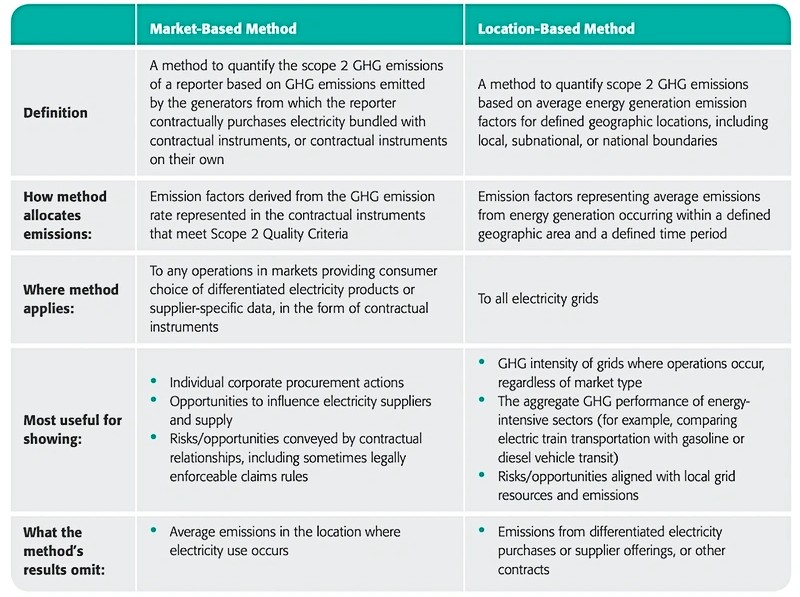
The GHG Protocol provides a comprehensive comparison between the two carbon accounting methods, including their applicability, most useful scenario, and what they miss out.ย 

Market-Based Vs. Location-Based Emissions Method

market based vs location based emissions
Borrowed from GHG Protocol

Policy Implications and Carbon Offsetting

Electricity sourced from a grid lacks differentiation and cannot be distinguished based on its origin. Even if your company buys renewable energy credits (RECs) or similar instruments, they donโ€™t significantly alter or lower your emissions. They also donโ€™t enable a complete disconnection from the grid, unless you establish your own self-sufficient power generation.ย 

You can account for RECs and other carbon credits in your companyโ€™s carbon offset inventory. However, they should be accounted for separately as a unique inventory line item and not included in calculating emissions from purchased power.ย 

In contemporary electricity grids worldwide, such as those in the U.S, Canada, and Germany, integrating renewable energy does not result in disconnection from the local electricity grid. Rather, electricity generated by your renewable energy system is often sold back into the grid, with net metering commonly employed.ย 

Consequently, you continue to use grid electricity, with any surplus clean energy benefit shared by all grid users. This integration leads to a reduction in the grid’s overall carbon intensity, a factor that’s useful in accounting for location-based Scope 2 emissions.

Location-Based vs Market-Based Emissions: Closing Thoughtsย 

As new guidance and regulations on carbon accounting and reporting corporate emissions are strengthening, companies should know the basics, at the very least, of factoring in their harmful emissions. Knowing the different methods for accounting emissions, be it location-based or market-based, and their nuances is crucial.ย 

While market-based emissions provide a more granular and specific picture of a company’s carbon footprint, the location-based approach offers transparency about the physical emissions generated at a site.ย 

Recognizing the distinct stories presented by each method allows you to develop effective carbon reduction strategies in line with your companyโ€™s or organizationโ€™s operational needs and environmental commitments.ย