The EU Commission made history by approving $380M (€350m) German scheme to bolster renewable hydrogen production in Germany. The scheme was released this month under the EU state aid rules. It would be operated exclusively through the European Hydrogen Bank’s “Auctions-as-a-Service” tool.
REPowerEU and The European Green Deal have set a concrete plan to move away from fossil fuels and embrace the EU’s industry for the net zero age. The scheme aligns with the objectives of these two entities. Most significantly, aiming to reduce dependence on Russian fossil fuels while transitioning to the green future.
Unleashing the Potential of the German Green Hydrogen Scheme
The Background
The “auctions as a service” model encourages EU member states to support domestic renewable hydrogen production. It allows countries to subsidize hydrogen production within their borders by leveraging the existing system set up by the EU Commission.
The EU Commission’s 2022 Climate, Energy, and Environmental State Aid Guidelines (CEEAG) establish a flexible and useful framework to assist Member States. It offers the necessary support to achieve the Green Deal objectives efficiently and cost-effectively.
Media reports revealed that last year in December, Germany topped up the EU’s €800m ($876m) pilot auction for the European Hydrogen Bank. It secured €350m as a domestic fund under the “auctions as a service” model.
Yet, a forthcoming auction of €2.2 billion is set to launch in the spring of next year, i.e. 2025. This could amplify the new capacity’s budget and scale with the support of more member states.
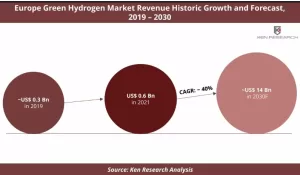
Image: The Europe Green Hydrogen Market is expected to record a positive CAGR of ~40% during the forecast period (2022-2030)
Project Capacity and Future Goals
The German scheme will power the establishment of up to 90 MW of electrolysis capacity, incentivizing the production of approximately 75,000 tons of renewable hydrogen.
Currently, Germany has less than 100MW of electrolyzer capacity. With this funding, it aims to achieve approximately 10 GW of domestic electrolysis capacity by 2030.
It would also contribute to the EU target of producing a minimum of 42.5% renewable energy by 2030, and scale up to 45% later.
Fund Allocation: Role of CINEA and REPowerEU
The European Climate, Infrastructure, and Environment Executive Agency (CINEA) is overseeing the competitive bidding process to allocate the aid. The bidding concluded on February 8th, and the Agency is currently evaluating and prioritizing project bids from all Member States. Companies aiming to build new electrolyzers in Germany can apply for support through this German scheme.
CINEA manages energy, environment, climate action, and transport programs under the EU. The agency monitors funding and project management to promote green initiatives, like decarbonization, green fuel, and other sustainability initiatives across the continent.
A snapshot of CINEA’S funding and responsibilities
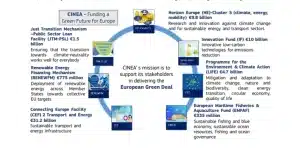
Source: European Commission Annual Report 2022
The European Commission’s vice-president for the European Green Deal, Maroš Šefčovič expressed his pleasure in this deal, stating that,
“We will only achieve the transition to a climate-neutral EU and a decarbonized energy system if we join forces. I am very pleased to see Germany become the first Member State to use the Innovation Fund’s hydrogen pilot auction to support renewable hydrogen projects nationally.”
Moving on, the REPowerEU plan has necessitated substantial investments and reforms in the form of loans and grants. Priority allocations include ~ €10 billion for gas and LNG infrastructure to ensure energy security for all Member States. They would deploy approximately €2 billion to phase out Russian oil shipments.
Most importantly, the bulk funding- 95%, will be dedicated to driving the clean energy transition. The key focus would be on implementing a modern regulatory framework for hydrogen and establishing a hydrogen accelerator.
Beneficiaries of the German Scheme
Companies planning to build new electrolyzers within Germany will qualify for assistance. Furthermore, beneficiaries must adhere to the EU standards to produce renewable fuels of non-biological origin (RFNBOs).
Additionally, the companies will receive the grant directly for 1 kilogram of renewable hydrogen generated, with a maximum duration of ten years.
Germany has further established sufficient measures to minimize the scheme’s influence on competition and business within the EU.
The European Green Deal and REPowerEU Lead the Green Hydrogen Mission
Since its inception, the Commission has effortlessly aimed to reshape the EU into a sustainable, resource-efficient, globally competitive economy, aligning with the Paris Agreement’s goals.
The EU crafted the European Green Deal to guide it towards these aspirations. Its primary aim is to achieve carbon neutrality by 2050 and make Europe the first climate-neutral continent in the world.
The EU has actively backed the establishment of infrastructure and technologies to curb emissions. One such initiative is such as supporting the shift to green hydrogen production.
In March 2022, EU leaders in the European Council unanimously decided to reduce Europe’s reliance on Russian energy imports. Thus, the concept of REPowerEU came into existence.
EU’s press release mentions,
“REPowerEU is about rapidly reducing their dependence on Russian fossil fuels by fast-forwarding the clean transition and joining forces to achieve a more resilient energy system and a true Energy Union.”
As per the latest reports, the two initiatives: REPowerEU and the European Green Deal have helped the EU to achieve the following outcomes:
- Reduced its dependency on Russian fossil fuels
- Saved ~ 20% of its energy consumption
- Introduced the gas price cap and the global oil price cap
- 2x additional deployment of renewables (clean hydrogen)
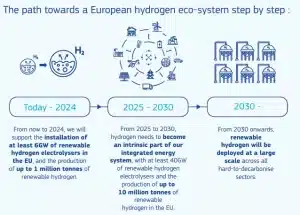
source: EU Hydrogen Strategy
With this analysis, we hope the EU Commission aptly uses the German Scheme funding to magnify its renewable hydrogen capacity and take the lead to a sustainable future.




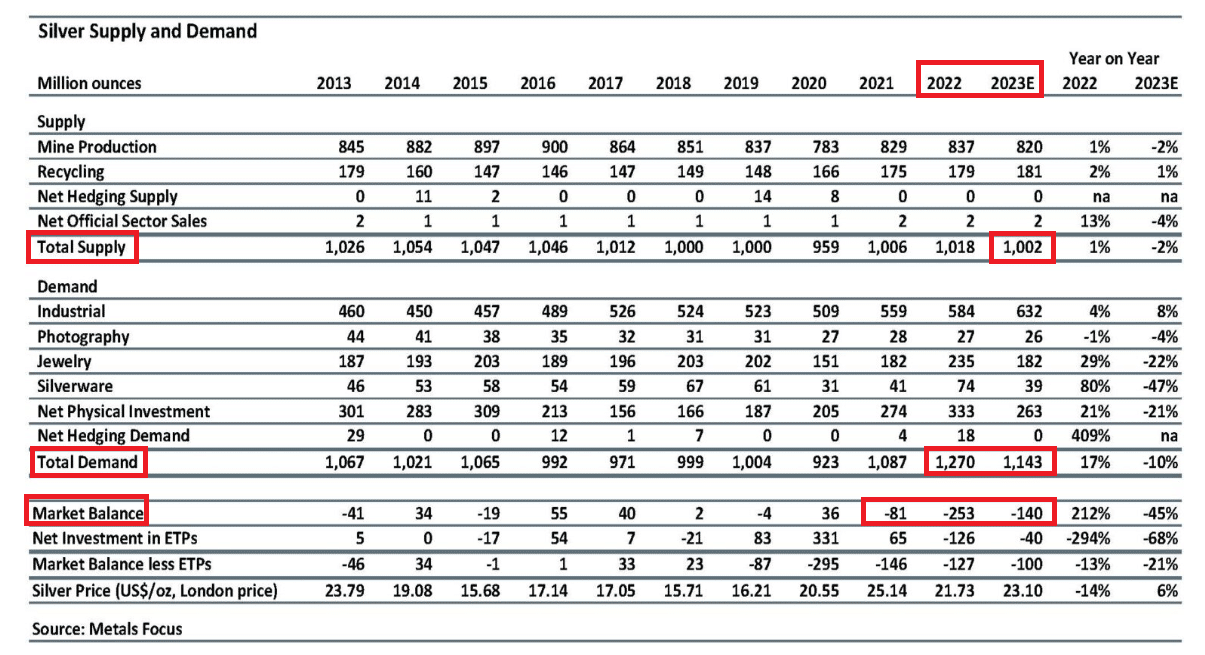
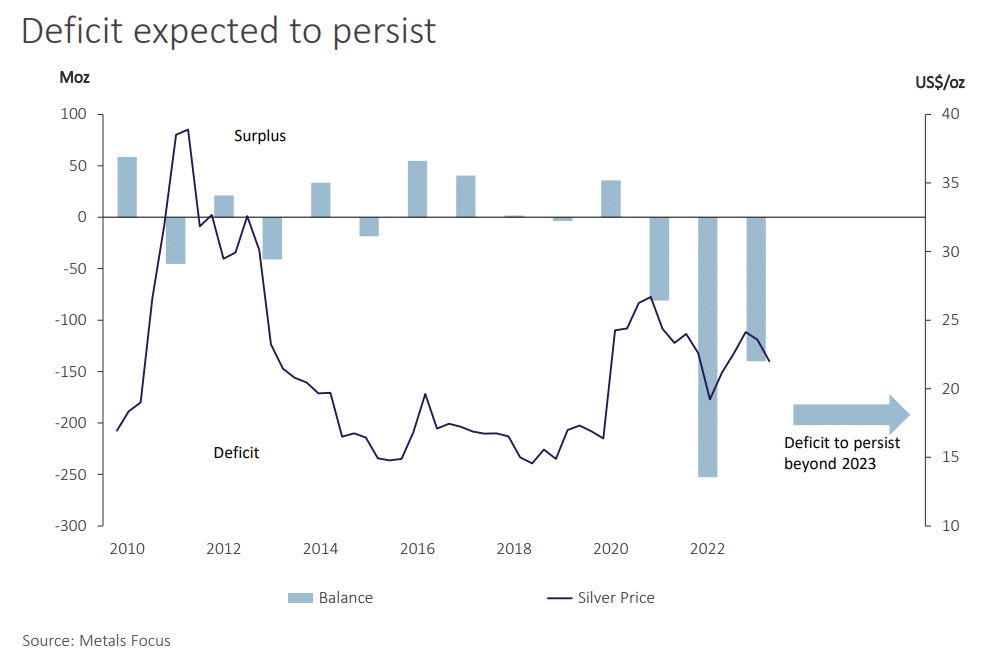 The forecast suggests that the imbalance between supply and demand in the silver market is not a short-term phenomenon but rather a structural issue that is likely to endure in the coming years. This underscores the ongoing importance of silver in various industrial applications and highlights the challenges in meeting the growing demand for this precious metal.