


Tesla (NASDAQ: TSLA) reported nearly flat third-quarter 2026 revenue as declining automotive regulatory credit sales and lower vehicle deliveries weighed on its financial performance. The electric vehicle (EV) maker generated $28.05 billion in revenue, while net income attributable to common stockholders fell 43% year over year to $787 million.
The results highlight Tesla’s changing business model as it invests in artificial intelligence (AI), robotics and battery storage. While its energy storage deployments increased, revenue from automotive regulatory credits continued to decline, reducing a historically important source of high-margin income.
According to Tesla’s Q3 2026 earnings update, the company generated $1.53 billion in free cash flow and ended the quarter with $45.45 billion in cash, cash equivalents and short-term investments.
Tesla Q3 2026 Earnings: Key Financial Results
Tesla’s total revenue was broadly unchanged from $28.10 billion in Q3 2025. However, operating income fell 56% to $718 million as operating expenses increased and regulatory credit revenue declined.
Its adjusted earnings per share were $0.48, compared with $0.50 a year earlier.
Here’s the complete breakdown of the results:
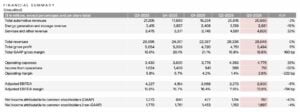
The company’s free cash flow was $1.53 billion, down 62%.
Operating expenses rose 39% to $4.78 billion, driven partly by research and development spending. Capital expenditure increased 110% to $4.73 billion as Tesla expanded its infrastructure and invested in future technologies.
Tesla Carbon Credit Revenue Drops to $113 Million
- Tesla’s automotive regulatory credit revenue fell to $113 million in Q3 2026, down 73% from $417 million in Q3 2025. Revenue also declined 23% from $146 million in Q2 2026.
The credits accounted for approximately 0.4% of Tesla’s total quarterly revenue, compared with 1.5% a year earlier. Tesla cited lower regulatory credit revenue as a factor weighing on both revenue and operating income.
The decline follows a broader downturn in Tesla’s credit business. In 2025, the company generated $2.76 billion from regulatory credits, a record high in 2024, before annual credit revenue fell 28% to approximately $2 billion in 2025. The quarterly figures show that the decline has continued into 2026.
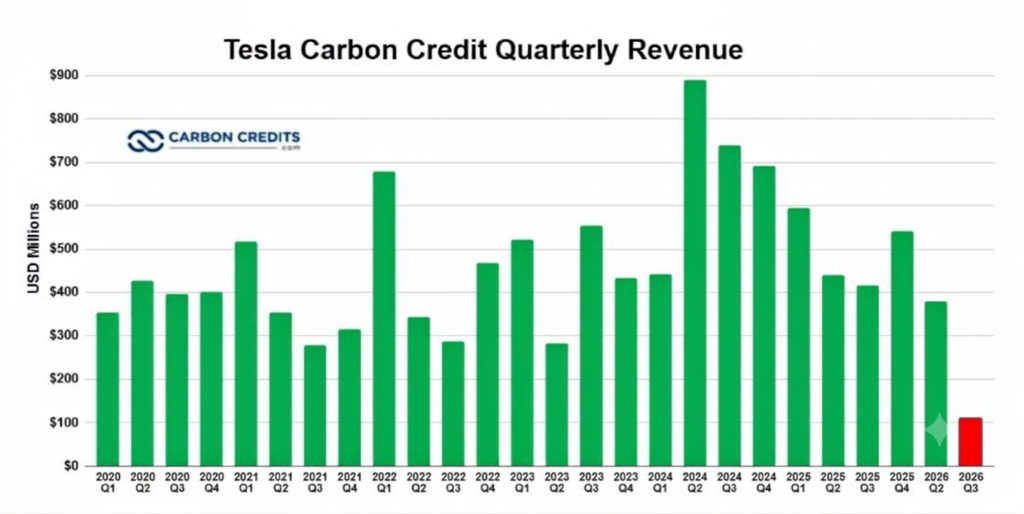
Tesla earns this revenue by selling surplus automotive regulatory credits to other automakers that need them to comply with emissions requirements. These credits have historically supported profitability because they provide revenue without the manufacturing costs associated with selling vehicles.
However, as more automakers expand their EV lineups, some need fewer credits from Tesla. Changes in emissions policies and compliance requirements can also affect demand. The latest results underline the financial impact of this shift as Tesla faces pressure to generate more earnings from its core businesses.
Vehicle Deliveries and Automotive Revenue Face Pressure
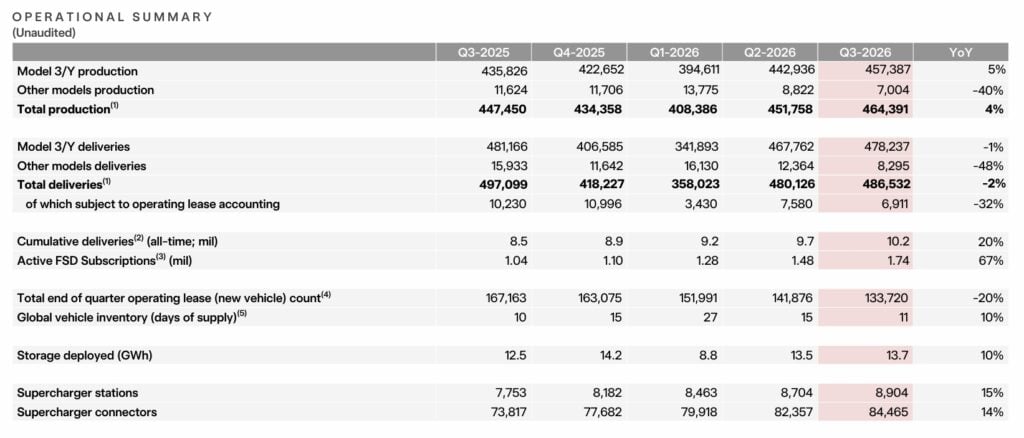
Tesla delivered 486,532 vehicles during the quarter, down 2% year over year, despite producing 464,391 vehicles, up 4%.
Automotive revenue reached $20.56 billion, down 3% from a year earlier. The company also cited lower average selling prices and fewer deliveries as factors affecting revenue.
Services and other revenue increased 33% to $4.61 billion, supported partly by growth in automotive ancillary sales and Full Self-Driving (Supervised) subscriptions. Active FSD subscriptions reached 1.74 million, up 67% year over year.
These businesses could help diversify Tesla’s revenue as regulatory credit income becomes less significant. However, higher research and development costs and investments in AI and robotics continue to weigh on near-term profitability.
Tesla Energy Storage Business Offers a Growth Opportunity
Tesla’s energy generation and storage revenue declined 16% year over year to $2.88 billion. However, the company deployed 13.7 gigawatt-hours (GWh) of energy storage products, up 10% from Q3 2025.
Tesla said demand remained strong, with its highest-ever quarterly order rate and backlog. Production also began at Megafactory Texas, which has a planned annual capacity of 50 GWh.
The energy storage business could benefit from rising electricity demand from data centers and the expansion of renewable energy. Grid-scale battery systems, including Tesla’s Megapack, can store electricity and help manage fluctuations in demand, support grid reliability, and integrate variable renewable power.
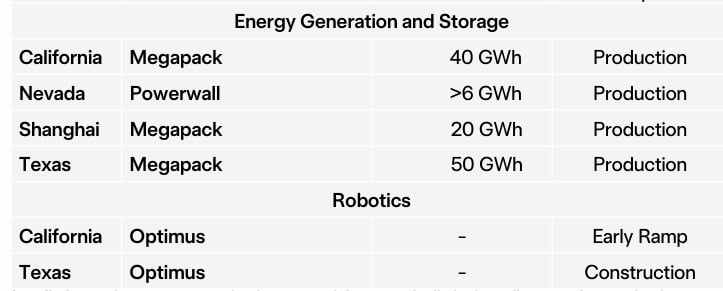
Tesla expects data center demand to support future storage sales. Still, the latest revenue decline shows that strong orders and deployment growth do not always translate into higher quarterly revenue.
What Tesla’s Earnings Mean for Investors
Tesla’s Q3 2026 results show why investors are watching its transition beyond vehicle manufacturing. TSLA shares traded at $386.96 on October 21, 2026, gaining 3.55%.
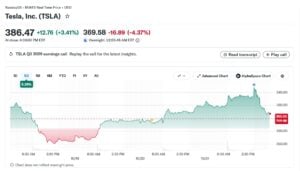
The company’s $45.45 billion cash position provides financial flexibility to fund its expansion. However, Tesla will need stronger operating performance to offset the declining contribution from regulatory credits and support its investments in AI, robotics, and energy storage.
For the clean energy market, battery storage remains an important growth opportunity as power demand rises and electricity grids adapt to renewable energy. For Tesla (TSLA stock) investors, the challenge will be turning that opportunity into sustained revenue growth and stronger profitability as its traditional credit business loses importance.