

Sweden is committing €840 million to three carbon capture projects that aim to permanently store millions of tonnes of carbon dioxide (CO₂). The funding marks another step in the country’s plan to reach net-zero emissions by 2045 and achieve negative emissions after that.
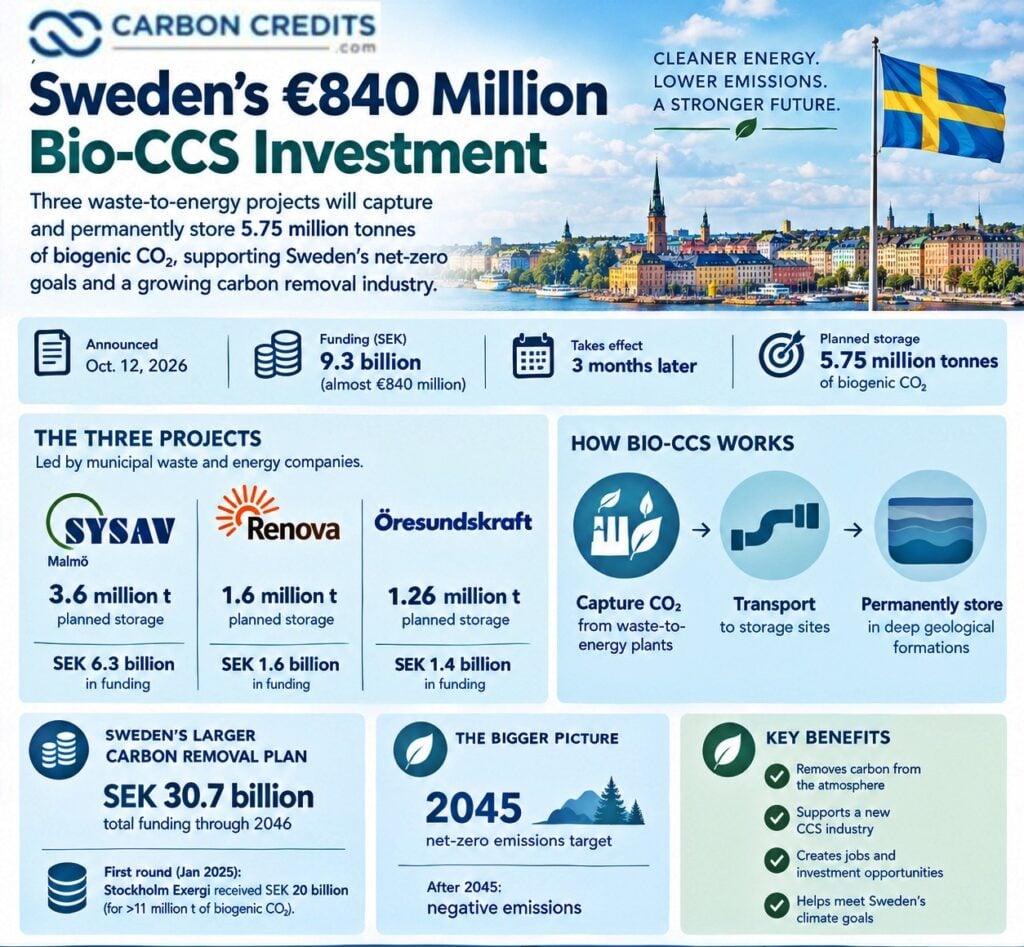
The Swedish Energy Agency awarded SEK 9.3 billion (almost $950 million) to three waste-to-energy operators: Renova, SYSAV, and Öresundskraft. Together, their projects plan to capture and permanently store 5.75 million tonnes of biogenic CO₂.
The funding comes through Sweden’s second government auction for bio-CCS, a technology that captures carbon dioxide from biological sources and stores it underground.
The projects could help Sweden remove more carbon from the atmosphere while building a new industry around carbon capture and storage. However, the planned storage volumes still need to be delivered. The funding will be paid out as storage begins, rather than as a single upfront payment.
Sweden Backs Three Carbon Capture Projects
The three projects are led by municipal waste and energy companies. Their facilities process waste and produce electricity and district heating. Adding carbon capture could allow them to store CO₂ that would otherwise enter the atmosphere.
The Swedish Energy Agency divided the SEK 9.3 billion award among the projects as follows:
- SYSAV: SEK 6.3 billion to develop its SkyZero carbon capture project in Malmö.
- Renova: About SEK 1.6 billion for its carbon capture plans.
- Öresundskraft: About SEK 1.4 billion for its project.
The three companies plan to store 3.6 million tonnes, 890,000 tonnes, and 1.26 million tonnes of biogenic CO₂, respectively, during their support periods. These amounts add up to 5.75 million tonnes.
The projects must begin geological storage within four years of the funding decision. The government will release the support as storage activities begin. This structure links public funding to project delivery. It also gives the companies support for both construction costs and operating expenses.
How Bio-CCS Can Create Negative Emissions
Bio-CCS combines carbon capture and storage with CO₂ from biological sources. Plants absorb CO₂ as they grow. When biomass is used in industrial processes or burned for energy, that carbon can return to the atmosphere.
Bio-CCS captures the CO₂ and stores it in deep geological formations instead. If the process meets the required conditions, it can remove carbon from the atmosphere and create negative emissions.
This differs from capturing fossil CO₂. Fossil fuels release carbon that has been stored underground for millions of years. Capturing and storing those emissions can prevent additional CO₂ from entering the atmosphere, but it does not automatically remove carbon that is already there.
The distinction matters for climate targets and carbon removal markets. Projects must show where the captured carbon comes from, how much is stored, and whether the storage remains secure.
The Swedish projects will capture CO₂ from waste-to-energy plants. These facilities process mixed waste, which contains both biological materials and fossil-based materials such as plastics.
As a result, not all captured CO₂ will count as biogenic carbon removal. The climate benefit depends on the amount of biogenic CO₂ captured and permanently stored, along with the emissions produced across the process.
- INTERESTING READ: Sweden’s Biggest Nuclear Bet in 40 Years: Rolls-Royce Lands Historic SMR Deal, Pushing RYCEY Stock Upward
Sweden Uses Reverse Auctions to Allocate Carbon Removal Funding
Sweden uses reverse auctions to allocate support for bio-CCS projects. In a standard auction, buyers compete to pay the highest price. In a reverse auction, project developers compete to provide a service at the lowest required level of public support.
For Sweden’s program, applicants had to meet technical and other requirements and offer a credible plan for capturing, transporting, and permanently storing biogenic CO₂. The agency then assessed the bids and awarded support to eligible projects.
The aim is to direct public money toward projects that can deliver negative emissions at a lower cost to taxpayers. The second auction closed in August 2026. Renova, SYSAV, and Öresundskraft were the only three applicants, and all three received funding.
The award also shows that bio-CCS is still developing as a market. Large projects require significant investment in capture equipment, transport systems, and access to suitable geological storage. Government support can help cover these costs while the industry develops its business models.
Sweden’s Larger Carbon Removal Industry: SEK 30 Billion in Awards
The latest award is part of a wider Swedish program worth SEK 30.7 billion through 2046. In January 2025, Stockholm Exergi received SEK 20 billion in the first funding round. Its project plans to store more than 11 million tonnes of biogenic CO₂ over the support period.
With the latest awards, about SEK 29.3 billion of the total funding budget has now been allocated to four companies: Stockholm Exergi, Renova, SYSAV, and Öresundskraft. Together, their projects have the potential to store nearly 17 million tonnes of biogenic CO₂ by 2046.
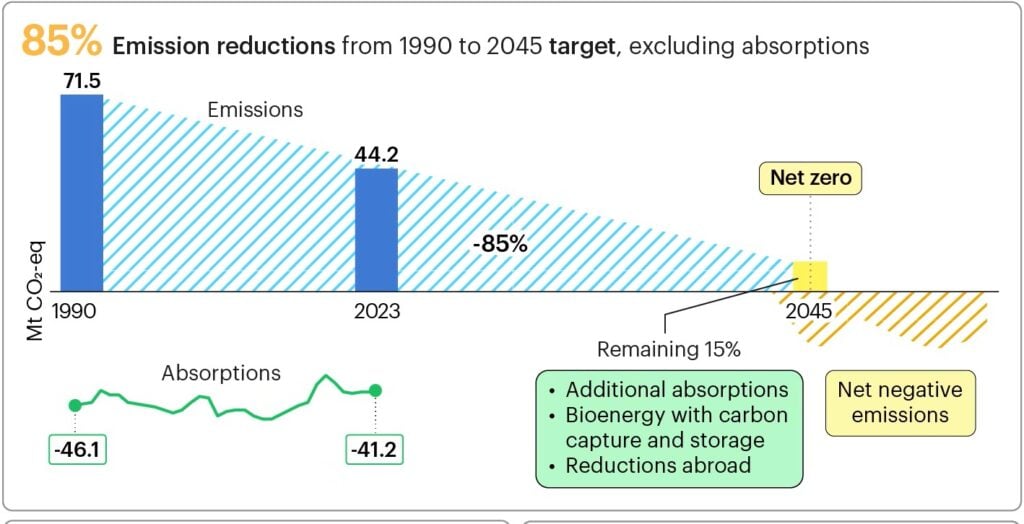
Sweden aims to reach net-zero greenhouse gas emissions by 2045 and achieve negative emissions afterward. Cutting emissions across the economy remains essential, while carbon removal can help address emissions that are difficult to eliminate.
The country has several potential advantages for bio-CCS, including its forest industry and facilities that produce biogenic CO₂. However, turning this potential into real carbon removal will require reliable technology, transport and storage systems, and long-term monitoring.
Could Sweden’s Bio-CCS Investment Help Scale Carbon Removal?
Sweden’s investment could help establish a stronger business case for engineered carbon removal in Europe. Bio-CCS projects need large amounts of capital before they can begin storing CO₂. Government support reduces some of that financial risk and helps companies build the infrastructure needed to operate at scale.
The projects may also help develop expertise in carbon capture, transport, geological storage, and emissions measurement. These services could become important as more industries look for ways to reduce emissions and remove carbon.
However, public funding does not automatically mean that carbon credits will be issued or sold. Any credits linked to these projects would depend on the applicable rules, accounting methods, verification, and market arrangements.
Buyers and investors will also need clear evidence of how much CO₂ is captured, how much is biogenic, and how much reaches permanent storage. Energy use, transport, and other project emissions must be considered when assessing the overall climate benefit.
The projects’ progress will therefore matter as much as the size of the funding award.
Can Sweden Turn Bio-CCS Funding Into Lasting Climate Gains?
Sweden’s €840 million award gives three carbon capture projects a major boost. Together, they aim to store 5.75 million tonnes of biogenic CO₂, while the wider government program seeks to build a larger industry for permanent carbon removal.
The reverse-auction model links support to planned storage and helps direct public funds toward eligible projects. But the expected climate benefits will depend on whether the companies build their facilities, start storage on time, and verify the amount of biogenic CO₂ permanently stored.
For carbon markets, the key lesson is that public funding can help bring carbon removal projects closer to reality. Still, the lasting climate value will depend on measured, verified, and permanent storage.