

Boeing has secured 20,000 tonnes of permanent carbon dioxide removal (CDR) through a new agreement with Supercritical. This deal shows a broader shift toward higher-quality carbon credits in the voluntary carbon market (VCM).
The deal focuses on durable carbon removal technologies rather than traditional avoided-emissions offsets. Boeing screened more than 200 projects globally before selecting six suppliers across Brazil, Bolivia, India, and Namibia.
The agreement arrives as pressure grows on high-emission sectors like aviation. They need to cut emissions and boost their climate credibility.
Airlines and aerospace companies are under more scrutiny for using lower-quality offsets. Regulators and investors now prefer permanent carbon removal solutions.
Allison Melia, Vice President of Global Enterprise Sustainability, Boeing, remarked:
“We’re committed to supporting the responsible growth of our industry, and high-integrity carbon removal is key to cutting net emissions as global air travel demand continues to rise. Our work with Supercritical supports that goal by expanding access to high-quality, diversified, science-vetted carbon removal credits.”
Boeing’s 118-Point Carbon Credit Test Signals New Market Standards
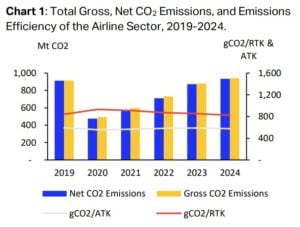
The aviation industry remains one of the hardest sectors to decarbonize. According to the International Energy Agency (IEA), aviation accounts for roughly 2% of global energy-related CO₂ emissions. The chart below shows the sector’s carbon emissions in 2024.
Passenger air traffic is still rising. The International Air Transport Association (IATA) predicts that global passenger numbers may top 5 billion each year by the decade’s end. As a result, durable carbon removal is becoming a more important part of long-term net-zero strategies.
Boeing applied a detailed 118-point evaluation framework to assess carbon removal projects. The process reviewed several factors, including:
- permanence of carbon storage,
- additionality,
- measurement and verification,
- operational readiness, and
- delivery risk.
This reflects a major change in how large corporations buy carbon credits. Companies are now prioritizing scientific quality and long-term climate impact. They focus less on just price or availability.
Michelle You, CEO of Supercritical, said the market is moving toward “criteria-first” procurement. This means buyers define strict quality requirements before selecting projects.
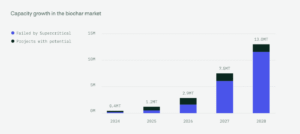
The tighter standards come as demand for durable carbon removal rises rapidly. Supercritical estimates that about 89% of the premium biochar supply for 2025 is already sold. The company’s data projects global biochar capacity rising from about 0.43 million metric tonnes in 2024 to 2.86 million metric tonnes by 2026.
However, a large share of this supply does not meet strict quality requirements. Around 58% of the projected 2026 capacity is expected to fail Supercritical’s vetting criteria, with the rejection rate rising to about 88% by 2028.
This growing competition for high-quality credits is reshaping the VCM. According to CDR.fyi, companies bought almost 30 million tonnes of carbon removal credits in 2025. This is more than three times the amount from 2024.
Biochar and Enhanced Weathering Gain Momentum
Boeing’s portfolio combines two durable carbon removal technologies:
Biochar is produced by heating agricultural or forestry waste in low-oxygen conditions. The process locks carbon into a stable material that can remain stored in soil for hundreds or even thousands of years.
Enhanced weathering accelerates a natural geological process by spreading crushed basalt rock on farmland. As the rock reacts with rainwater and atmospheric CO₂, carbon is permanently stored in stable mineral forms.
Scientists see both technologies as key climate tools. They can store carbon much longer than many traditional forestry offsets.
Research in ScienceDirect shows that using dunite rock for enhanced weathering can remove 1.06 to 3.48 tonnes of CO₂ per hectare in sandy soils. Other studies suggest that biochar can store carbon for more than 1,000 years, depending on soil conditions.
The Intergovernmental Panel on Climate Change (IPCC) estimates that by mid-century, carbon removal technologies must take out billions of tonnes of CO₂ each year. This is crucial to meet global climate goals.
Industry forecasts also show strong market growth ahead. BloombergNEF predicts that the global carbon removal market might grow into a multi-billion-dollar industry in the next decade. This growth is driven by the rise in net-zero commitments.
Boeing Spreads Carbon Removal Bets Across Global Projects
Boeing selected projects across many regions to reduce operational and delivery risks.
- In Bolivia, Exomad Green currently removes about 260,000 tonnes of CO₂ annually. The company plans to expand capacity to 1 million tonnes by 2027 through additional facilities.
- In India, Ground Up and Varaha work with smallholder farmers to convert agricultural residues into biochar instead of burning crop waste.
- Brazil hosts projects from NetZero and InPlanet, both focused on scaling carbon removal through agriculture.
- Meanwhile, Planboo uses invasive bush species in Namibia to make biochar; this also helps restore degraded savannah ecosystems.
The geographic diversification is important because carbon removal markets still face major supply challenges. Industry data shows many projects fail to scale on time due to financing, permitting, or operational delays.
Earlier this year, many biochar suppliers provided fewer removal credits than expected. This shows that supply issues in the market are still a problem.
Airlines Face Growing Pressure to Clean Up Hard-to-Cut Emissions
Boeing plans to use the carbon removal credits for residual Scope 3 emissions linked to business travel. These emissions remain difficult to cut through operational improvements alone.
The broader aviation sector faces major decarbonization challenges. Aircraft mainly use jet fuel. Low-carbon options like sustainable aviation fuel (SAF) are still rare and costly.
The IEA estimates that SAF accounted for less than 1% of global aviation fuel supply in 2025. Meanwhile, global air travel demand continues to rise steadily. This creates growing pressure on airlines, plane manufacturers, and aerospace suppliers to invest in complementary climate solutions such as carbon removal.
Boeing’s Net-Zero and Sustainability Commitments Intensify
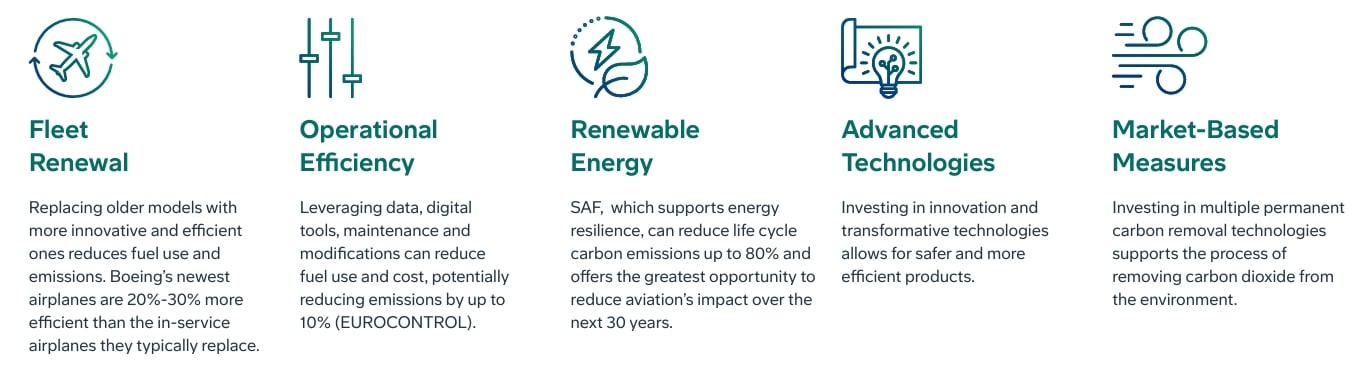
Boeing has increased its climate-related initiatives in recent years. The company backs the aviation industry’s aim for net-zero carbon emissions by 2050. It has invested in sustainable aviation fuel, improved operational efficiency, and advanced aircraft technologies.
The company signed a deal with Carbonfuture. They will buy at least 40,000 tonnes of durable carbon removal credits.
In its latest sustainability reporting, Boeing said it has reduced Scope 1 and Scope 2 emissions by around 31% compared to its 2017 baseline. It also reports that it now sources about 100% renewable electricity for its global operations through direct procurement and certificates.
A key pillar of its strategy is SAF adoption. Boeing aims to ensure all commercial aircraft are compatible with 100% SAF capability by 2030. According to the IATA, SAF can reduce lifecycle emissions by up to 80% compared to conventional jet fuel.
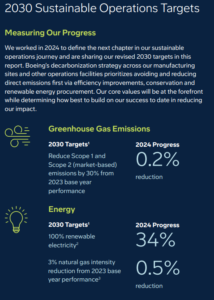
The company also highlights aircraft efficiency gains, with newer models delivering around 15–25% lower fuel burn and CO₂ emissions compared to previous generations. It is also increasing its focus on Scope 3 emissions, which include supply chain and aircraft use. These represent the majority of its total emissions footprint.
Alongside these efforts, Boeing is expanding the use of high-quality carbon removal credits to address residual emissions that cannot yet be eliminated through technology or fuel switching.
Across the industry, major airlines and technology companies are also increasing carbon removal purchases. Microsoft is the biggest buyer worldwide. It has made most of the durable carbon removal purchases in recent years.
Prices for durable carbon removal credits also remain significantly higher than traditional carbon offsets. Premium biochar credits can go over $150 per tonne.
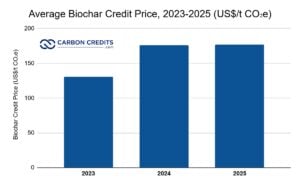
In contrast, direct air capture credits usually cost several hundred dollars per tonne. Still, many companies will pay more for trustworthy climate claims and less risk to their reputation.
A Turning Point for Carbon Market Quality
Boeing’s agreement with Supercritical reflects a broader evolution in voluntary carbon markets. Large corporations are shifting from cheap offsets to carbon removal projects. These projects are scientifically verified and offer long-term durability.
As demand for high-quality carbon removal accelerates, companies with access to reliable, scalable, and scientifically verified projects may become increasingly valuable players in the global net-zero economy.