

Sweden has taken a major step toward expanding nuclear energy for the first time in more than four decades. The country chose Rolls-Royce SMR to provide three small modular reactors (SMRs). These will support a new nuclear project on the Värö Peninsula, close to the Ringhals nuclear power station.
The decision follows a three-year review process in which project developer Videberg Kraft evaluated 75 reactor options before choosing Rolls-Royce’s technology. Tufan Erginbilgic, CEO, Rolls-Royce plc. remarked:
“Rolls-Royce SMR has now been successful in every competitively tendered SMR selection process in Europe, and it is now very well placed to become a market leader globally.”
Why Sweden Needs Twice as Much Electricity by 2045
The project could add about 1.41 gigawatts (GW) of new electricity capacity to Sweden’s grid. Each reactor is designed to generate 470 megawatts (MW) of power, with the first unit expected to enter operation in the mid-2030s.
The announcement marks a significant milestone for both Sweden and the global SMR industry. Sweden’s first big nuclear project since the 1980s is here. It’s also one of the largest investments in small modular reactor technology in Europe.
Sweden’s nuclear expansion comes as electricity demand could grow sharply over the coming decades. The Swedish Energy Agency predicts that electricity use could grow from about 135 terawatt-hours (TWh) now to over 300 TWh by 2045.
Most of that growth will likely come from:
- Industrial electrification,
- Electric vehicles,
- Hydrogen production, and
- Data centers.
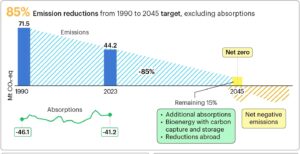
At the same time, Sweden has committed to reaching net-zero greenhouse gas emissions by 2045. Meeting both goals will require a substantial increase in clean electricity generation.
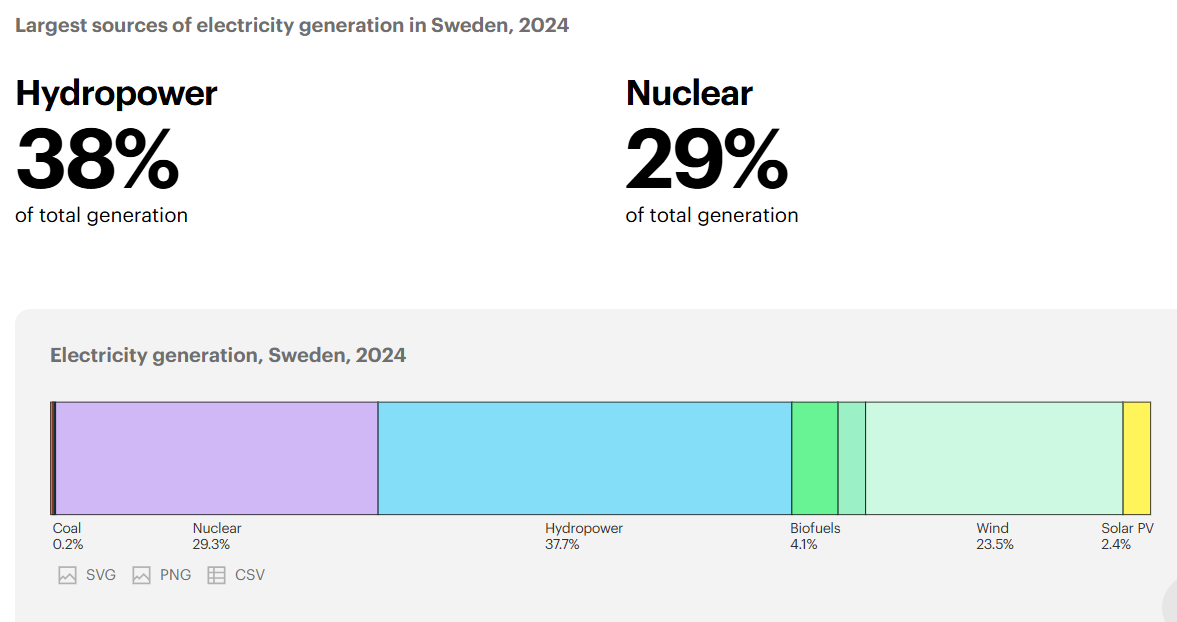
Today, Sweden already has one of Europe’s cleanest power systems. The International Energy Agency (IEA) reports that about 98% of Sweden’s electricity is from fossil-free sources. This mainly includes hydropower, nuclear energy, and wind power.
However, policymakers believe additional generation will be needed to maintain energy security while supporting industrial growth.
Sweden’s government has proposed support measures to tackle that challenge. These measures are worth up to 440 billion Swedish kronor, which is about €40 billion or US$47 billion. The package includes state-backed loans, long-term price guarantees, and support for nuclear waste management.
- The goal is to build at least 5 GW of new nuclear capacity, equivalent to several large reactors, by the middle of the century.
The SMR Revolution Is Gathering Momentum
The Swedish project is part of a growing global interest in small modular reactors.
Unlike traditional nuclear plants, which often exceed 1 GW per reactor, SMRs are smaller and designed for factory-based manufacturing. Developers argue that standardized designs can reduce construction costs, shorten build times, and lower project risks.
Rolls-Royce’s reactor design produces 470 MW. This makes it one of the larger SMR concepts in development today. The company estimates that one unit can supply electricity to about one million homes. Plus, it produces no direct carbon emissions when in operation.
Interest in the technology is accelerating worldwide.
According to the International Atomic Energy Agency (IAEA), more than 80 SMR designs are currently being developed globally. Governments and utilities in Europe, North America, and Asia are looking at SMRs. They see them as a way to decarbonize power systems while also keeping the electricity supply reliable.
Sweden now joins a growing list of countries supporting the technology. The deal makes Sweden the third European country to select Rolls-Royce SMR technology after the United Kingdom and the Czech Republic.
A Global Nuclear Renaissance Is Underway
Sweden’s decision reflects a broader global nuclear resurgence. According to the IEA, nuclear power generated around 2,900 TWh of electricity worldwide in 2024, close to a record high. Moreover, over 70 GW of new nuclear capacity is currently under construction globally.
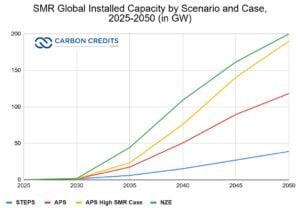
SMRs are also expected to grow massively by 2050. Under the Net Zero scenario, it can reach 200 GW of installed capacity.
Investment is also increasing. The IEA estimates annual global investment in nuclear power has risen by nearly 50% since 2020, reaching around US$75 billion per year.
Several factors are driving renewed interest.
- First, governments need reliable low-carbon electricity to support net-zero goals.
- Second, growing renewable energy deployment increases demand for stable power sources that can operate regardless of weather conditions.
- Third, rapidly expanding data center infrastructure is creating new electricity demand.
Artificial intelligence (AI) is becoming an important factor.
The IEA projects global data center electricity demand could more than double by 2030. Some forecasts suggest AI-driven data centers may consume as much electricity as major industrialized countries within the next decade.
As a result, policymakers are now viewing nuclear energy as a complement to renewable energy rather than a competitor.
Rolls-Royce is Expanding Beyond Aerospace
The project also represents an important milestone for Rolls-Royce. The company is best known for aircraft engines. Recently, it has focused on developing its SMR business. This effort is part of a larger plan to move into clean energy technologies.
Rolls-Royce received final approval for its SMR design from UK regulators earlier this year, a key step toward commercial deployment.
The company claims that using a fleet-based approach can cut costs. This is possible by making standard reactor parts and using them in different projects.
The Swedish selection provides another major vote of confidence. For Rolls-Royce, this project boosts its stance in the tough global SMR market. Key competitors include GE Hitachi, Westinghouse, Holtec, X-energy, NuScale, and TerraPower.
The global opportunity could be significant. Industry analysts estimate the SMR market could be worth hundreds of billions of dollars over the coming decades as countries seek low-carbon electricity solutions.
Rolls-Royce Shares Rally on Nuclear Boom
Investors reacted positively to the Swedish contract announcement. On the day the deal was announced, U.S.-listed shares of Rolls-Royce (RYCEY) jumped almost 4%. This was their highest level since March 2026. Markets saw this as a strong endorsement of the company’s SMR strategy.
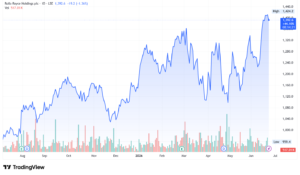
This boosts Rolls-Royce’s status as a top nuclear technology provider in Europe. The RYCEY stock has risen over 16% this year and about 45% in the last 12 months and has outperformed the wider equity markets. Investors are excited about growth in nuclear energy, defense, and power systems.
Could This Project Redefine Europe’s Energy Future?
The selection of Rolls-Royce SMR is more than a single infrastructure project. It signals Sweden’s long-term commitment to nuclear energy as part of its climate and energy strategy.
The project will still face regulatory reviews, financing decisions, and construction challenges before power begins flowing in the mid-2030s. Yet, the direction is becoming clear.
For Rolls-Royce, the contract represents one of the most important SMR wins to date. For Sweden, it marks the start of a new chapter in nuclear development after more than 40 years.
For the broader energy sector, it offers another sign that nuclear power is once again becoming a central part of the global clean energy transition.