

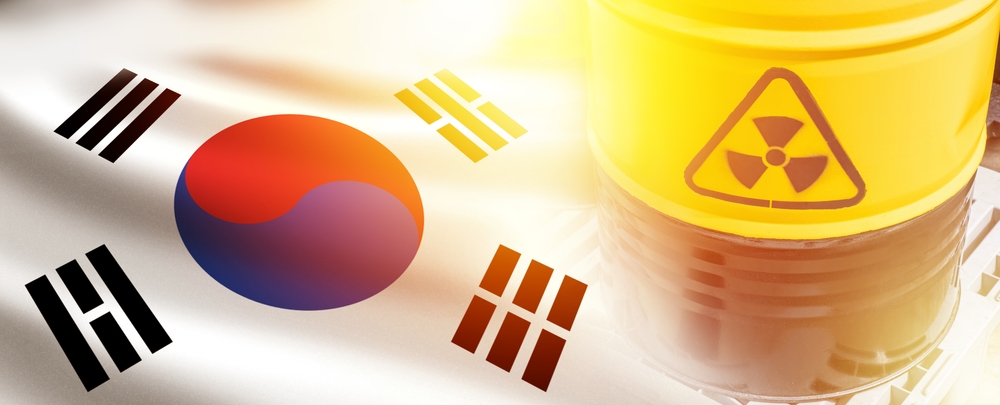
The United States’ decision to support South Korea’s uranium enrichment goals marks a major shift in the two countries’ long-standing nuclear partnership. This move not only strengthens their alliance but also boosts South Korea’s ambitions in clean energy, nuclear fuel cycle development, and naval defense.
With a strong nuclear power fleet already supplying one-third of its electricity, South Korea is now preparing for a new chapter in nuclear technology, strategy, and security.

A Turning Point in US–ROK Nuclear Cooperation
The latest agreement signals Washington’s clearest endorsement yet of Seoul’s desire to take greater control of its nuclear fuel supply. South Korea operates 26 nuclear reactors with a combined capacity of about 26 gigawatts electric (GWe). These reactors are the backbone of the energy system, providing stable, low-carbon electricity year-round.
Now, with US backing, South Korea is set to advance in two sensitive areas it has long sought approval for:
- Uranium enrichment for peaceful use
- Reprocessing spent nuclear fuel
Alongside these steps, the US has also supported South Korea’s plan to build nuclear-powered attack submarines, expanding cooperation into the defense sector.
This shift reflects a deeper level of trust in the alliance and positions South Korea for greater energy security and strategic capability.
Inside the Agreement: A Break from Past Restrictions
On November 13, 2025, the White House and South Korea’s Presidential Office released a joint fact sheet following a state visit by US President Donald Trump. The document reaffirmed the strengthened US–ROK alliance and outlined a series of shared economic and security commitments, including a $350 million strategic trade and investment deal.
However, the most significant announcement centered on nuclear cooperation. For decades, South Korea operated under tight restrictions through the 123 Agreement, a treaty that governs nuclear trade and technology sharing between the two nations. Originally signed in 1974, the agreement limited South Korea’s ability to enrich uranium or reprocess used fuel.
A revised deal signed in 2015 loosened some restrictions but still required US approval for progress on fuel cycle technologies. The new statement goes further than ever before. The US has officially endorsed the processes leading to South Korea’s enrichment and reprocessing capabilities, as long as they comply with US legal requirements.
This marks one of the biggest relaxations of US nuclear controls in decades.
South Korea’s Powerful Nuclear Fleet
South Korea has built one of the world’s most reliable, efficient, and advanced nuclear power systems. The country’s 26 operating reactors supply 32–34% of national electricity, making nuclear energy a major pillar in Korea’s clean energy transition.
The fleet includes:
- APR-1400 reactors – Korea’s flagship advanced design
- OPR-1000 reactors – earlier standardized units
- Westinghouse PWRs – older imported models
- CANDU reactors – heavy-water units that use natural uranium
Key nuclear power plants include Hanbit, Hanul, Kori, and Wolsong Nuclear Power Plant. These reactors operate with high load factors, often above 80%, showing strong performance and reliable output.
New Reactors and Next-Gen Technology on the Way
South Korea is expanding its nuclear fleet to meet rising energy demand and support its climate goals. The country currently has four reactors under construction, expected to add around 4 GWe when complete. These include:
- Saeul units (APR-1400 design)
- Shin Hanul units
Looking ahead, South Korea plans to add additional large reactors and deploy small modular reactors (SMRs) by 2038. SMRs offer lower cost, improved safety, and flexible use for industry and clean hydrogen production. These new technologies could bring Korea closer to energy independence and strengthen its export competitiveness in the global nuclear market.

SEE MORE:
- Amazon, X-energy, KHNP, and Doosan Partner on $50B Nuclear Push for AI Data Centers
- Oklo and KHNP Team Up to Accelerate Global Deployment of Advanced Nuclear Power
Nuclear-Powered Submarines: Transforming Defense Capabilities
Another major part of the agreement is the US decision to support South Korea’s plan to build nuclear-powered attack submarines. Seoul has wanted this technology for many years because it offers clear military advantages. Nuclear submarines can stay underwater much longer, move faster, operate more quietly, and travel farther without stopping to refuel. As a result, they would greatly improve South Korea’s ability to protect its coastline and respond quickly to threats in the Indo-Pacific region.
The joint US–ROK fact sheet also stated that both countries will work together on the technical needs of these submarines. This includes fuel sourcing, design features, and reactor requirements. This cooperation supports South Korea’s broader defense modernization goals and helps the country move closer to taking full wartime operational control, or OPCON, from the United States. With this capability, South Korea strengthens not only its naval defense but also its overall strategic independence.
Regional Security Concerns: The North Korea Factor
These developments come at a time when North Korea is rapidly expanding its nuclear program. Experts estimate that Pyongyang now holds around 50 nuclear warheads and has enough fissile material to build many more. The country continues to operate active uranium enrichment sites and is speeding up its weapons production. Because of this, tensions in Northeast Asia have increased sharply.
South Korea’s nuclear advancements, however, remain focused on peaceful and defensive goals, and they operate under strict US oversight and global safeguards. Even so, these new capabilities send a strong deterrence message. They show that South Korea is ready to strengthen its technology, defense posture, and national security. In a region marked by rising uncertainty and military competition, Seoul’s progress reflects confidence, preparedness, and responsible leadership.

A Milestone for Northeast Asia’s Energy and Security Landscape
The US decision to support South Korea’s enrichment and reprocessing goals marks a major turning point in the alliance. South Korea already runs a powerful 26-GWe nuclear fleet that supplies a large share of its electricity. By gaining more control over the nuclear fuel cycle, the country can improve its energy security and boost its role as a global nuclear technology leader.

At the same time, the approval of nuclear-powered submarines strengthens South Korea’s defense capabilities at a moment when regional threats continue to rise. These combined steps create a stronger foundation for clean energy development, national security, and long-term cooperation between the United States and South Korea.
Together, they represent a major shift in Northeast Asia’s strategic landscape. They also show how civilian nuclear programs and national security interests are becoming increasingly connected in today’s geopolitical environment.