

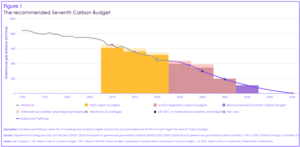
The United Kingdom has set a new legally binding target to cut greenhouse gas emissions by 87% below 1990 levels by 2040. This supports its pathway toward net-zero emissions by 2050. The target follows advice from the independent Climate Change Committee (CCC). It creates the country’s Seventh Carbon Budget for 2038 to 2042.
Energy Secretary Ed Miliband stated:
“As Britain faces the second fossil fuel shock of the decade, the only way to protect family and business finances is to drive for clean homegrown power that we control.”
Climate Minister Katie White also commented, saying:
“The record-breaking May heatwave is another reminder that climate change is no longer a distant prospect. Increased heatwaves, flooding, and nature loss are becoming the new norm for our country.”
The UK Has Already Cut Emissions in Half
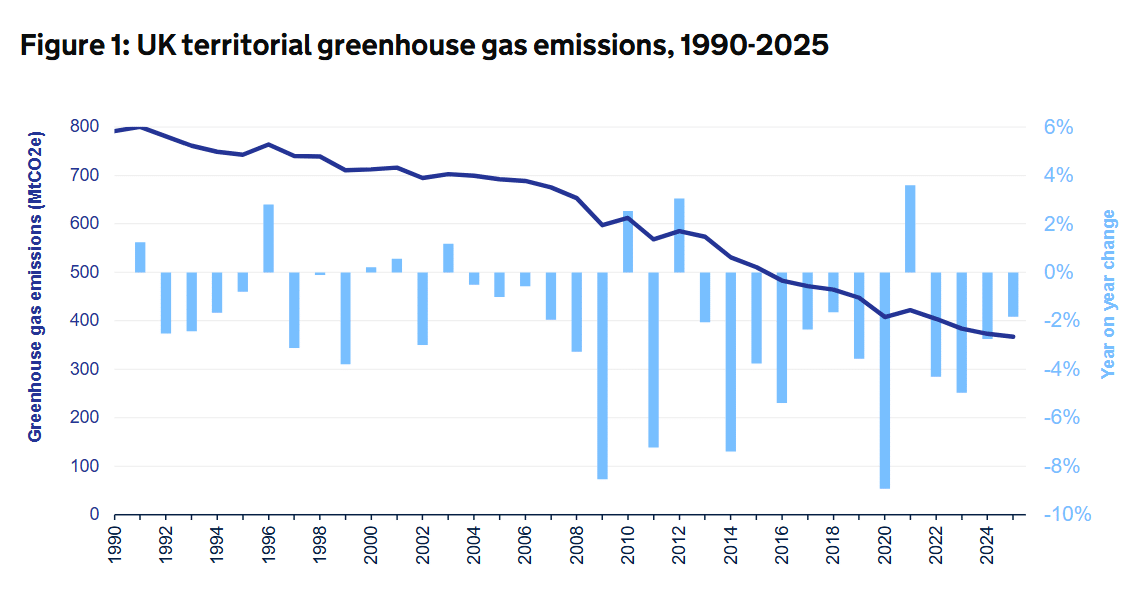
The announcement comes at a critical moment. The UK has already reduced emissions by about 54% from 1990 levels, making it one of the fastest decarbonizing major economies in the world. However, the next stage of emissions reductions will be much harder than the last.
Future reductions will not come just from switching from coal to natural gas or renewables. Instead, there’s a need for bigger changes in transport, buildings, agriculture, aviation, and industry. At the same time, the target has exposed growing political tensions over how quickly the country should pursue its net-zero ambitions.
Britain’s climate progress over the past three decades has been significant.
UK greenhouse gas emissions dropped to about 367 million metric tons of CO₂ equivalent in 2025, which is over half a decrease from 1990 levels, based on official government data. Emissions also declined by 2% in 2024.
Much of this progress came from changes in the power sector.
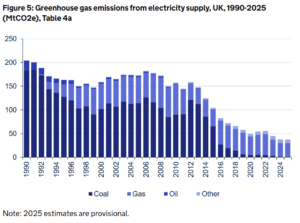
Coal use has almost disappeared from Britain’s electricity system. Government data shows that coal emissions have dropped by 99% since 1990. Meanwhile, renewable energy has grown quickly all over the country. The closure of the UK’s last coal-fired power station marked a major milestone in the country’s energy transition.
These changes have helped Britain reduce emissions while continuing to grow its economy. However, the sectors that remain are more difficult to decarbonize.
Transport is now the UK’s largest source of emissions, accounting for 31% of total emissions in 2025. Buildings contribute 22%, agriculture 13%, industry 11%, and electricity supply 10%.
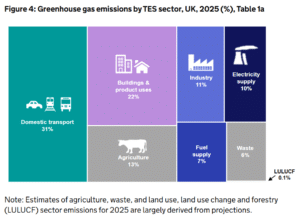
As a result, future progress will depend less on power generation and more on changing how people travel, heat homes, and produce goods.
What an 87% Emissions Cut Will Require
The Climate Change Committee says the new target can be achieved, but only through large-scale deployment of clean technologies. Its pathway relies heavily on electric vehicles, heat pumps, renewable electricity, battery storage, and improvements in energy efficiency.
The plan also assumes continued reductions in industrial emissions and greater use of low-carbon fuels.
By 2040, the CCC expects surface transport emissions to drop by 86% from 2023 levels. Also, emissions from residential buildings should fall by 66%. This represents a major shift for households and businesses.
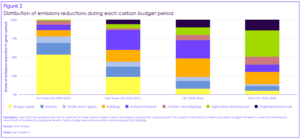
Consumers would need to adopt more electric vehicles and low-carbon heating systems. Companies would need to continue investing in cleaner technologies and energy-efficient operations. The electricity system would also need to expand significantly to support growing demand from electrification.
The government claims these investments will boost energy security. They aim to cut our reliance on imported fossil fuels and shield us from global energy price swings.
Why Net Zero Is Becoming a Political Battleground
While the emissions target has support from climate experts, it has also intensified political debate.
The announcement came shortly after leaked communications revealed divisions within the governing Labour Party over climate policy. Former Prime Minister Tony Blair said the government should rethink net-zero spending. He believes the country needs affordable energy for economic growth and to boost artificial intelligence development.
The leaked messages also showed senior Labour figures privately agreeing with some of Blair’s concerns. Meanwhile, Energy Secretary Ed Miliband has continued to defend the government’s climate strategy and its long-term economic benefits.
Outside Labour, opposition parties have taken even stronger positions. Both the Conservatives and Reform UK have criticized current net-zero policies. They want to increase domestic oil and gas production.
This growing divide reflects a broader challenge facing many countries. Climate targets often enjoy support in principle, but disagreements emerge over costs, timelines, and implementation.
As net-zero policies move from the power sector into homes, transportation, and industry, political debates are likely to intensify.
How Clean Energy Is Becoming an Economic Strategy
Supporters of the new target argue that climate policy is no longer only about emissions reductions. It is increasingly tied to industrial competitiveness, investment, and energy security.
The UK government says the country has attracted approximately £90 billion in clean energy investment since July 2024. Officials note that the net-zero economy supports over one million jobs. These jobs span various sectors, including renewable energy, electric vehicles, energy efficiency, and clean technology.
This trend mirrors developments across Europe and other advanced economies.
The European Union has reduced emissions by 40% from 1990 levels, driven largely by:
- renewable energy growth,
- efficiency improvements, and
- cleaner industrial processes.
At the same time, investment in clean energy technologies continues to accelerate worldwide. For governments, the challenge is increasingly about balancing climate goals with economic growth and affordability.
The UK’s new target reflects an effort to pursue both.
The Hardest Part of Decarbonization Still Lies Ahead
The UK’s 87% emissions reduction target represents one of the most ambitious climate commitments among major economies. Yet, the country has already completed many of the easiest emissions reductions.
The next phase will require changes across sectors that are harder and often more expensive to decarbonize. Transport, buildings, agriculture, aviation, and heavy industry will all play larger roles in determining whether the target is achieved.
The good news is that Britain enters this phase with a strong track record. Emissions have already fallen by more than half since 1990, largely through cleaner electricity and reduced coal use.
The challenge now is maintaining that pace.
The 2040 target makes Britain’s direction clear. Whether the country can deliver on that ambition will depend on how quickly clean technologies can scale and how much political support remains behind the transition in the years ahead.