

When discussing the reduction of global carbon emissions, the focus often falls on heavy-emitting sectors, with glass-making frequently overlooked. However, the manufacturing of glass contributes approximately 86 million tonnes of carbon each year. A new type of glass, however, could halve these emissions and is ten times more resistant to damage.
Researchers at Pennsylvania State University have created LionGlass, a glass that’s much stronger and has lower emissions than conventional glass. The researchers had requested for patent approval as the first step in bringing the new glass to market.
A New Approach to Glass Manufacturing with Lower Emissions
The glass industry is well-established, yet it is capital- and energy-intensive, heavily reliant on durable raw materials. Glass is a ubiquitous material, found in everyday items ranging from smartphones to cars, but its production requires extremely high temperatures.
The primary components used in glass production are quartz sand, soda ash, and limestone. The melting of soda ash and limestone releases CO2, a significant contributor to climate change. Limestone, in particular, is a major reason why the cement industry emits large amounts of carbon.
Glass production is both sand and energy-intensive. It contributes around 86 million tonnes of CO2 annually, a significant contribution to global warming.
For context, consider the energy use and carbon emissions of a glass bottle compared to other materials like cans and plastic.
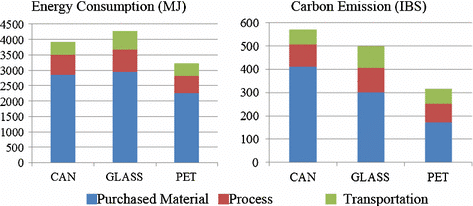
The majority of these emissions come from the energy required to heat furnaces to the high temperatures needed to melt glass.
A research team at Penn State University has introduced a new glass product that is 10 times more resistant to damage and emits about half the CO2 of the current manufacturing process using soda lime.
The lead researcher and professor at the University highlighted the importance of their discovery in making glass production sustainable, stating:
“During the glass melting process, the carbonates decompose into oxides and produce carbon dioxide, which gets released into the atmosphere… Our goal is to make glass manufacturing sustainable for the long term. LionGlass eliminates the use of carbon containing batch materials and significantly lowers the melting temperature of glass.”
With LionGlass, the melting temperatures are reduced to about 300°C to 400°C. This reduction decreases the amount of energy needed to process glass by about 30% compared to soda lime glass.
Thinner and Lighter, yet Unbreakable
The researchers also noted that they can reduce the glass thickness without compromising its strength, making the new product lighter than conventional glass.
This is even more environmentally friendly because less material means less energy is required to process and transport the glass.
Surprisingly, scientists discovered that LionGlass has much higher damage resistance, ten times more than soda lime glass. It can resist cracks even under a 1-kilo-force load of a diamond indenter machine. In comparison, conventional glass can crack under just 0.1 kilo of force.
Resistance to damage or cracking is a crucial quality of glass to ensure its longevity. Glass that is resistant to forming micro-cracks is highly valuable.
LionGlass also comes in various compositions, each offering unique properties and uses. However, the team is still studying how the glass would react to different chemical environments. Their findings will help them better understand how their new discovery can be used worldwide.
Importantly, with improved performance, glass can help address not just environmental issues but also healthcare and urban development. The team aims to make a significant contribution to these areas.
The U.S. glass industry is a global leader in glass production and technology. Many valuable industries rely on glass for various products, including solar equipment, vehicle parts, building materials, consumer electronics, and semiconductor devices.
LionGlass’ Potential Industrial Applications
Given the impressive properties of the new glass, it offers a wide range of potential uses across industries.
For example, it could improve the efficiency of solar panels, which use a sheet of glass to protect their inner components against harsh elements. Lighter panels could lead to lower solar installation costs.
Car manufacturers could use LionGlass to create unbreakable glass roofs using lighter but stronger materials. This could reduce the cost of manufacturing electric vehicles as well as consumer devices made with glass.
This breakthrough is remarkable because it signifies the glass industry’s participation in the global race to reduce carbon emissions. New scientific discoveries can improve products and make them in a way that’s less damaging to the Earth. Lighter but stronger glass with reduced emissions is one such innovation.