


Paid Advertisement – Disseminated on behalf of Alaska Energy Metals Corporation.
Alaska Energy Metals Corporation (AEMC) is moving into a more decisive phase. The company is no longer just an exploration story. Instead, it is building a case around scale, technical validation, and future economics. Yet, despite this progress, its valuation still reflects early-stage risk.
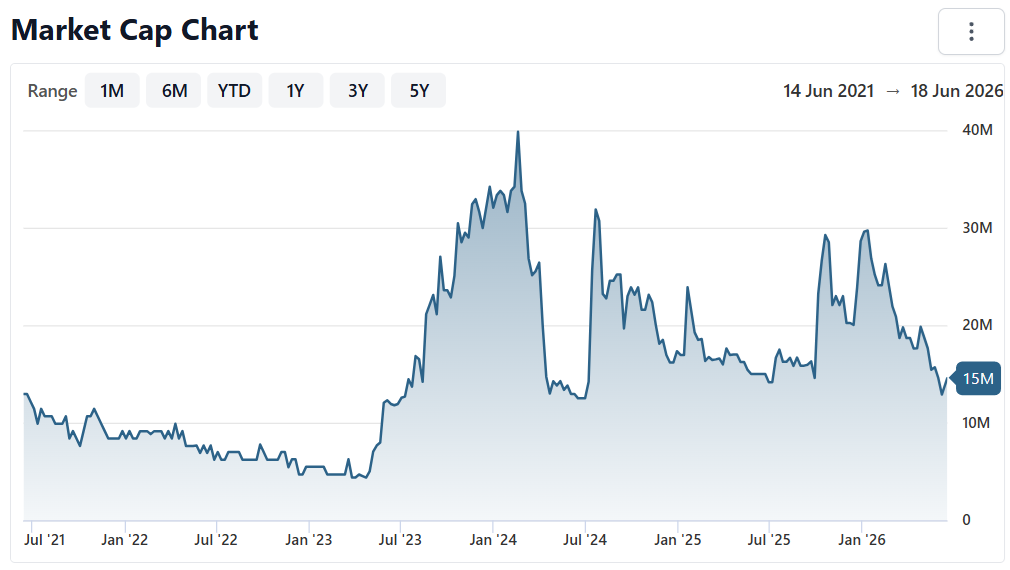
As of June 22, 2026, Alaska Energy Metals holds a market capitalization of CAD 14.56 million, with its shares trading on the TSXV at CAD 0.06. This lean valuation provides a compelling baseline entry point for investors eyeing the critical minerals sector. The current stock consolidation establishes a strong foundation just ahead of key upcoming company catalysts, positioning the company perfectly to leverage the structurally favorable and expanding long-term market for domestic energy metals.
Alaska Energy Metals Market Cap
Scale First: A Resource That Commands Attention
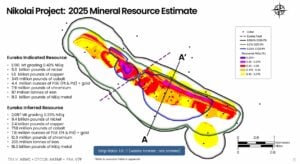
AEMC’s flagship Nikolai project hosts the Eureka deposit, which is already considered one of the largest undeveloped nickel resources in the United States. In a market increasingly shaped by supply security, scale matters more than ever.
The U.S. currently relies heavily on imports for critical minerals like nickel. At the same time, global demand is rising fast due to electric vehicles and energy storage systems. According to industry estimates, nickel demand could double by 2030, driven largely by battery applications.
Against this backdrop, a large domestic resource carries strategic weight. AEMC is not just exploring for metals – it is positioning itself within a supply chain that policymakers now consider critical.
This combination of size and location creates a strong foundation. However, investors will want more than just potential. They need proof that the asset can grow, perform, and eventually generate returns.
Angliers Could Be Alaska Energy Metals’ Next Growth Driver
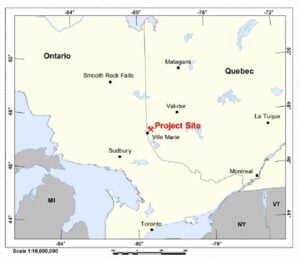
The Angliers Project is a nickel exploration property owned by Alaska Energy Metals in western Quebec, Canada. The project covers more than 26,000 hectares in the Témiscamingue region near the Ontario border. Good road access helps keep exploration costs low.
Location and Access
Promising Geology and Nickel Targets
Angliers sits within the Belleterre-Angliers Greenstone Belt, a region known for mineral deposits. The property contains ultramafic rocks, which often host nickel sulfide deposits. Its geology is similar to Australia’s Kambalda district, a major nickel-producing area.
The project targets nickel, copper, cobalt, and platinum-group metals (PGMs), all of which are important for EV batteries and clean energy technologies.
- Using machine learning and historical data, the company identified four priority targets. Among them, Area 4 stands out.
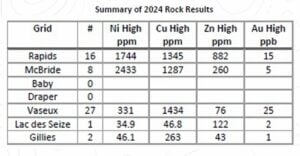
- It hosts a six-kilometer nickel trend, and surface samples returned nickel grades of up to 2,290 ppm.
Meanwhile, prior exploration and government surveys have identified nickel-rich rocks and nearby nickel-copper occurrences. Notably, results from the 2024 VTEM survey revealed several undrilled areas with signs that could point to valuable mineral deposits.
Check out below:
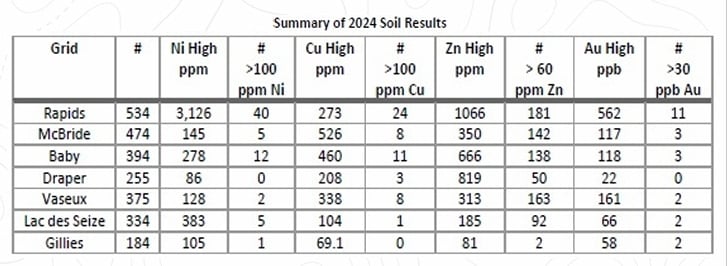
August Drilling Could Add Value
As per company sources, AEMC plans to begin drilling at Angliers in August. These results could help confirm the project’s mineral potential.
For investors, the drill program will be an important milestone. Strong results can increase confidence in the resource, reduce uncertainty, and support future development studies. As a result, the project could attract greater market attention.
Although Angliers is still in the early exploration stage, it combines strong geology, encouraging early results, and near-term drilling catalysts. If drilling confirms significant nickel mineralization, the project could become an important source of critical minerals for the growing battery and clean energy markets.
Metallurgy: The Hidden Driver of Value
A large deposit only matters if the metal can be extracted efficiently. This is where metallurgical studies come into play.
AEMC is advancing test work to demonstrate that nickel and cobalt can be recovered at commercially viable rates. Early-stage metallurgy often determines whether a project remains theoretical or becomes investable.
If recovery rates are strong and processing methods remain practical, the implications are significant. Better metallurgy improves project economics by increasing output while controlling costs. It also makes the asset more attractive to strategic partners who prioritize operational simplicity.
In many cases, positive metallurgical results act as a turning point. They shift investor perception from “resource potential” to “recoverable value.”
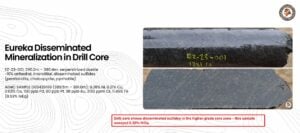
The PEA: Turning Geology Into Economics
One of the most important upcoming milestones is the company’s internal Preliminary Economic Assessment (PEA). This study will translate years of exploration into a financial framework.
The PEA will outline expected production levels, capital requirements, operating costs, and potential returns. For investors, this is where the story becomes tangible.
Markets tend to respond strongly to credible economic data. A solid PEA can anchor valuation and provide a clearer benchmark for comparison with peers. It also opens the door to financing discussions, offtake agreements, and strategic partnerships.
For AEMC, this step represents a shift from exploration-driven narratives to numbers-driven analysis.

Funding and Policy Support Could Accelerate Growth
Funding remains a key challenge for junior mining companies. However, AEMC operates in a sector that is increasingly supported by government policy.
The United States has prioritized domestic critical mineral supply chains. Programs under frameworks like the Defense Production Act, Project Vault, and other federal initiatives aim to reduce reliance on foreign sources.
AEMC has already engaged with these pathways. Its earlier submission for development funding – reportedly around $56 million – received a “Met” determination, indicating eligibility under government criteria. While this does not guarantee funding, it signals alignment with national priorities.
This alignment matters. Government backing, even partial, can significantly reduce financial risk. It also attracts institutional investors and strategic partners who prefer projects with policy support.
If AEMC secures funding or forms partnerships, it could change the company’s trajectory quickly. In many cases, funding announcements serve as major re-rating events.
High-Grade Potential Adds Another Layer of Upside
Beyond scale, AEMC is also targeting higher-grade mineralization within its broader resource.
High-grade zones can improve project economics by increasing the amount of metal produced per tonne of ore. This can lower processing costs and enhance early-stage cash flow.
Even limited success in identifying such zones can reshape mine planning. Companies often prioritize higher-grade areas in initial production phases to improve project returns.
For investors, this creates an additional layer of optionality. The project is not just large—it also has the potential to become more efficient and profitable over time.
2026–2027: A Window of Catalysts
Looking ahead, AEMC’s timeline includes several key inflection points:
- Expected drilling results at Angliers may refine scale and confidence this year.
- At the same time, the internal PEA will introduce economic clarity. Progress on permitting and infrastructure—such as access routes and site development—will signal movement toward production readiness.
- Overlaying all of this is the policy environment. Any announcements related to grants, incentives, or strategic investments could amplify the company’s narrative.
Individually, each catalyst matters. Together, they create a pathway for a broader market re-evaluation.
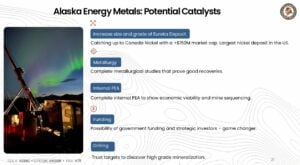
Valuation Gap: The Core Investment Thesis
Perhaps the most compelling part of the story lies in valuation.
Companies like Canada Nickel, which operate in a similar thematic space, command market capitalizations exceeding $150 million. In contrast, AEMC trades at a fraction of that level despite having a large and growing resource base.
This gap reflects risk, but it also highlights opportunity. As AEMC advances through key milestones, that risk profile could change. When it does, the market may begin to close the valuation gap.
Re-ratings in the mining sector often happen in stages. Early gains come from exploration success. Larger moves typically follow economic validation and funding support.
AEMC appears to be approaching this transition point.
Can Nickel Market Rebalancing Boost Alaska Energy Metals’ Growth Story?
The nickel market is finally showing signs of recovery after years of oversupply, creating a more favorable backdrop for companies like Alaska Energy Metals.
AEMC appears to be approaching this transition point.
Shrinking Indonesian Output
ANZ Research expects the global nickel market to shift from surplus to a small deficit by 2026. This change comes as Indonesia tightens its supply. Indonesia produces 60-70% of the world’s nickel.
They have cut mining quotas, reinstated annual production approvals, and raised costs for producers by changing ore pricing. Disruptions in sulfur and sulfuric acid supplies are also affecting Indonesian processing operations.
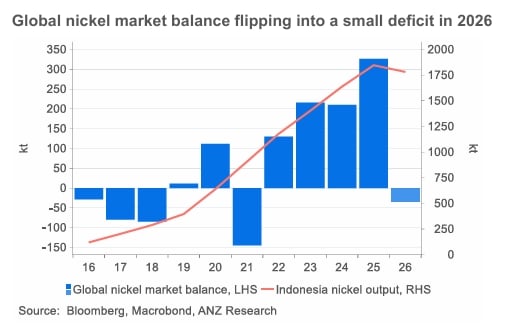
These actions could reduce Indonesia’s nickel output by over 60,000 tonnes this year. This may help rebalance the market and support a price floor above $17,000 per tonne. Nickel prices have already risen above $19,000 per tonne due to supply concerns.
This shift is timely for Alaska Energy Metals. The recent downturn saw abundant Indonesian supply lower nickel prices and dampen investor interest in exploration. A tighter market could change that.
Rising Prices Strengthen the Investment Case
Higher nickel prices often improve project economics. They also increase the value investors place on large undeveloped resources. Concerns about supply concentration in Indonesia point to the need for new nickel sources in North America.
Nickel Prices
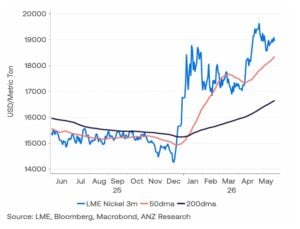
As Alaska Energy Metals advances its Angliers Project, better market conditions could attract more interest. Resource growth, technical studies, and development milestones will be key in a market seeking new nickel supplies.
In summary, ANZ’s outlook suggests the nickel sector is entering a healthier phase. If the expected supply deficit happens, companies with large-scale nickel assets outside Indonesia may benefit the most.
- CHECK: LIVE NICKEL PRICES
- RELATED: The Ultimate Guide to Nickel: Supply, Demand, and Nickel Prices for 2026 and Beyond
Final Take: A Strategic Bet on Execution
AEMC is evolving from a speculative explorer into a company with defined growth drivers. Its large-scale resource, ongoing drilling, advancing metallurgy, and upcoming economic studies create a clear roadmap.
At the same time, its alignment with U.S. critical mineral policy adds a strategic dimension that many junior miners lack.
The opportunity for investors lies in execution. If AEMC delivers consistent drilling results, demonstrates strong metallurgy, and advances its economic case, the current valuation may not hold.
In that scenario, the company could shift from being overlooked to being recognized as a meaningful player in the North American nickel supply chain.
For now, the market is waiting. But with multiple catalysts lined up through 2026 and 2027, that wait may not last long.
- MUST READ: Why Investors See a High-Upside Catalyst Pipeline Building for Alaska Energy Metals Corporation
Qualified Person. Mr. Gregory Beischer, President & CEO of Alaska Energy Metals Corporation, has reviewed and approved the technical content of this document.
Mr. Beischer is a professional geologist (American Institute of Professional Geologists #10505) and is a qualified person under NI43-101.
DISCLAIMER
New Era Publishing Inc. and/or CarbonCredits.com (“We” or “Us”) are not securities dealers or brokers, investment advisers, or financial advisers, and you should not rely on the information herein as investment advice. Alaska Energy Metals. (“Company”) made a one-time payment of $90,000 to provide marketing services for a term of three months. None of the owners, members, directors, or employees of New Era Publishing Inc. and/or CarbonCredits.com currently hold, or have any beneficial ownership in, any shares, stocks, or options of the companies mentioned.
This article is informational only and is solely for use by prospective investors in determining whether to seek additional information. It does not constitute an offer to sell or a solicitation of an offer to buy any securities. Examples that we provide of share price increases pertaining to a particular issuer from one referenced date to another represent arbitrarily chosen time periods and are no indication whatsoever of future stock prices for that issuer and are of no predictive value.
Our stock profiles are intended to highlight certain companies for your further investigation; they are not stock recommendations or an offer or sale of the referenced securities. The securities issued by the companies we profile should be considered high-risk; if you do invest despite these warnings, you may lose your entire investment. Please do your own research before investing, including reviewing the companies’ SEDAR+ and SEC filings, press releases, and risk disclosures.
It is our policy that information contained in this profile was provided by the company, extracted from SEDAR+ and SEC filings, company websites, and other publicly available sources. We believe the sources and information are accurate and reliable but we cannot guarantee them.
CAUTIONARY STATEMENT AND FORWARD-LOOKING INFORMATION
Certain statements contained in this news release may constitute “forward-looking information” within the meaning of applicable securities laws. Forward-looking information generally can be identified by words such as “anticipate,” “expect,” “estimate,” “forecast,” “plan,” and similar expressions suggesting future outcomes or events. Forward-looking information is based on current expectations of management; however, it is subject to known and unknown risks, uncertainties, and other factors that may cause actual results to differ materially from those anticipated.
These factors include, without limitation, statements relating to the Company’s exploration and development plans, the potential of its mineral projects, financing activities, regulatory approvals, market conditions, and future objectives. Forward-looking information involves numerous risks and uncertainties and actual results might differ materially from results suggested in any forward-looking information. These risks and uncertainties include, among other things, market volatility, the state of financial markets for the Company’s securities, fluctuations in commodity prices, operational challenges, and changes in business plans.
Forward-looking information is based on several key expectations and assumptions, including, without limitation, that the Company will continue with its stated business objectives and will be able to raise additional capital as required. Although management of the Company has attempted to identify important factors that could cause actual results to differ materially, there may be other factors that cause results not to be as anticipated, estimated, or intended.
There can be no assurance that such forward-looking information will prove to be accurate, as actual results and future events could differ materially. Accordingly, readers should not place undue reliance on forward-looking information. Additional information about risks and uncertainties is contained in the Company’s management’s discussion and analysis and annual information form for the year ended December 31, 2025, copies of which are available on SEDAR+ at www.sedarplus.ca.
The forward-looking information contained herein is expressly qualified in its entirety by this cautionary statement. Forward-looking information reflects management’s current beliefs and is based on information currently available to the Company. The forward-looking information is made as of the date of this news release, and the Company assumes no obligation to update or revise such information to reflect new events or circumstances except as may be required by applicable law.
Disclosure: Owners, members, directors, and employees of carboncredits.com have/may have stock or option positions in any of the companies mentioned: None.
Carboncredits.com receives compensation for this publication and has a business relationship with any company whose stock(s) is/are mentioned in this article.
Additional disclosure: This communication serves the sole purpose of adding value to the research process and is for information only. Please do your own due diligence. Every investment in securities mentioned in publications of carboncredits.com involves risks that could lead to a total loss of the invested capital.