

As global economies accelerate decarbonization, attention is shifting beyond electricity toward harder-to-abate sectors that still rely on liquid fuels. Transport, aviation, and shipping account for a large share of global energy-related CO₂ emissions, with transport alone contributing around one-quarter, according to the International Energy Agency (IEA).
Electrification is changing passenger vehicles, but it’s slow in heavy-duty transport, aviation, and shipping. This is because of energy density needs and infrastructure limits. This gap has brought biofuels back into focus as a key part of the energy transition.
Biofuels are liquid or gaseous fuels made from organic materials such as crops, agricultural waste, used cooking oil, and algae. They can usually fit into current engines with little change. This makes them crucial for areas where full electrification isn’t practical yet.
Today, biofuels supply about 4–5% of global transport fuel demand. However, their role is expected to grow, particularly in aviation and heavy transport, where demand is projected to increase under net-zero pathways outlined by the IEA.
The industry is moving from first-generation crop-based fuels to advanced biofuels made from waste and non-food materials. This shift is driven by sustainability concerns and changing policies like the EU RED III and U.S. RFS.
This guide explores the biofuels landscape, including production methods, fuel types, market trends, policy drivers, and future outlook.
Executive Summary
- What Are Biofuels? A Renewable Alternative to Fossil Fuels
- Lifecycle Emissions of Biofuels: Why LCA Matters
- Why Biofuels Matter in the Energy Transition
- Policy as the Main Growth Driver
- Corporate Demand and Net-Zero Commitments
- How Biofuels Are Produced
- Types of Biofuels and Their Industrial Applications
- Global Policy and Regulatory Landscape for Biofuels
- Carbon Markets and Fuel Standards
- Global Biofuel Market Size, Key Players, and Economic Trends
- Future Outlook: Where Biofuels Are Headed
- Conclusion: The Strategic Role of Biofuels in Net Zero Pathways
1. What Are Biofuels? A Renewable Alternative to Fossil Fuels
Biofuels are fuels made from recently living organic materials, also known as biomass. These include plants, algae, agricultural residues, forestry waste, and used cooking oils.
Unlike fossil fuels, which take millions of years to form, biofuels are part of the modern carbon cycle. The carbon they release during combustion was recently absorbed from the atmosphere as the biomass grew.
This is important for climate impact. In theory, biofuels can reduce greenhouse gas emissions compared to fossil fuels. However, results vary widely depending on feedstocks, production methods, and land-use changes.
Biofuels are generally divided into liquid and gaseous fuels, and further grouped by “generation” based on feedstock type and technology maturity.
Main Types of Biofuels
Ethanol (Alcohol-Based Fuel):
Ethanol is the most widely used biofuel globally and is mainly blended with gasoline. It is produced by fermenting sugars and starches from crops such as corn and sugarcane. It is then distilled and used as a fuel additive.
Key points:
- Common blends: E10, E85
- Major producers: the United States and Brazil
- Largest biofuel by global volume (EIA data)
Ethanol helps reduce emissions, but its climate performance depends on farming practices, fertilizer use, and land conversion.
Biodiesel (FAME):
Biodiesel is made from vegetable oils, animal fats, or recycled cooking oil through a process called transesterification. It is used in diesel engines, either pure (B100) or blended (B20).
Common feedstocks include:
- Soybean oil (U.S., Brazil)
- Rapeseed oil (EU)
- Palm oil (Southeast Asia)
Biodiesel generally reduces particulate emissions and lifecycle carbon intensity compared to diesel. However, some feedstocks, especially palm oil, raise concerns over deforestation and land-use change.
Renewable Diesel (HVO):
Renewable diesel is chemically different from biodiesel. It is produced through hydrotreatment and is almost identical to petroleum diesel.
Key advantages include:
- Fully compatible with existing engines
- Higher energy density than biodiesel
- Better cold-weather performance
- Lower emissions when made from waste feedstocks
It is increasingly used in California and parts of Europe as a low-carbon diesel substitute.
Sustainable Aviation Fuel (SAF)
SAF is a fast-growing biofuel designed for aircraft and can be blended with jet fuel without engine changes. It can be made from:
- Used cooking oil
- Agricultural residues
- Synthetic pathways (power-to-liquid)
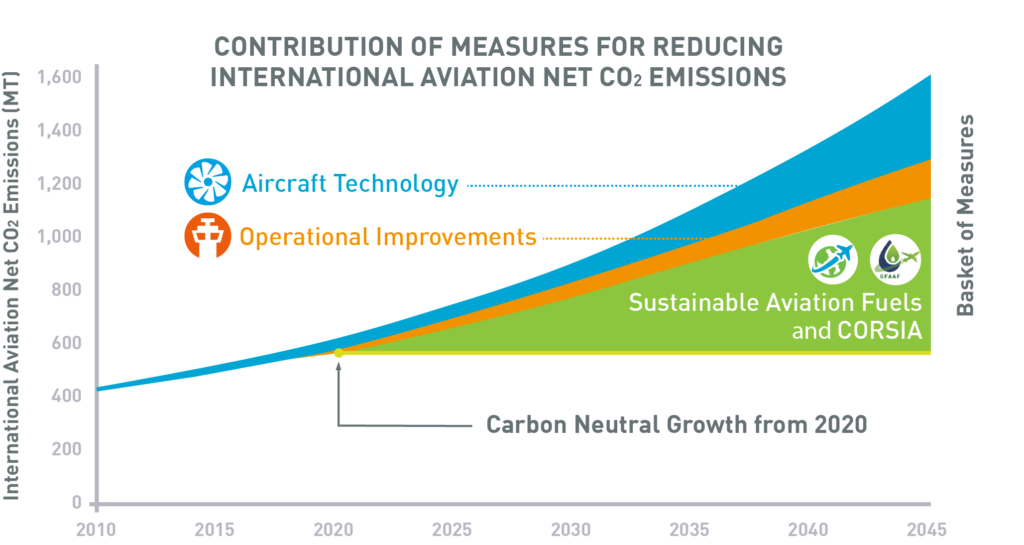
According to the International Civil Aviation Organization (ICAO), SAF could deliver over 60% of the emissions reductions needed for aviation to reach net zero by 2050. However, growth is limited by high costs and limited feedstock supply.
Biogas and Biomethane
Biogas is produced from organic waste such as manure, sewage, and food waste through anaerobic digestion. It contains methane and carbon dioxide. When purified, it becomes biomethane, which can be used as:
- Transport fuel
- Gas grid injection
It plays two key roles: waste management solution and renewable energy source. It is especially important in agricultural regions with large organic waste streams.
Biofuel “Generations”: First, Second, and Third
Biofuels are also classified into generations based on feedstock sustainability and technological maturity. Here is how these generations differ from one another.
First-Generation Biofuels
- Derived from food crops (corn, sugarcane, vegetable oils)
- Most commercially mature
- Controversial due to the food vs fuel debate
Second-Generation Biofuels
- Derived from non-food biomass (agricultural residues, wood waste)
- Lower competition with food systems
- More complex and expensive to produce
Third-Generation Biofuels
- Derived from algae
- Extremely high theoretical yields per land area
- Still largely in pilot and early commercialization stages
Advanced Biofuels (Cross-Cutting Category)
Includes second- and third-generation fuels plus waste-based pathways such as used cooking oil and municipal solid waste conversion. These are increasingly prioritized in climate policy frameworks due to better lifecycle emissions performance.
Energy Density and Performance vs. Fossil Fuels
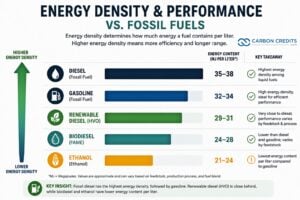
One of the key technical constraints of biofuels is energy density, which affects efficiency in transport applications.
- Gasoline and diesel remain highly energy-dense liquid fuels.
- Ethanol has a lower energy content per liter than gasoline.
- Biodiesel and renewable diesel are closer to fossil diesel, but still vary depending on feedstock and processing.
This is why biofuels are often used in blended form, rather than as full replacements in most transport systems.
2. Lifecycle Emissions of Biofuels: Why LCA Matters
When evaluating biofuels, the key question is not ‘Are biofuels zero emissions?’ but ‘What is the full lifecycle carbon intensity of this pathway versus fossil fuel baselines?'”
Unlike fossil fuels, biofuels cannot be evaluated based solely on tailpipe emissions. Their climate impact depends on a full lifecycle assessment (LCA), which includes:
- Feedstock cultivation,
- Land-use change,
- Processing and refining,
- Transportation, and
- End-use combustion.
This means that some biofuels can reduce emissions by 50–80% compared to fossil fuels. Meanwhile, others may deliver much smaller benefits—or even net increases—if land-use change is significant.
This variability is a key reason why biofuels are important and debated in global climate policies.
Now that we know what biofuels are and how they’re classified, let’s look at their importance in the global energy shift. Why do governments and industries keep investing in them, even with options like electrification and hydrogen?
3. Why Biofuels Matter in the Energy Transition
Despite rapid growth in renewable electricity and electric vehicles, global emissions remain concentrated in sectors that are difficult to electrify. The IEA states that transport makes up around 24% of global energy-related CO₂ emissions. Aviation and shipping are among the fastest-growing emission sources.
The main challenge is not only emissions, but physical constraints. Aircraft, ships, and long-haul trucks require fuels with high energy density, fast refueling, and long operating range. Current battery technology cannot yet meet these needs at scale.
This is why biofuels remain important as a transitional solution in the energy mix.
Where Biofuels Fit in Transport
Biofuels play different roles depending on the transport segment.
Road transport:
This is the most electrified segment, but internal combustion engines still dominate in many regions and in freight. Ethanol and biodiesel are widely used as blending fuels to reduce emissions without changing existing infrastructure.
Aviation:
Aviation is one of the most important growth markets for advanced biofuels. It contributes around 2–3% of global CO₂ emissions, but its overall climate impact is higher due to non-CO₂ effects such as contrails.
Maritime shipping:
Shipping accounts for nearly 3% of global emissions (IMO data). While hydrogen and ammonia are being explored, bio-based marine fuels remain one of the few near-term, scalable options compatible with existing engines.
The Drop-In Advantage
One of the key strengths of biofuels is their compatibility with existing systems. Unlike electrification, which requires new infrastructure, biofuels can often be used with minimal changes.
They work with:
- existing combustion engines,
- existing fuel distribution networks, and
- existing storage systems.
This reduces transition costs, especially in sectors with long asset lifetimes such as aviation and shipping, where equipment can operate for 20–30 years.
Energy Security and Fuel Diversification
Beyond emissions reduction, biofuels are increasingly linked to energy security. Recent energy shocks caused by the US-Israel and Iran war have highlighted the risks of relying heavily on imported fossil fuels.
Biofuels help countries reduce oil import dependence, diversify energy supply, and strengthen local agricultural and waste value chains.
For example, Brazil uses sugarcane ethanol as a major domestic fuel source, reducing gasoline imports. The United States and the European Union also integrate biofuels into national fuel policies to improve energy resilience.
4. Policy as the Main Growth Driver
Biofuels are highly policy-driven compared to many other energy technologies. Demand is largely created through regulation rather than pure market economics. The key frameworks today include:
- U.S. Renewable Fuel Standard (RFS): mandates blending of ethanol and biodiesel
- EU Renewable Energy Directive (RED III): sets renewable transport targets and prioritizes advanced biofuels
- Low Carbon Fuel Standards (LCFS): reward fuels based on lifecycle carbon intensity
These systems create a guaranteed demand floor even when biofuels are not yet cost-competitive with fossil fuels.
5. Corporate Demand and Net-Zero Commitments
Corporate climate strategies are becoming a major driver of biofuel demand, especially in aviation and logistics.
Airlines and shipping companies are signing long-term contracts for sustainable aviation fuel (SAF) and renewable diesel to meet emissions targets. This is important because aviation is difficult to decarbonize, and SAF is currently one of the only scalable compliance options.
As a result, biofuels are now part of both:
- government climate policy,
- corporate ESG and net-zero strategies.
Climate Performance: Why Biofuels Remain Debated
Biofuels are not uniform in their climate impact. Lifecycle emissions vary widely depending on feedstock type, production method, land-use change, and transport distance.
According to IEA and OECD findings:
- Waste-based biofuels can reduce emissions by 50–90%.
- Some crop-based biofuels deliver much lower reductions when land-use impacts are included.
This is driving a policy shift toward advanced biofuels that avoid food competition and reduce land-use risks.
Why Biofuels Still Matter in a World of EVs
Even with rapid electric vehicle growth and early hydrogen development, biofuels remain important because they fill a specific gap in the energy transition.
- EVs dominate light-duty transport.
- Hydrogen is still early-stage and infrastructure-heavy.
- Biofuels work in existing high-energy systems today.
In other words, biofuels are not competing with electrification. They are filling the last-mile decarbonization gap in liquid fuel-dependent sectors.
With the strategic role of biofuels established, the next step is to understand how they are actually produced.
6. How Biofuels Are Produced
Biofuel production is not a single process. It is a group of industrial methods that convert biological materials into liquid or gaseous fuels. The process depends on the feedstock, technology used, and final fuel type.
According to the IEA, most commercial biofuels today come from a few main pathways: ethanol fermentation, biodiesel production, hydrotreated renewable diesel (HVO), and emerging aviation fuel technologies such as HEFA and alcohol-to-jet.
Together, these make up the majority of the global biofuel supply, which is around 170 billion liters annually.
Feedstocks: The Starting Point
All biofuels begin with biomass feedstocks. These materials strongly influence cost, emissions, and scalability.
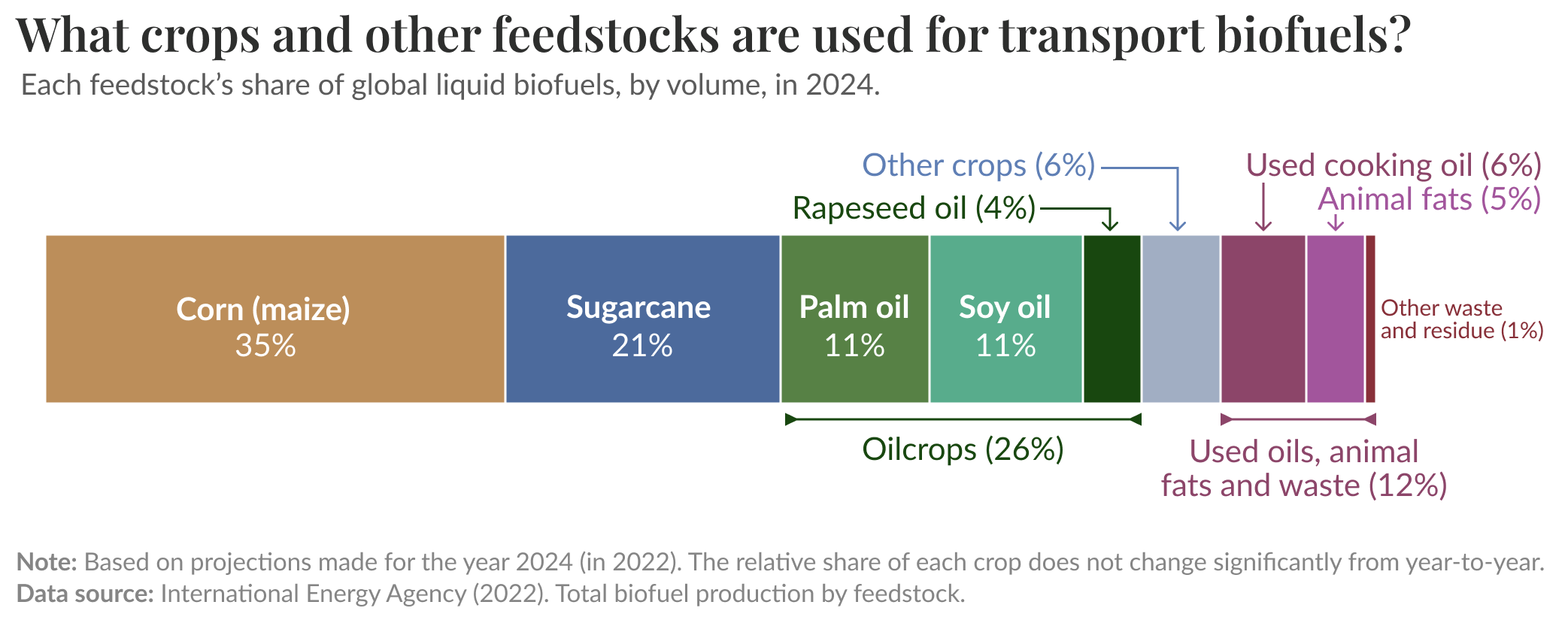
Conventional feedstocks include corn, sugarcane, soybean oil, rapeseed oil, and palm oil. These dominate current production because they are widely available and supported by existing agricultural systems. However, they can raise concerns about land use, food competition, and indirect emissions.
Advanced feedstocks are increasingly preferred in climate policy. These include used cooking oil, animal fats, agricultural residues, forestry waste, municipal solid waste, and non-food energy crops. These materials generally offer lower lifecycle emissions, but supply is limited.
The IEA notes that waste-based feedstocks currently represent a smaller share of production but must grow significantly to align with net-zero scenarios.
Ethanol: Fermentation-Based Fuel
Ethanol is the most widely produced biofuel and is mainly blended into gasoline.
It is made by fermenting sugars and starches from crops such as corn and sugarcane. The process involves breaking down plant material into sugars, fermenting them into alcohol, and then refining the fuel.
Ethanol accounts for roughly 70% of global biofuel consumption by volume. The United States and Brazil are the main producers.
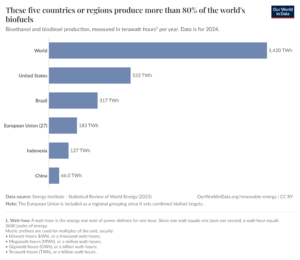
Its main limitation is its dependence on agricultural inputs. Fertilizer use, land conditions, and crop yields all affect its overall emissions performance.
Biodiesel: Oil-Based Conversion
Biodiesel is produced from vegetable oils, animal fats, and waste oils through a chemical process called transesterification. This process converts oils into fatty acid methyl esters (FAME), which can be used in diesel engines.
It is commonly blended with diesel in mixtures such as B20.
Production costs are highly sensitive to feedstock prices, which can account for 70–90% of total costs according to industry and IEA-related estimates. This makes biodiesel economically volatile.
Sustainability concerns also exist, particularly around palm oil, which has been linked to deforestation in some regions.
Renewable Diesel (HVO)
Renewable diesel is chemically different from biodiesel. It is produced through hydrotreatment, where feedstocks are processed with hydrogen under high temperature and pressure.
The result is a fuel that closely resembles petroleum diesel.
Key advantages include full engine compatibility, higher energy density, and lower emissions when made from waste-based feedstocks. It also performs better in cold conditions.
The U.S. Energy Information Administration (EIA) reports that renewable diesel capacity is growing fast. Meanwhile, biodiesel has stalled in some markets because of competition for feedstock.
Sustainable Aviation Fuel (SAF)
SAF is one of the fastest-growing biofuel segments. It is designed to match jet fuel properties while reducing lifecycle emissions.
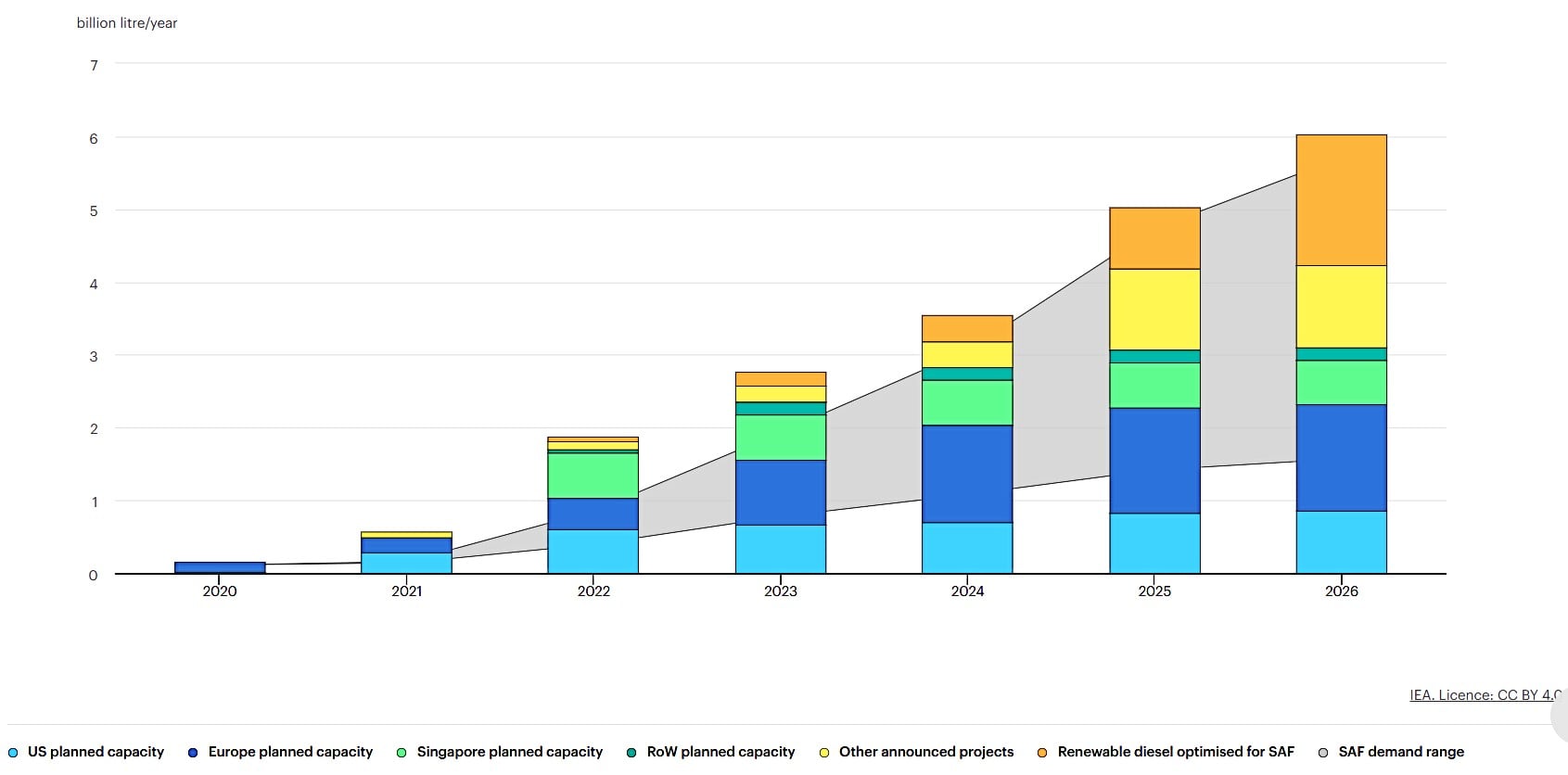
It is produced through several pathways, including HEFA, alcohol-to-jet (ATJ), and Fischer-Tropsch synthesis using biomass or waste gases.
SAF can reduce lifecycle emissions by up to 80% compared to conventional jet fuel, depending on feedstock and production method. However, scaling remains difficult due to:
- limited sustainable feedstocks,
- high production costs, and
- early-stage infrastructure.
Advanced Biofuels and New Pathways
Next-generation biofuels aim to expand feedstock flexibility and improve efficiency. These include gasification, pyrolysis, cellulosic ethanol, and alcohol-to-jet technologies.
The IEA estimates that advanced biofuels could represent over 40% of total supply in net-zero scenarios by 2030. However, current production costs are often 2–3 times higher than those of fossil fuels, though they will decline with scale.
Key Production Reality: Cost Structure
Across all biofuel types, one factor dominates: feedstock cost.
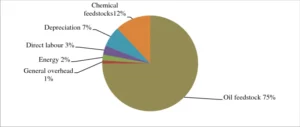
In many cases, 70–95% of the total production cost comes from feedstock procurement. This creates a structural trade-off:
- Waste-based fuels offer better emissions performance but limited supply, while crop-based fuels are scalable but raise sustainability concerns.
This balance between cost, scale, and sustainability defines the entire biofuels industry.
7. Types of Biofuels and Their Industrial Applications
Biofuels are not a single-market solution. Their role depends on how different fuel types fit into specific sectors with different energy needs, infrastructure, and decarbonization limits.
According to the International Energy Agency, more than 90% of liquid biofuels are currently used in road transport. However, this is slowly changing as aviation and shipping emerge as higher-value demand areas due to limited low-carbon alternatives.
Road Transport: The Largest Market
Road transport is the most mature biofuel market, mainly using ethanol and biodiesel.
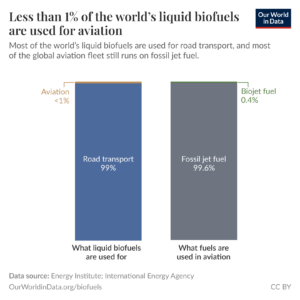
Ethanol is blended into gasoline to reduce emissions and improve fuel performance. Biodiesel and renewable diesel are blended into diesel to lower particulate emissions and lifecycle carbon intensity.
The United States and Brazil dominate ethanol use, supported by long-term blending mandates and strong agricultural supply chains. Brazil’s system is particularly integrated, where ethanol can represent a significant share of fuel demand depending on sugarcane output.
Europe has historically led biodiesel adoption, but renewable diesel (HVO) is growing faster due to better performance and full compatibility with existing engines.
However, road transport is increasingly electrifying, which is expected to limit long-term biofuel growth in this segment.
Aviation: The Fastest-Growing Demand Segment
Aviation is becoming the most important growth market for advanced biofuels, especially sustainable aviation fuel. Unlike road transport, aviation has no near-term electrification option due to energy density constraints.
Today, SAF production remains small compared to global jet fuel demand but is growing quickly through policy support and airline commitments in Europe, the U.S., and Asia.

However, it remains expensive and limited by feedstock supply, making it a premium decarbonization fuel rather than a mass-market product.
Maritime Shipping: Early but Growing Adoption
Shipping contributes about 3% of global emissions, according to the International Maritime Organization (IMO). While the sector is harder to decarbonize, it is exploring multiple fuel options.
Biofuels such as biodiesel and renewable diesel are being tested as transitional fuels because they can be used in existing engines. However, adoption is uneven due to cost differences and a lack of fuel standardization.
As global emissions regulations tighten, biofuels are expected to play a growing compliance role, even if they are not the long-term solution.
Industrial Heat and Power
Biofuels are also used in industrial heat and power generation, especially in regions with abundant agricultural or forestry waste. Biogas and biomass fuels are used to replace coal and natural gas in thermal processes.
Although this is a smaller market, it is important in local decarbonization strategies. In parts of Europe, biomethane is also injected into natural gas grids, reducing fossil fuel use without changing end-use systems.
Market Shift: From Volume to Value
A key trend in biofuels is a shift from high-volume fuels like ethanol toward high-value fuels like SAF and renewable diesel. This shift is driven by:
- Road transport electrification reducing long-term demand.
- A higher willingness to pay in aviation and shipping.
- Policy focuses on lifecycle emissions rather than volume.
As a result, future growth will rely less on total fuel volume. Instead, it will focus on how we allocate limited sustainable feedstocks for the greatest climate impact.
8. Global Policy and Regulatory Landscape for Biofuels
Biofuels are one of the most policy-driven energy markets. Unlike technologies that scale mainly through cost reductions, biofuels depend heavily on regulation, mandates, and subsidies.
In most regions, demand is not driven purely by market pricing but by government requirements and carbon accounting systems. This makes policy the central force shaping biofuel growth, with very different approaches across regions.
United States: Renewable Fuel Standard (RFS)
The United States has one of the biggest biofuel markets because of the Renewable Fuel Standard (RFS). The RFS requires fuel suppliers to mix renewable fuels into the national fuel supply.
Under this system, companies must meet annual Renewable Volume Obligations (RVOs), creating guaranteed demand for ethanol, biodiesel, and advanced biofuels. This has supported both domestic production and agricultural feedstock markets.
According to the U.S. Energy Information Administration, ethanol dominates U.S. biofuel consumption by volume. However, renewable diesel and biodiesel are growing faster, supported by stricter low-carbon fuel policies at the state level, especially in California.
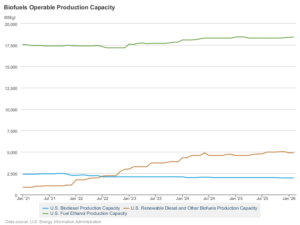
This shows a split system. Federal rules set the basic demand while state policies boost growth for higher-value, low-carbon fuels.
Brazil: Integrated Ethanol System
Brazil has one of the most developed biofuel systems globally, built around sugarcane ethanol and flexible-fuel vehicle (FFV) technology.
Since 2003, FFVs have become dominant in the country, representing roughly 98% of new car sales and about 90% of the light-duty fleet. These vehicles can run on gasoline, pure ethanol, or any blend of the two, allowing ethanol to directly compete with gasoline at the pump, depending on fuel prices and supply conditions.
Brazil also maintains one of the world’s highest gasoline ethanol blending mandates at roughly 27%, reinforcing ethanol’s central role in the national transport fuel system.
Key strengths of this system include:
- high sugarcane productivity per hectare,
- strong lifecycle emissions performance, and
- long-term policy stability.
Brazil’s model is widely viewed as one of the most effective large-scale ethanol systems, although its expansion is still tied to land availability and agricultural output.
European Union: Strict Sustainability Rules
The European Union has one of the most advanced regulatory systems for biofuels under the Renewable Energy Directive (RED III). Its policy is shifting away from crop-based fuels toward advanced and waste-based biofuels due to concerns over land use and indirect emissions.
Key features of RED III include:
- binding renewable energy targets for transport,
- limits on high-risk feedstocks linked to deforestation, and
- strict lifecycle emissions accounting.
The EU is also moving from volume-based mandates to carbon-intensity regulation, where fuels are assessed based on total lifecycle emissions rather than renewable content alone.
Asia-Pacific: Energy Security Driven Policies
In Asia, biofuel policy is largely driven by energy security and import reduction goals.
China has introduced ethanol blending pilots in selected regions, mainly to reduce oil imports and manage crop surpluses, though rollout remains gradual.
India has taken a more aggressive approach, setting national ethanol blending targets to reduce crude oil dependence and support rural incomes.
Southeast Asia, particularly Indonesia and Malaysia, focuses heavily on biodiesel blending due to strong palm oil production. However, these programs face international pressure over deforestation concerns, leading to stronger sustainability certification systems.
9. Carbon Markets and Fuel Standards
Beyond mandates, carbon pricing systems are becoming increasingly important for biofuels.
The most influential example is California’s Low Carbon Fuel Standard (LCFS), which assigns carbon intensity scores to fuels. Low-emission fuels generate tradable carbon credits, improving project economics. This links biofuels directly to carbon markets, rewarding emissions reductions rather than fuel volume.
Similar systems are expanding in Canada and Europe, signaling a shift toward performance-based fuel regulation focused on lifecycle carbon intensity.
Across all regions, biofuel policy is shifting from volume-based blending mandates to carbon-based performance systems. Instead of simply requiring renewable fuel use, newer frameworks focus on:
- lifecycle emissions,
- feedstock sustainability, and
- carbon intensity reduction.
This is reshaping the industry toward:
- waste-based feedstocks,
- advanced conversion technologies, and
- high-value fuels like SAF and renewable diesel.
In effect, success in biofuels is no longer measured by production volume alone, but by verified emissions reductions per unit of fuel.
10. Global Biofuel Market Size, Key Players, and Economic Trends
The global biofuels market has grown from a niche renewable segment into a large industrial system embedded in transport fuel supply chains. Global biofuel demand is now about 170 billion liters each year. This growth is mainly from ethanol and biodiesel used in road transport, according to the IEA.
Likewise, global biofuel production increased 7x in the last two decades, as shown below.
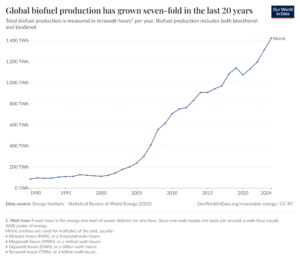
The market is valued at over $150 billion. Estimates vary based on policy support, feedstock supply, and how quickly advanced fuels are adopted. Growth is now focused more on higher-value segments. This includes renewable diesel and sustainable aviation fuel (SAF), instead of traditional blending fuels.
Despite this scale, the industry is large, but it stays regional and fragmented. It relies heavily on local feedstocks and policies.
Key Industry Players: A Hybrid Value Chain
The biofuels industry sits at the intersection of agriculture, energy, and chemicals, meaning its players span multiple sectors.
Agribusiness and Feedstock Leaders
Agribusiness companies play a central upstream role, supplying feedstocks such as corn, sugarcane, and vegetable oils. Globally, corn ethanol and sugarcane ethanol still dominate the liquid biofuel supply. Ethanol alone accounts for the majority of biofuel production by volume.
Key players in this segment include:
- Archer Daniels Midland Company — one of the world’s largest corn processors and a major ethanol producer in North America.
- Cargill — a global agribusiness leader supplying oilseeds and biofuel feedstocks.
- POET LLC — one of the largest bioethanol producers in the United States.
- Raízen — a major producer of sugarcane ethanol and one of the largest bioenergy firms globally.
In Brazil, integrated sugarcane systems led by companies like Raízen are central to ethanol supply, supported by long-established agricultural infrastructure.
Energy Majors and Refining Conversions
Energy majors are increasingly active in renewable diesel and sustainable aviation fuel (SAF). These firms are repurposing existing refinery infrastructure into hydroprocessing units rather than building entirely new refining systems, a key advantage in scaling drop-in fuels.
Major participants include:
- Neste — the world’s largest producer of renewable diesel and SAF.
- Chevron — expanding renewable diesel production in North America.
- Valero Energy Corporation — a major producer of renewable diesel through its joint ventures.
- TotalEnergies — investing heavily in SAF and renewable fuels across Europe.
- BP — developing biofuels alongside broader low-carbon energy transition strategies.
These companies are leveraging refinery conversion strategies, particularly in the United States and Europe, where existing infrastructure can be adapted for renewable feedstocks such as used cooking oil and animal fats.
Advanced Biofuel and Clean-Tech Producers
Specialized biofuel producers and clean-tech firms are expanding in advanced segments such as SAF and waste-based fuels. These companies focus on technologies like hydroprocessed esters and fatty acids (HEFA), gasification-to-liquids, and alcohol-to-jet conversion.
Notable players include:
- LanzaJet — focused on alcohol-to-jet SAF technology.
- Gevo — developing low-carbon fuels and SAF from renewable feedstocks.
- Aemetis — producing renewable fuels and developing SAF projects.
- World Energy — one of the earliest commercial SAF producers in the United States.
These firms are critical in pushing innovation beyond first-generation biofuels, particularly into aviation and waste-based pathways where scalability remains constrained but strategic importance is high.
Structural Outcome: A Multi-Layer Value Chain
This creates a hybrid industrial structure where agriculture, refining, and technology firms operate across different stages of the same value chain.
Unlike conventional fossil fuel markets, value creation is distributed across:
- upstream agribusiness feedstock supply,
- midstream refining and conversion infrastructure, and
- downstream fuel distribution and policy-driven markets.
The result is a fragmented but increasingly interconnected ecosystem, where partnerships between agribusiness firms, energy majors, and clean-tech developers are becoming essential for scaling next-generation biofuels.
Cost Structure and Economic Drivers
A defining feature of biofuels is their cost structure. Unlike fossil fuels, where production is relatively standardized, biofuel economics are highly sensitive to feedstock pricing and logistics.
Across most commercial pathways, feedstocks represent the largest share of total production cost, commonly estimated at ~50% to 90% of total cost in biodiesel and renewable diesel systems, depending on input type and market conditions.
This creates strong exposure to agricultural commodity cycles. Rising prices for vegetable oils or crops like corn can quickly compress margins, while periods of oversupply improve competitiveness.
Waste-based feedstocks such as used cooking oil and animal fats improve lifecycle emissions performance and policy eligibility, but they are structurally constrained in supply, limiting scalability.
Advanced fuels like SAF remain significantly more expensive than conventional jet fuel. Industry estimates typically place SAF at 2× to 5× the cost of fossil jet fuel, depending on feedstock type and production pathway.
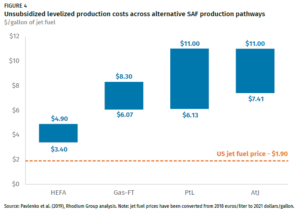
The IATA estimates that SAF could contribute a large share of aviation decarbonization—up to ~65% of required emissions reductions for net-zero aviation pathways, but only if costs fall and supply scales significantly.
As a result, the industry depends heavily on policy support, including:
- blending mandates,
- tax credits and production incentives, and
- carbon pricing systems.
Investment Trends and Capital Flows
Investment in biofuels is increasingly focused on renewable diesel and sustainable aviation fuel (SAF). These fuels benefit from stronger policy support and higher value markets than ethanol and biodiesel. According to the IEA, global biofuel demand could grow by about 20% between 2023 and 2028, with most growth coming from advanced fuels.
Renewable diesel has grown quickly in North America and Europe. Much of this growth comes from refinery conversions, which are cheaper than building new plants.
In the United States, renewable diesel capacity has reached over 6 billion gallons per year (about 23–25 billion litres) in the mid-2020s. Growth is supported by policies like the Renewable Fuel Standard and California’s Low Carbon Fuel Standard.
SAF is still very small today. The International Air Transport Association estimates it made up less than 0.2% of global jet fuel use in 2023. But it is becoming the main long-term focus for investment.

There are now more than 100 SAF projects announced around the world. Many airlines and energy firms are signing long-term supply contracts. These contracts often run for 10 to 20 years. This helps reduce investment risk.
Policy support is also growing. The EU ReFuelEU Aviation rule requires SAF blending to start at 2% in 2025, rising to 70% by 2050. In the United States, the Inflation Reduction Act provides SAF tax credits of up to $1.75 per gallon, depending on carbon intensity.
These policies are helping shift investment toward low-carbon fuels instead of traditional biofuels. Overall, capital flows are shifting away from commodity ethanol/biodiesel expansion toward specialized, high-margin, policy-backed fuels.
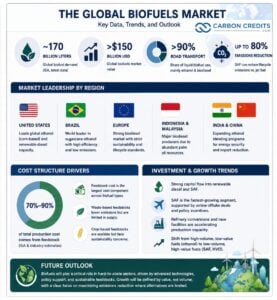
11. Future Outlook: Where Biofuels Are Headed
The future of biofuels is defined less by whether demand will grow and more by where that demand will concentrate. In most net-zero pathways modeled by the International Energy Agency, biofuels remain a critical but targeted solution, not a universal substitute for fossil fuels.
Across these scenarios, global biofuel demand rises meaningfully toward mid-century, but growth is uneven across sectors.
Road transport currently accounts for the majority of consumption but is expected to grow more slowly over time due to accelerating electrification, particularly in passenger vehicles. In contrast, aviation and maritime shipping become the dominant long-term growth drivers because they are significantly harder to electrify.
Demand Growth Will Be Uneven Across Sectors
While total biofuel production is projected to expand under net-zero scenarios, demand is increasingly concentrated in specific sectors.
- Road transport: mature market with slowing growth
- Aviation: fastest-growing demand segment
- Shipping: emerging structural demand driver
The IEA highlights that sustainable biofuel supply must scale significantly by 2030 to remain aligned with net-zero pathways, particularly for sectors where electrification is limited.
Sustainable Aviation Fuel: The Core Growth Engine
Among all biofuel segments, SAF is expected to dominate long-term growth.
Aviation contributes roughly 2–3% of global CO₂ emissions, but its decarbonization is disproportionately difficult due to energy density requirements. This makes SAF one of the few viable near-term solutions. However, current SAF production remains extremely limited—still well below 1% of global jet fuel supply.
Key constraints include:
- limited sustainable feedstock availability,
- production costs that remain 2–5× higher than conventional jet fuel, and
- early-stage global refining capacity.
As a result, SAF expansion depends heavily on:
- policy mandates (blending requirements),
- subsidies and tax incentives, and
- long-term airline offtake agreements.
Feedstock Constraints Will Define Scaling Limits
A structural constraint across the entire biofuels industry is feedstock availability. Unlike wind or solar energy, biofuels are fundamentally limited by biomass supply chains.
Sustainable feedstocks—such as used cooking oil, agricultural residues, and forestry byproducts—are widely considered the lowest-carbon inputs due to lifecycle emissions advantages. However, their availability is inherently finite.
This creates a long-term structural tension between scaling production to meet decarbonization targets and maintaining strict sustainability and land-use standards.
As demand increases, competition for these feedstocks is expected to intensify, potentially increasing prices and forcing focus toward:
- aviation (highest-value use case)
- shipping and heavy industry
- compliance-driven blending markets
Technology Shift Toward Advanced Biofuels
The technological direction of the industry is clearly moving toward advanced biofuel pathways.
First-generation fuels such as corn ethanol and conventional biodiesel are expected to grow more slowly over time due to sustainability concerns, land constraints, and competition with food systems.
In contrast, advanced fuels could expand their share of supply. Key technologies include:
- hydrotreated renewable diesel,
- alcohol-to-jet (ATJ) conversion,
- biomass gasification and Fischer-Tropsch synthesis, and
- cellulosic ethanol from non-food feedstocks.
These pathways improve lifecycle emissions performance and expand feedstock flexibility, but they are also more capital-intensive and complex. As a result, their growth depends heavily on sustained policy support and infrastructure investment.
Policy Will Remain the Key Scaling Driver
Across all scenarios, one conclusion is consistent: biofuels remain policy-dependent.
Unlike fossil fuels, they do not scale purely through market pricing. Instead, growth is driven by a mix of:
- blending mandates,
- carbon intensity regulations,
- tax credits and subsidies,
- carbon credit systems, and
- corporate procurement agreements.
A clear shift is also underway from volume-based mandates to carbon-performance frameworks, where fuels are evaluated based on lifecycle emissions rather than renewable content alone.
This transition strongly favors advanced and waste-based fuels while placing increasing pressure on higher-emission first-generation pathways.
12. Conclusion: The Strategic Role of Biofuels in Net Zero Pathways
Biofuels play a targeted but important role in the global energy transition. They are not a full replacement for fossil fuels, but a sector-specific solution for hard-to-electrify areas such as aviation, shipping, and heavy-duty transport.
Their main advantage is compatibility with existing fuel infrastructure, allowing emissions reductions without major system replacement. However, growth is limited by feedstock availability, land-use pressures, and variable lifecycle emissions.
Future expansion is shifting from crop-based fuels toward advanced and waste-based options like sustainable aviation fuel and renewable diesel. Policy is also evolving from volume mandates to carbon-intensity standards. Overall, biofuels will remain a bridging technology within a broader low-carbon energy system.