


Microsoft has hit a significant sustainability goal by becoming water positive in fiscal year 2025, five years early. The company replenished more water than it used in its global operations. This achievement is impressive, especially with the growing demand for cloud computing and AI.
In a blog post, Judy Priest, Corporate VP and Chief Technology Officer, and Steve Solomon, VP of Datacenter Engineering, emphasized that this success reflects decades of progress in water management.
From 2.3 to 0.27 L/kWh: Microsoft’s Water Efficiency Breakthrough
Microsoft has improved the water efficiency of its data centers by nearly 90% since the early 2000s.
-
The average Water Usage Effectiveness (WUE) has dropped from 2.3 liters per kilowatt-hour (L/kWh) to 0.27 L/kWh in 2025. This shows its commitment to reducing water usage while supporting AI and cloud growth.
For comparison, Microsoft’s latest WUE for FY24 was 1.16 liters per kWh, consistent across major regions. Study the chart below:
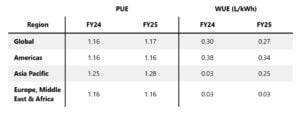
These advancements highlight how quickly Microsoft’s new facilities have become more water efficient.
This achievement comes five years before Microsoft’s original 2030 target set in 2020. It reflects years of investment in advanced cooling technologies, water recycling, rainwater harvesting, and major replenishment projects.
The company states these efforts show that expanding digital infrastructure and protecting natural resources can coexist.
Progress Toward Lower Water Intensity
Microsoft has also set a new goal: reducing water intensity in its owned data centers by 40% by 2030. And it has already achieved a 25% reduction by FY25, putting it well on track.
Key operational improvements include:
- Better temperature and humidity controls
- Continuous cooling performance monitoring
- Real-time weather analysis
- Regular water audits
- Smarter operational analytics
These changes help minimize unnecessary cooling and ensure facilities use only the water they need.
In Phoenix, Arizona, upgrades improved water-use effectiveness by 23% year over year in FY25. Microsoft plans to expand these practices to similar facilities worldwide.
AI-Optimized Data Centers Use Zero Water for Cooling
One of Microsoft’s major breakthroughs is its AI-optimized data centers.
Launched in 2024, these facilities use direct-to-chip liquid cooling with a closed-loop system. Water circulates inside the cooling equipment instead of evaporating, meaning no additional water is needed during normal operations.
As a result, these data centers use zero water for cooling while operating.
-
Each new facility can save over 125 million liters of water annually, or about 125,000 cubic meters, compared to traditional systems.
This technology supports growing AI workloads and significantly eases pressure on freshwater supplies.
Expanding Water Recycling and Replenishment
Microsoft is not just using less water; it’s also replacing freshwater with recycled and non-potable water across its operations. This reduces pressure on local water supplies as the company expands its AI and cloud infrastructure.
Some of Microsoft’s largest data center campuses rely heavily on alternative water sources:
- Singapore: 99% recycled, reused, or non-potable water
- San Antonio, Texas: 79%
- Quincy, Washington: 74%
The company is also expanding its rainwater harvesting program. Systems are already in use in the Netherlands, Sweden, and Ireland, with more planned for Canada, the UK, Finland, Italy, South Africa, and Austria.
-
For instance, new data centers in Quebec are expected to collect up to 1.5 million liters of rainwater yearly, reducing their need for freshwater.
Many Microsoft data centers have on-site water treatment systems that clean and recycle cooling water several times before replacement, further cutting freshwater consumption.
Water Replenishment Supports Communities
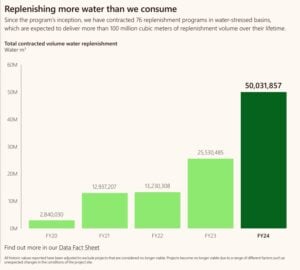
Microsoft’s water strategy goes beyond saving water in its facilities. The company invests in projects that restore and replenish water resources in stressed areas.
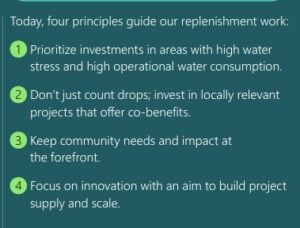
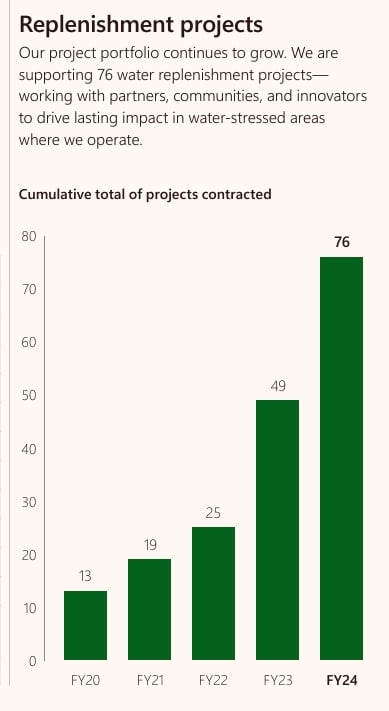
Currently, Microsoft supports water projects in about 40 priority locations worldwide. These initiatives aim to enhance local water supplies while benefiting nearby communities and ecosystems.
Replenishment projects include:
- Groundwater recharge
- Wetland restoration
- Rainwater harvesting
- Irrigation modernization
- Water reuse and conservation
Finding high-quality water projects was a major challenge after announcing its water positive commitment in 2020. To tackle this, Microsoft partnered with NGOs and private companies to develop new projects.
By 2024, 17% of its global replenishment portfolio came from private-sector partnerships, creating a larger market for water sustainability.
AI- Enabled Water Conservation
For example, Microsoft collaborates with FIDO Tech and local utilities in Phoenix, Arizona, and nearby Nevada. AI technology identifies hidden leaks in aging pipelines before significant water loss occurs, helping communities save valuable resources.
Microsoft also partners with The Nature Conservancy to restore historic oxbow wetlands in the U.S. Midwest. These wetlands recharge groundwater, reduce flood risks, enhance wildlife habitats, and provide more reliable water supplies for nearby communities.
To summarize, AI supports water conservation in the following ways:
- Detect hidden water leaks
- Track watershed health
- Predict droughts and floods
- Monitor water quality
- Improve irrigation schedules
- Forecast water demand
Building Sustainable AI Infrastructure
As AI use grows, data centers face increasing scrutiny for water consumption. Microsoft states that responsible water management is now central to its Community-First AI Infrastructure strategy.
The company combines water-efficient cooling, recycled water, rainwater harvesting, and replenishment projects to support AI growth while reducing environmental impact.
Reaching water-positive status five years ahead of the 2030 target is a significant milestone. However, Microsoft plans to improve water efficiency, expand replenishment projects, and maintain a positive water balance as its AI and cloud infrastructure grows.
Similarly, Google and Amazon have announced new water-positive commitments and sustainability milestones as the tech industry works to reduce the environmental impact of expanding data centers.