

Verra has approved the first carbon credits under its carbon capture and storage (CCS) methodology, marking a new step for technology-based projects in the voluntary carbon market (VCM). The credits come from a natural gas processing project in Texas that captures carbon dioxide (CO₂) and stores it permanently underground.
The project, called Barnett Zero, was developed by BKV Corporation in Bridgeport, northern Texas. It captures CO₂ separated from raw natural gas at a processing plant, compresses the gas, and sends it to a nearby injection well for permanent storage.
Verra announced the approval on November 6, 2026. The credits came from the Verified Carbon Standard (VCS) methodology VM0049. This method outlines how to measure emissions reductions and carbon removals from CCS projects.
The milestone gives developers a recognized way to certify carbon storage activities under Verra’s program. It also brings more attention to the role of carbon capture in the voluntary carbon market, where buyers are looking for ways to support measurable climate action.
Mandy Rambharos, CEO, Verra, remarked:
“Carbon capture and storage is one of the most technically demanding approaches in the market. Capturing and permanently storing the CO₂ that would otherwise be vented from natural gas is real, measurable climate action. Barnett Zero is the first of many projects we expect to be using VM0049. We’re proud to give project developers a credible pathway for permanent carbon storage that delivers verified and meaningful climate impact.”
Barnett Zero Earns the First Project Under Verra’s CCS Methodology
BKV developed Barnett Zero to capture CO₂ that would otherwise be released during natural gas processing. Raw natural gas can contain CO₂, which must be separated before the gas can be sold or transported for use. At the Bridgeport facility, the separated CO₂ is captured, compressed, and injected into a nearby underground well.
The project began commercial CO₂ injection in November 2023. It uses an existing natural gas processing operation and a nearby storage well, rather than capturing carbon directly from the atmosphere.
Independent validation and verification body GHD Limited verified the project. Verra said the project applies VM0049 together with a specific module, VMD0062, which covers CO₂ capture from natural gas processing.
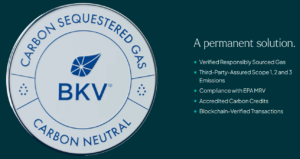
BKV said the certification allows it to monetize the credits and move forward with its Carbon Sequestered Gas (CSG) business. The company will use the certification to back deliveries of its third-party-verified natural gas product. This is part of earlier agreements with Kiewit and Gunvor.
However, Verra’s announcement did not disclose the number of credits approved or their total volume. It also did not provide a project-level estimate of annual emissions reductions.
How Verra’s VM0049 Methodology Works
Verra introduced VM0049 in June 2024. The methodology provides a framework for measuring the climate impact of CCS projects that capture CO₂ and store it permanently.
It covers different stages of the process, including carbon capture, transport, and geological storage. Developers can combine specific modules based on the technology and design of their projects. This structure allows the methodology to cover several types of CCS activities, including:
- direct air capture (DAC),
- bioenergy with carbon capture and storage (BECCS),
- CO₂ transport, and
- geological storage.
The methodology also sets rules for accounting for emissions linked to the energy used by CCS systems. This matters because capturing, compressing, transporting, and storing CO₂ can require significant energy. Projects must account for these emissions when calculating their climate benefits.
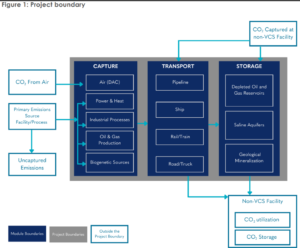
For Barnett Zero, the relevant module is VMD0062, which covers CO₂ capture during natural gas processing. It addresses CO₂ that is separated from raw gas and would otherwise be released into the atmosphere. This is different from direct air capture, which removes CO₂ already present in the atmosphere. It is also different from capturing emissions from a power plant after fossil fuels are burned.
Barnett Zero is therefore best described as an emissions-reduction project. It prevents CO₂ from a natural gas processing stream from entering the atmosphere and stores it underground.
Why ICVCM Approval of the Specific Module Matters
The first credits come as Verra’s CCS framework gains wider recognition in the carbon market. In September 2026, the Integrity Council for the Voluntary Carbon Market (ICVCM) approved VM0049 and several related modules under its Core Carbon Principles (CCPs). These principles set quality requirements for carbon credits, including rules on additionality, permanence, measurement, and transparency.
- The approved modules include those covering direct air capture, CO₂ transport, CO₂ storage, and bioenergy with carbon capture and storage.
However, there is an important distinction for the Barnett Zero project. Verra said that module VMD0062, which the project uses for natural gas processing, was still under review by the ICVCM as of November 6. This means the wider VM0049 methodology has received CCP approval, but the specific module used by Barnett Zero had not yet received that separate approval.
The distinction matters to buyers who use CCP approval as one way to assess credit quality. It also shows why carbon credit buyers need to check the exact methodology and modules used by a project, rather than relying only on the name of the broader standard.
BKV Expands Its Carbon Capture Business
The Verra certification is part of BKV’s wider plan to expand its carbon capture and storage operations. The company began its first commercial sequestration project with Barnett Zero in 2023. It has since added other operating facilities and projects to its carbon management business.
In its third-quarter 2026 results, BKV said its operational CCS portfolio had grown to four projects. Together, these facilities represented an annual carbon sequestration run rate of about 350,000 metric tonnes.
The company reported that its total CO₂ injection volume reached 55,200 metric tonnes in the third quarter of 2026. This figure covers its operational portfolio, not Barnett Zero alone.
BKV is also targeting an annual injection run rate of 1.5 million metric tonnes by 2028. This is a company target, not current operating capacity or confirmed annual storage.
The company sees carbon credits as a way to create additional value from its storage operations. Its Carbon Sequestered Gas product is designed to link natural gas sales with verified carbon storage.
Still, the climate value of such products depends on the full emissions profile of natural gas production, processing, transport, and use. Storing CO₂ separated during processing does not remove the emissions produced when customers later burn the gas.
Global CCS Capacity Grows, But Verification Remains Critical
The Barnett Zero milestone comes as carbon capture and storage expands worldwide. The Global CCS Institute’s Global Status of CCS 2026 report counted 113 commercial CCS projects in operation as of July 31, 2026. These facilities had a combined CO₂ capture capacity of 68 million tonnes per year. Another 56 million tonnes per year of capture capacity was under construction.
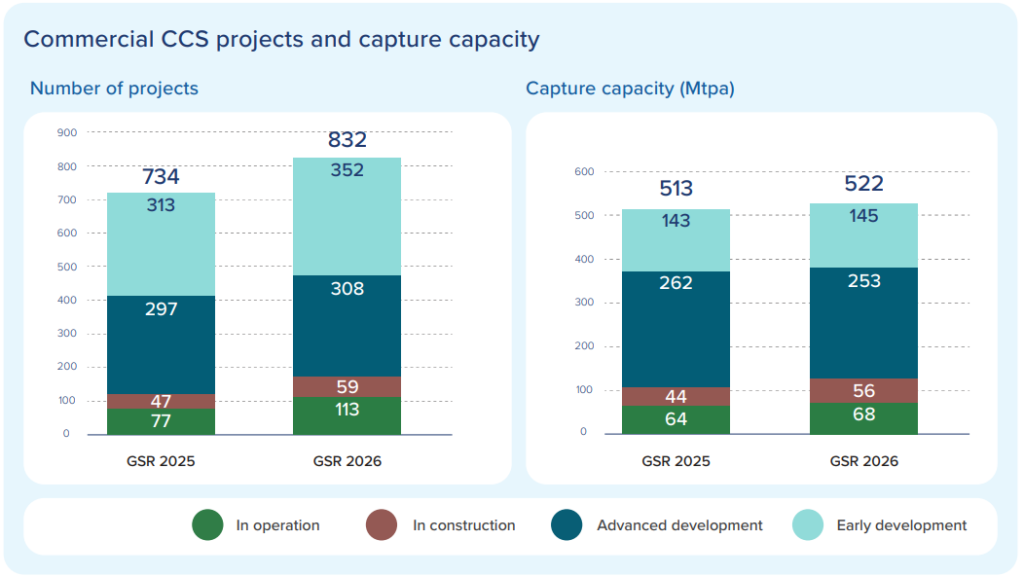
The report also found that more than 400 million tonnes of CO₂ had been captured and permanently stored worldwide since 1996. These figures show that CCS is moving beyond pilot projects.
However, capture capacity is not the same as actual annual storage. The amount of CO₂ stored depends on how often facilities operate and whether their capture, transport, and injection systems perform as planned.
Carbon credits from CCS projects also need careful review. Buyers should think about a few key points:
- Did the captured emissions happen anyway, even without the project?
- Is the storage safe for the long term?
- Are all emissions from the process included in the calculations?
For geological storage, monitoring is important to confirm that CO₂ remains underground. Projects must also account for possible leakage and other risks over time.
Verra’s VM0049 framework provides a way to measure these activities under a common standard. The first credits from Barnett Zero show how the framework can be applied to natural gas processing.
The next challenge is to demonstrate that projects can deliver reliable storage at a larger scale, with transparent accounting and strong safeguards. As more CCS projects seek carbon market certification, the quality of their measurements and the permanence of their storage will remain central to buyer confidence.