

Rwanda has reached an important milestone in the global carbon market. The country has completed the accounting needed to authorize 5.69 million carbon credits from the DelAgua Clean Cooking Grouped Project under Article 6 of the Paris Agreement.
The credits can now be traded internationally with a Corresponding Adjustment. This accounting rule prevents the same emissions reductions from being counted by both Rwanda and the country or company buying the credits.
The credits are also eligible for use under the Carbon Offsetting and Reduction Scheme for International Aviation (CORSIA), the global carbon market created by the International Civil Aviation Organization (ICAO).
One of Africa’s Largest Cookstove Projects
This is one of the largest cookstove credit authorizations completed under Article 6 so far. It shows that Article 6 is moving from planning to real market activity.
The Rwanda Environment Management Authority (REMA) has finalized and submitted the accounting records needed to track these emissions reductions at the national level. Verra has now accepted those records, confirming that the process meets the international requirements for Article 6 transfers.
The authorization covers 5,690,481 carbon credits generated between 2021 and 2024 from three DelAgua clean cooking projects:
- Clean Cooking Grouped Project – VCS 2749 with 551,326 tCO₂e.
- Improved Cookstove Grouped Project – VCS 3699 with 1.73 million tCO₂e.
- Clean Cooking Grouped Project in Rwanda – VCS 4150, which accounts for 3.40 million tCO₂e.
By recording these credits in Rwanda’s official greenhouse gas accounts, the country has confirmed that the associated emissions reductions have been transferred internationally and will not also count toward its own climate targets.
The milestone is important for everyone involved. It gives buyers more confidence in the quality of the credits and opens new markets for project developers. It also helps countries like Rwanda attract more climate finance while supporting their national climate goals.
Euan McDougall, CEO of DelAgua Group, remarked:
“We are proud to stand alongside the Government of Rwanda in demonstrating what is possible when project developers and host governments are fully aligned. For the market, this sets a benchmark while for our buyers, it provides the assurance they have rightly demanded.”
The carbon credits come from one of the biggest clean cooking programs in Africa.
Rwanda Completes the Full Article 6 Accounting Process
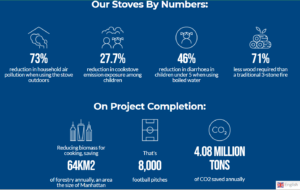
The DelAgua Clean Cooking Grouped Project has distributed 1.8 million improved cookstoves to households across Rwanda since 2016. According to DelAgua, the program now reaches about one-quarter of Rwanda’s population.
The project replaces traditional three-stone fires with fuel-efficient wood-burning stoves. These cooking tools use much less firewood and produce far less smoke inside homes.
The benefits go beyond cutting emissions.
- DelAgua estimates the project has avoided more than 19 million tonnes of CO₂ equivalent since it began.
- Families spend less time collecting firewood, helping reduce pressure on Rwanda’s forests.
- Cleaner indoor air also lowers exposure to harmful smoke, which can cause lung and heart diseases.
- The project also creates jobs. Local workers help distribute the stoves, train households, monitor results, and support communities.
Carbon finance makes the program possible.
Instead of asking families to pay the full cost of the stoves, money from carbon credit sales helps cover distribution, monitoring, and long-term support. This allows many low-income households to receive cleaner cooking technology at little or no upfront cost.
Billions of People Still Lack Clean Cooking
Rwanda’s project addresses a global problem.
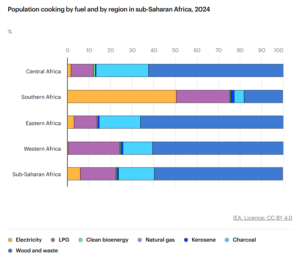
According to the International Energy Agency (IEA), about 2.1 billion people still cook with wood, charcoal, animal dung, or agricultural waste. Most live in sub-Saharan Africa, where access to clean cooking has not kept pace with population growth. People without access increased by around 14 million in 2024.
The health impacts are serious.
The World Health Organization (WHO) estimates that household air pollution causes about 3.2 million premature deaths every year. Women and children are most affected because they spend more time near cooking fires.
Traditional cooking also affects the environment. Burning wood and charcoal contributes to forest loss, releases black carbon and other pollutants, and increases greenhouse gas emissions.
The IEA estimates that to give everyone clean cooking access by 2030, the world needs about $8 billion each year. This amount is much higher than what we currently fund.
That funding gap has made carbon markets increasingly important. The Clean Cooking Alliance says carbon finance has become one of the biggest sources of private funding for clean cooking projects.
Revenue from carbon credit sales helps developers:
- Distribute efficient stoves
- Maintain projects
- Measure climate and social benefits over the years
Rwanda’s latest approval shows how this market is changing. Projects that follow Article 6 rules can now connect with buyers seeking carbon credits. That could increase demand for high-quality cookstove credits while bringing more climate finance to developing countries.
Article 6 Opens a Bigger Market for Cookstove Credits
Rwanda’s approval gives DelAgua’s cookstove credits access to higher-value international markets.
Under Article 6, countries can trade carbon credits using common carbon accounting rules. A key requirement is the Corresponding Adjustment, which prevents the same emissions reduction from being counted twice. That makes the credits more trusted by governments and businesses.
The credits are also eligible under CORSIA, the UN-backed carbon market for international aviation, where airlines need high-integrity carbon credits to offset part of their emissions.
For cookstove projects, this could mean stronger buyer confidence, better pricing, and access to larger international markets.
Africa Is Becoming a Bigger Player in Carbon Markets
Rwanda’s success also highlights Africa’s growing role in global carbon markets. The continent offers huge chances to cut emissions. This is possible through nature-based projects, clean energy, and better household technologies, like improved cookstoves.
The African Carbon Markets Initiative (ACMI) estimates that by 2030, Africa could produce 300 million carbon credits each year. This number might grow to 1.5 billion credits annually by 2050.
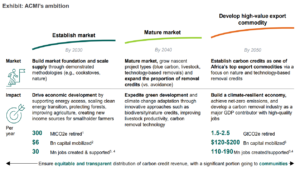
ACMI estimates the industry could bring in up to US$6 billion in revenue by 2030. By 2050, this could grow to US$120 billion. This growth may also create millions of jobs across the continent.
Cookstove projects are expected to remain an important part of that growth.
Unlike many industrial carbon projects, clean cooking programs deliver several benefits at the same time. They reduce greenhouse gas emissions, improve public health, lower fuel costs for families, reduce pressure on forests, and create local jobs.
That combination makes them attractive to buyers looking for carbon credits with measurable social and environmental impacts.
A New Benchmark for High-Integrity Cookstove Credits
Rwanda’s approval is about more than one carbon project, and it shows how carbon markets are changing.
Buyers are placing greater value on credits backed by strong accounting, government approval, and clear environmental benefits. Countries are also becoming more active, authorizing projects under Article 6 rather than relying solely on voluntary markets.
For Rwanda, the 5.69 million approved credits represent new climate finance that can support clean cooking, healthier communities, and forest protection.
For the wider market, the milestone shows that cookstove projects can meet some of the world’s highest carbon market standards.