

Econetix, a carbon project developer, has signed a million-dollar deal with RWE Supply & Trading. This agreement allows the German energy trader access to carbon credits for the international aviation market under CORSIA.
The deal, announced September 1, 2026, will see Vienna-based Econetix supply CORSIA-eligible carbon credits from its certified project portfolio. RWE will then market the credits to airlines and other buyers that need units for compliance.
The deal shows a major challenge for CORSIA: airlines might need many more eligible credits than the market can provide right now.
RWE Builds a New Bridge to Airline Carbon Buyers
Under the partnership, Econetix will provide CORSIA-eligible credits from its portfolio to RWE Supply & Trading. RWE will act as the intermediary. It will use its trading platform and customer network to connect the credits with airlines and other compliance-driven buyers.
The companies did not disclose the exact value or volume of credits covered by the agreement. Econetix described it as a million-dollar forward supply agreement.
A forward deal allows a buyer to secure future credit supply before all of the credits are ready for delivery. That can be useful in CORSIA because projects often need time to secure host-country approval, complete certification, and receive the required labels.
For developers, a committed buyer can also make future projects easier to finance. For RWE, the agreement adds another source of credits for customers preparing for CORSIA’s first compliance deadline.
CORSIA’s Carbon Credit Gap Is Getting Harder to Ignore
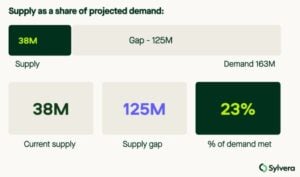
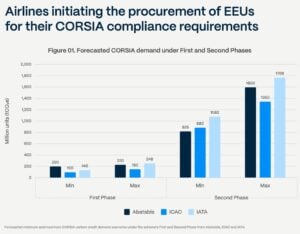
The timing reflects a major supply problem. ICAO’s latest CORSIA Eligible Emissions Unit Supply Project estimates 170 million to 236 million tonnes of demand during the 2024–2026 first phase. It puts eligible supply from 10 countries at about 36-38 million tonnes as of June 2026.
Sylvera data also shows a similar trend for the demand and supply gap for CORSIA credits.
ICAO estimates that the first phase could create a $4 billion to $5 billion climate investment opportunity for developing countries. These countries can provide eligible emissions units.
IATA’s June 2026 market update gives a similar warning. The main scenario shows a first-phase demand of 213 million tonnes. However, there are only 38 million tonnes of eligible units available. This results in a shortfall of about 175 million tonnes.
The small difference between the ICAO and IATA supply figures reflects timing and methodology. But both point to the same conclusion: CORSIA supply remains far below potential demand. That gap is creating stronger interest in forward agreements such as the Econetix-RWE deal.
What Makes a Credit CORSIA Eligible?
Not every carbon credit can enter the CORSIA market. ICAO maintains a specific list of approved emissions-unit programs and sets rules for eligible vintages and other conditions.
For the 2024–2026 first phase, eligible programs include standards such as:
- American Carbon Registry,
- Gold Standard,
- Verra’s Verified Carbon Standard, and
- Isometric, among others.
Credits also need to meet host-country requirements.
For many credits issued from 2021 onward, ICAO requires evidence linked to host-country authorization and corresponding adjustments. These rules help prevent a country from counting the same emissions reduction toward its own climate target after an airline uses the credit under CORSIA.
That makes CORSIA supply more difficult to build than a normal voluntary carbon project. A project may generate carbon credits, but that does not mean those credits are automatically eligible for aviation compliance.
Article 6 Is Becoming Central to CORSIA
The CORSIA market is also becoming closely linked to Article 6 of the Paris Agreement. Host countries must approve projects and follow accounting rules before credits can be used internationally.
Econetix says its portfolio includes projects with Article 6 Letters of Authorization and corresponding adjustments. Its earlier Rwanda cookstove project, for example, received authorization for up to 1.77 million tonnes of CORSIA supply.
In August, Econetix also secured a Ugandan authorization covering up to 10 million tonnes of CO2e from its clean cooking program for vintages from 2025 to 2030. The company described that as the largest single Article 6 authorization granted to a private company in Uganda.
These authorizations do not mean all 11.77 million tonnes will immediately become available to airlines. Projects still need to meet the relevant CORSIA and certification requirements.
But they show how host-country approvals can create a pipeline of future eligible supply.
Econetix Builds a Six-Country CORSIA Pipeline
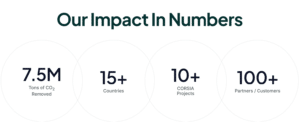
The RWE deal follows several other CORSIA-related transactions for Econetix. The company said it is advancing more than 10 projects across the Democratic Republic of Congo, Uganda, Tanzania, Malawi, Rwanda and Sierra Leone. It has already signed supply deals with SCB Environmental Markets and SmartestEnergy.
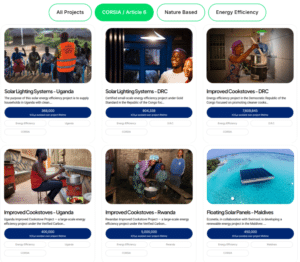
In July, Econetix also delivered its first Phase 1-tagged CORSIA credits under an earlier million-dollar agreement with a major international commodity trading house. That delivery is important because it shows a distinction between having a project pipeline and delivering credits that buyers can actually use.
Econetix’s new RWE agreement adds another commercial channel for future supply. For the company, the strategy appears to be moving from individual project development toward a broader CORSIA supply platform.
Airlines Race Toward the 2028 Compliance Deadline
CORSIA’s timing is putting pressure on buyers. The scheme’s first phase runs from 2024 through 2026. Airlines must then cancel the eligible emissions units needed to meet their obligations. ICAO’s timetable sets January 31, 2028 as the deadline for cancellation of units linked to the first compliance period.
That means airlines do not simply need credits eventually. They need qualifying units ready for use ahead of the deadline.
ICAO says 130 states will participate in CORSIA from 2026, increasing to 134 states from 2027, together covering about 85% of international aviation emissions. As participation grows, the need for eligible units could increase. This is one reason airlines, traders and other buyers are securing supply early.
The CORSIA Credit Crunch Could Reward Early Supply
CORSIA is moving toward a larger compliance market. IATA estimates airlines might buy over 200 million credits in the first phase, valued at $4 billion to $5 billion. Demand could reach almost 2 billion credits by 2035.
ICAO estimates a first-phase supply gap of up to 200 million tonnes, while IATA puts the gap at about 175 million tonnes in its central scenario.
That shortage makes forward deals such as the Econetix-RWE agreement more important. The deal gives RWE access to future CORSIA-eligible credits while giving Econetix a route to airline and other compliance buyers.
However, projects still need financing, host-country approval, validation, verification, and CORSIA eligibility before they can deliver credits. With airlines facing a January 2028 deadline to cancel units for the first compliance period, securing reliable future supply is becoming increasingly important.