


Cypress Creek Energy has brought its new Ostrea Solar project online in Washington state, adding 104 MWdc of solar capacity to a region facing rapidly rising electricity demand.
The $180 million project in Yakima County is backed by a long-term power purchase agreement (PPA) with Microsoft (MSFT Stock). The technology giant will purchase electricity and environmental products generated by the facility, making it the project’s long-term offtaker.
Ostrea Solar is the latest example of how large technology companies are using long-term clean energy contracts to secure renewable power while supporting new generation capacity.
The project began commercial operations as Washington’s economy continues to expand. According to Cypress Creek, the state recorded annualized real GDP growth of 4.5% in the first quarter of 2026, more than twice the national rate. The information sector was one of the main contributors, highlighting the growing relationship between Washington’s technology economy and electricity demand.
Microsoft Backs New Washington Solar Capacity
Ostrea Solar is connected to the Bonneville Power Administration transmission system and provides 80 MWac of generation capacity to the regional grid.
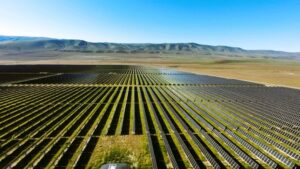
Microsoft’s agreement covers both the electricity and environmental products produced by the facility. While the company has been expanding its renewable energy procurement across the U.S., projects such as Ostrea are particularly important because they add new generation rather than simply relying on existing clean power.
The timing is significant. Electricity consumption is rising as technology companies, data centers and other businesses expand their operations. More power generation and transmission infrastructure will be needed to meet that demand while supporting Washington’s broader economic growth.
Cypress Creek CEO Kevin Smith said the project demonstrates how new power capacity can be developed while also creating benefits for local communities and protecting the land around energy projects.
The project represents a private investment of approximately $180 million in Washington’s energy infrastructure.
U.S. Solar Capacity Continues to Climb
Ostrea is entering a U.S. solar market that has expanded rapidly over the past decade.
- The U.S. had about 225.6 GW of estimated solar photovoltaic capacity by June 2026, including utility-scale and small-scale systems, according to the U.S. Energy Information Administration.
Solar is also expected to remain a major source of new U.S. electricity capacity. The EIA expects solar to account for 51% of planned utility-scale generating capacity additions in 2026. Developers are expected to add another 86 GW of total utility-scale capacity this year if all planned projects are completed.
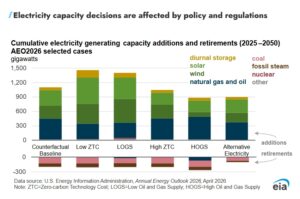
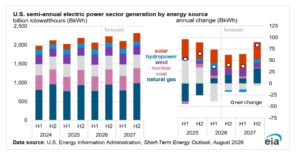
The growing solar fleet is already having an impact on electricity generation. Utility-scale solar generation increased 34% in 2025, while small-scale solar generation rose 11%, according to the EIA.
Projects such as Ostrea therefore fit into a much larger shift in the U.S. power market, where renewable generation is increasingly being built to serve utilities and large corporate customers.
- ALSO READ: Microsoft and Avangrid Team Up on 140MW Solar Project to Power AI Growth and Net Zero Goals
Cypress Creek Prioritizes Land Conservation at Ostrea Solar
Cypress Creek says Ostrea was developed with land management and environmental protection as key priorities.
During development, the company worked with Washington’s Energy Facility Site Evaluation Council and the Washington Department of Fish and Wildlife. The project design was modified to conserve about 275 acres of shrubsteppe habitat.
Shrubsteppe is an important ecosystem in Washington, supporting a range of plants and wildlife. Much of the state’s historic shrubsteppe has been lost or degraded because of agriculture and development.
Ostrea also includes wildlife corridors intended to preserve movement through the project area. Those corridors can help species such as Rocky Mountain elk continue to move across the landscape.
Land restoration is another part of the project’s environmental strategy.
Some areas of the site were formerly used as cropland but had not been actively farmed for more than two decades. Invasive and non-native vegetation had taken hold in parts of the property.

Promising Long-Term Stewardship
During construction, Cypress Creek removed invasive plants and restored disturbed areas. The company then planted a mix of grasses and flowering species designed to support native vegetation and pollinators.
The approach highlights a broader issue facing utility-scale solar development. Solar facilities require land, but the entire project area is not covered by panels. Vegetation can remain beneath and around many solar arrays, allowing developers to combine electricity generation with land management.
Cypress Creek plans to own and operate Ostrea for up to 40 years. The company says its goal is to leave the property in good condition when the project’s operating life ends, preserving options for future land use.
$180 Million Investment Creates Local Economic Benefits
Beyond electricity generation, Ostrea is expected to provide a long-term economic contribution to Yakima County.
Cypress Creek estimates the project will generate approximately $13.3 million in state and local tax revenue over its operating life.
Construction was also a significant source of employment. About 300 jobs were created during the development and construction phase, with workers paid prevailing wages.
The project included an apprenticeship program designed to provide workers with experience in construction trades. Around 75 apprentices contributed approximately 39,000 hours to the project.
PCL Solar Constructors USA served as the engineering, procurement, and construction contractor.
Cypress Creek also reported that the project completed construction without a recordable injury or incident.
Community Investment Extends Beyond the Solar Site
The company has also made investments in the surrounding Yakima community.
Cypress Creek contributed $50,000 toward a new aquatic center at Martin Luther King Jr. Park in Yakima. It also participated in a back-to-school initiative at Moxee Elementary School with PCL.
Through its Energizing Tomorrow’s Leaders program, the company has provided scholarships to 14 Yakima County students since 2023. The scholarships represent $18,500 in educational support.
The company has also partnered with the Oregon Institute of Technology on scholarships and educational opportunities for students pursuing energy-related careers.
These initiatives are designed to extend the economic benefits of the project beyond construction and electricity generation.
Microsoft Links Renewable Energy to Rising Power Demand
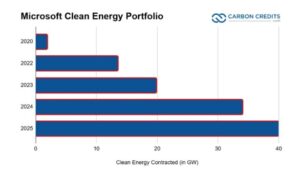
Microsoft already operates one of the largest corporate renewable energy portfolios globally. According to its sustainability reporting, it has 40 gigawatts (GW) of contracted capacity across 26 countries. This scale puts Microsoft among the world’s largest corporate buyers of clean electricity.
Its renewable energy strategy is increasingly tied to the growing electricity needs of digital infrastructure, particularly as data centers and artificial intelligence workloads expand.
Ostrea Shows the Next Phase of Solar Development
Ostrea combines corporate clean energy demand with private investment, job creation, land restoration, and long-term environmental management. Cypress Creek will operate and maintain the facility throughout its expected operating life, including its electricity generation, vegetation management, and land stewardship.
As U.S. solar capacity continues to expand, projects such as Ostrea show that renewable development is about more than adding panels. New projects will increasingly need to balance rising power demand with grid needs, environmental protection, and economic benefits for local communities.