

The U.S. Environmental Protection Agency (EPA) has moved to dismantle federal limits on carbon emissions from coal- and natural gas-fired power plants, marking a major shift in U.S. climate policy.
On September 14, 2026, the EPA finalized a repeal of most of the greenhouse gas requirements in the Biden administration’s 2024 power plant rule. At the same time, it proposed removing the remaining federal greenhouse gas standards for fossil-fuel power plants.
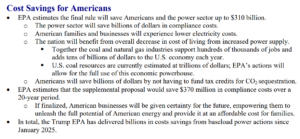
EPA Administrator Lee Zeldin said the changes will reduce costs and make it easier to expand U.S. power generation. The agency estimates that the finalized repeal could save the power sector and consumers up to $310 billion. Additionally, the proposed repeal might save another $370 million in compliance costs over 20 years.
The move comes as the U.S. faces rising electricity demand from data centers, manufacturing, and other industries. But it also removes a major federal tool for cutting power-sector emissions.
What the EPA Is Repealing
The Biden EPA finalized its Carbon Pollution Standards in April 2024. The rules covered existing coal-fired plants and new natural gas-fired power plants. The agency wrote:
“U.S. EPA is repealing the most burdensome greenhouse gas emissions standards from the EPA’s 2024 Carbon Pollution Standards (CPS), while simultaneously working to cement long-term energy prosperity by proposing to repeal the remaining Obama-Biden Greenhouse Gas (GHG) emission standards for the power sector.”
For existing coal plants, the rules relied heavily on carbon capture and storage (CCS) for units planning to operate for longer periods. New long-term natural gas plants also faced emissions limits based on technologies including CCS and lower-carbon fuels.
The Trump EPA now says those requirements were too costly and depended on technologies that are not available at the required scale. The agency specifically determined that 90% carbon capture was not adequately demonstrated or cost-effective for coal plants.
It also rejected natural gas co-firing as an appropriate emissions-control approach for existing coal units. Most of these requirements have now been removed.
The EPA is asking for public feedback on a plan to remove all remaining greenhouse gas standards for fossil-fuel power plants. This is under Section 111 of the Clean Air Act. That part is still a proposal, rather than a final repeal.
EPA Says Repeal Will Lower Energy Costs
The Trump administration argues that the rules could have forced utilities to spend heavily on emissions controls or retire plants earlier than planned. The EPA says repealing them will reduce compliance costs and make it easier to build and operate coal and natural gas generation.
Its September 2026 fact sheet estimates up to $310 billion in savings from the finalized repeal. It says the changes will also reduce barriers to new power projects and support greater use of domestic coal and natural gas. This argument comes as electricity demand is rising.
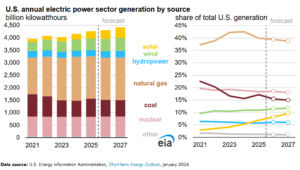
The U.S. Energy Information Administration expects electricity generation to reach new records in 2026 and 2027. It forecasts natural gas to provide about 40% of U.S. electricity generation in 2026, while coal’s share falls to about 16%.
Data centers are one source of the increase. Manufacturing growth and higher cooling demand are also adding pressure to the grid.
U.S. Power Emissions Jump as Electricity Demand Grows
The timing of the repeal is important because U.S. power sector emissions increased in 2025. EIA estimates that carbon dioxide emissions from the electric power sector rose 4%, or 58 million metric tons, in 2025.
- Electricity generation increased by 3%, while coal-fired generation jumped 13%.
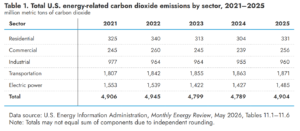
Coal-related power emissions rose by 78 million metric tons during the year. That increase reversed part of the longer decline in U.S. power-sector emissions.
Natural gas remains the largest source of U.S. electricity generation, but coal still produces much more CO2 per unit of electricity. EIA expects coal’s share of generation to decline over the next two years as scheduled retirements continue, even as overall power demand grows.
This means the EPA rollback does not guarantee a major increase in coal generation. Market forces, plant economics and the growth of lower-cost renewable power will continue to influence the generation mix.
Biden EPA Projected Large Emissions Cuts
The disagreement over the rules is partly about their expected climate benefits.
The 2024 EPA analysis projected that the standards would reduce power sector carbon pollution by 1.38 billion metric tons between 2028 and 2047. It also estimated up to $370 billion in climate and public health net benefits over two decades.
The agency’s analysis predicts that by 2035, the rules could reduce annual power sector CO2 emissions by 123 million metric tons. This is compared to a scenario without the standards. Those projected benefits will now largely disappear if the federal standards are fully removed.
The Trump EPA disputes the earlier estimates and argues that the rules relied on unrealistic technology assumptions and would have imposed unnecessary costs. The difference reflects two very different views of how the U.S. should decarbonize its electricity system.
CCS Loses a Major Policy Driver
The repeal also has implications for the U.S. carbon capture market. The 2024 rules helped create a potential market for CCS at coal and gas plants because some facilities would have needed major emissions reductions to comply.
Removing those requirements weakens one of the strongest federal policy drivers for power sector CCS. Yet, that does not mean CCS development will stop.
Federal tax incentives for carbon capture remain available, and companies in sectors such as cement, steel, chemicals and natural gas processing continue to explore the technology. However, power plants now have less regulatory pressure to install expensive capture systems.
For the carbon market, this is an important distinction. Capturing and permanently storing CO2 from a fossil fuel power plant is not automatically the same as generating a tradable voluntary carbon credit. Its value may instead come through regulatory compliance, tax incentives or corporate climate claims, depending on the project.
States and Corporate Buyers Can Still Push Cleaner Power
The federal rollback does not end climate regulation across the United States. States can maintain their own emissions rules, renewable energy standards and climate policies.
California and other states already have systems that require significant reductions in power-sector emissions. Utilities also face pressure from investors, customers and large electricity buyers.
Technology companies building data centers are increasingly looking for cleaner electricity to meet their own emissions targets. That creates another market force supporting renewable energy, storage and low-carbon generation even as federal climate rules are weakened.
The U.S. power market will likely stay split. Some states and companies are pushing for lower-carbon electricity. Meanwhile, federal policy supports more fossil fuel development.
What the EPA Rollback Means for Carbon Markets
The EPA’s decision could have effects well beyond power plants. The U.S. electric power sector produced about 1.485 billion metric tons of energy-related CO2 in 2025, making it a major source of emissions.
Removing federal carbon limits could make deeper emissions cuts harder and change investment decisions across coal, gas, renewables, storage and carbon capture. It also highlights the importance of policy risk for carbon markets, where project economics can depend on regulations, tax credits and carbon prices.
The move marks a major shift from the Biden administration’s approach, which used emissions standards to push utilities toward cleaner technologies. The Trump administration argues those rules would raise costs and threaten power reliability.
Meanwhile, electricity demand is rising due to data centers, manufacturing and electrification. Solar, wind, storage and natural gas will compete to meet that growth, while EIA still expects coal’s share of U.S. generation to decline.
The key question is whether market forces, state policies and corporate clean energy demand will continue to reduce emissions—or whether the federal rollback will slow that progress.