

Google is taking a long-term stake in Finland’s low-carbon energy future. The technology giant has signed a 22-year power purchase agreement (PPA) with Finnish utility Fortum covering up to 50% of the generation capacity of the Loviisa nuclear power plant.
The press release says that the agreement will help Fortum finance investments needed to extend Loviisa’s operating life through 2050. It will also support a planned power upgrade at the plant.
The Loviisa Deal Puts Nuclear at the Center
The most important part of the partnership is the long-term PPA.
- The agreement starts in 2028 with a smaller contracted capacity. From 2030 through 2049, Google will contract up to 50% of Loviisa’s generation capacity.
It gives Fortum something particularly valuable for a large nuclear investment: long-term revenue visibility.
Fortum is already pursuing an approximately €1 billion investment program to extend Loviisa’s operating life to 2050. About €700 million of the required capital expenditure is still pending investment decisions.
The Google agreement provides additional certainty to move ahead with those investments. This matters significantly because Loviisa is not a marginal asset for Finland.
Loviisa nuclear plant
Keeping 10% of Finland’s power online
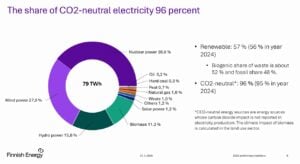
The plant currently provides about 10% of Finland’s electricity and employs approximately 580 people. Without the lifetime extension investment program, Loviisa would not be able to continue operating beyond 2030.
Extending the plant to 2050 therefore allows Finland to retain a large source of reliable, fossil-free electricity instead of losing that capacity at the end of the current operating period.
Additionally, the agreement could also increase the plant’s output. Fortum already has plans for a 38-megawatt capacity increase, expected to be operational in 2028. The new partnership with Google could support an additional 10 MW increase.
For Finland’s electricity system, keeping existing nuclear generation online while adding capacity can help strengthen supply without waiting years for entirely new large-scale generation projects.
Google’s Finland Bet Goes Beyond Nuclear Power
But the partnership goes beyond nuclear power.
The companies have also agreed to explore new nuclear generation, renewable energy and flexibility solutions. The companies are effectively building a broader framework for expanding reliable, low-carbon electricity across Finland.
- Google plans to invest €13 billion in Finland during 2027 and 2028. The investment will include data centers, supporting infrastructure and partnerships in Hamina, Muhos, Vaala and Kajaani.
Fortum has an 8 GW renewable pipeline in the Nordic countries currently in the permitting phase. The company aims to have 1.2 GW of ready-to-build renewable projects and 2.5 GW of new flexibility services and generation assets ready to deploy by the end of 2028.
Google’s partnership could help create demand for some of that future capacity and create a much broader clean-energy strategy.
The companies also want to explore how nuclear, renewable energy and flexibility technologies can work together as electricity demand changes. However, for Fortum, the immediate focus is clear: keep a major source of Finland’s fossil-free electricity online for another two decades.
Batteries join the equation
The first example is already taking shape in Kajaani. The deal will help optimize a new 94 MW battery storage system that Google has contracted for near its new data center.
Battery storage can help balance variable renewable generation and provide additional flexibility to the electricity system. It makes the partnership broader than a traditional nuclear PPA.
Google’s Clean-Energy Portfolio is Expanding
The Fortum agreement also fits into Google’s rapidly expanding clean-energy portfolio.
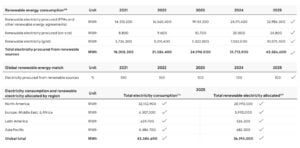
- In 2025, Google struck more than 12 GW of net-new clean energy deals. It was the company’s largest annual clean-energy procurement and exceeded the combined amount it contracted during the previous two years.
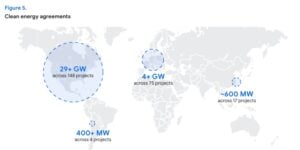
Since 2010, it has signed more than 240 clean-energy agreements representing nearly 35 GW of capacity. It also reported a 37% increase in electricity demand in 2025.
- Despite that increase, Google said it reduced operational emissions by 2% and matched 100% of its electricity consumption with renewable energy purchases for the ninth consecutive year.
- Its energy, hardware and computing-efficiency initiatives also avoided more than 58 million metric tons of CO2 equivalent in 2025.
The Nuclear Strategy Extends Beyond Finland
The Loviisa agreement is not Google’s only nuclear commitment. The company has signed landmark nuclear agreements earlier, and they are:
Geothermal, storage and fusion broaden the bet
In Taiwan, Google signed geothermal agreements expected to add 10 MW of always-on geothermal power to the grid and made an equity investment in Baseload Capital.
Google is also supporting long-duration energy storage through its partnership with Energy Dome. Its CO2 Battery technology is designed to store renewable electricity and discharge it over eight to 24 hours.
Together, however, they show Google’s willingness to support a wide range of technologies that could contribute to a more resilient low-carbon electricity system.
A Nordic Model for Clean Energy
The Loviisa deal shows how big companies can support the wider energy transition, not just buy clean electricity. Google’s long-term demand gives Fortum greater certainty to keep Loviisa running through 2050 and develop new renewable, storage and nuclear capacity.
Google’s €13 billion investment in Finland adds to this strategy by expanding its footprint and supporting the country’s low-carbon energy system. The partnership could become a model for using corporate demand and investment to strengthen clean energy infrastructure across Finland and the Nordic region.