

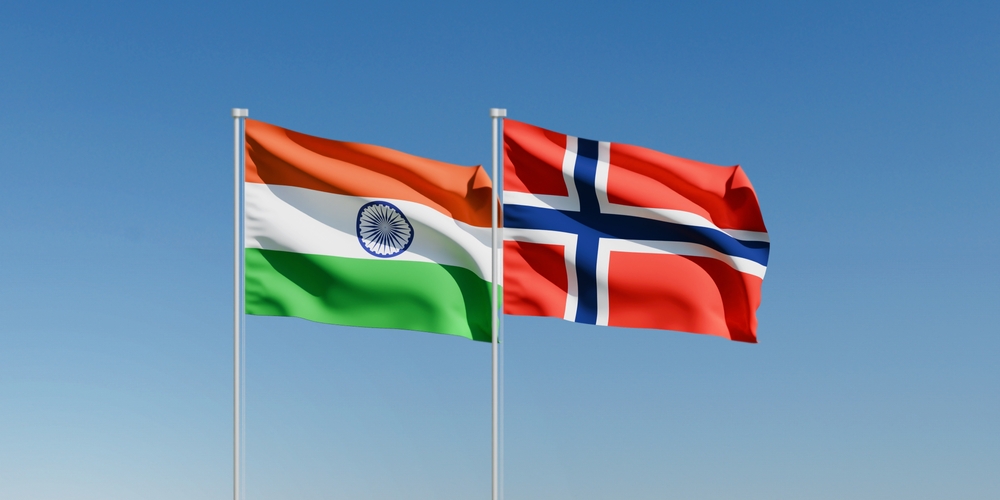
India and the Nordic countries are strengthening their partnership in clean energy, technology, and sustainable development. At the 3rd India-Nordic Summit in Oslo, India’s Prime Minister Narendra Modi met with leaders from Denmark, Finland, Iceland, Norway, and Sweden. They launched the Green Technology and Innovation Strategic Partnership.
This summit showcased a bond built on trust, sustainability, and economic cooperation. With climate change and energy security challenges, both sides agreed that stronger partnerships are essential for a resilient future.
The partnership expands cooperation in renewable energy, digital infrastructure, defense manufacturing, Arctic research, maritime security, and trade. It also supports India’s goal of enhancing its clean energy transition with global partners.
India and Nordic Countries Deepen Green Cooperation
The Green Technology and Innovation Strategic Partnership focuses on climate action, energy security, water management, and the blue economy. This builds on India’s earlier partnerships with Norway and Denmark.
During the summit, PM Modi highlighted how the partnership combines India’s scale with Nordic strengths. Iceland offers expertise in geothermal energy and fisheries. Norway excels in the blue economy and Arctic technologies. Sweden provides advanced manufacturing and defense. Finland supports telecom and digital innovation, while Denmark leads in sustainability, health tech, and cybersecurity.
These strengths can lead to new solutions for global climate and energy challenges.
The leaders discussed how clean technologies can boost economic growth and reduce emissions. They agreed innovation and sustainability should go hand in hand. As nations aim to decarbonize, partnerships like this could be vital for scalable green solutions.
Nordic Countries Lead the Renewable Energy Transition
The Nordic region excels in renewable energy. Over the past two decades, these countries have significantly increased their renewable energy share.
As per data, in 2004, shares varied from 9.5% in Greenland to 58.9% in Iceland. By 2023, those shares grew to between 19.1% in Greenland and nearly 80% in Iceland.
Sweden, Finland, and Denmark surpassed the EU’s 2030 renewable energy target of 42.5% in 2023. Iceland and Norway achieved even higher shares. This strong performance positions the Nordic countries as global leaders in clean energy.
While hydropower remains dominant, offshore wind, solar energy, and green hydrogen are rapidly growing.
- The Nordic renewable energy market was valued at 121.32 gigawatts in 2025 and may reach 183.7 gigawatts by 2031, with a compound annual growth rate (CAGR) of 7.15%.
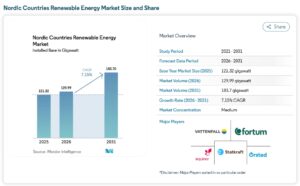
This growth is driven by large hydropower assets, expanding offshore wind projects, rising corporate demand for clean electricity, and investments in green hydrogen. Strong carbon pricing systems and advanced power grids also support this expansion.
Solar energy is expected to grow significantly, with an 18.24% CAGR through 2031. Finland is projected to be the fastest-growing renewable energy market in the region.
- ALSO SEE: Frontier Backs Norway’s First Carbon Capture Retrofit! Is This the Future of Waste-to-Energy?
India’s Clean Energy Goals Gain Global Support
India is rapidly increasing its renewable energy capacity. The country aims for 500 GW of non-fossil fuel energy by 2030 and net-zero emissions by 2070.
To support these goals, India has signed clean energy agreements with countries like Australia, Germany, Japan, the U.S., and now the Nordic nations. These partnerships focus on:
- Solar and wind power
- Green hydrogen and ammonia
- Battery energy storage
- Smart grids and transmission
- Clean technology R&D
- Renewable energy financing
India allows 100% foreign direct investment (FDI) in the renewable sector. This aims to attract global investors and advanced technologies.
At the summit, Modi noted that trade between India and the Nordic region has quadrupled in the last decade. Nordic investments in India rose by nearly 200% during this time, reflecting growing economic confidence.
The leaders stressed the need for new trade agreements. Modi mentioned the Trade and Economic Partnership Agreement (TEPA) with the European Free Trade Association, which includes Iceland and Norway. He also highlighted ongoing talks for a free trade agreement with the EU, which includes Denmark, Sweden, and Finland.
According to Modi, these agreements could lead to “a new golden era” in India-Nordic relations.
Defence, Digital Technology, and Arctic Cooperation Expand
Beyond renewable energy, the summit focused on defense and advanced technologies.
India and the Nordic nations agreed to boost defense cooperation. India promotes domestic manufacturing through initiatives like “Make in India.” Nordic companies are encouraged to invest in India’s defense corridors, where the government allows 100% FDI in specific sectors.
The countries also agreed to collaborate on next-gen communication technologies, like 6G, artificial intelligence, and digital infrastructure.
Arctic cooperation was another major topic. The leaders discussed joint efforts in polar research, environmental monitoring, and climate studies. As climate change accelerates ice melt in the Arctic, scientific cooperation is increasingly vital.
The summit also supported greater mobility for students, researchers, and skilled professionals between India and Nordic countries. Expanding educational and research partnerships could strengthen innovation on both sides.
A Shared Push Toward a Low-Carbon Future
This partnership comes at a crucial time for the global energy transition. Fossil fuels still dominate much of the world’s energy and are the largest source of greenhouse gas emissions, contributing to air pollution and millions of premature deaths each year.
Countries are under pressure to speed their shift to cleaner energy systems based on renewables, nuclear power, and low-carbon technologies.
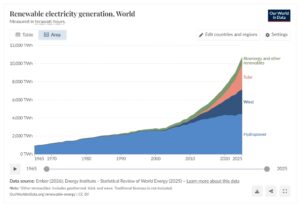
Today, renewable technologies supply about one-seventh of the world’s primary energy. While this share grows, progress must accelerate to meet global climate targets.
India and the Nordic countries are committed to being part of the solution. By combining Nordic innovation with India’s scale and growing clean energy demand, this partnership could speed up the development of affordable and scalable green technologies.
The Oslo summit showed that clean energy partnerships support economic growth, boost technology leadership, enhance energy security, and foster geopolitical cooperation.
The India-Nordic partnership is expanding in renewable energy, trade, defense, and digital innovation. This collaboration could serve as a model for future international green efforts.