

Chinese battery giant Contemporary Amperex Technology Co. Ltd. (CATL) and tech leader Tencent are joining a new effort to revive demand in global carbon markets. The companies are teaming up with Mitsubishi Corporation, Vale S.A., and Osaka Gas. They aim to buy high-quality carbon credits through a Singapore-based coalition, Action for a Resilient Climate Coalition. The group aims to help finance at least 10 million tonnes of carbon credits by 2030.
The move comes during a challenging period for voluntary carbon markets (VCMs). Carbon credit prices and trading volumes dropped over the last two years. VCMs continued to contract in 2025 as stricter quality standards reduced liquidity. However, demand for high-integrity credits remains strong.
Still, pressure to cut emissions keeps rising. Governments are tightening climate rules. Companies are also facing stronger investor pressure to meet net-zero goals.
This is creating a major shift in the carbon market. Large corporations are no longer buying offsets casually. They are forming long-term buying partnerships that focus on better carbon credits and stronger verification systems.
XU Hao, VP of Sustainable Social Value in Tencent, remarked:
“The carbon market has immense potential to drive necessary climate finance, but it must be built on a foundation of absolute trust and scientific rigor.”
A Shift From Volume to Quality in Carbon Credits
The voluntary carbon market grew rapidly between 2020 and 2022. Hundreds of companies bought carbon credits to support climate pledges and net-zero targets.
However, the market slowed after investigations questioned the effectiveness of some forestry and avoided-emissions projects. Buyers became more cautious. Many companies also reduced public use of offset-heavy climate claims. This affected carbon prices and trading activity, as shown in the chart below.
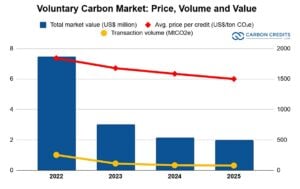
MSCI Carbon Markets reports that the VCM value dropped sharply from its 2021 peak. This decline happened as demand weakened and credit oversupply grew in many project categories.
Even so, long-term forecasts still show strong future growth.
McKinsey estimates that by 2030, global demand for carbon credits could hit 1.5 to 2 billion tonnes each year under net-zero scenarios. The World Bank also reports that carbon pricing systems now cover about 24% of global greenhouse gas emissions. This includes carbon taxes and emissions trading systems worldwide.
At the same time, demand is shifting toward higher-quality projects. Durable carbon removal credits from technologies like biochar, direct air capture, and enhanced weathering are gaining attention. They can store carbon for hundreds or even thousands of years.
This changing market helps explain why companies like CATL and Tencent are stepping in now.
CATL Brings Industrial Scale to Climate Action
CATL is already one of the world’s largest battery makers. The company supplies batteries to many leading electric vehicle manufacturers globally. As battery production expands, pressure is also growing to reduce emissions across mining, manufacturing, logistics, and electricity use.
CATL says it aims to achieve carbon neutrality across its core operations by 2025 and throughout its entire battery value chain by 2035. The company has already made significant progress.
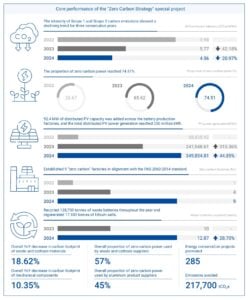
According to CATL’s latest ESG updates, the company now operates several certified zero-carbon factories in China. Zhaoqing’s battery plant is now carbon neutral. It achieved this by using renewable electricity, solar power, energy efficiency upgrades, and carbon offsets.
CATL also reported that renewable electricity now powers major parts of its production network. The company reached carbon neutrality in its core operations by 2025 while continuing to cut emissions from suppliers.
Battery recycling is also becoming a larger focus.
- In 2025, CATL recycled about 210,000 tonnes of used batteries, up more than 63% year over year. The company also regenerated 24,000 tonnes of lithium salts through recycling systems.
Battery supply chains are now a key focus in global climate policy. So, these sustainability efforts are important. Europe, China, and the United States are all introducing stricter emissions reporting and battery sustainability requirements.
Tencent Sees Carbon Markets as Part of Its Net-Zero Strategy
Tencent is also expanding its climate commitments. The company pledged to achieve carbon neutrality across its operations and supply chain by 2030. It also aims to use 100% renewable electricity across all operations by the end of the decade.
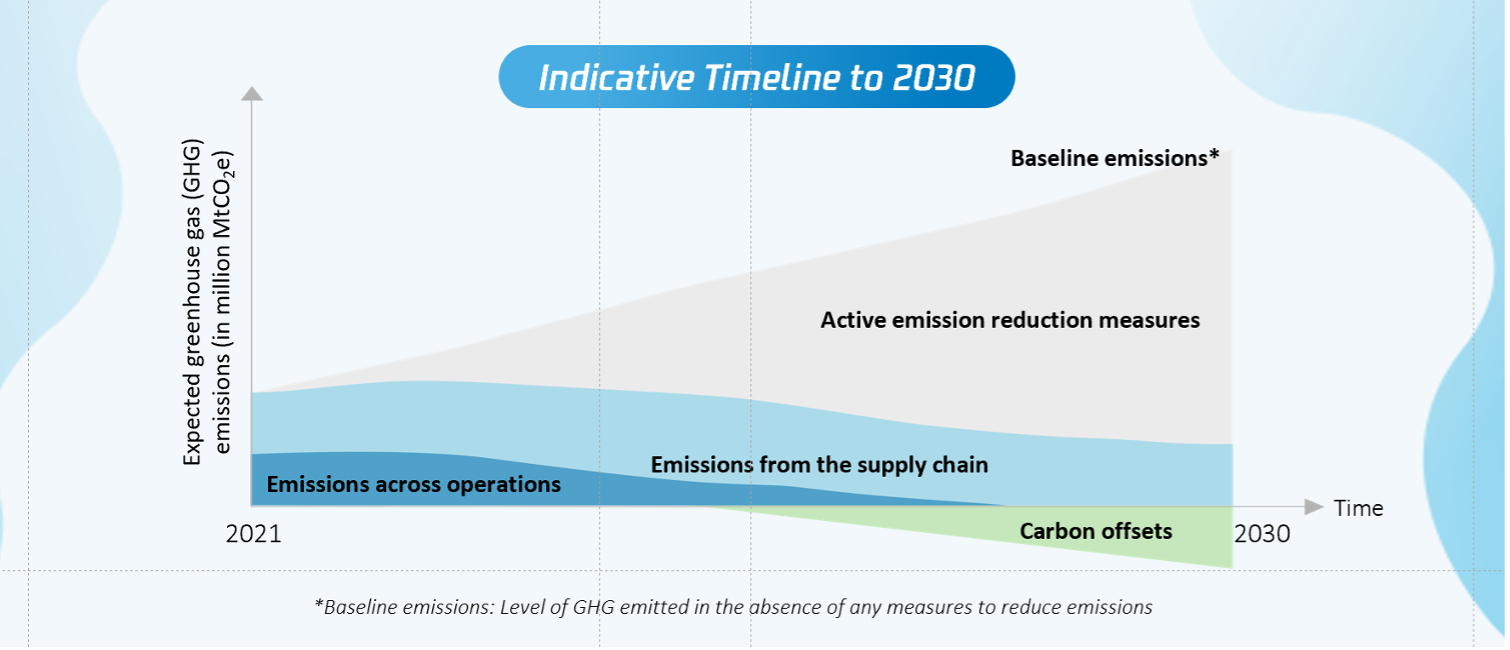
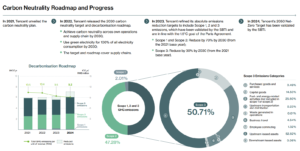
Tencent’s climate targets have already been validated by the Science Based Targets initiative (SBTi). The company plans to reduce Scope 1 and Scope 2 emissions by 70% by 2030 from a 2021 baseline. It also targets a 30% reduction in Scope 3 emissions.
The company’s emissions profile shows why carbon markets are becoming important.
The Chinese tech giant reported total greenhouse gas emissions of 6.06 million tonnes of CO2e in 2024, up from 5.79 million tonnes in 2023. Roughly 54% came from supply chain emissions, while data centers and purchased electricity accounted for the remaining emissions.
As Tencent expands AI infrastructure and cloud computing services, electricity demand will likely continue rising. The company is investing a lot in renewable energy, green data centers, and digital emissions management systems. It also plans to use a small number of high-quality carbon offsets for emissions that are hard to eliminate directly.
This reflects a broader trend across the technology industry. AI and cloud computing are increasing electricity demand worldwide. Many technology firms are now looking for carbon-free electricity and credible carbon removal systems to help meet climate goals.
China’s Carbon Market Is Growing Quickly
China’s carbon market is expanding as climate policy tightens. The national ETS launched in 2021 and now covers about 4 billion tonnes of CO₂ annually, making it the world’s largest compliance carbon market by emissions covered.
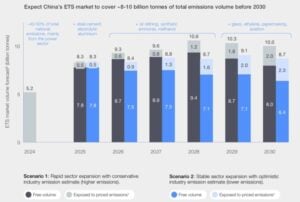
The system currently focuses on the power sector. But it is expected to expand to steel, cement, aluminum, and chemicals, which together account for a large share of China’s industrial emissions. As shown above, China’s ETS could cover about 10 million tonnes of emissions before the decade’s end.
China also restarted its voluntary carbon market (CCER) in 2024 after years of suspension. The updated system introduced stricter project rules and verification standards to improve credit quality and investor trust.
The world’s largest carbon emitter also aims to peak emissions before 2030 and reach carbon neutrality by 2060. Meeting these goals will require massive investment in clean energy, storage, EVs, hydrogen, and carbon capture.
- SEE MORE: China Expands Carbon Reporting to Airlines and Heavy Industry in Major Climate Disclosure Shift
CATL is closely tied to this shift. The company expects 20%–30% annual growth in battery demand over the next five years, driven by EVs, grid storage, and AI-related electricity demand.
AI and Electricity Demand Reshape Carbon Strategy
AI is now reshaping carbon and energy markets. Data centers and AI training systems use large amounts of electricity, and demand is rising fast.
The International Energy Agency (IEA) projects global data center electricity use could reach 945 TWh by 2030, more than double current levels under high-growth AI scenarios. This is pushing companies to secure cleaner and more reliable power sources. It also increases pressure to reduce emissions across supply chains.
Battery storage is becoming a key solution. CATL is expanding beyond EV batteries into grid-scale storage, which helps balance renewable energy and support AI-driven power demand.
At the same time, many companies still rely on carbon credits for emissions they cannot yet remove directly. This is linking carbon markets more closely with electricity systems, industrial supply chains, and energy infrastructure.
Carbon Markets Are Entering a More Structured Phase
The CATL–Tencent initiative reflects a wider shift in carbon markets. The focus is moving from short-term offset buying to long-term, structured demand. Companies are now prioritizing:
- stronger verification standards,
- higher-quality carbon removal projects,
- longer-term purchase agreements, and
- better market transparency.
For companies like CATL and Tencent, carbon credits are no longer just ESG tools. They are becoming part of core energy and net-zero strategies. As governments tighten climate rules, carbon market systems for tracking, verification, and trading emissions may become just as important as the credits themselves.