

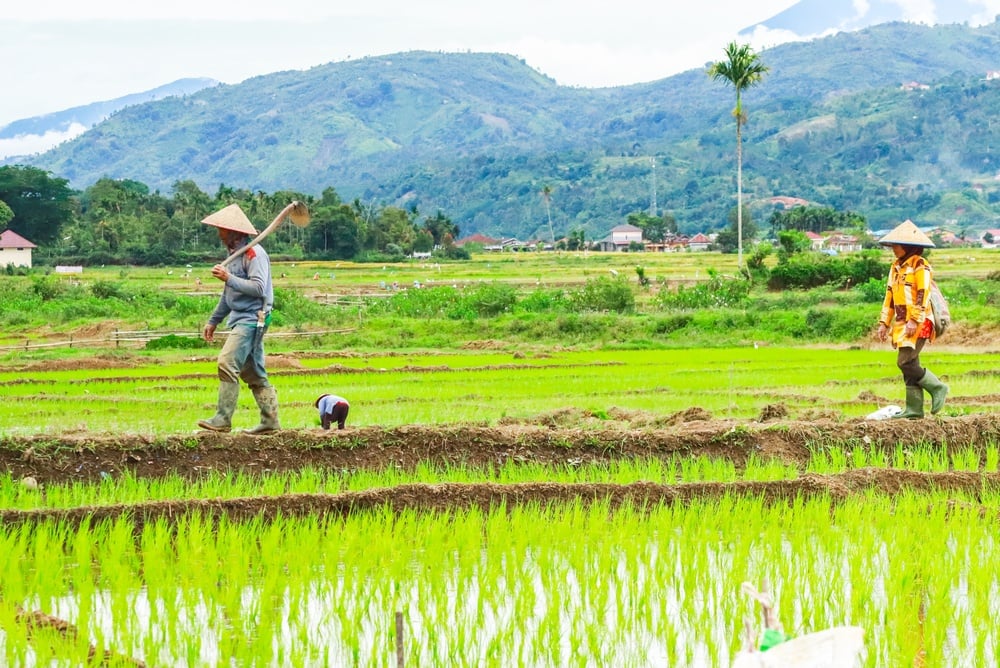
Indonesia has introduced new rules for carbon credit projects in farming. The regulation requires businesses to work with farmer groups and agree on how to share the benefits from these projects. It covers rice farming, livestock and plantations.
The new rule explains how agricultural projects can earn carbon credits, how emissions cuts must be checked, and how farmers should take part. The Indonesian Ministry of Agriculture issued Minister of Agriculture Regulation No. 18 of 2026 on October 6. It was published on October 12 and is set to take effect three months later.
The rules come as Indonesia builds its wider carbon market. Its national carbon exchange had recorded more than 1.6 million tonnes of carbon credits traded by July 2025, with a total transaction value of about US$4.7 million. More than 100 organizations had registered to use the exchange.
The new agricultural rules aim to give farming projects a clearer path into this market while setting conditions for farmer participation and benefit-sharing.
Opening Carbon Trading for Rice, Livestock and Plantations
The new regulation covers three main parts of agriculture: rice farming, livestock and plantations. Projects can earn carbon credits by cutting greenhouse gas emissions or storing more carbon in soil and plants.
Possible activities include changing how rice fields are watered, using lower-emission crop varieties, applying the right amount of fertilizer and improving the handling of crop waste and animal waste.
Other options include improving soil health, planting trees and other long-living crops, restoring damaged farmland and using farming methods that protect the soil. These activities can help reduce emissions or store more carbon. For example, changing how rice fields are watered can lower methane emissions. Better soil management can also help keep carbon in the ground.
Businesses, government agencies and farmer groups may take part in these projects. The rules explain how they can work together to reduce emissions and support Indonesia’s climate goals.
Businesses Must Agree to Share Benefits With Farmers
One of the most important parts of the regulation is its requirement for businesses to work with farmer groups.
Under Article 4, businesses involved in agricultural carbon trading must work with at least three farmer organizations near the project site. The number and choice of groups must consider factors such as the size of the business’s land area and its operations.
The business and the farmer groups must sign a written agreement. It must explain what each side will do, how benefits will be shared and how long the agreement will last. Farmers must also give free, prior and informed consent. In simple terms, they must receive clear information and agree to take part without pressure.
The regulation does not set one fixed percentage of carbon revenue for farmers. Instead, the share must consider several factors, including:
- Cost of technology,
- Size of the land or business,
- Amount of emissions reduced, and
- Number of carbon credits generated.
This means the benefit-sharing arrangement can differ from one project to another.
Farmer groups can also run carbon credit projects themselves through a cooperative or another business. They may also work with outside partners that provide funding, as long as the parties agree on how to share the benefits.
The rules give farmer groups a formal role in carbon projects. They are not simply expected to provide land or help carry out farming activities.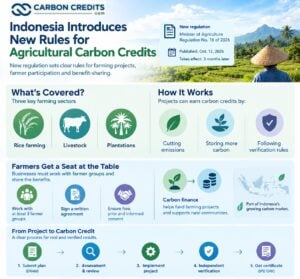
Projects Must Prove Their Emissions Cuts
The regulation sets out steps that projects must follow before they can receive carbon credit approval.
Businesses using Indonesia’s national certification system must first submit a project plan called a Climate Change Mitigation Action Design Document, or DRAM. This document explains what the project will do, how it will reduce emissions and how the results will be measured.
The plan must go through an assessment and independent review. Once the project has carried out its activities, an independent verifier must check the reported results. The business can then apply for a recommendation for an Indonesian Greenhouse Gas Emissions Reduction Certificate, known as SPE GRK.
These steps are designed to make sure that carbon credits are based on real, documented and verified results. Projects using other carbon credit standards may also qualify, subject to the relevant approval process.
Projects must also follow rules on social and environmental protection, public participation and legal compliance.
The regulation also seeks to prevent double counting. This happens when the same emissions reduction is claimed more than once by different parties or programs. Preventing this is important because buyers need to know that a credit represents a real emissions cut or carbon removal that has not already been counted elsewhere.
National Carbon Registry Sets the Path for Tracking Farm Credits
Agricultural carbon projects will use Indonesia’s national carbon registry, known as the Sistem Registri Unit Karbon, or SRUK. The registry records carbon units and helps track projects and transactions. It is part of the government’s wider effort to organize the country’s carbon market.
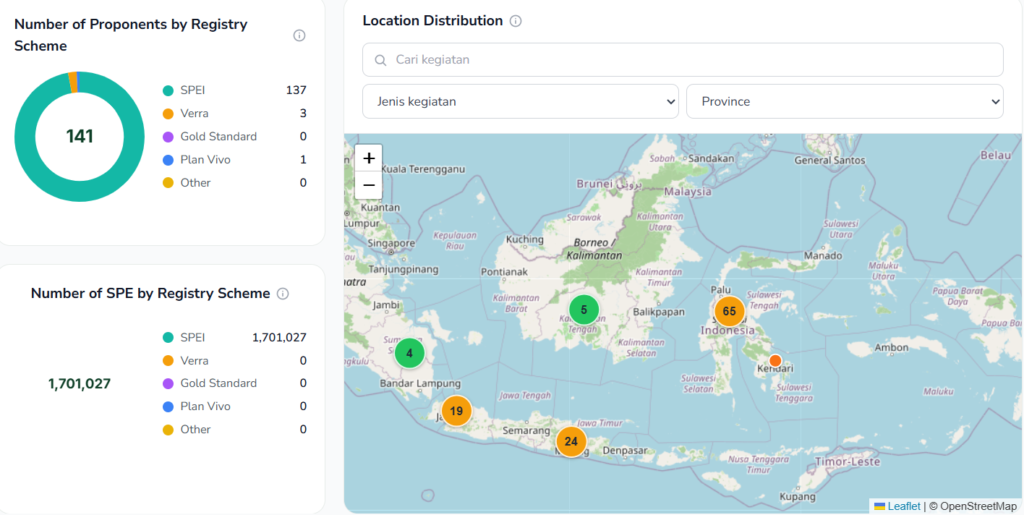
Project developers must submit the required documents and follow the rules for project review, independent checks and approval. Moreover, projects that want to transfer carbon credits for use by another country or for international purposes may need additional approval from the environment minister. This follows a recommendation from the agriculture minister.
- Approval to run a project does not automatically allow its credits to be transferred internationally. Projects must meet the separate requirements that apply to those transfers.
The rules also cover projects that combine agriculture with other activities, such as planting trees among crops, making biochar or producing biogas from waste. Any government charges must follow Indonesia’s rules on non-tax state revenue. The regulation does not set one fee that applies to every project.
Indonesia’s Wider Carbon Market Is Expanding
The new agricultural rules are part of Indonesia’s wider effort to build a carbon market for both domestic and international trading.
Indonesia launched its national carbon exchange, IDXCarbon, in September 2023. By July 2025, it had recorded more than 1.6 million tonnes traded, worth about US$4.7 million. These figures show that a market is already operating, although they do not represent agricultural credits alone.
The country is also preparing for more international carbon trading under Article 6 of the Paris Agreement. Article 6 allows countries to trade verified emissions reductions under rules designed to prevent the same reduction from being counted twice.
As of October 13, 2026, the UN Environment Programme Copenhagen Climate Centre’s Article 6 database listed four bilateral agreements and 40 Article 6.2 activities for Indonesia. It reported no internationally transferred or received mitigation outcomes yet. This suggests the country has a growing project pipeline, but international transfers remain at an early stage.
Indonesia also has major natural resources that could support its wider carbon market. The country has about 95.5 million hectares of forest and around 3.44 million hectares of mangroves, equal to roughly 20% of the world’s mangrove area. Its FOLU Net Sink 2030 program aims for the forestry and land-use sector to absorb a net 140 million tonnes of CO₂ equivalent by 2030.
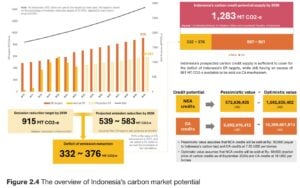
Forestry and land-use projects are different from farm carbon projects, but they show why Indonesia is working to strengthen its rules for carbon trading across several sectors.
In July 2026, Verra announced it would issue at least 20 million tonnes of emissions reductions. This comes from three Indonesian forestry projects under new carbon market rules. This was an expected issuance, not a report that all 20 million tonnes had already been issued.
Will Indonesia’s New Rules Expand Farm Carbon Investment?
Indonesia’s new rules create a clearer process for agricultural carbon projects, including credit approval and benefit-sharing with farmers.
Businesses must meet project requirements and agree with farmer groups on how to share benefits. However, farmers are not guaranteed a fixed income, as payments will depend on project results and agreed terms.
The rules add to Indonesia’s wider carbon market framework under Presidential Regulation No. 110 of 2025. Their impact will depend on how well projects follow the requirements and turn verified emissions cuts into approved carbon credits.