

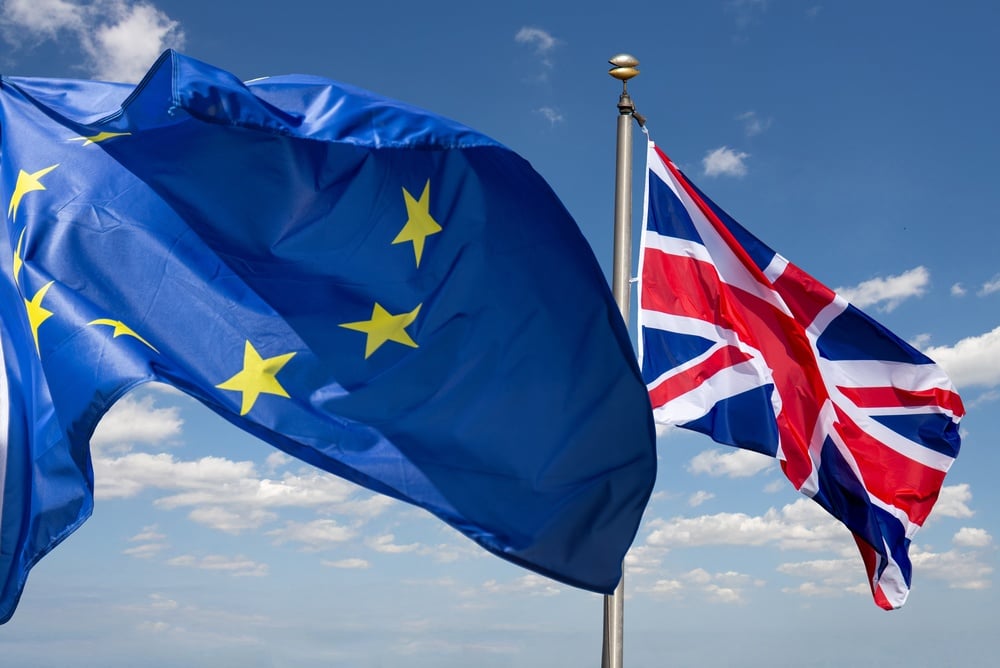
The European Union (EU) and the United Kingdom (UK) have agreed to link their carbon markets from 2028, bringing together two emissions trading systems that have operated separately since Brexit. The deal aims to create a larger, more liquid carbon market, reduce trade barriers, and support investment in cleaner industries.
The agreement could also bring major benefits for businesses. The UK government estimates that linking the markets could add up to £3.8 billion (US$4.9 billion) to the UK economy each year by 2040. It could also help exempt around £6.5 billion (US$8.4 billion) worth of British exports from the EU’s Carbon Border Adjustment Mechanism (CBAM).
The deal marks a major step in carbon market cooperation. However, the link will not take effect immediately. Both sides must complete legal and technical work before the planned launch on January 1, 2028.
EU and UK Reconnect Carbon Markets After Brexit
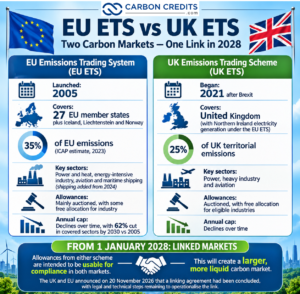
The agreement will link the EU Emissions Trading System (EU ETS) and the UK Emissions Trading Scheme (UK ETS). Once operational, companies covered by either system will be able to use emissions allowances issued in the EU or UK to meet their obligations in both markets.
The EU ETS began in 2005 and covers major polluting sectors, including power generation, steel, cement, chemicals, and aviation. It sets a cap on emissions and requires companies to hold allowances for the greenhouse gases they release. Companies that cut emissions can sell unused allowances, while those that exceed their limits must buy more.
After leaving the EU, the UK launched its own emissions trading scheme in 2021. The two systems have since operated separately, with different rules and carbon prices.
The new agreement will reconnect the markets while keeping them legally separate. The UK will retain its own ETS authority and some control over its emissions cap. However, both sides will align key rules to make allowance trading and compliance work across the two systems.
The UK and EU first agreed to pursue a link at their May 2025 summit. Negotiations began later that year and concluded with the November 2026 agreement.
The news release stated:
“This linking will provide the basis for a possible future mutual exemption from the respective carbon border adjustment mechanisms (CBAM), reducing red tape and costs for companies on both sides of the Channel.”
EU Commission President Ursula von der Leyen said:
“The agreement will cut emissions and generate investment in cleaner industries. This will help us advance our shared climate goals.”
Linked Carbon Markets Could Boost Trading and Price Stability
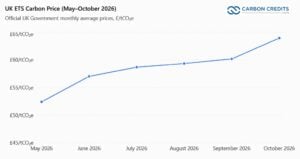
One of the main goals is to create a deeper market for emissions allowances. Linking the two systems will give companies access to a wider pool of allowances. This could make it easier to buy and sell them, improve market liquidity, and support more stable carbon prices.
For businesses, greater access to allowances could also improve planning. Companies operating across the EU and UK will have a more consistent carbon pricing framework. This may help them make longer-term decisions about energy use, industrial upgrades, and investments in lower-carbon technology.
The UK government describes the agreement as creating the world’s largest linked carbon market. It also expects the wider market to provide greater price certainty and support a more cost-effective path to net zero.
However, a larger market does not guarantee lower carbon prices. Allowance prices will still depend on supply, demand, emissions limits, and policy decisions. The agreement also does not remove the need for companies to reduce their emissions.
Instead, it aims to make carbon trading more connected and efficient, giving businesses more flexibility in meeting their climate obligations.
£6.5 Billion in UK Exports Could Gain CBAM Relief
The agreement could also reduce costs for companies trading between the UK and EU. The EU’s Carbon Border Adjustment Mechanism charges a carbon cost on some imported goods. These include iron and steel, aluminium, cement, fertilisers, electricity, and hydrogen.
The mechanism aims to stop carbon leakage. This happens when companies move production to countries with weaker climate rules to avoid higher carbon costs.
The UK has also planned its own CBAM, set to begin in 2027. Without an agreement, businesses could face additional reporting duties and carbon-related costs when trading across the Channel.
The UK government estimates that around £6.5 billion worth of British exports could qualify for an exemption from the EU’s CBAM once the linked carbon markets are in place. Mutual exemptions could also reduce administrative costs for companies importing goods from the EU.
The government estimates that the agreement could add up to £3.8 billion to the UK economy each year by 2040. These benefits depend on the link becoming operational and the required legal changes being completed. The announcement does not mean that all CBAM charges disappear immediately.
Deal Expands Carbon Pricing Across Aviation and Shipping
The agreement will also expand the sectors covered by the UK’s carbon market. The country has agreed to align its ETS rules for aviation and maritime activities with the EU system.
The European Commission says this expansion will bring more than 10 million tonnes of additional CO₂ emissions into the UK scheme. This will strengthen carbon pricing across transport, including emissions from international aviation and shipping. Airlines and maritime operators that work in both markets could also face fewer separate reporting and compliance requirements.
Both systems will also monitor the climate effects of aviation beyond CO₂ emissions. These include other effects that contribute to aviation’s overall warming impact.
For airlines and shipping companies, closer alignment could reduce paperwork and make compliance more consistent. At the same time, wider coverage will bring more emissions under carbon pricing rules. This will increase pressure on operators to use fuel more efficiently and adopt cleaner technologies.
Carbon Market Link Could Unlock New CCS Investment
The agreement could create another opportunity for the carbon management industry by making cross-border carbon transport and storage easier. The UK has large offshore storage potential, particularly in the North Sea.
European companies could use UK facilities to store CO₂ captured from industrial plants and other sources. British companies could also access storage opportunities across Europe.
The UK government says the agreement removes regulatory barriers to cross-border carbon transport and storage. It cites an estimate from the Carbon Capture and Storage Association wherein the Europe-wide CO₂ storage market could bring the UK more than £4 billion in export revenue each year. It could also support £7 billion in private investment.
These figures represent potential market opportunities, not confirmed revenues or investments.
Still, the deal could help strengthen the business case for carbon capture, utilisation and storage (CCUS). A more connected market may give industrial companies more options for managing emissions that are difficult to eliminate through direct reductions alone.
Legal and Technical Steps Remain Before the 2028 Launch
Despite the announcement, the linked carbon market is not yet operating. The UK and EU must complete legislative and technical steps before the January 1, 2028 target. The work includes passing the necessary laws in 2027 and updating both systems’ emissions registries. These changes will allow allowances issued in one market to be recognized in the other.
The first compliance deadline accepting allowances across both systems will be September 30, 2028. This will cover operators’ obligations for the 2027 emissions year.
The agreement also includes ongoing alignment with relevant EU rules, while protecting some UK-specific arrangements. These include flexibility for the UK to set its emissions cap in line with its carbon budgets and retain its own approach to greenhouse gas removal.
The deal is an important step toward more connected carbon markets. It could improve trading conditions, reduce costs for businesses, and support investment in industrial decarbonization and carbon storage.
However, the real test will come with implementation. The 2028 link must deliver a workable system that maintains strong emissions limits while giving companies the confidence to invest in cleaner operations. If successful, the agreement could also offer a model for wider cooperation between carbon markets around the world.