


Google and Energy Dome have taken a major step in long-duration energy storage (LDES) with a new 23 MW / 200 MWh CO₂ battery project in County Offaly, Ireland. The project is the first commercial deal between the two companies. It also boosts their rollout strategy across Europe and North America.
The system is designed to store surplus renewable electricity and dispatch it when demand rises. This helps stabilize grids that are increasingly powered by wind and solar energy.
The Ireland project follows a similar 19 MW / 200 MWh project announced in Arizona in the United States. Together, these deployments signal a coordinated global expansion strategy rather than isolated pilot projects.
The timing is important. Electricity demand from electrification and data centers is rising quickly. Grid operators are under pressure to integrate more renewables without compromising reliability.
Inside Ireland’s Landmark CO₂ Battery Project
The Irish project will be located in County Offaly near the town of Rhode. It will be developed, owned, and operated by Energy Dome. Key technical specifications include:
- Capacity: 23MW
- Storage: 200MWh
- Duration: roughly 8–12 hours of dispatchable power (typical for Energy Dome systems)
- Expected operation: 2028
- Contract: 10-year capacity agreement with EirGrid
The site sits on a former peat-fired power station. This allows the reuse of industrial land while supporting Ireland’s transition away from fossil fuel generation.
Ireland as a Strategic Grid Test Case
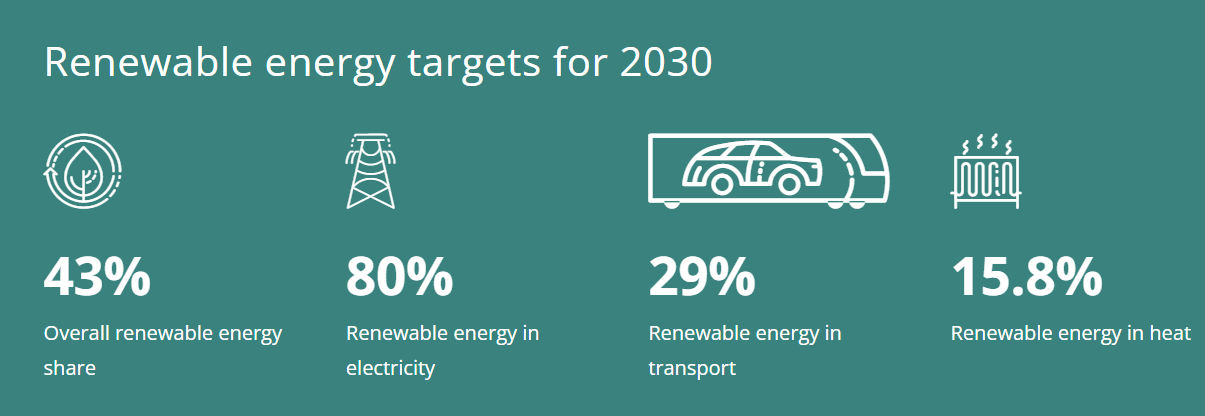
Ireland is becoming an important market for advanced energy storage. The country aims to generate 80% of its electricity from renewable sources by 2030, with wind power expected to play a major role. This creates a structural need for long-duration storage, especially during periods when wind output is high but demand is low.
The country faces three structural challenges:
- High wind penetration,
- Grid congestion in key regions, and
- Rapid growth in electricity demand, including data centers.
The Offaly project is designed to help address these issues. Built on the site of a former peat-fired power station, it repurposes existing energy infrastructure while supporting Ireland’s clean energy transition. Its location near key transmission lines serving the Greater Dublin area could also help improve grid flexibility.
EirGrid’s 10-year capacity contract shows strong support for long-duration storage. This approach helps keep energy reliable as renewable sources grow.
Why Google Sees Storage as the Missing Piece of Clean Power
Google’s participation is part of its broader effort to reach 24/7 carbon-free energy by 2030. The company has already invested in multiple clean energy technologies, including geothermal and advanced nuclear.
The Energy Dome partnership adds a critical missing layer: long-duration storage that can bridge multi-hour renewable gaps.
Google’s challenge is not just annual carbon matching. It is hourly matching. Wind and solar can fluctuate within minutes or hours. Lithium-ion batteries help, but they are typically optimized for short durations of around 1–4 hours.
Energy Dome’s CO₂ Battery system extends that window significantly. The company claims its system can deliver 8 to 24 hours of firm, dispatchable capacity depending on configuration. This makes it suitable for:
- Evening peak demand after solar drops,
- Multi-day weather variability, and
- Grid congestion management in high-renewable regions.
For Google, this supports its data center expansion strategy, where continuous clean electricity is becoming a core infrastructure requirement. Vanessa Hartley, Head of Google Ireland, commented:
“At Google, we are committed to catalyzing next-generation energy technologies to bolster grid resilience and introduce critical storage capacity to the system. This milestone is a next step in our long-term partnership with Energy Dome, and will help scale their promising long-duration energy storage technology, charging ahead to an affordable, secure and clean energy future.”
SEE MORE: Google Backs Energy Dome’s CO₂ Battery Breakthrough for Clean Energy Storage
How the CO₂ Battery Technology Works
Energy Dome’s system uses carbon dioxide in a closed-loop thermodynamic cycle. The process has two main phases:
Charging phase
- Excess renewable electricity powers compressors
- CO₂ is compressed into liquid form
- Heat generated during compression is captured and stored
Discharging phase
- Stored heat is reused
- Liquid CO₂ expands into gas
- Gas drives a turbine to generate electricity
The CO₂ is not consumed; it cycles repeatedly inside the system. The company highlights several design advantages as shown below.
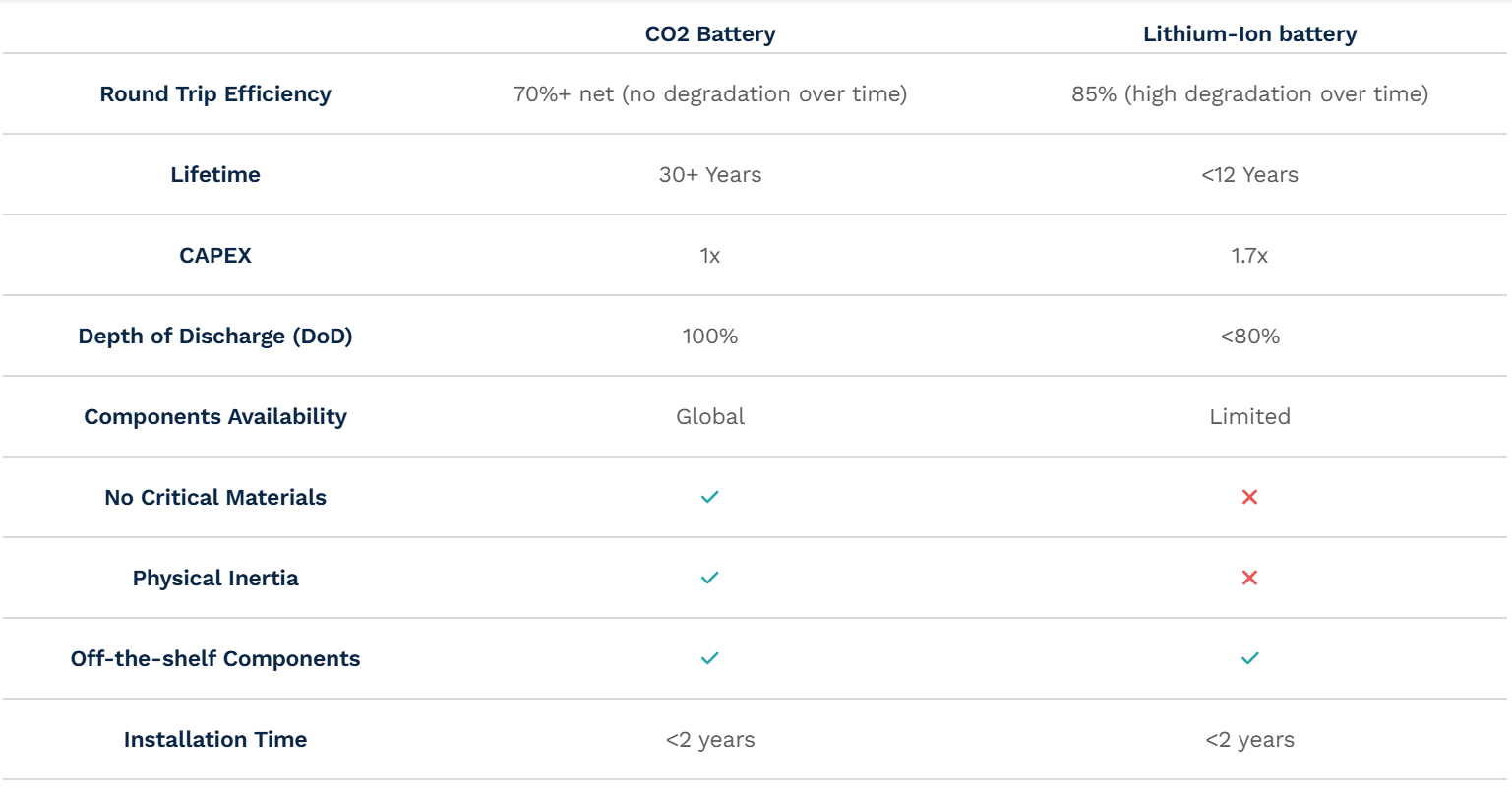
This positions the technology between lithium-ion batteries and mechanical storage systems like pumped hydro. Unlike lithium-ion, which is constrained by mineral supply chains, CO₂ storage relies mainly on steel, tanks, and compression systems.
The Global Storage Boom Is Just Getting Started
The global energy storage market is entering a new growth phase as countries add more renewable energy to their power systems. The International Energy Agency (IEA) says electricity demand will keep rising until 2030.
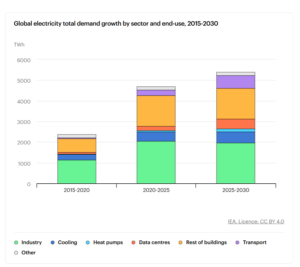
This increase is due to several factors: more electric transport and heating, larger data centers, higher power use from AI, and growing renewable energy production.
As wind and solar become a larger share of the energy mix, grid operators need more ways to balance supply and demand. Short-duration lithium-ion batteries are popular, but many power systems need storage that provides electricity for longer periods.
Interest in long-duration energy storage technologies has grown. This includes CO₂ batteries, pumped hydro, compressed-air storage, and thermal energy systems.
Energy Dome markets its CO₂ Battery as a grid-scale solution. It stores renewable energy and sends it out when needed. The technology aligns with a broader industry trend toward firm renewable power and more resilient electricity networks.
From Arizona to Ireland: A Multi-Continent Expansion
The Ireland facility is part of a broader strategy by Google and Energy Dome to deploy long-duration storage across multiple regions. Along with the Arizona project, this shows a move from demo projects to commercial-scale deployment.
The companies plan to keep expanding their technology in markets. This is where renewable energy growth is driving demand for flexible storage solutions. Energy Dome is also considering a second 200 MWh unit at the Irish site, which could turn the location into a larger storage hub.
Successful CO₂ battery systems could cut renewable energy waste, boost grid reliability, and reduce reliance on gas-fired peaker plants. Countries are aiming for net-zero targets, and electricity demand is growing. So long-duration storage will be crucial for modern power systems.
A Small Project With Big Implications
While the 23 MW Irish project is relatively modest in size, it represents an important milestone for long-duration energy storage. The project shows how advanced storage technology can boost renewable-heavy grids. It also helps companies like Google meet their carbon-free energy goals.
As the energy transition accelerates, projects like this could play a growing role in creating more reliable, flexible, and low-carbon electricity systems worldwide.