

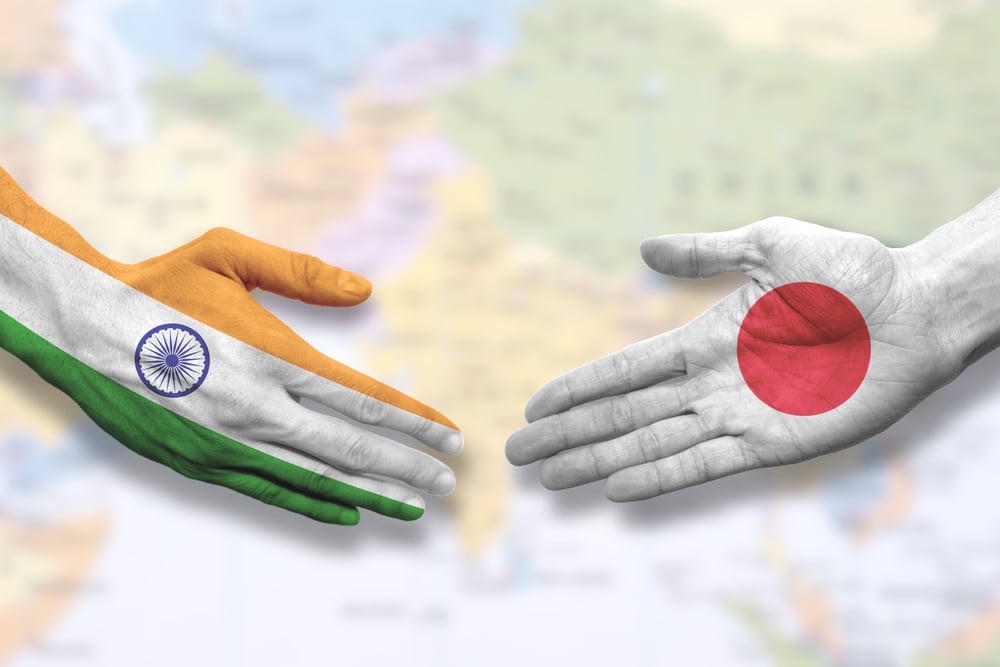
Japan and India are moving closer to a working carbon credit market after adopting rules for their Joint Crediting Mechanism (JCM) under Article 6.2 of the Paris Agreement.
The two countries adopted the Rules of Implementation (RoI) on June 8, 2026. The rules create the basic system for approving projects, checking emissions cuts, and issuing and transferring credits. Japan’s Environment Ministry said both sides are still working on some detailed procedures.
The JCM could bring Japanese finance and low-carbon technology to Indian projects. In return, both countries can share the carbon credits created by those projects.
The move comes as India expands its clean energy sector and Japan builds a wider network of international carbon market partnerships.
Japan and India Turn Carbon Deal Into Action
Japan and India first signed their JCM cooperation agreement on August 7, 2025. The deal created a framework for Japanese and Indian entities to work together on projects that reduce greenhouse gas emissions.
The 2026 implementation rules now give that framework a clearer structure. India’s Environment Ministry says the rules cover project approval, third-party validation and verification, sustainable development safeguards and national registries for issuing and transferring credits.
A Joint Committee made up of both governments will oversee the mechanism. This is an important step because Article 6.2 requires clear accounting when countries transfer emissions reductions across borders.
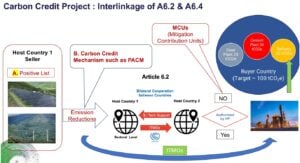
For Indian developers, the JCM now offers a more defined route to international carbon finance.
India’s Green Projects Get a New Credit Route
The JCM can support projects across several parts of India’s energy and industrial sectors. India and Japan have highlighted areas such as compressed biogas, renewable hydrogen and ammonia, high-emission industries, and carbon capture and storage (CCS).
Other clean energy and efficiency projects could also qualify if they meet the JCM’s rules. The JCM is not simply a market for existing Indian voluntary carbon credits.
Companies must develop eligible projects under the JCM system. Projects then go through approval, monitoring, validation, and verification before the two countries can issue and share credits. This process is designed to improve the quality and credibility of the resulting credits.
Article 6 Builds a Guardrail Against Double Counting
The JCM operates under Article 6.2, which lets countries transfer mitigation outcomes across borders. A key rule is that both countries cannot count the same emissions reduction toward their climate goals. The India-Japan rules cover these aspects:
- Credit allocation,
- Credit issuance, and
- Corresponding adjustments.
They also require third-party checks of project results. A corresponding adjustment changes a country’s emissions accounting when it transfers a mitigation outcome. This helps prevent double counting.
For buyers and investors, these safeguards can provide more confidence that a credit represents a real and measurable emissions reduction. For India, the system can connect local climate projects with international carbon market demand.
Japan Brings the Capital and Clean-Tech Push
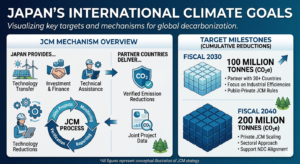
The JCM aims to do more than create carbon credits. Japan’s Foreign Ministry says the mechanism supports the spread of decarbonization technologies and infrastructure through investment by Japanese entities.
The resulting emissions reductions can then be measured and shared between Japan and its partner country. It will also be significant for the country’s decarbonization or net-zero pathway.
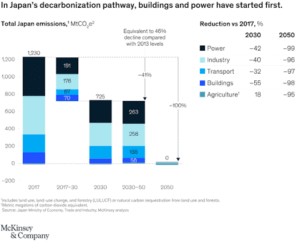
This could help Indian projects gain access to Japanese technology, equipment and finance. Japanese companies, in turn, can support emissions cuts outside Japan while receiving a share of the resulting JCM credits.
The model therefore links investment, technology transfer, and carbon markets.
India’s Climate Goals Create Strong Demand
The JCM also fits India’s wider climate plans. The country‘s updated climate target calls for a 47% reduction below 2005 levels by 2035. It also aims to have about 60% of installed electricity capacity from non-fossil sources by 2035.
India separately targets net-zero emissions by 2070. It has already moved past its power-sector target.

The government said non-fossil sources accounted for 54.18% of installed electricity capacity as of June 30, 2026. India also cut its emissions intensity by 37.38% in 2022 from the 2005 level.
The JCM could help fund further progress in clean energy and hard-to-abate industries.
Japan’s Carbon Network Keeps Expanding
India is part of a much larger Japanese carbon market strategy. As of April 2026, Japan had 32 JCM partner countries. The program had also selected more than 290 projects through its financing program.
India became Japan’s 31st JCM partner in 2025. Oman later became the 32nd partner in April 2026.
Japan has set an even larger long-term target. It aims to secure about 100 million tonnes of international greenhouse gas reductions or removals by fiscal 2030 and around 200 million tonnes by fiscal 2040 through public-private JCM cooperation.
India could become an important source of projects within that network. The next major step will come in New Delhi.
- Japan and India plan to hold the India Forum: Advancing International Carbon Markets for Climate Ambition, Sustainable Development and Shared Prosperity on September 28, 2026.
The event will focus on India’s international carbon markets and Article 6 implementation.
One session will focus on the India-Japan JCM under Article 6.2. The two governments plan to explain the new rules and encourage Indian and Japanese companies to develop projects. The timing is important because the basic JCM rules are now in place.
India’s Homegrown Carbon Market Adds Another Route
The JCM is also arriving as India develops its own domestic carbon market. The country has been building its Carbon Credit Trading Scheme (CCTS) to encourage companies to cut emissions and create a national carbon market.
The JCM and CCTS are separate systems. But they could give Indian companies different routes to finance emissions reduction projects.
Developers will need to understand which projects qualify for each market and how international transfers affect emissions accounting. This will become more important as India expands its links with global carbon markets.
The new system creates an opportunity, but it does not guarantee valuable credits. Projects must prove that they deliver real emissions reductions or removals. They must also meet the JCM’s rules for monitoring, reporting, validation, and verification.
The 2026 RoI includes third-party validation and verification and sustainable development safeguards. Strong project data will therefore be important from the start.
For buyers, the value of the JCM will depend on whether it can produce credits that meet Article 6 rules and maintain environmental integrity.
A New Carbon Bridge Between Japan and India
The India-Japan JCM has now moved beyond a basic cooperation agreement and into implementation. The adoption of the Rules of Implementation gives both countries the core procedures needed to operate their Article 6.2 carbon credit system.
For India, the mechanism could bring more Japanese investment and technology into renewable energy, clean fuels, industrial decarbonization and CCS. For Japan, it creates another source of international mitigation outcomes while supporting its wider JCM network.
The market is still at an early stage. Both countries are working on further details, and actual credit supply will depend on how quickly companies develop and verify projects.
The September 28 India JCM Forum could help turn the new rules into a stronger project pipeline. If India and Japan can build a steady flow of high-quality projects, the JCM could become an important Article 6 channel for bringing Japanese climate finance into India’s energy transition.