

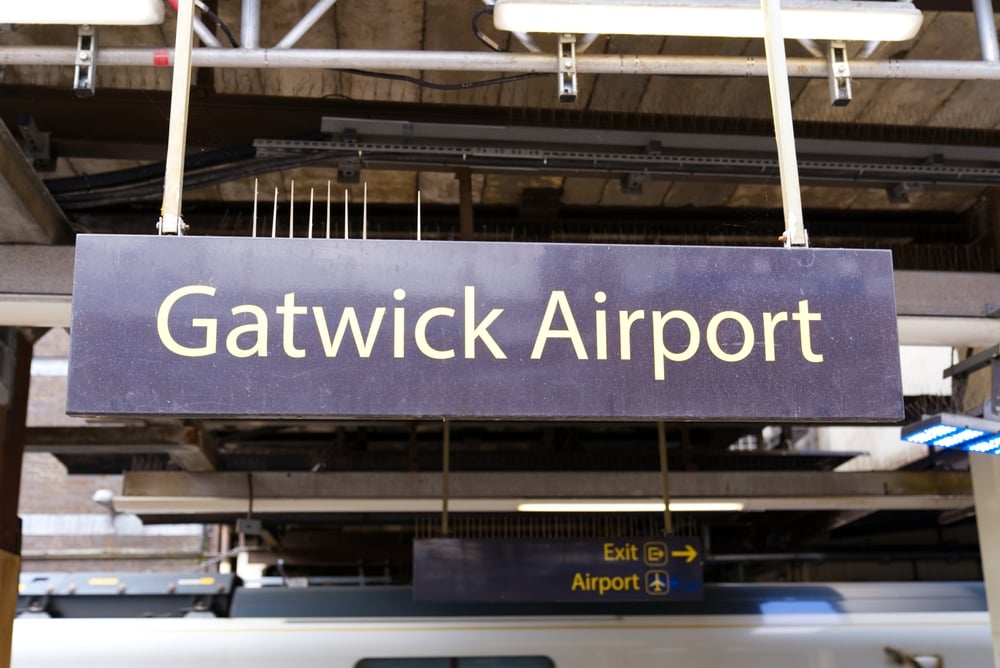
Gatwick Airport Limited (GAL) is enhancing its climate efforts by investing in nature-based carbon removal projects across England. The airport has teamed up with Kent Wildlife Trust and Somerset Wildlife Trust to restore damaged land and lower carbon emissions that can’t yet be eliminated from its operations.
This initiative builds on Gatwick’s long-standing commitment to sustainability and biodiversity. The airport has earned the Wildlife Trust Biodiversity Benchmark for 11 consecutive years, making it a leader in environmental management among UK airports.
Gatwick Invests £1 Million in Nature Projects
The press release says that GAL has dedicated £1 million to two environmental projects supported by Wilder Carbon, a non-profit that connects companies with wildlife restoration efforts.
- This funding will help remove around 10,000 tonnes of carbon dioxide equivalent (CO2e) from the air. The projects are located at Ironhurst Valley Nature Reserve in Kent and Honeygar Farm in Somerset.
Both sites, once farmland, will be transformed into rich habitats in the coming years. These projects aim to capture carbon and enhance biodiversity, soil quality, flood management, and local ecosystems.
At Ironhurst Valley, land will shift from farming to a blend of wet floodplain meadows, grasslands, and mixed woodland. This change will create healthier ecosystems and store more carbon.
GAL stated that the carbon removed through these projects will offset emissions generated between 2030 and 2039. These emissions can’t be fully eliminated due to current technological limitations.
Nature-Based Solutions Become Part of Net-Zero Plans
The airport is lowering emissions through infrastructure upgrades and cleaner operations. However, some emissions will likely remain after 2030.
Mark Edwards, Head of Sustainability at Gatwick, said:
“We have an unwavering commitment to sustainability and to achieving our aim of being net zero for emissions under our direct control by 2030. We are making great progress, as detailed in our 2025 Sustainability Report .
“We are doing all we can to reduce our carbon footprint but come 2030 a small proportion of greenhouse gas emissions will remain. We won’t be able to eradicate these emission sources for various reasons such as the technology not yet existing.
“In order to achieve Net Zero, we will need to remove these residual emissions.
“Collaborating with Wilder Carbon offered us the opportunity to support local, high integrity , nature-based projects that offered considerable benefits in addition to carbon removal.
“We carefully considered which projects to partner with and I’m delighted that Ironhurst is so close to the airport. I’m excited to see how nature will transform Ironhurst and Honeygar over the coming years as our partnership progresses. Our thanks go to the Wilder Carbon team for helping us find our partner sites, and to the two Trusts.”
The Ironhurst Valley project is especially welcomed because of its proximity to Gatwick. Edwards is eager to see nature recover at both sites in the coming years.
Gatwick’s Bigger Sustainability Strategy
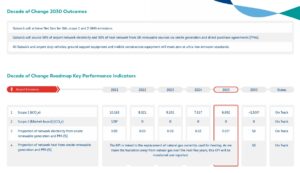
The wildlife partnerships are part of Gatwick’s broader “Decade of Change” sustainability plan.
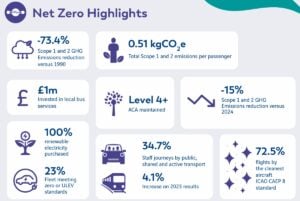
- In 2023, the airport advanced its net-zero target for Scope 1 and Scope 2 emissions from 2040 to 2030. To support this quicker timeline, GAL launched a £250 million decarbonization investment program.
- So far, the airport has reduced Scope 1 and 2 greenhouse gas emissions by over 73% compared to its 1990 baseline.
The latest 2025 Sustainability Report highlights several major achievements.
One significant project involves replacing natural gas boilers across the airport. Initial work is set to begin in 2026. Gatwick also lowered emissions from heating systems by reducing temperatures and optimizing operations.
- The company reported a 35% reduction in Scope 1 emissions from natural gas use since 2019.
Meanwhile, Gatwick has continued to purchase 100% renewable electricity for the twelfth year in a row.
The airport also completed a strategic electrical power study to prepare for its long-term net-zero transition. This will support future renewable energy systems and expanded EV charging infrastructure.
Electric Vehicles and Cleaner Transport
Transport electrification is another key area for Gatwick. Last year, the airport received 48 electric vehicles, with another 25 on order. It also opened two new EV charging stations for operational vehicles.
Gatwick expanded its electric public transport fleet, with four of the 14 electric buses already delivered. These buses will transport passengers between terminals and long-stay parking areas.
The airport believes cleaner transport systems will significantly lower emissions from ground operations in the coming years.
Biodiversity Efforts Go Beyond Carbon
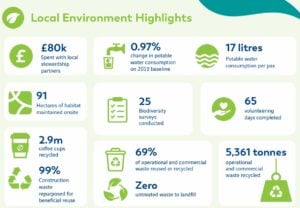
Gatwick’s environmental strategy includes strong biodiversity protection and ecological restoration. In 2025, the airport conducted 25 ecological surveys, including a first earthworm survey and mapping of veteran trees.
- It resumed its annual wildlife recording day with the Gatwick Greenspace Partnership, local ecologists, volunteers, and the Sussex Biodiversity Record Centre. The event recorded 202 species, including a fungi species called Lophiostoma caespitosum, identified for the first time in Great Britain.
- The airport is also replacing herbicides with alternative weed management methods in landside areas. Instead of chemicals, teams are using manual sweeping and hot lance equipment.
Gatwick published its second Biodiversity Action Plan Review Report, showing ongoing progress in maintaining and enhancing biodiversity areas.
Together with the Gatwick Greenspace Partnership, the airport hosted 65 volunteering events and 49 education events during the year.
These initiatives support Gatwick’s goal of achieving a “sector-leading” biodiversity net gain strategy while eliminating herbicide use by 2030.
Recycling Projects Add to Sustainability Goals
Beyond emissions and biodiversity, Gatwick expanded community and circular economy initiatives in 2025.
The airport created the UK’s first recycling facility on-site. It focuses on airline cabin waste that is not contaminated. This project aims to improve recycling rates and reduce landfill waste.
Sustainable Aviation Industry Joins Carbon Removal Push
Gatwick collaborates with the wider aviation industry to support long-term climate solutions. The airport is part of Sustainable Aviation, a coalition that includes airlines, airports, aerospace companies, and fuel producers focused on achieving net-zero aviation emissions.
Earlier this year, the coalition launched an Advanced Market Signal initiative for greenhouse gas removals. Through this commitment, members will invest over £2 million in greenhouse gas removal credits to speed up the carbon removal market.
This growing interest shows how aviation companies are linking direct emissions cuts with long-term carbon removal strategies.
As we see, the airport is making significant investments in clean energy, electrification, biodiversity restoration, and carbon removal. This shows its commitment to leading sustainability in the UK’s aviation sector.
In conclusion, Gatwick’s projects highlight that nature restoration and carbon removal are key to long-term climate strategies. While challenges remain for aviation decarbonization, these efforts are crucial.