

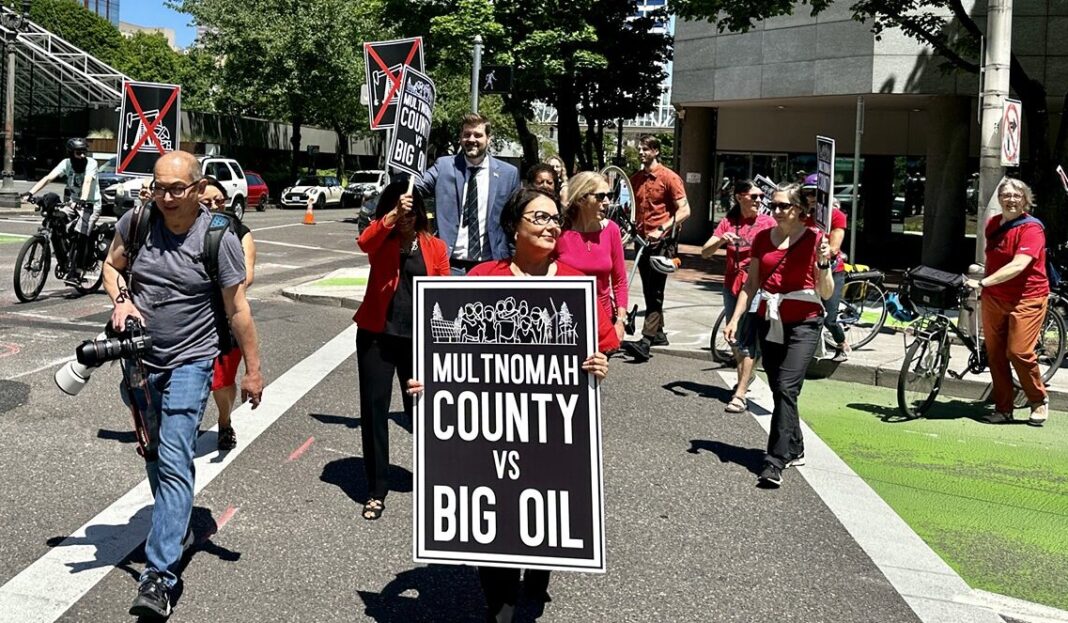
An Oregon county filed a lawsuit against oil and gas companies and industry, blaming them and seeking $51 billion in damages for the deadly 2021 Pacific Northwest heat wave that killed about 800 people.
Multnomah County, which includes Portland, sued 17 companies, including Shell, Exxon Mobil, Chevron, BP, among others. The county said these fossil fuel companies and other entities in the industry are the ones to blame for the deadly heat dome.
A heat dome event happens when a high-pressure system prevents cooler winds from blowing and also prevents clouds from forming.
The $51 Billion Heat Dome Damages
Multnomah County is seeking $50 million from the defendants for actual damages from the 2021 record-breaking heat wave. Temperatures in the region reached 116°F, killing 69 people in the county. This is the hottest temperature ever recorded in the county’s history.
The plaintiff also asked for $1.5 billion in future damages and $50 billion abatement fund to “weatherproof” the county. The fund will also be for public health services needed for future extreme weather events resulting from fossil fuel use.
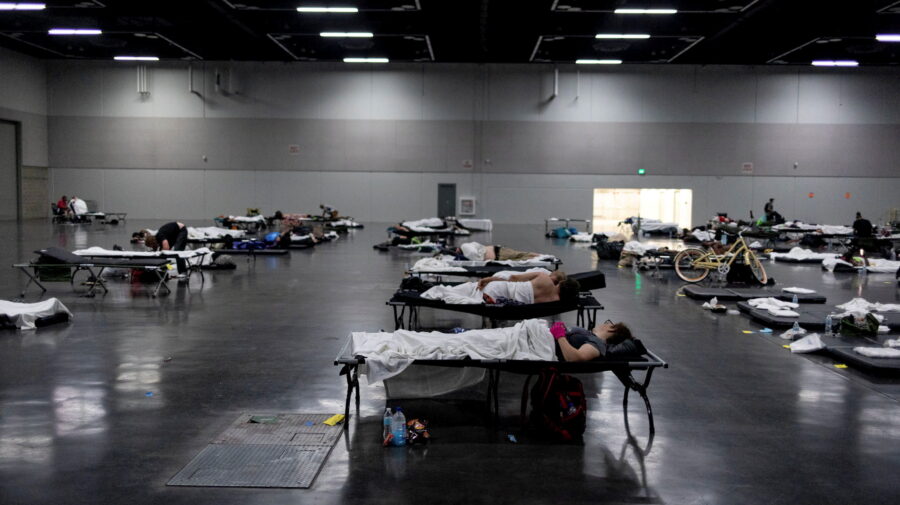
Emergency departments in the county were flooded with patients suffering from heat-related illness.
Apart from Oregon, hundreds of people also died because of the event in Washington and British Columbia.
Researchers composed of climate scientists said that the heat wave was due to excessive carbon emissions from burning fossil fuels.
According to these climate experts, the 2021 heat dome was “virtually impossible” if not because of global warming. Their study showed that the heat wave was at least 150x less likely to occur if temperatures hadn’t heated that much caused by human-related carbon emissions.
After the 2021 heat dome, the county has spent more to prepare for similar events in the future – expanding shelter, increasing supplies, and staffing up.
Climate Lawsuits Against Big Oil
The Oregon county accused the big oil companies, and other entities including McKinsey & Company, for committing negligence and fraud. They said the companies knew that their fossil fuel products will cause warming and will have a negative impact. Yet, they continue to deceive the public about it.
As per their statement:
“We are confident that, once we show what the fossil fuel companies knew about global warming and when, and what they did to deny, delay and deceive the public, the jury will not let the fossil fuel companies get away with their reckless misconduct.”
Oregon taxpayers paid for all the heat-related emergencies and expenses during the event, including air conditioning and cooling centers.
The Oregon lawsuit is similar to climate litigations filed by other local and state governments since 2017. It’s the 36th time a municipality has sued oil and gas companies for alleged damages caused by global warming.
It comes after the US Supreme Court sided with Colorado’s governments demanding oil giants to pay for their climate damages.
Last year at climate summit, COP27, Climate TRACE, an NGO tracking emissions, analyzed 72,612 individual sources of CO2. Their study revealed that fossil fuel emissions could be up to 3x higher than what oil and gas companies claim. They found that 50% of the largest emitters are oil and gas fields.
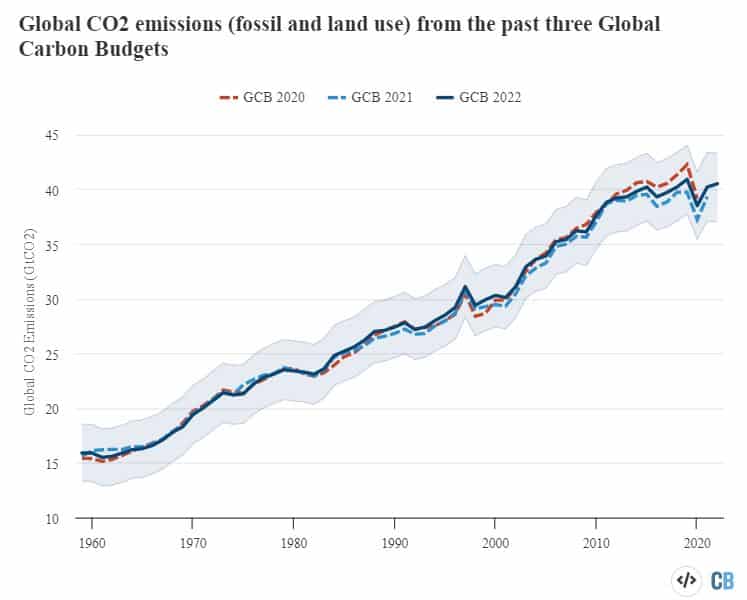
According to an analysis, global carbon emissions from fossil fuels hit record high in 2022 as shown below, at 40.5 gigatons of CO2.
Baseless, Unproductive Claims
In response to the lawsuit, Chevron’s legal representative said the claims are baseless and counterproductive in “advancing international policy solutions”.
Shell also responded saying that the court isn’t the right venue in tackling climate change. Rather, this issue needs collaboration from all sectors and a “smart government policy” as the right way to find solutions.
Exxon’s spokesperson said that this kind of lawsuit won’t be helpful in addressing climate change, and will just waste time and resources. The oil giant further stated that it won’t impact their commitment to invest billions to reach global net zero emissions.
If big oil companies ended up paying the damages, it can make the cost of doing fossil fuel business more expensive, as per a climate law fellow at Columbia University’s Sabin Center for Climate Change Law.
In effect, alternatives to fossil fuels will be more cost-competitive. This may not be a direct effect of climate change, but it could be a crucial turn of event.
Multnomah County brought the lawsuit in state court and has secured outside lawyers for the case.