

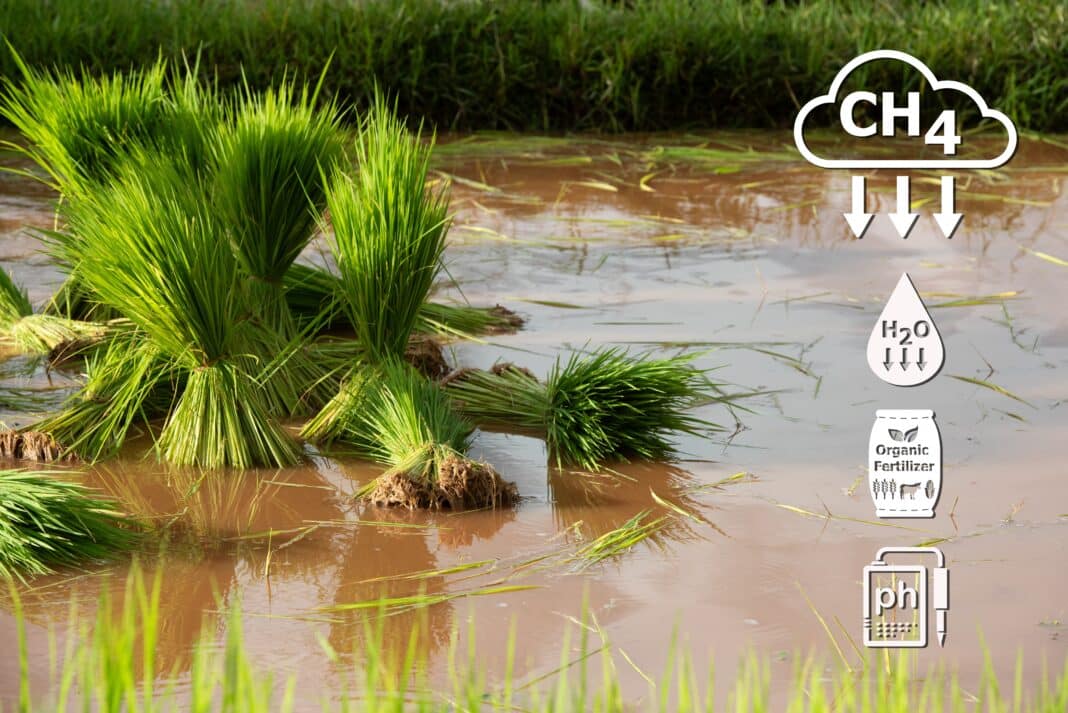
Mitti Labs has signed a five-year carbon credit offtake agreement with Salesforce to expand climate-smart rice farming across tens of thousands of smallholder farms in India. Under the agreement, Salesforce will purchase 500,000 methane reduction credits from the climate technology company by 2030.
The partnership will support water-saving farming practices that reduce methane emissions while helping farmers manage growing water stress. It also highlights rising corporate demand for agricultural carbon credits, particularly projects that use satellite technology to track and verify emission reductions.
The deal follows a separate five-year agreement with Google, announced in September 2026, under which Mitti Labs will deliver 1 million carbon credits by 2030. Together, the two agreements represent commitments for 1.5 million credits, strengthening the commercial case for rice methane reduction projects.
Why Rice Farming Matters for Methane Reduction
The press release says agriculture is responsible for 40% of all human-induced methane emissions.
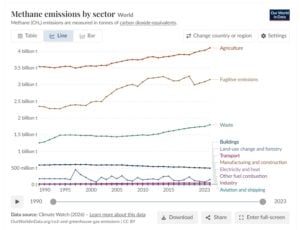
Rice is a staple food for more than half of the world’s population. However, conventional rice cultivation is also a major source of agricultural methane emissions.
Farmers traditionally keep rice fields flooded for much of the growing season. Without oxygen in the waterlogged soil, microorganisms break down organic matter and release methane into the atmosphere.
According to the Rocky Mountain Institute (RMI), rice cultivation accounts for around 10% of global methane emissions. More than 200 million smallholder farmers grow rice worldwide, creating a significant opportunity to reduce emissions through improved agricultural practices.
Methane traps substantially more heat than carbon dioxide over 20 years, so reducing emissions matters for slowing near-term warming. The gas also remains in the atmosphere for a much shorter time than CO2.
One solution is alternate wetting and drying (AWD). Rather than keeping fields continuously flooded, farmers allow them to dry during safe periods in the growing cycle before irrigating them again.
This approach reduces the oxygen-free conditions that support methane-producing microbes. According to Mitti Labs, alternate irrigation can:
- Reduce methane emissions by up to 50%.
- Cut water consumption by up to 40%.
- Maintain rice yields without requiring farmers to abandon conventional rice production.
The approach offers a way to reduce agricultural emissions while conserving water resources.
Mitti Labs Uses NASA-Backed Technology to Verify Methane Cuts
Mitti Labs combines artificial intelligence (AI), satellite imagery, and on-ground operations to help farmers adopt improved irrigation practices.
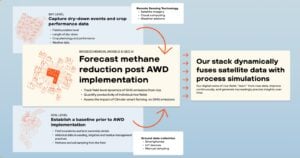
Its GeoAI platform, developed with NASA support, combines high-resolution satellite radar with field-collected data. It monitors flooding patterns, soil moisture, and crop health across individual smallholder plots.
This technology is important because carbon credits need reliable evidence that the claimed emission reductions have actually occurred. Traditional monitoring often relies on field visits and farmer records, which can become difficult and expensive when projects cover thousands of farms.
Mitti Labs uses satellite-verified field dry-downs and ground-level evidence to track whether farmers follow the required irrigation practices. Each credit delivered under the Salesforce agreement will have this supporting evidence.
The company also plans to expand its digital twin datasets. These datasets help create digital representations of farming conditions and support the monitoring of agricultural activity across project locations.
- Mitti Labs received an ‘A’ rating from carbon credit ratings agency Sylvera in July 2026, recognizing its implementation and measurement protocols.
The Salesforce partnership is projected to save 700 billion liters of water by 2030. Mitti Labs compares this volume with roughly 18 months of Bengaluru’s annual water supply. The savings could ease pressure on groundwater resources in regions where agriculture competes with urban and industrial demand.
Rice Carbon Credits Recover After Quality Concerns
Rice methane reduction projects have previously attracted significant interest in the voluntary carbon market (VCM). However, concerns over credit quality led to a major setback in 2024.
According to RMI’s July 2025 analysis, rice methane credits had accounted for nearly 30% of agricultural credits in the voluntary market before the controversy.
- In August 2024, Verra began invalidating 37 rice methane projects associated with approximately 4.5 million credits. The credits had been issued under an older Clean Development Mechanism methodology, with concerns primarily involving additionality.
Additionality means that emission reductions would not have occurred without the financial incentive provided by carbon credit revenue.
- RMI reported that only 597 rice credits remained on the market as of spring 2025. The controversy pushed developers and standards bodies to strengthen project requirements and improve monitoring.
Verra Updates VM0051
Verra introduced its updated VM0051 methodology in 2025, with stronger requirements for baseline setting, additionality, and monitoring. The changes aim to improve the reliability of emission reduction estimates.
Isometric Records New Credits
Recent registry activity also points to renewed issuance. For example, Isometric’s registry listed 97,806.67 issued credits for Mitti Labs’ Climate Smart Rice Farming in India project as of October 2026. This is a project-level issuance figure, not the total global supply of rice methane credits.
There is no consolidated global figure for all rice methane credits generated across registries and methodologies. However, new project issuances and corporate offtake agreements suggest that the market is rebuilding around stronger measurement and verification standards.
Corporate Demand Supports Mitti Labs’ Expansion
Salesforce’s purchase commitment adds to a growing customer base for Mitti Labs. Its customers include Google, Cool Effect, Ebro Foods and Syngenta.
The company plans to increase its annual credit issuance capacity to 2 million credits by 2028 through projects in India and Southeast Asia.
Other business milestones include:
- Water savings of 500 billion liters achieved through its programs to date.
- A workforce of 150 employees since launching in 2023.
- $12.5 million raised from investors, including Lightspeed India, Aramco Ventures, Godrej Industries Group and Cisco Foundation.
For Salesforce, the agreement also supports its involvement in the Beyond Alliance’s Superpollutant Action Initiative. The company aims to direct capital toward projects that reduce powerful short-lived climate pollutants such as methane.
Methane Emissions from Agriculture in India
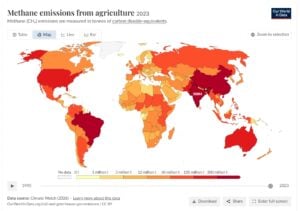
Lastly, for the rice carbon market, the bigger opportunity lies in scaling projects that can prove their environmental impact. Stronger monitoring, credible baselines, and continued corporate purchases will be important to sustaining demand for these credits.