

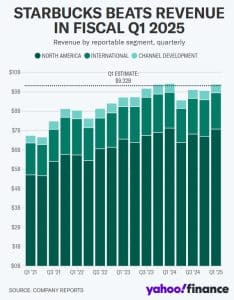
Starbucks has brewed up a moderately strong performance in Q1, raking in $1.9 billion in international revenue. Yet, despite its global success, people’s go-to coffee brand has experienced a dip in sales in key markets like North America and China.
Beyond its global growth, the coffee giant is deeply committed to brewing a sustainable future, with a wide array of green initiatives driving its mission forward.
A Closer Look at Starbucks’ Q1 FY25 Financial Results
At present, Starbucks has 40,576 stores worldwide. It’s a 5% growth year-over-year. Of these, 53% are company-operated, while 47% are licensed. It added 377 net new stores during this sole quarter. The U.S. and China remain critical to Starbucks’ portfolio, comprising 61% of global stores.
Brian Niccol, chairman and chief executive officer of Starbucks remarked on the first quarter’s performance noting,
“While we’re only one quarter into our turnaround, we’re moving quickly to act on the ‘Back to Starbucks’ efforts and we’ve seen a positive response. We believe this is the fundamental change in strategy needed to solve our underlying issues, restore confidence in our brand and return the business to sustainable, long-term growth.”
Starbucks Global Sales Decline
This quarter revealed a sales drop of 4% globally, driven by a 6% drop in customer transactions. However, a 3% increase in average ticket size helped soften the decline. Revenue for the quarter remained flat at $9.4 billion compared to Q1 FY24.
North America
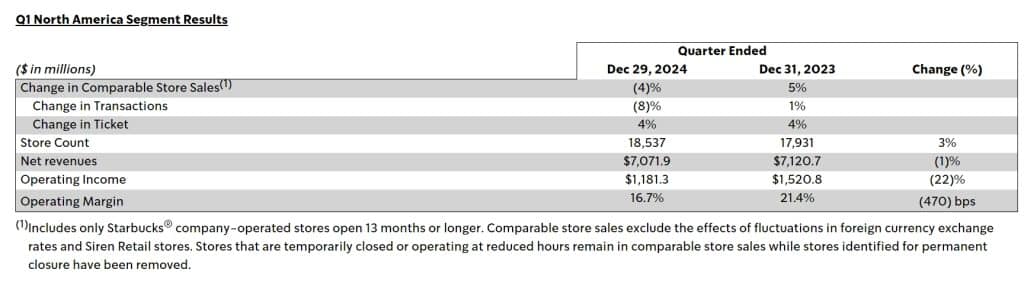
Sales declined by 4%, primarily due to an 8% drop in transactions. A 4% increase in ticket size was insufficient to offset lower foot traffic. Net revenues in the region dropped 1% year-over-year to $7.1 billion, partially due to a decline in the licensed store business.
International Markets
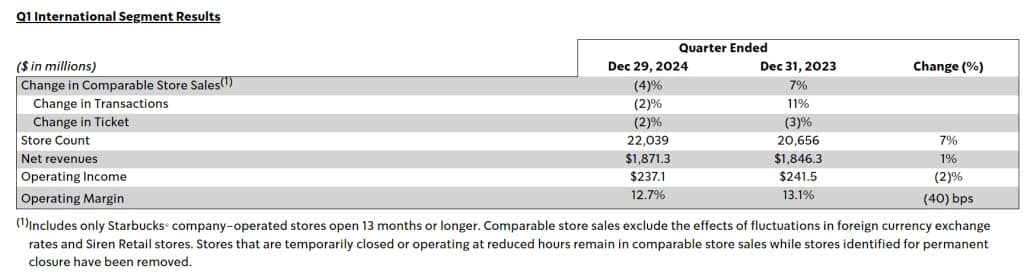
Sales decreased by 4%, as both average ticket size and customer transactions fell by 2%. Despite this, net revenues increased 1% to $1.9 billion, driven by 9% store growth and incremental revenue from acquiring a U.K. licensed business partner.
China
Starbucks’ second-largest market saw a sharper decline, with sales down 6%. Average ticket size fell by 4%, while transactions dipped by 2%.
Operating Margin and Earnings Shrink
Operating margin dropped by 390 basis points to 11.9%, down from 15.8% from the last year. This was due to increased investments in the “Back to Starbucks” initiative, supporting partner wages and benefits, as well as the removal of the non-dairy milk charge.
- In North America, operating income dropped to $1.2 billion, while the international segment also saw a decline, with operating income reaching $237.1 million.
Furthermore, Channel Development revenue fell 3% to $436.3 million, driven by SKU optimization and a decline in ready-to-drink sales. However, operating margins improved slightly to 47.7% due to lower product costs and changes in the product mix.
Loyalty Program Offers Relief
The Starbucks Rewards program showed modest growth, with U.S. 90-day active members reaching 34.6 million, a 1% year-over-year increase. This indicates that while customer transactions are down, loyal customers continue to engage with the brand.
While sales in key markets like North America and China are still under pressure, Starbucks is working on improving operational efficiency and making pricing adjustments to help recover in the coming quarters. In the next section, we will study the company’s sustainability efforts and how it’s tackling its carbon footprint across global operations.
Starbucks’ Climate Commitment for a Greener Future
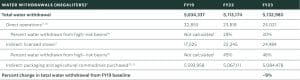
Starbucks aims to cut its water and carbon footprint by 50% by 2030. To achieve this, it is adopting greener practices and building resilience to environmental challenges. The company is tackling climate risks by forecasting supply chain disruptions and resource shortages. By addressing issues like carbon pricing and physical risks it wants to secure a sustainable future for its coffee operations.
Additionally, they are taking environmental efforts further by partnering with Mercedes-Benz to expand electric vehicle (EV) charging at its stores.
Scope 1, 2, and 3 Emissions
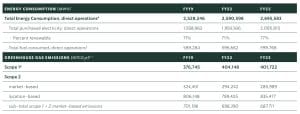
Starbucks’ total greenhouse gas (GHG) emissions across Scope 1, 2, and 3 categories reached 13.5 million metric tons as of the latest report. This marks an 8% increase in emissions compared to the 2019 baseline.
Notably fluid dairy purchases accounted for 18% of these emissions, while green coffee purchases contributed another 11%.
Sustainable Initiatives
- Support sustainability through reforestation, regenerative agriculture, and waste reduction.
- Prioritize eco-friendly sourcing for coffee, timber, and cocoa
- Collaborate closely with suppliers and farmers to lessen its environmental impact.
- Reduce its carbon footprint by streamlining operations, using renewable energy, and cutting emissions.
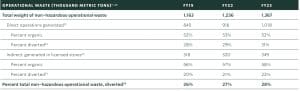
- Address waste management by recycling, reusing, and reducing food waste
- Use reusable and compostable packaging material made from recycled content.
Greener Stores Leading the Way
By April 2023, Starbucks had over 3,500 certified “Greener Stores” globally. This brings the company closer to its goal of 10,000 Greener Stores by 2025. These stores meet 25 standards for energy, water, and waste efficiency.
The certification, developed with the World Wildlife Fund and SCS Global Services, is verified by external auditors. This is how Starbucks ensures these stores follow sustainable practices throughout their lifecycle.
Starbucks’ ability to adapt to shifting consumer trends will play a key role in its recovery and long-term growth. As the company continues to enhance its sustainable practices, it’s not only shaping a more environmentally responsible business but also offering consumers a healthier, eco-conscious way to enjoy their favorite cup of coffee.