Amid the heated controversy over carbon offsets and renewable energy carbon credits, Xpansiv trading platform CBL reported record-breaking trends.
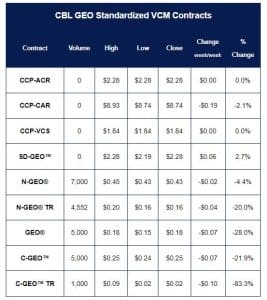
The week saw a significant trade on Xpansiv’s CBL platform, with 39,414 tons of vintage 2023 ACR CCP-approved United States Landfill Gas credits trading at $7.15 per metric ton. This transaction was notable as the largest and highest-priced trade of the week. It is also one of the largest CCP-tagged credit transactions since ICVCM’s methodology approval in June.
From India to Indonesia: VCM Sees Dynamic Trades and Price Shifts
The Xpansiv CBL market also saw activity with 3,500 vintage 2019 hydro credits from India and vintage 2016 Keo Seima REDD credits from Cambodia, traded at $2.00. Vintage 2020 Katingan Peatland Restoration credits from Indonesia were matched at $4.90, while a 100,000-ton block of vintage 2017 Katingan credits traded OTC at $3.25.
The data provided by Xpansiv, a leading environmental commodity exchange, reflects the dynamic and evolving nature of these carbon credits markets.
Other Key Trends
VCM Volume:
Total VCM volume on the CBL platform was 107,324 credits, with 78,423 matched on screen. Additionally, 812,000 tons were traded via CBL GEO futures on CME Group.
The December CBL N-GEO futures saw a slight drop, losing $0.03, following a previous sharp sell-off. However, the CBL GEO futures December contract rose by 64% to close at $0.23.
Paris Olympics Rewrites the Playbook on Sustainability
The Paris Olympics, which concluded recently, set new records in sustainability alongside its high attendance and global engagement. The organizing committee successfully reduced Scope 1, 2, and 3 carbon emissions by half compared to the Rio and London games.
The event organizers bought 1,472,550 metric tons of carbon credits from 13 different projects, focusing on offsets in Africa and France. These carbon offsets are from various projects, including cookstoves, solar power, mangrove restoration, forestry, and clean water access.
Key offers included Katingan REDD credits from Indonesia and cookstoves credits from Somalia and Rwanda, with prices ranging from $0.75 to $5.00.
I-REC Markets: Solar projects in India and Uganda showed bids and offers, with indicative pricing noted at $3.50 for Ugandan solar credits.
North American Compliance Markets Hit Highs
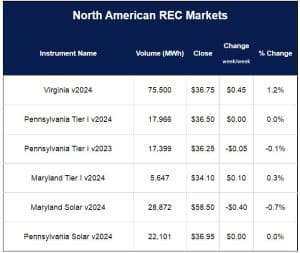
In North American compliance markets, PJM REC trading on the CBL platform reached a record notional value, with nearly $14 million traded over two weeks. Key transactions included Virginia and Pennsylvania Tier I credits and Maryland solar credits. This activity further underscored the growing importance of carbon credits and renewable energy certificates in achieving global decarbonization goals.
This summary highlights the significant trades, market movements, and sustainability efforts observed in environmental markets. The Xpansiv data underscores the growing role of carbon credits and renewable energy credits in global decarbonization efforts.
In 2024, the biofuel industry is on track for a significant boost. Thanks to increased investments in renewable diesel and biodiesel. The Biden-Harris administration’s support is set to accelerate this growth, making these biofuels key players in the shift toward cleaner energy. Let’s discover what’s happening in this space.
Surge in Renewable Diesel Production
According to the U.S. Energy Information Administration (EIA). the country has seen a major rise in renewable diesel production, with five new plants opening in 2018. This increase pushed the production capacity of this alternative fuel to 282,000 barrels per day (bpd). Recently two new facilities in the Gulf Coast and West Coast regions, and one on the East Coast were installed. With these, the country now has a total 22 renewable diesel plants. Notably, the West Coast alone saw its capacity more than double to 82,000 bpd this year.
But Why Biodiesel Plants Are Struggling?
As U.S. fuel makers shift toward renewable diesel to adapt to the decline of petroleum-based fuels, the production of this biofuel remains expensive and heavily subsidized by federal and state governments. However, the rapid expansion of renewable diesel has squeezed out some biodiesel manufacturers, who receive fewer financial incentives from the government. From media reports, we discovered that over the past year, three biofuel plants—located on the East Coast, West Coast, and Midwest—were forced to close.
Even though biodiesel production capacity is relatively stable at 136,000 bpd, more closures are likely to happen in the future. Talking about closures, Chevron has indefinitely shut down two biodiesel production facilities in the U.S.
Another factor behind the potentially crashing demand for biodiesel is high production costs. It is certainly more expensive than conventional petroleum diesel and renewable diesel. Even though it burns green and generates credits, it is not pocket-friendly. This has led to a slight imbalance in the demand and supply of biodiesel.
Meanwhile, Reuters reported, ethanol production saw a slight boost. Although one plant closed on the East Coast, a newer, larger facility on the Gulf Coast increased the total output capacity of 187 operational plants by 2%, reaching 1.18 million bpd. In another report, the media house also stated that by 2023, the combined output capacity for biomass-based diesel, including biodiesel, in the U.S. exceeded 5 billion gallons.
EIA Uncovers the Shifting Landscape of Biodiesel and Renewable Diesel
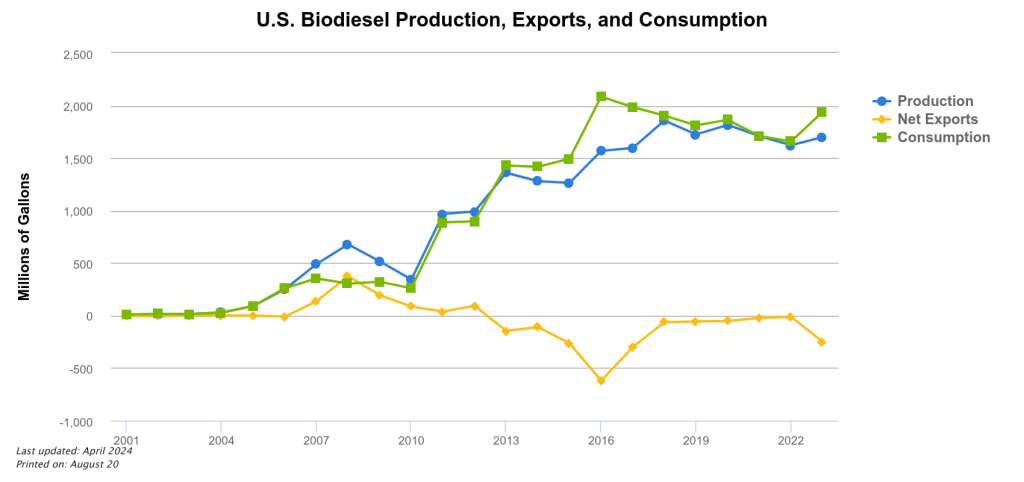
EIA reported that biodiesel exports reached their highest point in 2008 due to an “unintended” discrepancy in tax credits in the European Union. However, exports fell sharply after was salvaged. From 2011 onward, biodiesel production and consumption increased, largely driven by the Renewable Fuel Standard. However, in recent years, both production and consumption have declined, possibly due to the rise of renewable diesel.
This chart shows trends in U.S. biodiesel production, exports, and consumption from 2001 to 2023.
Source: EIA
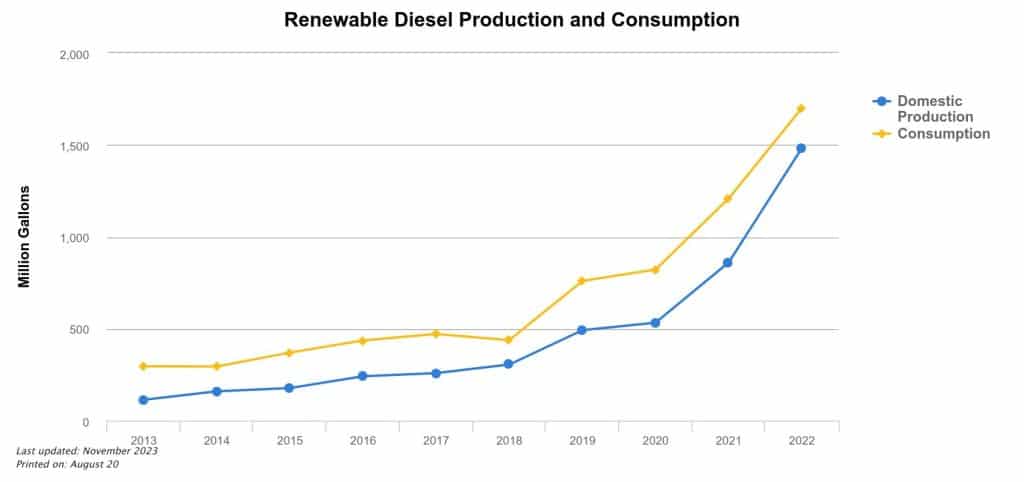
Renewable diesel is becoming more popular because it meets the same quality standards as petroleum diesel. This fuel is mainly produced from used cooking oil and inedible animal fats, which are leftovers from meat processing. It syncs well with diesel engines and infrastructure, requiring no modifications. Renewable diesel is predominantly used in California, where it takes advantage of financial incentives from the Low Carbon Fuel Standard.
This graph shows U.S. renewable diesel fuel production and consumption.
Source: EIA
The Biden-Harris Administration Invests in Domestic Biofuels and Clean Energy
On August 16, the USDA announced that the Biden-Harris administration will invest in domestic biofuels and clean energy as part of President Biden’s Investing in America Agenda. USDA Secretary Tom Vilsack announced $99.6 million in funding through the Higher Blends Infrastructure Incentive Program (HBIIP) and REAP.
It further noted, that ever since the Biden-Harris Administration began, the USDA has invested over $220 million into biofuel access and $2.2 billion into renewable energy projects.
Moving on, they are using the REAP program to support the Justice40 Initiative. It ensures that 40% of the benefits from federal climate and clean energy investments go to communities that have faced underinvestment and pollution. As part of this effort, the USDA is awarding $90.3 million in grants to 89 projects across 26 states.
Can it Revive America’s Future for Biofuels?
This investment, backed by President Biden’s Inflation Reduction Act, aims to increase access to biofuels and clean energy systems. These efforts are designed to strengthen energy independence, create jobs, and provide new opportunities for American farmers and rural communities. Additionally, these grants will help businesses upgrade infrastructure like fuel pumps and storage tanks, boosting economic growth in rural areas.
Secretary Tom Vilsack visited the University of Minnesota and spoke about investing in the American bioeconomy announced, where he disclosed the funding. A significant example of this funding beneficiary is The Corner Store in Inver Grove Heights, which is getting a $518,250 grant to upgrade its fuel infrastructure. The store will install four E15 dispensers, four E85 dispensers, and two ethanol storage tanks. These upgrades are expected to boost ethanol sales by 506,100 gallons per year. Other notable upgrades are:
In Georgia, CSX Transportation Inc. received a $1.9 million grant to set up a 200-gallon biodiesel storage tank, along with distribution equipment and electric monitoring tools. The company plans to increase biofuel availability by 1 million gallons per year with this investment.
In Nevada, Anabi Real Estate Development LLC secured a $3.7 million grant to install three E85 dispensers and three B20 dispensers at two fueling stations. This project aims to raise biofuel sales by over 80,000 gallons per year.
Following this, he assured by saying,
“By expanding access to homegrown biofuels and clean energy systems, we are strengthening our energy independence, addressing the impacts of climate change and creating new market opportunities and revenue streams for American producers while bringing good-paying jobs in rural communities.”
Overall, we can count on the right policies and tax incentives for growth of the biofuel. USDA’s new investment plan offers a promising boost for biodiesel, renewable diesel, renewable energy, and other biofuels, paving the way for a smooth transition to clean energy.
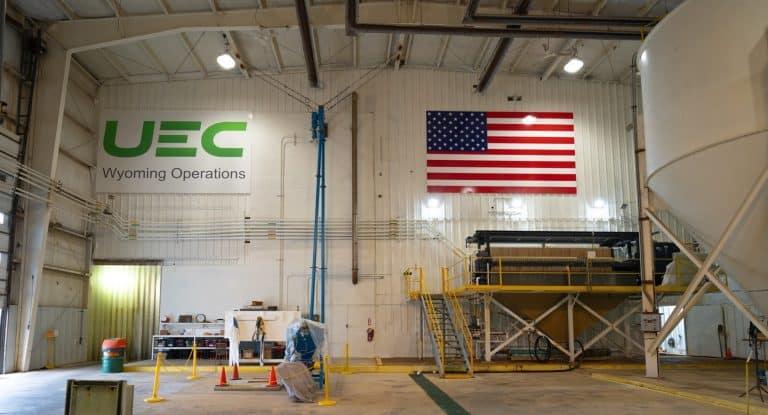
On August 13, US-based Uranium Energy Corp (UEC) announced resuming uranium production at its Christensen Ranch site in Wyoming. However, UEC was already operational in Mine Unit 10 at Christensen Ranch from a week back. The company expects a surge in uranium levels after a certain period, even though the initial uranium concentrations are good enough. But can the mining giant maintain its decarbonization goals amid the anticipated production spike?
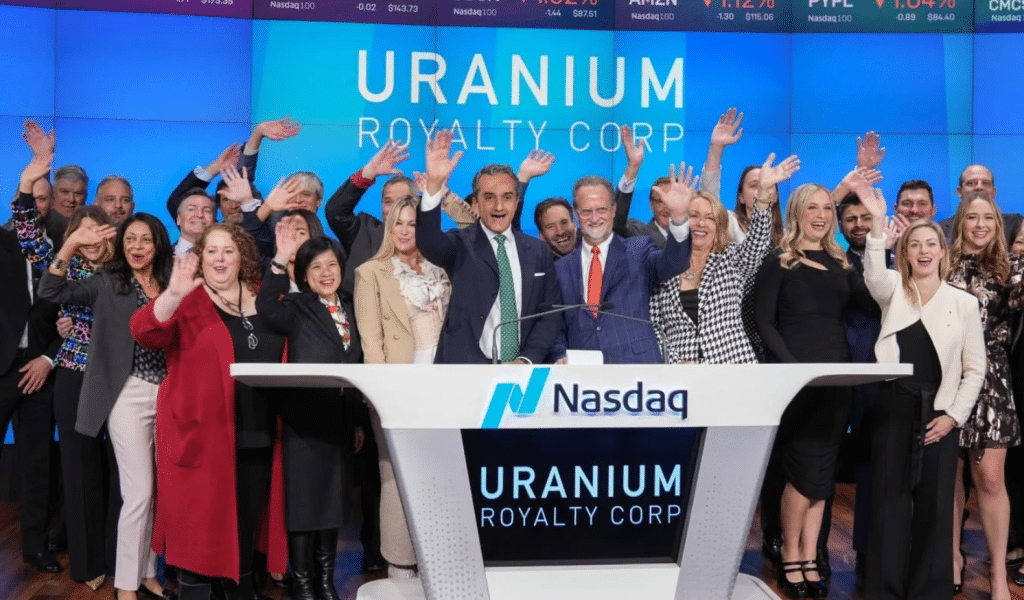
The company is Uranium Royalty Corp., trading as (NASDAQ: UROY, TSX: URC), holding a strong portfolio includes strategic acquisitions in uranium interests with royalties, streams, equity in uranium companies, and physical uranium trading. Their strategic approach aims to support cleaner, carbon-free nuclear energy while fostering long-term relationships based on sustainability principles.
UEC Achieves Key Milestones for Uranium Production Ramp-Up
UEC has prepped up all for the smooth ramp-up of uranium production at its Irigaray Central Processing Plant and Christensen Ranch. Last year, UEC carried out extensive redevelopments at the Christensen Ranch. Subsequently, the uranium recovered from Christensen Ranch will be processed at the Irigaray plant which is located 15 miles northwest of the actual site.
The Irigaray plant, licensed to produce 2.5 million pounds of U3O8 annually, may soon increase its capacity to 4.0 million pounds. However, its regulatory approval is pending.
Another stark feature of this plant is that it’s the hub of UEC’s Wyoming “hub-and-spoke project”, which includes 11 satellite ISL projects, four fully permitted. They expect the first shipment of uranium to be in November or December of this year.
Donna Wichers, Vice President of Wyoming Operations
“The Christensen Ranch ISL Mine has successfully restarted and we are in full growth mode with initial recoveries from Mine Unit 10 to be followed with Mine Units 7 and 8 in the coming months,”
She further explained that UEC has drilled, cased, and completed 55 wellfield patterns to extend Mine Unit 10 but production will start next year. Significantly, additional production growth is underway with delineation drilling and monitoring well planning at Mine Unit 11.
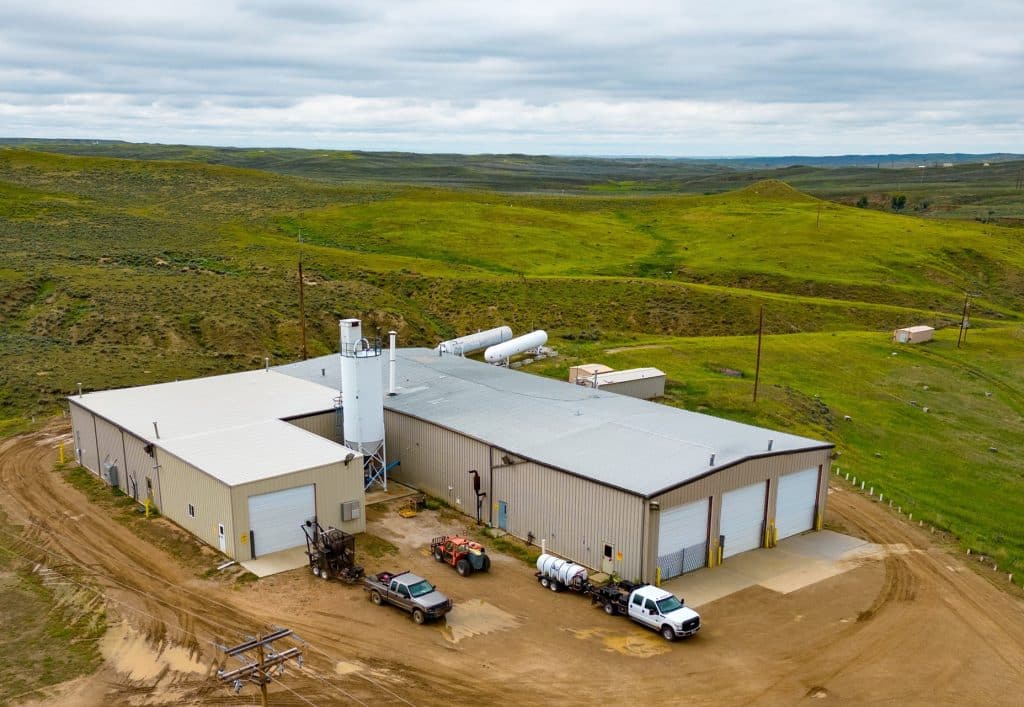
Here’s an image of Christensen Ranch satellite plant exterior
source: UEC
Christensen Ranch Revival: Can UEC Break Free from Russian Uranium Dependence?
Uranium Energy Corp President and CEO Amir Adnani highlighted the increasing demand for regional uranium, supporting U.S. national security needs. With uranium prices rising and Russian imports cut off, UEC has accelerated its production readiness to meet the demand surge for domestic uranium.
From previous media reports, we discovered that UEC acquired the Irigaray plant and associated orebodies, including Christensen Ranch, in 2021. It was made through the purchase of Uranium One Americas Inc. from Russian state-owned Rosatom. The Willow Creek project, which includes both Christensen Ranch and the Irigaray plant, has been on standby mode since 2018. Thus, reviving the site became a necessity.
This acquisition secured key assets, making UEC the largest fully permitted, low-cost ISL resource base among U.S. producers. Since then, the uranium giant has maintained its core infrastructure, including wellfields and the satellite ion exchange plant, to enable a quick restart.
Amir Adnani added,
“I am very proud of the Wyoming team who have executed as planned to achieve the restart of production. This is the moment we have been working towards for over a decade, having acquired and further developed leading US and Canadian assets with an exceptional, deeply experienced operations team. Global uranium market fundamentals are solid, with prospects for extraordinary growth in nuclear power and uranium demand.”
We can infer that UEC’s latest uranium effort directly supports the “Prohibiting Russian Uranium Imports Act.” Once the steady supply begins, it will position America to meet global uranium demand and gain a competitive edge.
Going back to April 2022, UEC reported over 69 million pounds of U3O8 in mineral resources across its Wyoming hub-and-spoke uranium ISL project. Notably, it is the largest S-K 1300 Compliant ISR Uranium Resource Base in the United States
The project encompasses several areas, including Irigaray, Christensen Ranch, Moore Ranch, Reno Creek, Ludeman, Allemand-Ross, Barge, and Jab/West Jab. The mining company reported that its Wyoming projects have:
Total Measured and Indicated resources disclosed in Wyoming projects are 66,198,200 lbs. with 58,460,000 tons with an average portfolio grade of 0.057% eU3O8.
Total Inferred resources disclosed in Wyoming projects are 15,053,700 lbs. with 10,859,000 tons with an average portfolio grade of 0.069% eU3O8.
The company is Uranium Royalty Corp., trading as (NASDAQ: UROY, TSX: URC), holding a strong portfolio includes strategic acquisitions in uranium interests with royalties, streams, equity in uranium companies, and physical uranium trading. Their strategic approach aims to support cleaner, carbon-free nuclear energy while fostering long-term relationships based on sustainability principles.
UEC’s Commitment to Nuclear Energy and Decarbonization
Nuclear energy is crucial for the transition to a low-carbon economy. Thus, UEC is scaling operations to meet rising nuclear energy demand in the U.S. and globally. Most importantly, it aims for net-zero emissions at its ISR facilities in Texas and Wyoming.
As a leading uranium supplier, UEC is well-positioned to support the shift from fossil fuels to clean energy. Its latest objectives include developing a decarbonization strategy for Wyoming and setting emission reduction targets for Scope 1 and 2 emissions. The company also wants to conduct a Scope 3 emissions study for Texas operations.
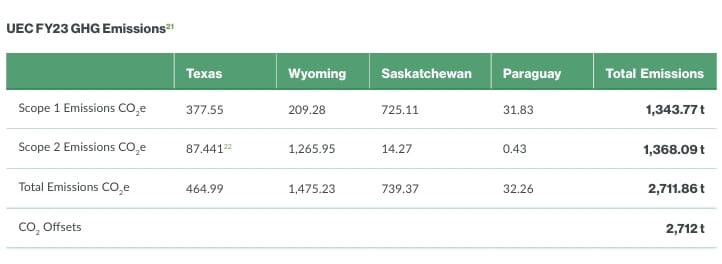
Looking back, UEC has a robust emission reduction strategy in place for its Texas facilities. Despite a slight increase in emissions due to activity at Burke Hollow, UEC continues to invest in carbon offset programs. It covered 2,712 t CO2e last year and is actively working toward further reducing its carbon footprint.
We discovered from its sustainability report that, UEC has invested in the A-Gas Voluntary Emission Reduction Program in Texas. This project mitigates over 1MMT of GHG emissions annually by preventing harmful hydrofluorocarbons (HFCs) from entering the atmosphere. HFCs cause far more environmental damage than CO2.
Cut Scope 1 emissions (about 22% during production) with carbon capture, recycling, and electric vehicles.
Lower Scope 2 emissions (around 78% during production) by using renewable energy and boosting energy efficiency.
source: UEC
Amir Adnani further noted,
“There has been a step-change across the globe with an increasing number of countries adopting plans and programs to restart, extend the life of and or build new nuclear plants in the quest for clean, safe, highly reliable and cost-effective electricity that nuclear power provides.”
The picture is clear, which means UEC’s uranium targets and emission reduction goals will drive a successful transition. All in all, they will also help establish a secure and independent nuclear fuel supply chain in the U.S. in the coming years.
Iberdrola, Europe’s largest electricity provider, through its U.S. subsidiary New York State Electric & Gas (NYSEG), has successfully issued a 10-year green bond worth $525 million (EUR 490 million). The company reported massive demand for the bond that exceeded EUR 2 billion. This high demand allowed Iberdrola to reduce its benchmark interest rate to 135 basis points. As a result, the transaction cost was set at 5.332%.
Investor Confidence Fuels Iberdrola’s U.S. Bond Success
Iberdrola has once again shown financial supremacy under Ignacio Galán’s leadership with a successful bond issue in the U.S. this month. The company smartly capitalized on the recent decline in U.S. long-term interest rates, issuing a green bond that drew participation from over 60 major American investors. Iberdrola will use the secured fund to expand its U.S. network business.
The press release notes that the bond issue was managed by several leading banks, including BNP Paribas, MUFG, Wells Fargo, Santander, SMBC, Intesa, and Commerzbank.
It also highlighted that the current transaction is part of a series of successful financing activities by Iberdrola this year. It follows the EUR 500 million syndicated green loan secured on August 1 with ICO, Sabadell, and HSBC, backed by Cesce.
Furthermore, it has added green loans with the European Investment Bank (EIB) and the World Bank to its portfolio. As a result, the company’s total green bonds outstanding now amount to approximately €23 billion.
Earlier this year, Iberdrola unveiled a major investment program focused on electrification. From 2024 to 2026, the company plans to invest €41 billion in its network and renewable energy projects. The investment will be split 60:40, with the majority going to network growth—covering distribution and transmission—and the remaining portion directed to the U.S.
Additionally, Iberdrola has already completed three other significant financing operations in 2024: a EUR 700 million hybrid bond in January, a CHF 335 million bond in the Swiss market in June, and a EUR 750 million senior bond in July.
Ignacio Galán, chairman of Iberdrola group said,
“As the main issuer of green bonds and provider of renewable energy, Iberdrola supports sustainable finance as a way of speeding up energy transition, along with any other initiative that seeks to tackle climate change.”
Green bonds are used to fund or refinance sustainable projects including renewable energy, clean transportation, energy efficiency and waste management, etc. Notably, Iberdrola has established itself as the world’s largest issuer of green bonds! In early 2021, the company made history by issuing the largest hybrid green bond ever, valued at €2 billion. In another major move in 2022, the energy house issued a 10-year, €1 billion green bond to support its offshore wind projects in France and Germany.
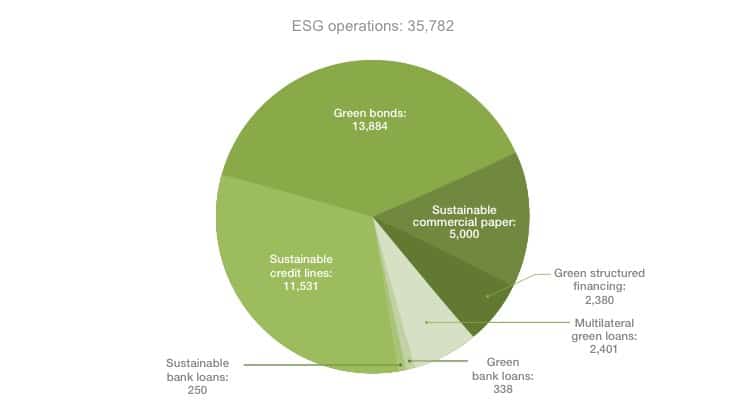
Moving on, green financing aligns perfectly with Iberdrola’s environmental goals. It supports the company’s investment plan by providing investors with transparency, enabling them to allocate funds effectively and measure their contribution to sustainability. Notably, the “Iberdrola Framework for Green Financing” ensures that its green financing efforts are right in place.
Image: Green and sustainable financing chart
source: Iberdrola
Iberdrola’s Climate Action and Net Zero Goals
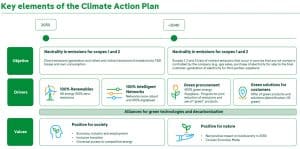
The electricity sector plays a crucial role in achieving the Paris Agreement’s goal of limiting global temperature rise to 1.5ºC. Iberdrola’s Climate Action Plan, aligned with the Paris Agreement, includes ambitious Science Based Targets initiative (SBTi) goals. They include:
achieving carbon neutrality for scopes 1 and 2 by 2030
net-zero emissions across all scopes, including scope 3, by 2040
For over 20 years, Iberdrola has been proactively developing sustainable solutions to support the global shift towards electrification. The company focuses on cleaner energy, increased storage, stable power backup, smarter grids, and enhanced digitization to meet its decarbonization goals.
Most recently, the company has taken a giant leap in the green hydrogen space. It has more than 50 green hydrogen projects, including ammonia and green methanol, spanning across the UK, Australia, Brazil, and the U.S. These initiatives aim to meet the electrification and decarbonization needs of industries and heavy transport.
source: Iberdrola
Four Key Levers Driving the Climate Action Plan
Environmental protection and sustainable development have been top priorities for the energy leader. Its sustainability report reveals that in the last four years, the company has invested over €140 billion in the energy transition. These investments have transformed the electric system, resulting in a more decarbonized generation mix and significantly reduced emissions.
Iberdrola’s Climate Action Plan focuses on four main levers to reduce emissions across all three scopes:
1. 100% Renewables
Iberdrola is heavily investing in renewable energy, expanding storage capacity, and advancing new technologies like hybrid systems and long-term storage. The goal is to achieve 52 GW of installed renewable capacity, primarily reducing Scope 1 emissions while also impacting Scope 3.
2. 100% Smart Grids
By 2025, Iberdrola aims for over 83% of its grid to be smart, making it a key component of a decarbonized and electrified energy system. These actions will directly reduce Scope 2 emissions and indirectly affect Scope 3.
3. Green Solutions for Customers
It is promoting the electrification and decarbonization of energy demand through initiatives like green hydrogen, sustainable mobility, and strategic alliances in green technologies. This lever is focused on reducing Scope 3 emissions.
4. Green Purchases
Iberdrola is committed to buying renewable energy for its use and forming partnerships to reduce emissions and accelerate the development of green products. These actions target reductions in both Scopes 2 and 3 emissions.
All in all, Iberdrola’s ability to attract investors across various markets is evident. As confidence grows, their commitment to sustainability and strategic market timing strengthens.
Lithium and battery technologies are at the forefront of global energy transformation in 2024. As demand for electric vehicles, renewable energy storage, and consumer electronics soars, the race to secure lithium and innovate in battery design is intensifying. This surge is driving significant advancements and investments worldwide. Discover the top lithium stories making news globally.
Chinese Giant Ganfeng Lithium Invests $500M in Turkey
Ganfeng Lithium recently announced a joint venture of $500 million with Yiğit Akü, Turkey’s leading lead-acid battery manufacturer, to boost lithium battery capacity. The new facility will produce 5 gigawatt-hours of lithium battery cells and packs annually.
Ganfeng Lithium Group, the Chinese lithium resource and technology giant, is focusing on expanding its downstream battery production. Last year, 74% of its revenue came from upstream battery materials, and 23% from lithium battery cells and packs. Notably, the R&D center in Turkey will feature advanced lithium battery technologies, including solid-state and high-power batteries for marine and aerospace applications. Both companies expect to grow their overseas customer base and significantly bolster international business. However, the final agreement is still pending approval.
A MESSAGE FROM Li-FT POWER LTD. This content was reviewed and approved by Li-FT Power Ltd. and is being disseminated on behalf of CarbonCredits.com.
Lithium, one of the most essential ingredients in the production of batteries, powers some of our most important devices. As you may already know, it will also be one of the hottest resources in the coming decade. And one of the fastest developing North American lithium juniors is Li-FT Power Ltd (TXSV: LIFT | OTCQX: LIFFF | FRA: WS0) with a flagship Yellowknife Lithium project located in the Northwest Territories.
Benchmark predicts meeting battery demand through 2040 will require at least $1.6 trillion in investment. This amount is nearly 3X the $571 billion needed to satisfy 2030 demand.
Battery demand is expected to rise from 937 gigawatt-hours in 2023 to 3.7 terawatt-hours by 2030. Demand will double again from 2030 to 2040, according to Benchmark’s Lithium-Ion Battery Database.
It further explains, of the $1.6 trillion needed by 2040, 44% will go toward building gigafactories that produce battery cells and assemble packs. As more gigafactories gear up and electric vehicles reach the end of their life, the volume of battery scrap will grow significantly. Subsequently, recycling this scrap into battery materials will require $26 billion by 2030. This would increase investment 5X to $157 billion by 2040 due to the growing amount of battery scrap.
Benchmark also discovered that among critical raw materials, lithium will require the largest investments: $94 billion for 2030 and double that for 2040. Additionally, producing cathode active materials will account for 52% of the midstream investment needed by 2040. These figures are based on Benchmark’s base case scenario. Moreover, meeting the ambitious targets set by policymakers and industry may require even greater investment.
Pilbara Minerals to Acquire Latin Resources for $369.4M
Australia’s leading lithium miner, Pilbara Minerals Ltd., and Latin Resources Ltd. have agreed on a binding Scheme Implementation Agreement (SIA). Under this arrangement, Pilbara Minerals plans to acquire 100% of Latin Resources’ shares for $369.4 million. This deal will allow Pilbara to take control of Latin Resources’ Salinas Lithium Project, which could become a top global hard rock lithium operation. Located in Minas Gerais, Brazil, Salinas offers Pilbara flexibility to supply new markets, depending on prevailing market conditions.
For Latin Resources shareholders, this acquisition means an immediate premium and the unlocking of Salinas’ value. They will benefit from Pilbara’s experience in developing hard rock lithium projects and gain exposure to production from Pilbara’s Tier 1 Pilgangoora operation. For Pilbara, the deal would add approximately 20% to its Mineral Resources and 30% to its steady-state production. This move also opens up new supply opportunities for the North American and European battery markets.
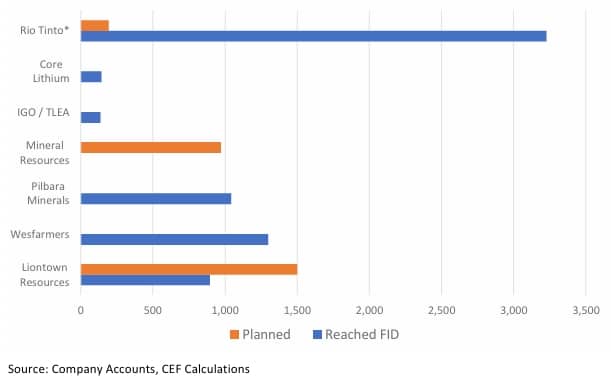
Image: ASX-listed Future Capital Investment into Lithium Assetssource: Clean Energy Finance
E3 Lithium Boosts Canadian Battery Supply with New Demo Facility
E3 Lithium Ltd. plans to build a fully integrated Lithium Brine Demonstration Facility in Alberta. This project aims to produce battery-grade lithium carbonate from brines within the Leduc reservoir. Last year, the company introduced the Direct Lithium Extraction (DLE) pilot program, which was a huge success. Consequently, it will scale up the DLE system and integrate purification, concentration, and chemical conversion processes to create a comprehensive, commercial-like system.
The news release further reveals that the Demo Project will provide real-time data and samples for potential partnerships. This will optimize and reduce risks in the lithium production process. E3’s initiative is a significant step forward in establishing Alberta as a key player in the global battery supply chain. The company plans to share further details in the coming months as it finalizes the project’s design and operations.
European Energy Metals Exploration Plans for Finland
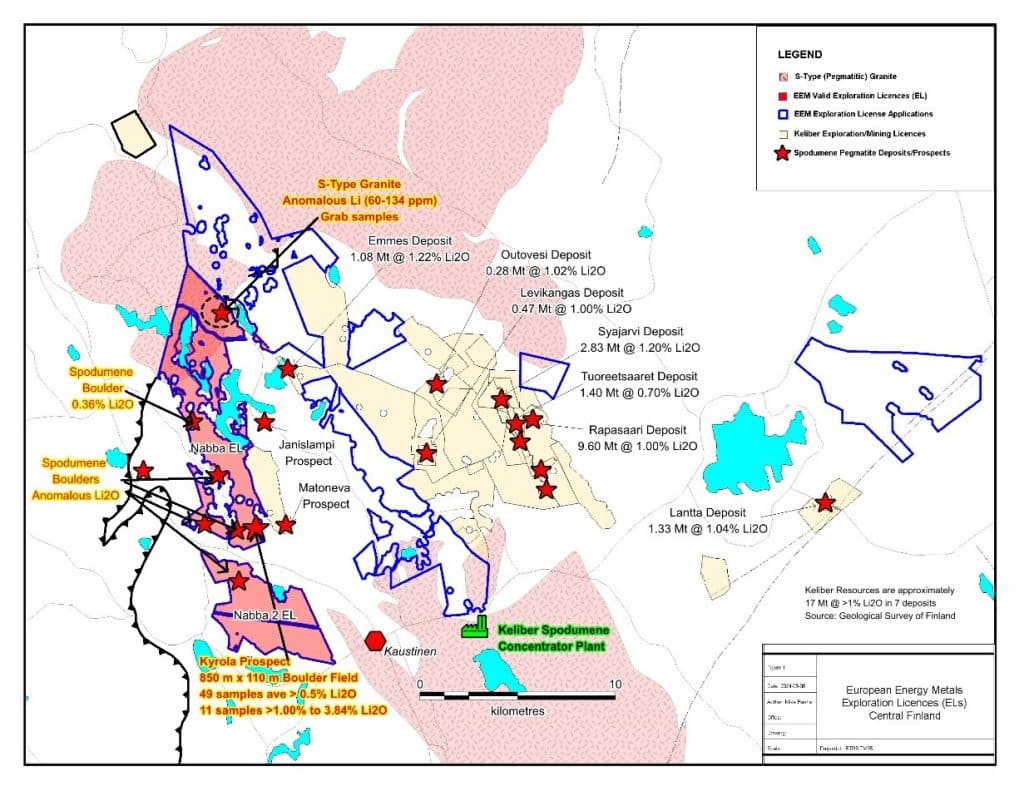
Vancouver-based European Energy Metals Corp. has submitted applications for five new Exploration Licenses (ELs) in Finland, adding to its substantial land holdings. These new ELs cover 10,220 hectares in the Kaustinen region, known for their potential in Lithium-Cesium-Tantalum (LCT) Pegmatites. With this addition, the company’s total EL holdings now reach 15,770 hectares, including the existing Nabba and Nabba 2 ELs.
Jeremy Poirier, CEO of European Energy Metals said,
“The expansion of our exploration licenses allows for more significant exploration to test and define the subsurface extent of widespread mineralization identified on the surface. In conjunction, our 2024 exploration program is designed to advance these projects and areas to a drill definition stage. The prospectivity of our tenements is highlighted by the proximity to other significant known deposits in addition to Keliber’s lithium concentrator currently under construction.”
source: European Energy Metals
The press release mentions that the company’s concessions are strategically located within 15 kms of the Keliber mine, which is set to begin production in late 2025. This area is undergoing significant development, with a €600 million investment led by Sibanye-Stillwater Limited and the Finnish Minerals Group. The project includes open-pit and underground mining, a central spodumene concentrator plant, and a lithium hydroxide chemical plant, aiming to establish a complete lithium supply chain in the region.
On August 13, The U.S. DOE (Department of Energy) announced a $54.4 million investment to reduce carbon emissions. This funding, provided by the DOE’s Office of Fossil Energy and Carbon Management (FECM), aims to advance carbon management technologies that come under its climate change portfolio.
DOE’s Agenda for Advancing Carbon Capture and Storage
Though President Biden has exited the race, his powerfulClimate Agenda will keep driving progress for America. Thus, DOE’s investments are paving the way for the country toward the Biden-Harris Administration’s net-zero emissions goal by 2050.
So, what is included in this latest funding and how will it benefit the carbon economy? Here are the answers.
This funding will support a range of innovative approaches to reduce carbon dioxide (CO2) pollution. The focus is on developing clean technologies that can capture CO2 from both industrial processes and power generation sources, as well as directly from the atmosphere. Once captured, the CO2 can be transported for permanent storage deep underground or converted into valuable products like fuels and chemicals. Notably, these advancements in carbon management technologies will charge upits fight against climate change.
Brad Crabtree, Assistant Secretary of Fossil Energy and Carbon Management.
“Reaching our climate goals requires a significant scale-up of our carbon management projects and infrastructure. DOE’s investments in carbon management will address technical challenges and help reduce costs to accelerate the widespread deployment of these technologies across the Nation, while also helping to ensure projects deliver benefits to communities and workers and mitigate potential risks to public health and the environment.”
Overview of the U.S. DOE Commercial Direct Air Capture Pilot Prize
The American-Made Commercial Direct Air Capture (DAC) Pilot Prize, supported by the Bipartisan Infrastructure Law, will accelerate the development of direct air capture projects that are ready for commercial application. These projects are expected to drive the industry forward, generate well-paying jobs, attract private sector investment, and bring the advantages of climate initiatives to communities that host clean energy projects. Funding for this initiative is sourced from Section 41005.b of the Bipartisan Infrastructure Law.
Certain criteria are set for eligibility for the prizes. Profit and non-profit private entities, non-federal government bodies like states,and municipalities, and academic institutions that meet the necessary criteria can participate. The prize aims to support DAC pilot projects that have completed the early stages but are yet to be included in the Regional Direct Air Capture Hubs program.
This Commercial DAC Pilot Prize offers a total of up to $52.5 million in cash prizes. Teams will receive prizes as they hit key milestones in design, development, and deployment, advancing through four phases.
Key Areas in FECM’s Carbon Management Funding Opportunity Announcement
Reactive Carbon Capture for Conversion to Products
This area focuses on integrating carbon capture with the conversion of CO2 into useful products. It aims to design and validate reactive CO2 capture methods that work with exhaust flue gas from power plants and industrial sites. Additionally, it could also capture CO2 directly from the atmosphere to convert it into eco-friendly products with minimal emissions.
Engineering-Scale Testing for NGCC Power Plants
Projects will test carbon capture technologies at natural gas combined cycle (NGCC) power plants under real flue gas conditions. The goal is to achieve 95% carbon capture efficiency and CO2 purity while working toward a 30% reduction in capture costs.
Portable Carbon Capture Systems for Industrial Plants
This area supports the development and testing of portable carbon capture systems at various industrial sites, such as refineries, cement plants, steel mills, and more.
Preliminary FEED Studies for NGCC Power Plants
These studies will focus on commercial-scale carbon capture systems for existing NGCC power plants or combined heat and power facilities.
Pre-FEED Studies for Hydrogen Production
This area includes studies to advance carbon capture systems that achieve at least 95% capture efficiency. It could be a new or existing hydrogen production facility using coal, biomass, natural gas, or other feedstocks.
CO2 Transport Infrastructure Development
Pre-FEED studies will support the creation of multimodal CO2 transportation infrastructure capable of transferring CO2 across regional and national networks.
Furthermore, applicants must also consider the societal impacts of their projects, focusing on diversity, equity, inclusion, and accessibility. They must explain how their innovations will provide access to the benefits of these new technologies. For more details, check out the U.S. DOE’s official site.
Overall, DOE offers various grants, loans, and financing programs. These resources help startups, and local, state, and even tribal governments launch or scale up their projects to meet their energy goals.
Oxford University spin-off OXCCU has announced a groundbreaking development in the aviation fuel sector: the launch of the world’s first hydrogen-to-synthetic aviation fuel demonstration plant.
Scheduled to commence operations next month at Oxford Airport in England, this innovative project marks a significant step toward achieving more sustainable aviation fuel (SAF) solutions.
What is SAF?
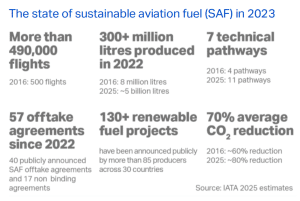
SAF is a liquid fuel for commercial aviation that can cut carbon dioxide emissions by up to 80%. It can be produced from various feedstocks, including waste oils, fats, green and municipal waste, and non-food crops. Below is the state of SAF as of 2023.
Infographics from IATA website
Alternatively, SAF can be synthesized by capturing carbon directly from the air. The term “sustainable” refers to its production process, which avoids competing with food crops, water resources, or causing deforestation.
Unlike fossil fuels, which release carbon that has been sequestered for millions of years, SAF recycles CO2 absorbed by biomass during its growth, thus reducing the overall carbon footprint. This is what the UK-based startup OXCCU is focusing on.
From Air to Aircraft: The Innovation Behind OXCCU’s Synthetic Fuel
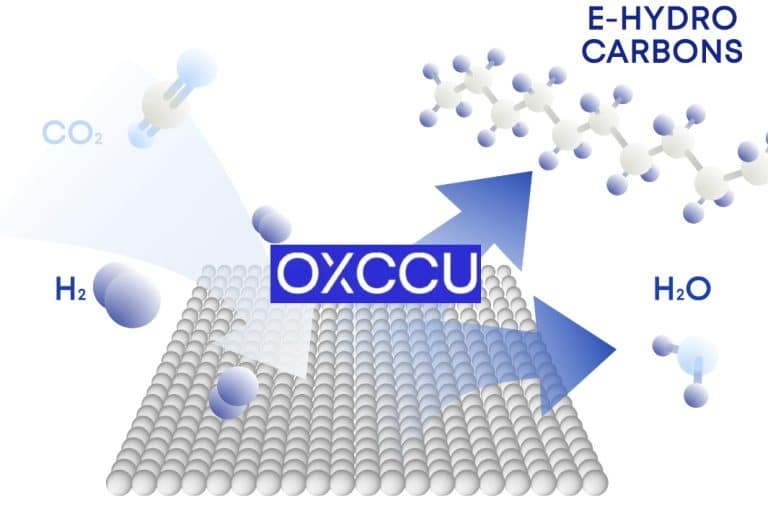
Backed by notable investors, including Saudi Aramco, United Airlines, and energy trader Trafigura, the OX1 plant will demonstrate a novel technology designed to convert hydrogen and carbon dioxide directly into long-chain hydrocarbons. This process uses an advanced iron-based catalyst and reactor design to achieve high conversion efficiency and selectivity, creating a cost-effective and scalable solution for producing aviation fuel.
Traditionally, producing aviation fuel from CO2 and H2 requires multiple steps. It involves CO2 first converted into carbon monoxide (CO) before being turned into hydrocarbons.
OXCCU’s new approach bypasses this intermediate step, significantly reducing energy consumption and overall costs.
OXCCU One-Step Process for SAF
Image from OXCCU website
The one-step, direct conversion process not only streamlines production but also minimizes the formation of unwanted byproducts, making it a more environmentally friendly option.
The OX1 demonstration plant is set to produce about 1 kilogram (1.2 liters) of synthetic aviation fuel daily. While this initial output is modest, it represents a crucial proof of concept for OXCCU’s technology.
The company has announced plans for a larger facility, the OX2 plant, which will be in northeast England. Expected to begin operations in 2026, OX2 aims to produce 160 kilograms (200 liters) of synthetic fuel per day.
These advancements lay the groundwork for future commercial-scale plants that will further develop and supply power-to-liquid (PtL) fuels.
In June of the previous year, OXCCU secured £18 million ($23 million) in Series A funding. Various investors supported this round, including Italian oil firm Eni and several venture capital firms.
Despite the excitement surrounding the OX1 plant, OXCCU has yet to disclose whether the hydrogen used in the pilot will be produced from renewable sources or its specific origin. The successful demonstration and scale-up of this technology are crucial for the future of sustainable aviation fuel.
According to CEO Andrew Symes, the key to achieving widespread adoption of PtL sustainable aviation fuel is making it cost-effective. He particularly said that:
“The single-step fuel we’ve developed in the lab has generated significant excitement due to its potential to dramatically reduce SAF costs. Scaling up is crucial, and this plant will provide the necessary data and fuel production.”
The OX1 plant will provide essential data and fuel volumes needed to validate the technology’s potential and pave the way for future commercialization.
The launch of the OX1 plant is a pivotal moment for the carbon removal and sustainable aviation fuel sectors.
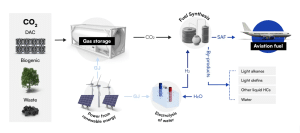
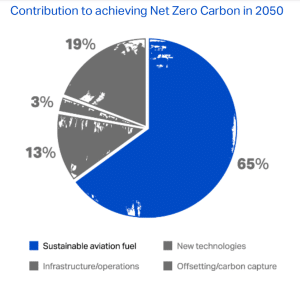
According to the International Air Transport Association (IATA), SAF would be crucial in achieving net zero CO2 emissions for aviation by 2050, potentially accounting for around 65% of the necessary emissions reductions. To meet this target, a ramp-up in SAF production is necessary, with the most substantial growth anticipated during the 2030s.
Chart from IATA website
This surge is expected as global policies become more supportive, SAF achieves cost parity with fossil kerosene, and credible carbon offsets become scarcer.
As the world seeks to address climate change and reduce emissions, innovative solutions like OXCCU’s fuel process are essential. By demonstrating the feasibility of this technology, OXCCU is setting the stage for broader adoption of sustainable aviation fuels.
Nuclear energy is emerging as a potential game-changer for the maritime shipping industry, which currently relies heavily on fossil fuels. With global shipping responsible for nearly 3% of greenhouse gas emissions, there’s a pressing need to explore cleaner energy alternatives. And the integration of nuclear power into the maritime shipping industry is gaining momentum as a promising solution to achieve zero-emission shipping.
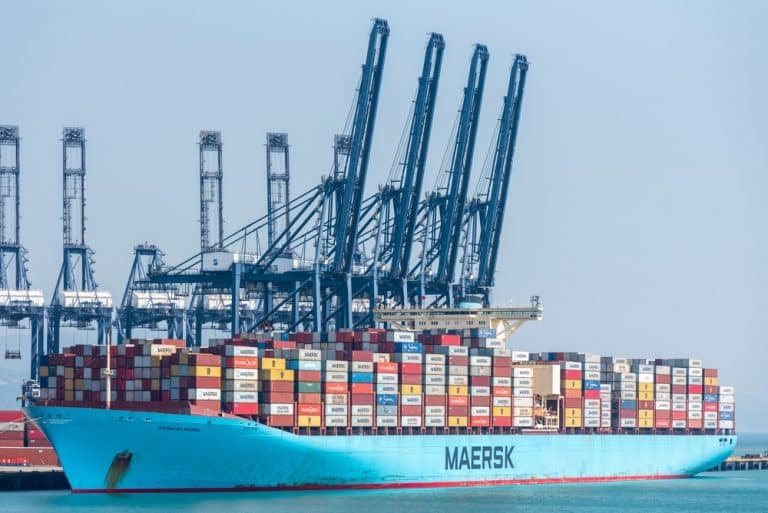
Danish shipping giant Maersk has joined forces with Lloyd’s Register (LR) and UK-based Core Power to explore the potential for nuclear-powered container shipping in Europe. This collaboration represents a significant step in the maritime industry’s efforts to decarbonize.
Teaming Up for Nuclear-Powered Shipping
The study will focus on the feasibility of using a fourth-generation nuclear reactor for powering container ships. Unlike traditional nuclear reactors, these small and mass-produced reactors are designed to consume less nuclear fuel while being less powerful. The partnership will evaluate the necessary regulatory frameworks and safety requirements to operate nuclear-powered vessels in European waters.
Maersk’s head of fleet technology, Ole Graa Jakobsen, acknowledged the challenges associated with nuclear power while also noting that if these challenges can be overcome, nuclear power could become a viable decarbonization option for the logistics industry within the next 10 to 15 years.
Nick Brown, CEO, Lloyd’s Register, remarkably highlighted the role of nuclear in the maritime industry saying that:
“A multi-fuel pathway to decarbonising the maritime industry is crucial to ensuring we as an industry meet the IMO’s emission reduction targets and nuclear propulsion shows signs of playing a key role in this energy transition.”
The maritime sector has been increasingly considering nuclear fuel as a potential solution to reduce its carbon footprint. A survey conducted by the International Chamber of Shipping in May 2022 highlighted growing interest in nuclear-powered commercial ships, with some experts predicting their viability within the next decade.
The collaboration between Maersk, LR, and Core Power signals a forward-looking approach to addressing the environmental impact of shipping.
Advanced Nuclear Reactors: The Next Frontier in Maritime Decarbonization
Nuclear power has a long history of use in naval vessels since the 1950s, and its application in commercial maritime shipping is being revisited due to the urgent need for decarbonization. The U.S. is exploring the potential of marinized nuclear reactors to replace aging fleets and meet the International Maritime Organization’s (IMO) target of a 50% reduction in CO2 emissions by 2050.
Among various types of nuclear energy technologies available, SMRs (small modular reactors) are particularly appealing for maritime applications due to their compact size and enhanced safety features.
SMRs are smaller and more flexible than traditional nuclear reactors, making them suitable for installation on ships. SMRs could provide ships with a steady supply of power, enabling them to travel long distances without the need for frequent refueling stops. This could be especially beneficial for large cargo ships and icebreakers operating in remote areas.
MSRs, a type of SMR, offer even greater potential with their ability to operate on various fuel cycles, including thorium, and provide extended refueling intervals.
Countries like the U.S., South Korea, and Denmark are at the forefront of developing these reactors for maritime use. For instance, Denmark’s Seaborg Technologies is working on a compact Gen-IV molten fluoride salt reactor with a 12-year refueling cycle, aiming for deployment on floating power plants.
Why Nuclear Power Could be the Key
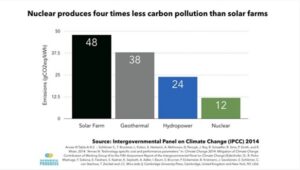
One of the most compelling reasons to consider nuclear energy for maritime shipping is its potential to reduce GHG emissions. Nuclear-powered ships do not emit carbon dioxide during operation, unlike conventional ships that burn fossil fuels. More notably, nuclear generates 4x less carbon emission than solar farms.
Additionally, nuclear energy produces minimal waste compared to fossil fuels, and advances in waste management have made it safer and more manageable.
Moreover, nuclear energy offers a high level of energy security and independence for ships. Unlike fossil fuels, which are subject to price fluctuations and geopolitical tensions, nuclear fuel is abundant and can be sourced from multiple countries.
However, while the potential of nuclear-powered ships is significant, there are challenges related to regulatory approval, public perception, and the high initial costs of reactor development. Still, countries like Russia, China, and the U.S. are making strides in overcoming these hurdles.
Russia, for example, already operates nuclear-powered icebreakers and floating power plants, demonstrating the feasibility of nuclear technology in harsh marine environments.
In the U.S., the adoption of nuclear power in maritime shipping could revitalize the domestic fleet, particularly under the Jones Act. The regulation mandates that goods transported between U.S. ports must be carried on U.S.-built and operated ships.
Could Nuclear Power Revolutionize Shipping?
The development of SMRs and advances in nuclear technology are making it increasingly feasible for commercial vessels to be powered by nuclear energy. However, careful consideration of safety, regulatory, and public perception issues will be crucial as the industry moves forward.
In conclusion, nuclear energy presents a promising opportunity for the maritime shipping industry to reduce its environmental impact and increase energy security. While there are still many challenges to overcome, the potential benefits make it an option worth exploring.
With continued research and development, as well as the establishment of appropriate regulatory frameworks, nuclear-powered commercial shipping could become a reality in the coming decades.
A direct air capture (DAC) company, Heimdal Inc., inaugurated its first plant on August 13 in Oklahoma, marking a significant milestone in the carbon capture industry. The Bantam plant, located near Shidler on the Osage Nation Reservation, is now the largest operational DAC facility in the United States.
The plant is designed to capture over 5,000 tons of CO2 annually. This capacity makes it the second-largest DAC plant globally, just behind the one operated by Heirloom Carbon Technologies in California.
The captured carbon dioxide is used for enhanced oil recovery (EOR), a method of extracting more oil from existing wells. This makes Heimdal’s approach distinct from other carbon capture companies that focus on storing the CO2 underground.
A Swift Success: From Blueprint to Operation
The company’s achievement comes less than a year after Heimdal announced its plans for the Bantam plant. The Altman-backed startup has ambitious goals, with plans for a second, much larger facility that will capture one megaton of CO2 per year. This plant is expected to come online by 2026.
Heimdal’s Direct Air Capture (DAC) process removes CO2 from the atmosphere using an approach that leverages natural minerals. The process starts by heating quarried limestone, which releases calcium oxide. This calcium oxide is then exposed to air, where it acts as a sorbent to capture CO2.
After the CO2 is absorbed, the material is heated again to release the captured CO2. It can then be either stored or utilized for other purposes, such as enhanced oil recovery (EOR).
The key innovation in Heimdal’s process is the use of readily available materials and existing industrial technologies. This approach allows for a more cost-effective and scalable solution.
The DAC company has focused on optimizing this process to achieve a cost of capture below $200 per ton of CO2. This focus on cutting down costs makes Heimdal competitive with other carbon removal methods.
Unlike rivals such as Heirloom Carbon Technologies and Climeworks AG, which avoid using captured CO2 for EOR, Heimdal embraces this practice, supported by prominent investors like Sam Altman and Marc Benioff.
Pioneering a Cost-Effective Pathway to Carbon Capture
Heimdal’s approach is distinct in its combination of simplicity and effectiveness. It is leveraging the natural properties of limestone to create a viable pathway for large-scale carbon capture. By using materials that are widely available and technologies that are already in use in other industries, Heimdal aims to scale its operations quickly and contribute to global efforts to reduce atmospheric CO2 levels.
The startup CEO, Marcus Lima, remarked:
“Our focus has always been on getting things done first, and we are thrilled to share the results of that effort faster than thought possible and more affordably than ever achieved up until now.”
Heimdal’s rapid progress has been enabled by its use of widely available “off-the-shelf” materials. The startup is also employing an approach that prioritizes speed and affordability over immediate net carbon capture efficiency. For instance, until federal permits are obtained for permanent CO2 storage, the captured CO2 will be used for enhanced oil recovery, and the plant will temporarily rely on natural gas to power its operations.
The Bantam plant is part of a broader trend in the U.S. where over a dozen companies are entering the DAC market. This trend is spurred by federal tax incentives and growing corporate demand for carbon offsets.
Notably, Occidental Petroleum Corp. is also set to launch a commercial DAC operation in Texas in mid-2025. The facility boasts an initial capacity of 500,000 metric tons of CO2 per year. BlackRock has committed $550 million to invest in Occidental Petroleum’s DAC project in Ector County, Texas.
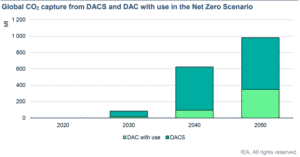
These DAC projects represent a significant step forward for carbon removal technology, which is seen crucial in fighting climate change. The International Energy Agency (IEA) emphasizes the importance of scaling up DAC to achieve global net zero emissions.
The technology’s ability to directly remove CO2 from the atmosphere offers a potential solution for decarbonizing industries that are difficult to electrify or reduce emissions by other means.
Heimdal’s direct air capture plant represents a significant step forward in the U.S. carbon capture landscape. It demonstrates the viability of DAC technology and setting the stage for future large-scale operations.
Copper prices rose on Wednesday due to optimism surrounding potential U.S. interest rate cuts and the impact of a strike at the Escondida mine in Chile, the world’s largest copper mine.
Factors Driving Copper’s Price Revival
The 3-month copper contract on the London Metal Exchange increased by 0.8% to $9,026 per metric ton. This is a turn-around from the previous month’s price dropping to below the $9,000/ton threshold.
This reflects market excitement over the possibility that the U.S. Federal Reserve might shift its focus from controlling inflation to promoting economic growth. Such expectation is fueled by weaker-than-expected U.S. producer price data, which has led investors to anticipate that cooling inflation could prompt rate cuts.
The U.S. dollar index, which fell to a one-week low, also supported copper prices by making the dollar-denominated metal more affordable for buyers using other currencies.
However, gains in copper were tempered by ongoing concerns about the Chinese economy. Recent data showing that bank lending in China in July was the lowest in nearly 15 years has intensified fears of a prolonged economic downturn. This could negatively affect industrial activity and demand for metals.
Notably, a powerful workers’ union’s strike at BHP’s Escondida mine in Chile has further bolstered copper prices. The strikers aim for a bigger share of the profits from the largest copper mine in the world.
What Fuels the Copper Mine’s Unrest?
The strike raises the prospect of disrupted production at a mine that produced almost 5% of the world’s copper output. This strike history is marked by significant disruptions, such as the 44-day strike in 2017, which led to a spike in global copper prices after BHP declared “force majeure.”
The term indicates the company couldn’t fulfill its contracts due to the strike’s impact. Similar disruptions occurred in 2006, 2011, and 2015, with the union’s actions consistently affecting production and prices.
Has substantial financial reserves to support workers during strikes, and
Is protected by Chilean law, which prevents the company from replacing striking workers.
These reasons give the union considerable leverage in negotiations. The union, Sindicato Nro. 1, controls nearly all frontline workers at Escondida, including essential machine operators, drivers, and technicians.
BHP has attempted to restart talks, but the union rejected the latest offer, although it has indicated a willingness to resume discussions. The company has a contingency plan that allows non-unionized workers to continue operations, but the extent to which production is maintained still needs to be clarified.
A key point of contention is the union’s demand for 1% of the mine’s shareholder dividends to be distributed to workers, estimated to be around $35,000 per worker.
In 2021, the union made a similar demand, but an agreement was ultimately reached that provided workers with a bonus of approximately $23,000, along with nearly $4,000 in overtime bonuses.
BHP has currently offered a bonus of $28,900, but the union is holding out for a better deal.
How Could the Strike Affect Copper Prices?
The strike’s impact on copper prices has been limited so far, mainly due to weak demand from China and hopes for a quick resolution. However, the situation could escalate if the strike continues.
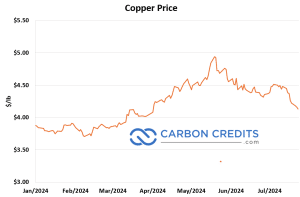
Since copper price reached record highs in May at LME, it has been dropping as shown below.
Remarkably, market sentiment shows a bullish forecast for the red metal, with an expected trading range to go beyond $4.10/pound. According to Trading Economics estimates, copper prices could trade at $4.14/pound at the end of the quarter.
As negotiations between BHP and the union continue, the outcome will significantly impact global copper markets, depending on the strike’s duration and severity. This situation highlights the critical importance of mining in the global copper supply chain. Nearly 90% of the world’s copper comes from mines rather than recycled scrap.
In addition to copper, other base metals also saw gains. LME aluminum price rose by 1.2% to $2,360.50 per ton, zinc climbed by 1.5% to $2,727.50, lead advanced by 0.9% to $2,008, and tin increased by 0.9% to $31,470. However, nickel prices dipped slightly, by 0.1%, to $16,300 per ton.
The ongoing strike and potential shifts in U.S. monetary policy could play pivotal roles in shaping the global copper market’s trajectory in the coming weeks. Investors and stakeholders will be closely watching the developments, particularly as copper remains a critical component to reach the world’s net zero goal.
To provide the best experiences, we use technologies like cookies to store and/or access device information. Consenting to these technologies will allow us to process data such as browsing behavior or unique IDs on this site. Not consenting or withdrawing consent, may adversely affect certain features and functions.
Functional
Always active
The technical storage or access is strictly necessary for the legitimate purpose of enabling the use of a specific service explicitly requested by the subscriber or user, or for the sole purpose of carrying out the transmission of a communication over an electronic communications network.
Preferences
The technical storage or access is necessary for the legitimate purpose of storing preferences that are not requested by the subscriber or user.
Statistics
The technical storage or access that is used exclusively for statistical purposes.The technical storage or access that is used exclusively for anonymous statistical purposes. Without a subpoena, voluntary compliance on the part of your Internet Service Provider, or additional records from a third party, information stored or retrieved for this purpose alone cannot usually be used to identify you.
Marketing
The technical storage or access is required to create user profiles to send advertising, or to track the user on a website or across several websites for similar marketing purposes.