Antimony: The Unsung Hero of Solar Energy and National Defense

In the rapidly changing global energy landscape, one material has become a cornerstone for renewable energy and defense sectors: antimony. This versatile mineral is pivotal in solar technology, battery advancements, and military applications.

However, recent geopolitical tensions have highlighted vulnerabilities in its supply chain, emphasizing the need for nations to secure sustainable sources. Companies like Military Metals Corp are stepping up to bridge the gap, ensuring antimonyโ€™s availability in an increasingly resource-scarce world.

Renewable Energyโ€™s Secret Weapon

The transition to renewable energy relies heavily on advanced materials, and antimony is no exception. In solar panels, this mineral enhances the efficiency of perovskite solar cells by improving light absorption and charge transport. This results in higher energy conversion rates, making solar panels more effective at capturing sunlight.ย 

Additionally, antimony compounds increase thermal stability, allowing panels to endure extreme conditions without frequent replacements.

Energy storage is another area where antimony shines. Liquid-metal batteries, a promising solution for storing solar energy, depend on antimonyโ€™s unique properties. These batteries enable efficient capture and distribution of excess solar power, addressing the intermittency challenges of renewable energy sources.ย 

With solar installations projected to grow exponentially, antimonyโ€™s role in making this energy transition feasible cannot be overstated. The EIA projects solar capacity to reach over 300 GW by 2030 and around 700 GW by 2050.
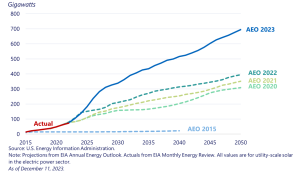
US solar capacity projections

The Silent Shield: Antimonyโ€™s Role in Defense Systems

Beyond renewable energy, antimony is indispensable to national security. The Department of Defense (DoD) uses this critical mineral in 200+ types of munitions, including percussion primers, stab detonators, and armor-piercing rounds.ย 

Moreover, antimony alloys enhance the durability and reliability of lead-acid batteries used in military vehicles and equipment.

Antimonyโ€™s role in flame retardants further underscores its importance in defense. Military uniforms, equipment, and vehicles rely on antimony-based compounds for fire resistance, ensuring the safety of personnel in combat scenarios. Furthermore, antimony-containing semiconductors are critical for infrared sensors and night-vision devices, key technologies for modern warfare.

Breaking Chinaโ€™s Grip: Global Efforts to Secure Antimony Supplies

China controls nearly 50% of global antimony mining and 80% of processing, creating a bottleneck in the supply chain. Recent export restrictions by China, citing dual-use applications of the mineral for both civilian and military purposes, have exacerbated this dependence.ย 

These restrictions pose significant challenges for countries like the United States, which relies on imports for over 80% of its antimony consumption.

Chinaโ€™s export controls also affect antimonyโ€™s availability for renewable energy technologies. The U.S. solar industry, a critical player in the clean energy transition, faces potential disruptions due to limited access to the material for solar panel production.ย 

As trade tensions escalate, securing alternative sources becomes a strategic imperative. Antimony is one of the critical minerals that China restricted export more recently in October this year.ย 

Diversifying Antimony: The Key to Supply Chain Resilience

Countries worldwide are taking steps to reduce reliance on Chinese antimony.ย 

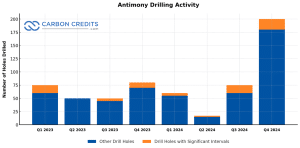
Over two years, global antimony drilling activity totaled 625 holes, with 88 yielding significant intervals. Australia dominated with 444 holes, including 65 significant finds, reflecting its active exploration sector. The USA followed with 44 holes and 10 significant intervals.ย 

antimony drilling activity 2024

Other contributions came from Canada, New Zealand, and Namibia. Emerging interest in regions like Bosnia, Indonesia, and Slovakia highlights a global push to secure antimony resources, driven by rising demand in energy and defense sectors.ย 

This data underscores strategic exploration efforts amid tight global supply chains and geopolitical tensions impacting mineral accessibility.

  • In the U.S., the Department of Defense awarded $15.5 million to Perpetua Resources to explore antimony production from the Stibnite Gold Project in Idaho.ย 

Similarly, Spearmint Resources in Canada has doubled its acreage at the George Lake South Antimony Project, recognizing the mineralโ€™s strategic value.

Moreover, international collaboration is gaining momentum. Nations like Australia, Belgium, and India are investing in antimony processing facilities. Meanwhile, African countries such as Mozambique and Tanzania are emerging as alternative mining hubs. These efforts aim to create resilient supply chains that can withstand geopolitical shocks.

Antimonyโ€™s dual role in solar technology and defense highlights its unique importance. This underscores the need for a balanced approach to resource allocation, ensuring that both renewable energy goals and national security needs are met.

The escalating U.S.-China trade war further complicates this balance. Tariffs, export restrictions, and retaliatory measures threaten to disrupt global markets, making it imperative for industries to innovate and adapt.

Surging Prices and Market Outlook

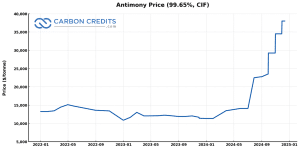
The global antimony market is under intense pressure due to surging demand and constrained supply. In December 2024, antimony trioxide prices soared by almost 232% compared to last year, reaching $38,000 per metric ton. This is largely driven by Chinaโ€™s export restrictions and heightened geopolitical tensions.ย 

The mineralโ€™s critical role in defense, solar panels, and battery technologies has made it a highly sought-after resource.

Global demand for antimony is expected to rise sharply in the coming years, particularly as renewable energy and defense sectors expand. Analysts predict that its market value could grow significantly, driven by advancements in solar technology, energy storage, and defense applications.

Demand for this critical mineral is forecasted to reach $3.5 billion by 2030. However, the market remains vulnerable to supply chain disruptions, with Chinaโ€™s dominance continuing to exert influence on global prices.

Efforts to address these challenges include investments in alternative sources and recycling initiatives. Countries like the U.S. and Canada are accelerating domestic production, while companies like Military Metals Corpย are spearheading exploration projects to tap into previously untapped reserves.ย 

Military Metals Corp: Leading the Antimony Revolution

Military Metals Corp is an emerging key player in ensuring a stable antimony supply. The companyโ€™s strategic assets in Slovakia and Canada aim to reduce dependency on Chinese imports by revitalizing historical mining sites with untapped potential.

Trojarova, Slovakia: Military Metals has identified significant antimony-gold mineralization at this site, with historical estimates indicating high-grade deposits. By extending underground adits and exploring deeper veins, the company plans to unlock valuable resources for both defense and renewable energy applications.

West Gore, Nova Scotia: Once Canadaโ€™s largest antimony producer, this site holds immense potential for modern exploration. Historical data suggests significant quantities of this mineral and gold in waste dumps and tailings, providing a cost-effective avenue for resource extraction.

Military Metalsโ€™ commitment to sustainable practices and strategic exploration ensures a reliable supply of antimony, bolstering both energy independence and defense readiness.

What Comes Next for Antimony?

To meet antimonyโ€™s growing demand, a multi-faceted approach is essential:

  • Investment in Domestic Mining: Expanding mining operations in countries like the U.S. and Canada can reduce reliance on imports and strengthen supply chain resilience.
  • Technological Innovation: Developing alternative materials and recycling methods can alleviate pressure on antimony resources.
  • International Cooperation: Collaborative efforts among nations can diversify supply chains and ensure equitable access to critical minerals.

Antimony is more than just a mineral; it is a linchpin for renewable energy and national security. As the world navigates the complexities of the clean energy transition and geopolitical tensions, ensuring a stable supply of this critical resource is paramount.ย The time to act is now, and antimonyโ€™s story is one of resilience, innovation, and opportunity.
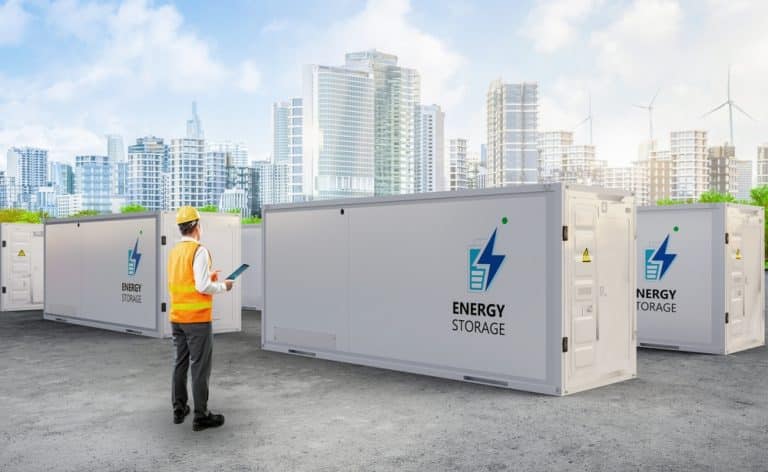
U.S. Battery Storage Hits a New Record Growth in 2024

The U.S. battery storage market achieved unprecedented growth in 2024, fueled by the need for renewable energy integration and improved grid stability. The year surpassed previous records, highlighting the sectorโ€™s rapid expansion and future potential.

Power Surge: How Battery Storage Is Transforming the U.S. Grid

Large-scale lithium-ion battery storage installations in the U.S. reached new heights in 2024, surpassing the previous yearโ€™s record.ย 

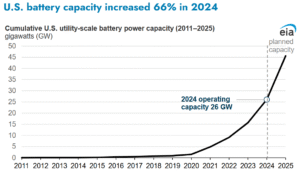
By November, developers had added over 9 GW of new capacity, setting a new benchmark for the industry. This remarkable growth pushed the nationโ€™s cumulative battery storage capacity to exceed 26 GW by the end of 2024, per the U.S. Energy Information Administration.

U.S. battery capacity increased 66% in 2024
Source: US EIA

Most installed battery systems are designed for 1 to 4 hours of discharge, with many directly connected to solar farms. These hybrid setups provide dual benefits:ย 

  • Renewable energy generation, andย 
  • Storage for use during peak demand periods or when solar production wanes.

Among the major projects completed in 2024, Quinbrook Infrastructure Partnersโ€™ Gemini Solar Plus Storage Project in Nevada stands out. This massive facility, which became fully operational in July, combines a 690-MW solar farm with a 380-MW/1,416-MWh battery system. It delivers power under a 25-year agreement with NV Energy, supporting grid reliability and renewable energy adoption.

Charging the Future with Expanding Battery Projects Pipeline

The pipeline for future battery storage projectsย in the U.S. remains robust, reflecting sustained confidence in the sector. By the third quarter, developers had begun construction on 14.2 GW of new battery power capacity, with an additional 2 GW in advanced development.ย 

Looking further ahead, the U.S. battery storage market has a planned pipeline of 143 GW of non-hydro energy storage projects through 2030. This includes ambitious goals for the next few years, including:

  • 43.6 GW in 2025,
  • 37.3 GW in 2026, and
  • 33.8 GW in 2027.

These figures highlight the industryโ€™s rapid evolution and its critical role in the energy transition.

Battery Storage Key to 60% Carbon Reduction

Battery storage is emerging as a critical driver of the energy transition, with costs falling and adoption accelerating. Major companies are expanding their offerings to meet surging demand fueled by the rise of AI and data centers. Both of these will significantly increase energy consumption, driving substantial growth in the global battery storage market.

Electric vehicles (EVs) alone will replace millions of barrels of oil daily by 2030, intensifying the need for large-scale energy storage in the power sector.

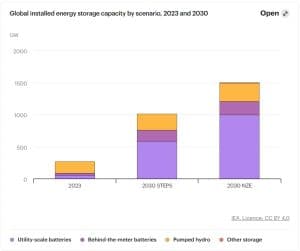
According to the International Energy Agency (IEA), achieving net-zero emissions requires energy storage capacity to grow six-fold by 2030. This means reaching 1,500 GW by that period.ย 

  • Batteries are expected to drive 90% of this expansion, increasing 14-fold to 1,200 GW, while other technologies like pumped storage and compressed air provide support.

lithium battery storage IEA

This rapid growth calls for annual battery deployment to rise by 25%. Batteries could account for 60% of carbon reductions by 2030, both directly through EVs and solar PV systems and indirectly via electrification and renewable energy integration.

As battery storage scales up, it remains essential to decarbonizing the energy sector and ensuring electricity security worldwide. In the U.S., certain states are leading the charge in battery storage development and planning.

Who is Leading the Battery Charge?

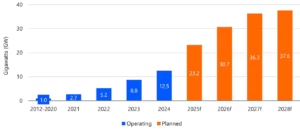
California maintains its dominance with 12.5 GW of installed capacity in 2024. Most of this operates within the California Independent System Operatorโ€™s (CAISO) service area.

Cumulative operating and planned battery storage capacity in CAISO, 2020-2028

California battery storage capacity
Source: Rabobank

Texas follows with a little over 8 GW of installed capacity, supported by its vast renewable energy resources and deregulated energy market. Arizona and Nevada also feature prominently, while no other state has surpassed the 1 GW threshold.

When it comes to planned projects, Texas leads with around 60 GW of battery storage in development, far outpacing Californiaโ€™s 35 GW. Nevada ranks third, followed by Arizona and Oregon.

This geographical distribution highlights the growing regional diversity in battery storage investments, driven by varying energy demands, renewable energy policies, and state-level incentives.

Toward a Clean Energy Future with Solar + Storage

The 2024 additions reflect a healthy mix of hybrid and standalone systems, showcasing the versatility of battery storage solutions. Of the nearly 9.2 GW added this year, around 6 GW were standalone projects, while 3.2 GW were hybrid systems, mostly colocated with solar farms.

These hybrid setups are particularly valuable for enhancing the efficiency of renewable energy projects. By combining solar generation with battery storage, hybrid facilities can store excess solar power during the day and discharge it during periods of high demand or low solar output.ย 

This ability to smooth energy supply and demand makes hybrid systems a critical component of the grid’s transition to cleaner energy sources.ย 

The Atrisco Solar Plus Storage Project in New Mexico is another noteworthy example of hybrid development. This facility includes a 360-MW solar farm paired with a 300-MW/1,200-MWh battery system.

The project delivers power under a 20-year agreement with the Public Service Company of New Mexico, underscoring the long-term viability and economic benefits of such projects.

The rapid growth of the U.S. battery storage market in 2024 reflects broader efforts to decarbonize the energy system. By enabling the integration of renewable energy and improving grid reliability, battery storage is becoming an indispensable tool for achieving national and state-level clean energy goals.

Rio Tinto Bets Big: $2.5B Lithium Expansion in Argentinaโ€™s โ€˜White Goldโ€™ Rush

Rio Tinto Group has announced a major $2.5 billion investment to expand its Rincon lithium project in Argentina. This move aligns with President Javier Milei’s push to deregulate the country’s economy and attract foreign investment. As demand for lithium continues to soar, this expansion positions Rio Tinto as a significant player in the battery materials market.

Scaling Up Lithiumโ€™s Next Frontier

The Rincon project in Argentinaโ€™s Andean salt flats is set to become one of the world’s leading lithium operations. It is part of the โ€œlithium triangleโ€, home to over half of global resources.ย 

The expansion will enable an annual production capacity of 60,000 metric tons of battery-grade lithium carbonate, up from its current 3,000-ton starter plant. Construction of the expanded facility will begin in mid-2025, subject to permitting, with the first production scheduled for 2028. The projectโ€™s full ramp-up to capacity is anticipated to take three years.

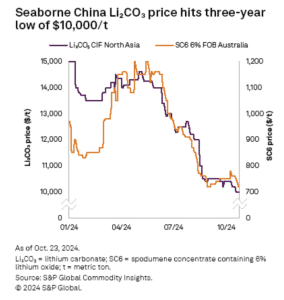
This ambitious undertaking is a response to the booming demand for lithium, a.k.a. white gold. It is a key component in electric vehicle (EV) batteries and renewable energy storage. Despite recent declines in lithium prices due to oversupply and a dip in EV demand, Rio Tinto is forging ahead.ย 

seaborne China lithium price

Jakob Stausholm, Rioโ€™s CEO, emphasized that the long-term outlook for lithium remains robust, driven by the global shift toward green energy. He further noted that:

โ€œBuilding on Argentina’s supportive economic policies, skilled workforce, and exceptional resources we are positioning ourselves to become one of the top lithium producers globally. This investment alongside our proposed Arcadium acquisition ensures that lithium will become one of the key pillars of our commodity portfolio for decades to come.โ€

Leveraging Innovative Technology

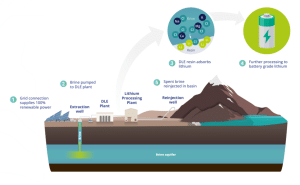
The Rincon project will use direct lithium extraction (DLE) technology, a novel method that is considered more environmentally friendly than traditional lithium extraction techniques. Unlike conventional methods, consuming large quantities of water, DLE conserves water, reduces waste, and ensures consistent production of high-quality lithium carbonate.ย 

direct lithium extraction DLE process
Image from Cleantech Lithium

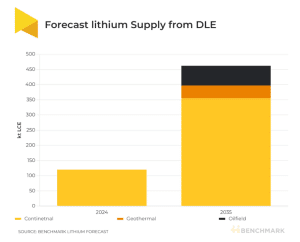
Currently, 13 DLE projects are operational, with a combined output expected to reach 124,000 tonnes in 2024. Benchmark data predicts DLE could supply 14% of global lithium by 2035, producing 470,000 tonnes of lithium carbonate equivalent (LCE). This projection highlights its growing importance in battery and EV markets.

Direct lithium extraction forecast

However, according to RBC Capital Markets analyst Kaan Peker, while DLE holds promise, it also carries risks due to its relatively unproven nature. Potential challenges include cost overruns, delays in ramp-up, and technological hurdles. Despite these concerns, Rio Tinto remains confident in its ability to deliver on its commitments.

Argentinaโ€™s Lithium Boom: Policy Meets Opportunity

The Rincon investment underscores Argentinaโ€™s potential as a global lithium powerhouse. The South American nation is the worldโ€™s 4th-largest lithium producer and boasts the largest lithium reserves globally.ย 

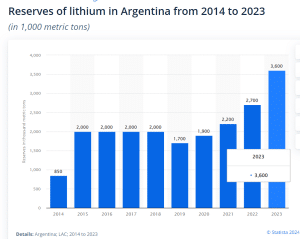
Argentinaโ€™s lithium production could surge from 43,719 metric tons in 2023 to over 261,000 metric tons by 2027. By 2028, it is set to overtake Chile as South Americaโ€™s leading lithium producer, capturing 13.1% of global lithium production, a significant rise from 4.4% in 2023. This growth is bolstered by record-breaking mine production and lithium reserves as seen below.

Argentina lithium reserves 2014 to 2023

The countryโ€™s economic reforms, spearheaded by President Milei, have created a favorable environment for foreign investors. Central to this effort is the Incentive Regime for Large Investments (RIGI), a legislative framework offering tax benefits, currency stability, and trade incentives. These measures provide regulatory certainty for 30 years, safeguarding projects like Rincon from future policy changes.

Stausholm described Rincon as a “poster child” for the RIGI program, praising the initiativeโ€™s ability to attract and protect foreign investments. Rio Tintoโ€™s decision to proceed with Rinconโ€™s expansion highlights the companyโ€™s confidence in Argentinaโ€™s resources, workforce, and supportive policies.

Beyond Rincon: Rioโ€™s Bold Moves in the Battery Market

Rio Tintoโ€™s investment in Rincon is part of a broader strategy to position lithium as a cornerstone of its commodity portfolio. The company recently acquired Arcadium Lithium, a U.S.-based miner, for $6.7 billion, signaling its commitment to becoming a leading player in the lithium market.ย 

Moreover, Rio is exploring lithium opportunities in Chile, including a potential stake in Codelcoโ€™s Maricunga project. The mining giant is also planning to build Europeโ€™s largest lithium mine in Serbia.

Despite the challenges posed by fluctuating lithium prices, Stausholm affirmed Rioโ€™s commitment to accelerating Arcadiumโ€™s projects and ensuring the timely delivery of Rinconโ€™s additional production. By 2028, Rinconโ€™s output can significantly contribute to the global lithium supply.

In addition to lithium, Rio Tinto is also keen on expanding its footprint in Argentinaโ€™s copper sector. Through its Nuton venture, the company holds a stake in the Los Azules copper project, which recently cleared key permitting hurdles.ย 

Stausholm expressed Rioโ€™s interest in furthering its copper investments in Argentina, emphasizing the importance of delivering on existing commitments before pursuing new opportunities.

Rio Tintoโ€™s $2.5 billion investment in the Rincon lithium project marks a significant milestone in its efforts to build a world-class battery materials portfolio. This investment not only strengthens Rio Tintoโ€™s position in the global lithium market but also highlights Argentinaโ€™s emergence as a key player in the energy and mining sectors.ย 

By leveraging advanced technology like DLE, committing to sustainable practices, and capitalizing on Argentinaโ€™s favorable investment climate, Rio Tintoโ€™s project could play a pivotal role in the green energy transition.

Microsoftโ€™s $9 Billion Power Move: Revolutionizing U.S. Clean Energy and Communities

Microsoft has taken a significant step in the global renewable energy transition by partnering with Acadia Infrastructure Capital to launch the Climate and Communities Investment Coalition (CCIC). This ambitious $9 billion initiative aims to develop 5 gigawatts (GW) of renewable energy projects across the United States over the next five years.ย 

The move underscores Microsoftโ€™s commitment to sustainability and highlights corporations’ growing role in accelerating clean energy development.

Sparking a Green Revolution: How Microsoft and Acadia are Powering Up the Future

Acadia Infrastructure Capital specializes in driving investments into North Americaโ€™s proven energy transition infrastructure. The company strategically deploys tax credits and structured/common equity into mid-market, real asset-based opportunities. By focusing on bespoke product structuring, Acadia goes beyond conventional investment approaches to adapt seamlessly to the dynamic energy market landscape.

The CCIC is designed to address the dual challenges of:ย 

  1. Expanding clean energy capacity, andย 
  2. Ensuring that communities benefit from the renewable energy transition.ย 

The coalitionโ€™s projects are expected to generate enough power for nearly 1 million homes. It can also prevent about 15 billion pounds of carbon emissions annually.

These efforts align with Microsoftโ€™s long-standing commitment to reducing its carbon footprint and achieving sustainability goals.

The coalitionโ€™s first project is a 210-megawatt (MW) solar farm in Texas. It is financed in collaboration with Matrix Renewables and supported by the Sustain Our Future Foundation. The project serves as a model for how corporate investment can drive the renewable energy sector forward while providing tangible benefits to local communities.

Corporate-Led Climate Action

Dr. Brian Oโ€™Callaghan, Vice President at Acadia Infrastructure Capital, emphasized the coalitionโ€™s mission to fast-track corporate-led renewable energy financing. He stated that:

โ€œThe CCICโ€™s reason for being is to accelerate corporate-led renewable energy financing with real tangible benefits to local communities.โ€

This approach not only aids in achieving environmental goals but also delivers economic and social benefits.

The CCIC initiative is strategically designed to assist businesses in accessing Renewable Energy Certificates (RECs). Also known as renewable energy credits, RECs are essential for offsetting carbon emissions and greening supply chains. These certificates will enable participating corporations to meet sustainability targets while supporting the U.S. energy transition.

Just a few days ago, Meta also announced a similar move of purchasing green credits from 4 big solar energy projects in the U.S. The deal will produce 760 megawatts of solar power that the big tech can use to negate its carbon emissions.

Tech Meets Climate: Microsoftโ€™s Role in a Global Green Shift

Microsoftโ€™s role as an anchor member of the CCIC reflects its broader sustainability vision. The tech giant has been a leader in climate action, with initiatives ranging from reducing its carbon emissions to designing zero-water data centers.

Unlike other recent renewable energy announcements, Microsoft has not tied the CCIC projects to specific data centers. Instead, the RECs generated are expected to flow into Microsoftโ€™s general sustainability efforts, supporting its commitment to becoming carbon-negative by 2030, which means removing more carbon than it emits.

Microsoftโ€™s Path to Carbon Negativity by 2030

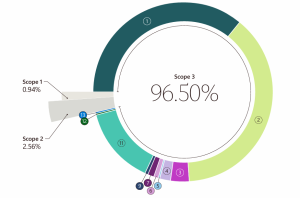
The tech giant aims to remove all emissions since 1975 by 2050. However, achieving this ambitious goal involves tackling complex challenges, particularly the reduction of Scope 3 emissions, comprising over 96% of its carbon footprint. These emissions largely stem from purchased goods, capital goods, and the use of sold products.

Microsoft scope 3 emissions
Chart from Microsoft 2024 Environmental Sustainability Report

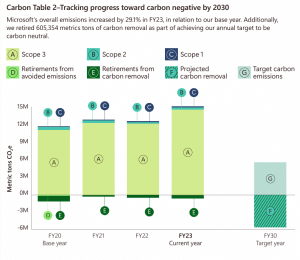
Despite progress, Microsoftโ€™s total emissions rose by 29.1% in FY23 compared to 2020, driven by infrastructure investments. Still, the company has reduced Scope 1 and 2 emissions by 6% through clean energy procurement and efficiency initiatives.

Microsoft 2030 carbon negative target
Chart from Microsoft 2024 Environmental Sustainability Report
  • To scale clean energy, Microsoft expanded its renewable energy portfolio to 19.8 GW across 21 countries by 2023.

It signed power purchase agreements in countries like Brazil, Poland, and New Zealand. The tech company became the first major entity to use 24ร—7 clean energy services for its Washington data center.

Microsoft also focuses on data center efficiency, achieving a PUE of 1.12 and reducing hardware needs for Azure by 1.5%, cutting embodied carbon. The company is electrifying its fleet, with plans to achieve a 100% electric fleet by 2030.

To address unavoidable emissions, Microsoft is investing in carbon dioxide removal (CDR) projects, contracting over 5 million metric tons annually starting in 2030. In 2023, it secured landmark deals, including reforestation in the Amazon and bioenergy with carbon capture. These efforts highlight Microsoftโ€™s commitment to driving sustainability and global decarbonization.

The CCIC further strengthens Microsoftโ€™s renewable energy portfolio, which includes diverse projects across the globe. Danielle Decatur, Director of Environmental Justice at Microsoft, highlighted the coalitionโ€™s significance:

โ€œThe CCIC program provides us opportunities to meet our goals through high-quality renewable energy procurement.โ€

A Triple Win for Corporate Climate Leaders

The CCICโ€™s success relies on its ability to attract additional corporate members. With Microsoftโ€™s leadership and Acadiaโ€™s expertise, the coalition is actively recruiting other companies to amplify its impact.

Tim Short, Managing Partner at Acadia, described the coalition as offering a โ€œtriple winโ€ for corporations with these aspects:ย 

  1. clean energy,ย 
  2. improved earnings, andย 
  3. meaningful community impact.

One of the standout features of the CCIC is its focus on community benefits. The coalition aims to:

  • Expand access to affordable clean energy for low-income households.
  • Create local jobs and promote economic inclusion.
  • Support diverse contractors and suppliers, ensuring equitable growth.

With these goals, the CCIC emphasizes environmental justice, ensuring that renewable energy projects contribute positively to underserved communities. By involving more corporations, the CCIC aims to scale its impact significantly, accelerating the transition to a sustainable energy future.

Microsoft and Acadiaโ€™s partnership set a benchmark for how businesses can lead in the renewable energy space while delivering tangible benefits to local communities. By combining financial resources, technological innovation, and a commitment to social equity, the coalition can help shape the U.S. clean energy landscape over the next five years.

Boosting Aviation Carbon Credits: ICAO Greenlights Verra’s VCS Program for CORSIA Carbon Market

On December 12, Verra mentioned in its press release that The United Nations International Civil Aviation Organization (ICAO) has approved using the Verified Carbon Standard (VCS) Program during the first phase (2024โ€“2026) of the Carbon Offsetting and Reduction Scheme for International Aviation (CORSIA).

This decision marks a significant milestone for the emerging CORSIA carbon market. Subsequently, airlines with a vital new source of carbon credits can meet their aviation emissions mitigation mandates.

Additionally, ICAO released an updated Eligible Emissions Units document, outlining specific VCS credit categories and vintages approved for use in CORSIA’s initial phase.

Aviationโ€™s Carbon Footprint Set to Soar by 2050

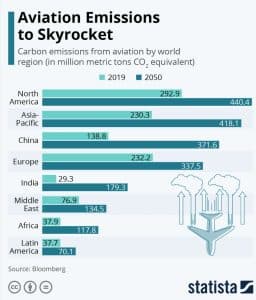
Air travel has become a major contributor to global carbon emissions. Climate experts predict it will be one of those toughest sectors to decarbonize in the coming decades. North America is expected to remain the top emitter, while Asiaโ€™s aviation market, driven by China and India, is projected to grow the fastest. The Asia-Pacific region overall is likely to reduce its gap with North America, solidifying its position as the second-largest emitter.

Statista has presented Bloomberg BNEF data showcasing aviation-related carbon emissions which are set for a sharp rise across all regions over the next 30 years. In 2019, North America generated an estimated 293 million metric tons of COโ‚‚ from aviation, but it can exceed 440 million metric tons by 2050. The Asia-Pacific region trailed at 230 million metric tons in 2019 but is forecasted to reach 418 million metric tons by 2050.

  • Globally, aviation emissions could reach nearly 2 billion metric tons by mid-centuryโ€”almost 2X the pre-pandemic levels of 2019 and nearly 4X the emissions recorded in the 1990s.

Addressing this steep rise will require bold, innovative strategies to decarbonize air travel and mitigate its impact on climate change.

aviation carbon footprint

CORSIAโ€™s First Phase: Expanded VCS Eligibility

With this approval, the number of Verified Carbon Units (VCUs) that may become eligible for CORSIA labels will get a significant boost. While most VCUs are covered under this decision, ICAO has excluded specific project types and methodologies.

Whatโ€™s Included?

Hereโ€™s what remains eligible for Agriculture, Forestry, and Other Land Use (AFOLU) projects in REDD+ countries:

  1. Small-scale projects: Those generating less than 7,000 tCO2e of reductions and removals annually.
  2. Projects using specific methodologies: These include VM0012, VM0017, VM0021, VM0022, VM0024, VM0026 (and VMD0040), VM0032, VM0033, VM0036, VM0041, and VM0042.
  3. โ€œNestedโ€ projects: Projects integrated into jurisdictional REDD+ accounting under Scenario 2a or Scenario 3 of Verraโ€™s Jurisdictional and Nested REDD+ (JNR) Framework.

Additionally, Verraโ€™s new REDD methodology (VM0048) has been made eligible for CORSIAโ€™s first phase under these guidelines.

Whatโ€™s Excluded?

Verra has raised concerns about certain exclusions in CORSIAโ€™s first phase (2024โ€“2026) eligibility rules, highlighting inconsistencies in how theyโ€™ve been applied across crediting programs. The organization is actively working with ICAO to address these issues in future eligibility decisions.

So, the key exclusions that are under review are:

1. Cookstove Methodologies

Credits from methodologies AMS-II.G. and VMR006 were excluded from the VCS Program but remain eligible under other programs using similar methods. Verra questions this inconsistency and urges ICAO to reassess these exclusions.

2. Carbon Capture and Storage (CCS)

Methodologies under sectoral scope 16, which includes CCS projects, have been excluded. While ICAO is still evaluating if carbon dioxide removal (CDR) activities meet CORSIA requirements, Verra emphasizes that CCS extends beyond CDR and plays a critical role in limiting global warming. Verra believes CCS projects meet CORSIA criteria and should be fully eligible, particularly in countries with ICAO-approved greenhouse gas programs covering these activities.

3. Certain AFOLU Projects

AFOLU (Agriculture, Forestry and Other Land Uses) projects not โ€œnestedโ€ into jurisdictional REDD+ frameworks were excluded despite using advanced methodologies. Verra argues for stronger recognition of these projects’ high-quality accounting, particularly under methodologies like:

  • VM0045 Methodology for Improved Forest Management Using Dynamic Matched Baselines from National Forest Inventories
  • VCS Methodology VM0047 Afforestation, Reforestation, and Revegetation,
  • VCS Methodology VM0048 Reducing Emissions from Deforestation and Forest Degradation.

Furthermore, Verra stresses the importance of fair and consistent eligibility criteria for CORSIA. By addressing these exclusions, ICAO can ensure better access to high-quality carbon credits and support impactful climate action in the aviation sector.

Mandy Rambharos, CEO, Verra noted,

“VM0047 provides a scientifically robust approach for projects removing carbon from the atmosphere through tree planting or the restoration of ecosystems. The ICVCMโ€™s approval of VM0047 is a testament to the methodologyโ€™s rigor and credibility and an important milestone in driving global investment to high-integrity ARR projectsโ€”a critical nature-based approach to carbon removals.”

icao verraSource: ICAO

Article 6 Authorization and Updates for CORSIA

Verified Carbon Units (VCUs) from 2021 onward must have an โ€œArticle 6 Authorized โ€“ International Mitigation Purposesโ€ label to qualify for use under CORSIA. This requirement aligns with the Paris Agreementโ€™s mitigation framework. Verraโ€™s Article 6 Label Guidance provides detailed information on these labels, and an updated version, reflecting decisions from COP29, will be released early next year.

Moving on, Verra is also finalizing additional assurance requirements. This will ensure there is no double claiming of mitigation outcomes for VCUs with vintages from 2021. These requirements will soon be published to guide project proponents in meeting the necessary standards.

Next Steps for Verra

Verra plans to release a new CORSIA Label Guidance document in the coming weeks. This document will provide details on several key updates, including:

  • The VCS Programโ€™s revised CORSIA eligibility.
  • New labels differentiating between the pilot phase (2021โ€“2023) and the first phase (2024โ€“2026).
  • Instructions for project proponents to request CORSIA labels for VCUs generated by their projects.

Additionally, the press release highlighted that the Verra Registry has already been updated to show these changes. This means VCUs with CORSIA labels from the pilot phase will be automatically updated to display the new label designations, ensuring consistency with the latest eligibility decisions. These steps aim to streamline the process and enhance clarity for stakeholders as CORSIAโ€™s first phase progresses.

This approach offers more flexibility to airlines to meet CORSIA requirements and supports the global aviation industryโ€™s efforts to carbon neutrality. Moreover, the expanded eligibility is expected to create more demand for VCUs while supporting credible emissions reduction efforts worldwide.

LATEST: Verra Unveils Guidance for ICVCM CCP Label on Carbon Credits

In another scenario, on December 13, Verra published a detailed guide to help project proponents apply the Integrity Council for the Voluntary Carbon Market (ICVCM) Core Carbon Principles (CCP) label to Verified Carbon Units (VCUs).

Verra mentioned,

The release ofย ICVCM CCP Label Guidance, v1.0 follows the ICVCMโ€™s recent approvals of the Verified Carbon Standard (VCS) Program (May 2024),ย VCS Methodology VM0048 Reducing Emissions from Deforestation and Forest Degradation (November 2024), andย VCS Methodology VM0047 Afforestation, Reforestation, and Revegetation (December 2024).

Automatic Labeling for Approved Projects

When the ICVCM approves a methodology, projects using it automatically receive the CCP label on their issued VCUs provided they meet all additional criteria. However, there are situations where projects may need to manually request the CCP label.

This includes cases where VCUs were not automatically labeled but still qualify for the label, or when a project updates its methodology to an ICVCM-approved version for past verification periods. To facilitate this process, Verra will launch a digital form for CCP label requests in 2025, accompanied by detailed instructions to guide users through the application process.

Updating to ICVCM-Approved Methodologies

Verra has released two guidance documents to streamline methodology updates:

  • Methodology Change and Requantification Procedure, v4.0 allows projects to update their methodology or version for past verification periods.
  • Procedure to Change Methodology through a Project Description Deviation, v4.0 helps projects transition to a different methodology or version for current and future monitoring periods.

With these updates, Verra aims to make it easier for projects to meet ICVCM standards, ensuring high-quality carbon credits while supporting global climate action. The new guidance provides the tools needed for projects to align with evolving standards in the voluntary carbon market.

US-China Trade War: Can the US Beat Chinaโ€™s Critical Minerals Grip?

The escalating trade war between the United States and China is reshaping the global energy transition. As the two largest economies exchange restrictions and tariffs, the impact on clean energy technologiesโ€”especially those reliant on critical minerals and international supply chainsโ€”is becoming increasingly apparent.

These geopolitical tensions could stall renewable energy adoption or accelerate innovations and diversification strategies to reduce dependence on Chinaโ€™s dominance.

Chinaโ€™s Critical Minerals Ban: A Strategic Signal

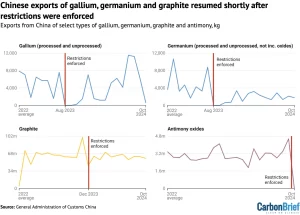
In December 2024, China escalated tensions by banning exports of key minerals to the United States. The targeted mineralsโ€”essential for technologies in semiconductors, defense, and renewable energyโ€”are gallium, germanium, antimony, and graphite.ย 

China exports of critical minerals

This marks a new phase in the trade war, with China signaling its readiness to leverage its dominance in these materials as a geopolitical tool.

Combs and Trivium China co-founder Andrew Polk noted that those restrictions suggest that the largest Asian economy is โ€œready to counter the US moves much more aggressivelyโ€.ย 

While the immediate effects are muted, given prior restrictions on these minerals, the potential for broader economic pain looms large. For example, graphite, a vital material for lithium-ion battery anodes, is critical for electric vehicle manufacturing and grid storage systems.ย 

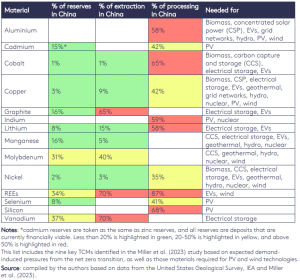
  • China controls 80% of global graphite output and processes 70% of it, making its dominance a significant bottleneck in the clean energy supply chain.

Here are the other critical minerals that China has a substantial grip on as per the Grantham Research Institute on Climate Change and the Environment analysis:

China's control of critical minerals mining and refining

As seen above, China also controls over half of the global processing capacity for aluminum, indium, lithium, silicon, and rare earth elements (REEs), while also leading in REE extraction.

So, how can this control impact the most needed transition to clean energy, particularly for the U.S.?ย 

Rising Costs for Key Technologies:

The price of EV batteries, solar panels, and other clean technologies could rise as supply chain disruptions drive costs. Batteries, which already represent a significant portion of an EVโ€™s cost, require vast quantities of graphite.

Any further restrictions could exacerbate pricing pressures, slowing consumer adoption of EVs and renewable energy solutions. EVsโ€™ high price tags are one of the biggest hurdles for buyers.ย 

Diversification Challenges:

While the U.S. and its allies are pursuing alternatives, building domestic supply chains or sourcing from other nations takes time. Recent investments include a $150 million loan to accelerate graphite mining in Mozambique and a proposal to reopen a gold mine in Idaho to extract antimony for military applications.

These efforts, while promising, are years away from meeting current demand. For instance, the proposed reopening of the Yellow Pine mine in Idaho could bolster domestic antimony supply, but full-scale operations are unlikely before 2027.

Economic Ripple Effects:

A U.S. Geological Survey found that a complete ban on gallium and germanium exports could reduce U.S. GDP by $3.4 billion. While niche applications dominate these materials, their use in semiconductors, LEDs, and military components underscores their strategic importance.

U.S. Strikes Back: Tariffs and Supply Chain Resilience

President Donald Trumpโ€™s administration has pledged to impose steep tariffs on Chinese imports, ranging from 10% to potentially 100%. These measures aim to curb dependence on Chinese goods but risk further inflating costs for clean energy technologies.

Efforts to counter Chinaโ€™s influence include bolstering domestic production and securing new trade agreements. However, the U.S. relies heavily on Chinese manufacturing for components like solar panels and wind turbine parts. This highlights the challenges of quickly achieving supply chain independence.

Global Ripple Effects: Beyond the US and China

The trade war is not only impacting U.S.-China relations; it is reverberating across the globe.ย 

Europe, Japan, and other nations reliant on Chinese-made clean energy components face similar vulnerabilities. For instance, Europe has ambitious offshore wind targets but remains dependent on Chinese supply chains for cost-effective production.

Chinaโ€™s dominance in solar panel and wind turbine manufacturing gives it leverage over global renewable energy development. However, disruptions in its supply chain could also hurt its economy, as nations shift toward alternative suppliers and technologies.

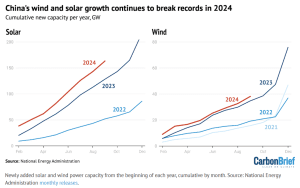
China renewable growth, wind and solar Q3 2024

Chinaโ€™s Paradox: Leading with a Dominant Grip on Supply Chains

Chinaโ€™s position in the clean energy sector is paradoxical. On one hand, it dominates the production of critical materials and components. On the other, it is also a leader in renewable energy deployment, accounting for more than half of global offshore wind installations in 2023.

  • China also produced over 80% of the worldโ€™s solar panel supply in 2023, making any disruption in trade a significant challenge for global renewable energy targets.

This dual role creates mutual dependencies. While China can disrupt global supply chains, its economy benefits from being the worldโ€™s primary supplier of clean energy components. This tension underscores the complexity of the trade warโ€™s impact on both nations.

The US-China trade war, while disruptive, presents opportunities to accelerate innovation and diversification in the energy sector. Hereโ€™s how:

  • Innovation in Battery Materials:
    Researchers are exploring alternative chemistries that reduce reliance on graphite and other materials dominated by China. Advancements in solid-state batteries and recycling technologies could lessen dependence on traditional supply chains.
  • Strengthening Domestic Supply Chains:
    The U.S. and its allies are increasing investments in mining and processing critical materials domestically or through friendly nations. Check out how this energy metals company is doing just that, strengthening U.S. energy independence. Moreover, diversifying supply sources not only reduces reliance on China but also enhances energy security.

The Bigger Picture: Trade Wars and Climate Goals

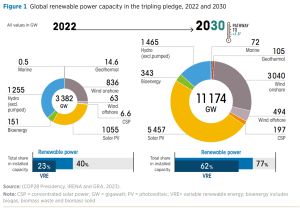
Global clean energy goals depend on the rapid deployment of renewable technologies. The International Renewable Energy Agency (IRENA) estimates that renewable energy capacity must triple by 2030 to meet climate targets.ย 

renewable power triple pledge 2030 wind energy

Trade wars and supply chain disruptions threaten to derail these efforts, particularly in regions heavily dependent on Chinese imports. Even more solar and wind energy together take up over 80% (8,991 GW) of the 2030 renewable tripling pledge.

At the same time, the conflict could drive nations to prioritize long-term energy independence and sustainability. Balancing these competing dynamics will require strategic planning, investment, and international cooperation. The stakes are highโ€”not just for the U.S. and China but for the entire planet.

The US-China trade war highlights the delicate balance between geopolitical rivalry and global cooperation in the clean energy transition. It serves as a stark reminder of the interconnectedness of global supply chains and the need for collective action to secure a sustainable future.

Carbfix and CarbonQuest Unite to Revolutionize Carbon Capture in North America

CarbonQuest, the U.S.-based carbon capture and storage (CCS) provider, and Carbfix, Europe’s leading CO2 mineral storage operator have announced a groundbreaking partnership to tackle emissions from “hard-to-abate” industries in North America.

Both companies will deploy Distributed Carbon Capture and Storage (DCCS) solutions, making decarbonization more accessible and efficient for medium-scale emitters in the United States and Canada.

Unlocking the MOU between Carbfix and CarbonQuest

Under the Memorandum of Understanding (MOU), CarbonQuest and Carbfix will combine their expertise to address carbon emissions and mineralization at point sources. Their joint efforts will focus on industries such as manufacturing and utilities that face unique challenges in reducing emissions.

Subsequently, by locating emitters near mineralization-ready sites, the partnership will streamline the creation of onsite CCS projects for both new and existing facilities.

Innovative Technology at the Core

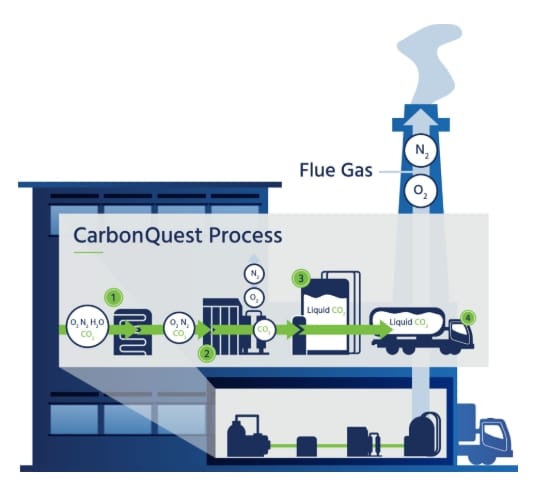
CarbonQuestโ€™s modular DCCS technology features compact solid sorbents that can capture CO2 in space-constrained settings. This system works seamlessly in industrial facilities, utility infrastructure, and campus power generation setups such as Combined Heat and Power (CHP) systems and fuel cells. The captured CO2 is then liquefied for easy transport to mineralization sites or local businesses.

On the other side, Carbfix offers a transformative solution by dissolving CO2 in water and injecting it into porous basaltic rock formations. Within two years, the CO2 transforms into stable carbonate minerals, effectively turning it into stone.

Carbfixโ€™s technology is already commercially established across Europe. However, through this partnership Carbfix can expand to new locations for CO2 mineralization, thereby pushing commercial growth across North America.

Edda Aradรณttir, CEO of Carbfix noted,

โ€œCarbfix is excited to partner with CarbonQuest to advance our interest in North America. We see tremendous potential for carbon mineralization in a variety of business scenarios from co-location or mineralization hubs, and this MOU will ensure that, together, we can bring meaningful projects to reality in the U.S. and Canada,โ€

Shane Johnson, CEO of CarbonQuest said,

โ€œOur partnership with Carbfix will accelerate the adoption of carbon capture throughout North America,โ€. โ€œTogether we see numerous opportunities in both new and existing applications. Carbfixโ€™s solution is a cost-effective and permanent way to mineralize captured CO2 even for emitters located far from a mineralization hub. This aligns with our goals to make the end-to-end CO2 capture and mineralization as local as possible.โ€

CarbonQuest: Capturing CO2 Through Modular Solutions

CarbonQuest offers a modular solution to capture CO2 emissions from small- and medium-scale emitters before they reach the atmosphere. Their broader goal is to help businesses achieve their GHG Protocol requirements and Science-Based Targets (SBTi) while significantly lowering their carbon footprint. One such way is to reduce their Scope 1 emissions.

Furthermore, they integrate their innovative carbon capture system with other sustainable solutions to accelerate emissions reductions and improve energy savings. For example, they connect with renewable energy sources like solar power, energy efficiency systems, and partial electrification to boost the decarbonization efforts of companies.

Image: Building Carbon Captureโ„ข: Explore how the integrated four-step process works for carbon capture.

carbonQuest carbon captureSource: CarbonQuest

The companyโ€™s patented carbon capture system is scalable and adaptable under various environments, making it ideal for owners and operators of facilities or onsite distributed power systems.

This is how CarbonQuestโ€™s Sustainable CO2โ„ข solution supports the circular economy by turning captured carbon into a resource for other industries.

Carbfix: Leveraging a Decade of Expertise in CO2 Mineral Storage

Carbfix provides a natural and permanent CO2 storage solution by transforming CO2 into stone underground in under two years. The company partners with businesses worldwide to promote safe, scalable carbon mineral storage through feasibility studies, pilot programs, facility construction, and full-scale commercial operations.

Permanent carbon mineralizationcarbfix carbon captureSource: Carbfix

Some of their key projects are:

Silverstone Project

Project Silverstone is a cutting-edge initiative funded by the EU to implement full-scale CO2 capture, injection, and mineral storage at Icelandโ€™s Hellisheรฐi ON Power plant. This project will transform the plant into one of the worldโ€™s first geothermal power facilities with a near-zero carbon footprint. By 2030, Silverstone is expected to deliver 10% of Icelandโ€™s Climate Action Plan targets for energy and industrial sectors not covered by the EU ETS.

Nesjavellir Pilot Plant

In 2023, Carbfix launched a pilot carbon capture and storage (CCS) plant at the Nesjavellir geothermal site in Iceland. Developed under the H2020 Geothermal Emission Control project, the plant started injecting CO2 and H2S into the ground. This pilot optimized Carbfixโ€™s capture technology and laid the foundation for future large-scale projects.

Thus, Carbfixโ€™s innovative approach ensures permanent and safe underground CO2 storage, contributing to global climate recovery efforts.

By combining innovative solutions and expertise, CarbonQuest and Carbfix are paving the way for a sustainable future while helping businesses achieve net-zero emissions. All in all, this collaboration marks a crucial milestone for North Americaโ€™s journey toward decarbonization.

Source: Carbfix and CarbonQuest announce a Memorandum of Understanding to Pursue distributed Carbon Capture and mineralization Projects in North Americaย  – Carbfix

Gone with the Wind: Is This the End for Wind Energy?

For years, wind energy has symbolized the clean energy transition. Towering turbines onshore and offshore have driven significant progress in reducing carbon emissions. However, recent setbacks in the global offshore wind industry have raised concerns about its future.ย 

Rising costs, delayed projects, and shifting investment priorities force governments and companies to reassess their ambitious wind energy targets. While countries like China continue dominating the sector, others, including the United States and European nations, struggle to keep pace.

Profit vs. Progress: Why Energy Giants Are Scaling Back Offshore Ambitions

The offshore wind sector faces mounting challenges, with profitability concerns leading to significant withdrawals. Most recently, five energy companies, including Shell and Lyse, pulled out of Norwayโ€™s first large-scale floating offshore wind tender. The project, slated for 1.5 GW of capacity, has been deemed too risky due to profitability, timelines, and industrial maturity concerns.

Norwayโ€™s government capped state support at NOK 35 billion (EUR 3 billion), which critics argue is insufficient to attract large-scale investments. Energy Minister Terje Aasland defended the cap, stating it would be enough to launch 500 MW of floating wind capacity.ย 

However, energy companies like Fred. Olsen Seawind and Hafslund have opted out, citing Norwayโ€™s restriction on mainland-only connections, which limits the profitability of exporting energy to other countries.

This follows a pattern seen elsewhere in Europe, where rising costs and regulatory constraints are driving companies to reconsider offshore wind projects. Denmarkโ€™s ร˜rsted, a global leader in renewables, has also exited several offshore wind opportunities, highlighting broader challenges within the sector.

Skyrocketing Costs Blow Offshore Wind Goals Off-Course

Globally, the offshore wind industry is grappling with escalating costs.

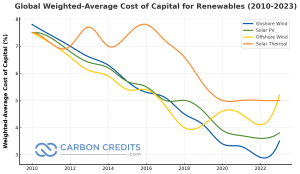
  • Over the past two years, the average cost of offshore wind projects has risen by 30% to 40%, reaching $230 per megawatt-hour (MWh). This is more than 3x the cost of onshore wind, placing significant pressure on developers.

cost of capital for renewables, wind energy

Inflation, supply chain disruptions, and high interest rates have further exacerbated the financial strain.

Equinor, a leading player in renewable energy, recently withdrew from offshore wind projects in Vietnam, Spain, and Portugal, citing unsustainable costs. Paal Eitrheim, Equinorโ€™s head of renewables, noted that:

“Itโ€™s getting more expensive, and we think things are going to take more time.”ย 

Similarly, Shell, another energy giant, is scaling back its offshore wind ambitions. Shell sold its stakes in projects across Massachusetts, South Korea, Ireland, and France, signaling a strategic retreat from leading offshore developments.

Shell CEO Wael Sawan admitted that the company lacks the competitive advantage to generate material returns in renewable generation. This sentiment is echoed by other oil majors like BP.

The withdrawal of these energy giants underscores a fundamental shift in priorities, with many companies now favoring onshore renewables like solar and wind, which are less affected by rising costs and regulatory hurdles. These challenges come at a time when global governments have set lofty targets for offshore wind energy.

Global Shortfalls and Missed Targets

Governments around the world have pinned their hopes on offshore wind as a key driver of the clean energy transition. The International Renewable Energy Agency (IRENA) initially projected a need to increase global offshore wind capacity from 73 GW to 494 GW by 2030 to meet climate goals.ย 

renewable power triple pledge 2030 wind energy
Chart from IRENA
  • However, revised estimates now suggest the industry will fall short by one-third, delaying this milestone until after 2035.

The U.S. Offshore Wind Dilemma

The U.S. offshore wind industry, for instance, is at a crossroads. The country aimed to install 30 GW of offshore wind by 2030 but has less than 200 MW operational as of mid-2024.

Despite federal support through tax credits and lease auctions, the sector faces significant challenges. The outgoing administration of President Joe Biden issued permits for 15 GW of projects and held six lease sales. However, the recent election of President-elect Donald Trump raises concerns about future policy support, as his campaign promised to dismantle the industry’s progress.

Carl Fleming, a renewable energy policy advisor, noted that market conditions alone make it unlikely for the U.S. to meet its 2030 goals, regardless of political leadership. Delays in project approvals and a lack of supply chain investment have hindered progress. Analysts predict the country will achieve less than half of its target due to these challenges.ย 

The European Wind Shortfall

Europe, which currently accounts for 40% of global offshore wind capacity, is also falling behind. Rising costs and lengthy approval processes have slowed progress.

Nations like the UK, Germany, and the Netherlands are projected to meet only 60% to 70% of their 2030 targets. Even Norway, a country with abundant wind resources, is struggling to attract developers due to perceived risks and limited support mechanisms.

Future auctions will require far larger investments to meet the targets, putting additional pressure on developers and governments alike.

Rebecca Williams, deputy CEO of the Global Wind Energy Council, expressed cautious optimism, stating that with the right policies, targets remain achievable. However, delays and financial constraints make it increasingly unlikely that Europe will meet its goals within the set timelines.

China’s Offshore Wind Boom

While Western markets struggle, China continues to dominate the offshore wind sector.

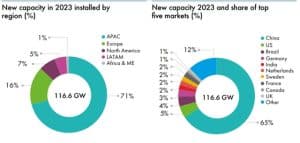
  • In 2023, China accounted for more than half of the worldโ€™s new offshore wind installations, adding 6.3 GW of capacity.ย 
new wind capacity by region 2023
Chart from DIGITIMES Asia

The countryโ€™s state-owned enterprises benefit from low financing costs, subsidies, and locally produced components, enabling rapid deployment.

Chinaโ€™s dominance is expected to grow further, with annual installations projected to reach 16 GW over the next few years. However, the countryโ€™s closed market limits opportunities for international developers to participate or benefit from its advancements.

The Winds of Change: Adapting to a Shifting Energy Landscape

Remarkably, a recent market development suggests renewed enthusiasm. Energy giants BP and JERA have partnered to create JERA Nex BP, a $6 billion joint venture aimed at becoming one of the worldโ€™s largest offshore wind developers. Combining their existing assets, the venture boasts a potential net generating capacity of 13 GW.ย 

BP CEO Murray Auchincloss emphasized the companyโ€™s โ€œcapital-lightโ€ growth approach, while JERA CEO Yukio Kani highlighted offshore windโ€™s critical role in the energy transition.

With 1 GW of current capacity, 7.5 GW in development, and 4.5 GW of secured leases, this collaboration seems to bring back confidence in offshore windโ€™s role in the energy transition.ย 

Ultimately, the offshore wind industry is facing significant headwinds, but it remains a vital part of the clean energy transition. The current challenges highlight the need for governments and developers to adapt, innovate, and collaborate to ensure wind energy remains viable.

Chinaโ€™s rapid progress offers valuable lessons on the benefits of state support and localized manufacturing, while the struggles in Western markets underscore the importance of addressing financial and regulatory barriers.

The question is not whether offshore wind will survive but how it can evolve to meet the demands of a rapidly changing energy landscape.

ExxonMobilโ€™s First-of-its-Kind Carbon Capture Solution for the U.S. Data Centers

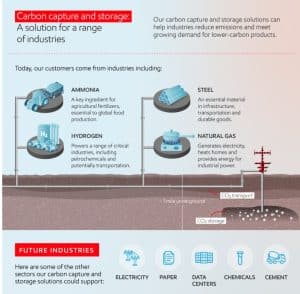
ExxonMobil, a pioneer in carbon capture and storage (CCS) helps the U.S. industries, mainly steel, ammonia, and hydrogen reduce their carbon emissions while meeting growing demand for lower-carbon products. But this time they are targeting the power-hungry U.S. data centers, as mentioned in their press release.

The oil giant is developing a groundbreaking plan to provide low-carbon power to the U.S. data centers which are vital hubs for the booming artificial intelligence (AI) sector. The proposal outlines a first-of-its-kind facility that would produce electricity with natural gas while capturing over 90% of associated CO2 emissions. The captured emissions would then be safely stored deep underground.

Dan Ammann, president of Exxon’s Low Carbon Solutions Business said,

โ€œWeโ€™re in a unique position to provide low-carbon power at large scale on a very competitive and accelerated timeline.”

ExxonMobilโ€™s Natural Gas Equipped Carbon Capture for Data Centers

ExxonMobil’s CCS technology supports key industries like steel, ammonia, and hydrogen. The company has already secured agreements to transport and store up to 6.7 million tons of CO2 annually for these sectors. They proudly claim this scale is more than any other competitor.

However, with data centers tapping into CCS, Exxon has a different plan to decarbonize them.

So, hereโ€™s what makes the project stand out:

  • Low-carbon fuel: The facility plans to use low-carbon-intensity natural gas, like what ExxonMobil produces in the Permian Basin.
  • Grid independence: Operating off-grid allows for faster deployment, unlike traditional grid-dependent systems or slower alternatives like nuclear power.
  • Accelerated timelines: ExxonMobilโ€™s expertise and scale enable swift action to meet the urgent demands of AI growth, which could account for 20% of the CCS market by 2050.

This innovative solution highlights how CCS can support industries beyond heavy manufacturing and create a sustainable pathway to decarbonize emerging sectors like AI.

As new solutions are urgently needed to support AI growth, Exxon wants to move fast. They are leveraging their strengths in integration, operational scale, and project expertise. Significantly, the front-end engineering design (FEED) for this project is already in progress, and currently, the company is engaging with potential customers.

ExxonMobil carbon captureSource: Exxon

Permian Basin: A Key Pillar in ExxonMobilโ€™s Net-Zero Vision

Exxon has a strong focus on expanding energy supplies from the Permian Basin to meet the global demand for reliable energy. This vast region, covering southwest Texas and southeast New Mexico, plays a critical role in the company’s operations and Exxon is one of the most active operators in this area.

In 2021, ExxonMobil became the first integrated energy company to join a program that certifies natural gas production. The pilot program is based in Poker Lake, New Mexico, a key area of its Permian Basin operations. There they use MiQโ€™s standardsโ€”set by a nonprofit organization focused on verifying and mitigating methane emissions.

This certification program is part of Exxonโ€™s broader strategy to reduce emissions and achieve Scope 1 and 2 net-zero goals as a certified natural gas supplier.

Empowering U.S. Industry with CCS Technology

Exxon bets on the U.S. Gulf Coast for its CCS projects. This is because that particular region offers some unique advantages like a dense industrial base, existing CO2 pipeline infrastructure, and proximity to large storage sites.

The company further disclosed that Texas, Louisiana, and Mississippi are the key states for their CCS portfolio. They also drive U.S. exports, which hit a record $1.6 trillion in 2023. By integrating CCS, industries like steel and ammonia production Exxon expects to gain a competitive edge in global markets.

For instance, Exxon signed its fourth carbon capture and storageย agreement with a major customer, CF Industries just a few months back. The deal will involve transporting and permanently storing up to 500,000 metric tons of CO2 annually from CFโ€™s nitrogen production complex in Yazoo City, Mississippi. They expect to roll on by 2028 and cut CO2 emissions by about 50%.

With this new agreement, the company can now store a total of 5.5 million metric tons of CO2 annually for customers. Well, this is equivalent to removing about 2 million gasoline-powered cars from the road.

Exxon Sets a Major Milestone in Emissions Reduction

Carbon capture and storage (CCS) is crucial for the energy transition. Both the UN and the IEA agree that CCS is one of the most cost-effective ways to reduce emissions in industries with heavy emitters, such as chemicals, refining, cement, and steel.

Itโ€™s also one of the few technologies capable of achieving negative CO2 emissions, especially when paired with bio-energy or direct air capture.

The Center for Climate and Energy Solutions says that CCS can capture over 90% of emissions from power plants and industrial facilities.

Keeping all these facts intact in its net zero goals, ExxonMobilโ€™s investments in CCS highlight its commitment to emissions reduction and sustainability. Additionally, supporting U.S. economic growth.

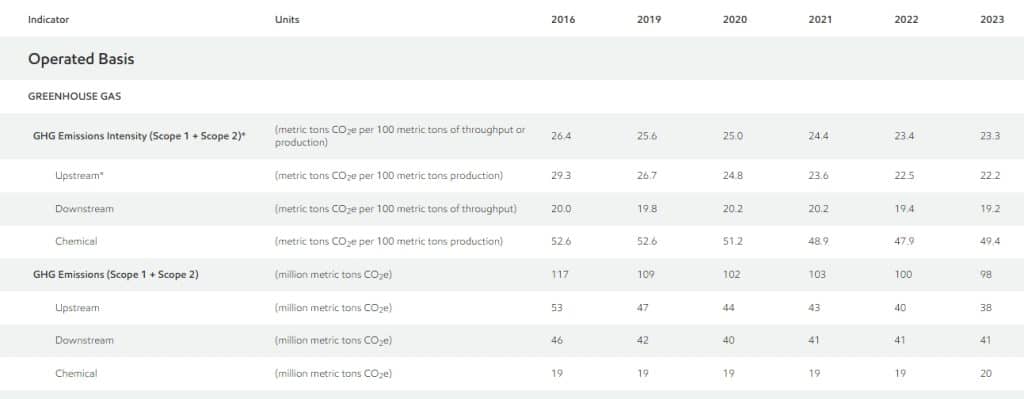
Greenhouse Gas and Performance DataExxonMobil

Source: Exxon’s sustainability report

By expanding into AI and data centers, ExxonMobil is proving that carbon capture is crucial to decarbonizing vital sectors and securing America’s leadership in innovation.

UK Renewables Outshine Fossil Fuels in 2024: Wind Gushes Ahead

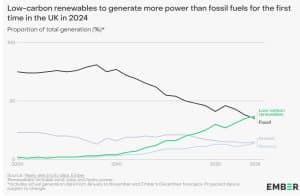
Renewable energy will take the lead in the UK power mix for the first full year in 2024, according to an analysis by global energy think tank Ember. This means 2024 will be the first full year where UK low-carbon renewable sources like wind, solar, and hydropower generated more electricity than fossil fuels. This milestone marks a significant shift in the energy landscape, with wind generation likely to be the country’s largest power source, edging out gas.

Elaborating further on the report, in 2024, wind, solar, and hydropower generated 37% of the UKโ€™s electricity (103 TWh), compared to 35% (97 TWh) from fossil fuels. This marked a significant leap from 2021 when fossil fuels produced 46% of electricity and renewables just 27%.

Fossil Fuels Face Sharp Decline

The Ember report showcased record-low power generation from fossil fuel, which fell by two-thirds since 2000. The decline in fossil fuel reliance was driven by a combination of increased renewable capacity, lower electricity demand, and cheaper imports.

Gas power, which accounted for 34% of electricity in 2023, dropped to 30% in 2024โ€”the lowest level since 1996. This represents a 13% decline (13 TWh) year-on-year, marking one of the largest falls outside of the COVID-19 pandemic.

Most significantly, the UKโ€™s coal phaseout also played a critical role. The country closed its last coal-fired power plant in 2024, joining the ranks of one-third of OECD nations now coal-free. The Ember study highlighted the rapid decline of coal power since 2012, culminating in zero coal generation by October 2024.

renewable energy UK

The Sad Tale of Crumbling Coal

UKโ€™s Department of Energy Security and Net Zero (DESNZ) issued a Statistical Release on September 26, 2024, highlighting the downfall of coal throughout the second quarter of this year.

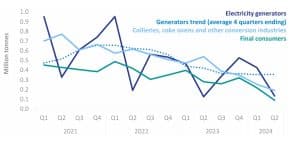
  • In Q2 2024, overall coal production in the UK fell to only 19,000 tonnes. This marks an 84% decrease compared to the same period in 2023.

With the closure of the last major surface mine, Ffos-Y-Fran, at the end of November 2023, thereโ€™s now no large-scale surface mining left in the UK. Despite a slight rise in coal demand by electricity generatorsโ€”up 6.6% from the previous year to 135,000 tonsโ€”coal still accounted for less than 1% of the UKโ€™s electricity generation during this period.

Meanwhile, coal imports also saw a sharp decline, dropping to 315,000 tons, the lowest level since the 1970s. This is a 55% decrease compared to the same quarter in 2023.

ย  ย  ย  ย  ย  ย  ย  ย  ย  ย  ย  ย  ย  ย  ย  ย  ย  ย  ย  ย  ย  Coal Consumption: Energy TrendsCoal Consumption UK renewableSource: DESNZ

Gusts of Change: Wind Takes the Top Spot

Moving on, wind power achieved a major milestone in the UKโ€™s energy transformation and it is about to overtake gas as the countryโ€™s largest power source.
In 2024, wind generated 29% of the UKโ€™s electricity (82 TWh) and gas 30% (85 TWh). With only a 1% difference between the two sources, the race is too close to call, with final totals depending on Decemberโ€™s weather conditions, wind speeds, and power demand.

Onshore Winds Surge, Offshore Winds Slow

The growth in wind power generation has been steady, with a 1.5% increase in total output in 2024, largely driven by an expansion of onshore wind capacity. Onshore wind generation saw a 23% rise in the first three quarters of the year, marking the second-largest growth since 2017.

New additions, such as the 443 MW Viking Wind Farm on the Shetland Islands, have contributed to this surge. Furthermore, the lifting of the onshore wind ban in England in July 2024 is expected to further accelerate capacity expansion.

  • In total, 590 MW of new onshore wind capacity has been added in 2024, with an additional 78 MW expected by the end of the year.

While onshore wind is seeing rapid growth, offshore wind has experienced a slower pace in 2024. No new offshore projects have come online this year, though partial developments like Dogger Bank, Neart na Gaoithe, and Moray West are already feeding power into the grid.

However, the future of offshore wind is not gloomy at all. Several large offshore wind farms of 3.8 GW of combined capacity are in the pipeline for completion between 2025 and 2026. This shows offshore wind will have a significant impact on the UKโ€™s energy mix in the coming years.

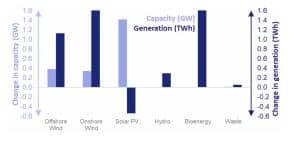
Change in renewable generation and capacity between Q2 2023 and Q2 2024wind renewable energy UKSource: DESNZ

Solar Dips, Hydro Soars: A Mixed Bag for Renewables

DENZ report revealed that solar generation saw a 9.5% drop, despite adding 2.1 GW of new capacity, primarily due to a 20% decrease in average sun hours compared to last year. Among the new installations, 1.4 GW came from solar PV, including several new sites like Litchardon Cross, Gorse Lane, Sutton Bridge, Burwell, Porth Wen, and Thaxted.

On the other hand, hydro generation surged by 38% due to a significant increase in rainfall, which was the highest for Q2 since 2016.

In bioenergy, overall generation rose by 29%, despite no new capacity. Plant biomass alone saw a 47% increase, recovering from low levels in the previous year due to plant outages.

A Low-Carbon Future Takes Shape Amid Challenges

The UK is set to achieve 95% low-carbon electricity by 2030, with wind, solar, and hydropower playing a key role. However, the report has highlighted a major concern over biomass carbon emissions and its reliance on imports that might affect this shift.

Similarly, challenges in the wind sector like grid limitations and payment cutdowns (e.g. to the Viking Wind Farm) remain. These issues hinder wind generation during periods of low demand, especially in Scotland, where much of the UK’s onshore wind capacity is located.

However, the UK can overcome these challenges with more offshore projects and increased onshore capacity with reliable financial backing. By 2030, wind can inevitably lead the UK’s transition to a low-carbon grid, supporting its renewable energy goals.

Data Sources:

  1. UK low-carbon renewable power set to overtake fossil fuels for first time | Ember
  2. DESNZ Energy Trends September 2024