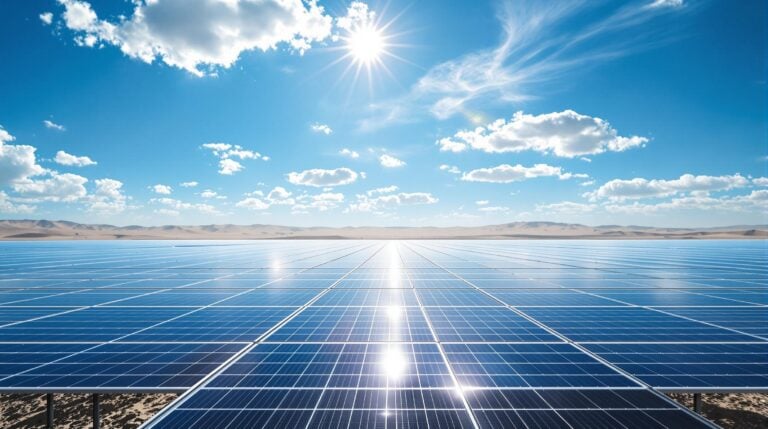
The Middle East and North Africa (MENA) region is emerging as a global solar energy leader. With falling solar costs, government-backed clean energy strategies, and strong partnerships with Chinese manufacturers, the region is accelerating its renewable energy transition.
According to the Middle East Solar Industry Association (MESIA) 2025 Solar Outlook Report, MENA’s solar capacity could exceed 180 GW by 2030.
In 2024 alone, installed capacity reached 24 GWAC, up 25% from the previous year, and is expected to surpass 30 GW by year-end.
MENA’s Solar Boom: The UAE Leads the Growth
The UAE is leading the solar growth in the region with bold plans like the Dubai Clean Energy Strategy 2050, which aims for 75% renewable energy by 2050, and the Abu Dhabi Vision 2030, targeting 30% renewables by 2030.
It expanded its solar capacity from just 12 MW in 2012 to 6.1 GW in 2023, now ranking 10th globally in solar capacity per capita. Programs such as Shams Dubai are also encouraging homes and businesses to install solar panels.
To meet these goals, companies are incorporating digital and scalable tools that help manage large solar projects and improve efficiency.
Gears Up to Become Global Solar Powerhouse
Saudi Arabia has giga-scale projects such as the 700 MWAC Ar Rass 1 plant and the Red Sea solar development.
Egypt is also advancing rapidly, with the Kom Ombo 200 MWAC project now online and Benban Solar Park already contributing over 1.6 GW.
North African countries like Morocco, Algeria, and Tunisia are scaling up, with Morocco surpassing 2 GW and Algeria targeting 15 GW by 2035, partly through its plan to solar-power 22,000 schools.
Set to Replace Southeast Asia in Global Solar Trade?
The global solar supply chain is undergoing a shift—and MENA is at the center of it. Wood Mackenzie projects that the region will emerge as a low-tariff hub for solar panel manufacturing.
As per Wood Mackenzie, with US tariffs on Southeast Asian solar modules reaching up to 651%, MENA’s 10% import tariff advantage is already attracting Chinese manufacturers. As a result, the region’s solar manufacturing capacity could reach 44 GW by 2029, with Chinese firms projected to control 85% of that output by 2028.
This trend is driven not only by tariffs but also by growing local demand, abundant sunlight, and regional ambitions to dominate solar exports. In fact, MENA is forecast to achieve solar module self-sufficiency by 2026.
These factors together make MENA one of the most cost-competitive regions for exporting solar components to global markets, especially the US.
Source: MESIA’s 2025 Solar Outlook Report
Policy Push and Private Sector Action
Strong policy backing is another major growth driver. The UAE aims to triple its renewable energy capacity by 2030 under its Energy Strategy 2050, supported by AED 150–200 billion in investments.
Saudi Arabia has raised its clean energy commitment to $235 billion and wants two-thirds of its residential electricity to come from renewables by 2030.
Egypt and Morocco are also pushing hard, targeting 42% and 52% renewable shares in their electricity mixes, respectively.
Private players like ACWA Power, AMEA Power, Jinko, and Masdar are actively driving installations across the region. Notably, the Red Sea project in Saudi Arabia is integrating solar, wind, and battery storage to power an entire tourist development sustainably.
In the UAE, the 500 MWAC Abydos project will also include 300 MWh of battery energy storage when it goes online later this year.
Innovation, Jobs, and Economic Impact of Solar Growth
The solar sector is fueling not just clean energy but economic transformation across MENA. Investments in solar are expected to create more than 500,000 direct and indirect jobs by 2030.
Advances in solar module mounting structures, tracking systems, and battery storage are reducing the Levelized Cost of Electricity (LCOE), making renewables even more affordable.
Several hybrid solar projects now combine PV with green hydrogen production, desalination, and waste-to-energy systems, reflecting a new era of infrastructure innovation.
With high solar irradiance, strong financing momentum, and growing investor confidence, the region is solidifying its position as a global solar hub.
Source: MESIA’s 2025 Solar Outlook Report
MENA’s Solar Outlook: From Regional Player to Global Export Hub
Wood Mackenzie predicted earlier that the global solar market is expected to stabilize at 493 GW in 2025, and MENA is on track to contribute significantly to that total. With the right mix of natural resources, strategic trade advantages, and supportive policies, the region is quickly moving from energy importer to clean energy exporter.
Source: MESIA’s 2025 Solar Outlook Report
All in all, MENA’s solar growth is not only helping meet climate goals but also shaping new economic futures for millions across the Arab world.
Carbfix has made a big move in Europe’s battle against climate change. It received the first permit for onshore carbon dioxide (CO2) storage under EU law. This project, based in Iceland, makes history by allowing the underground storage of CO2 in line with the EU’s strict climate policies. It is the first time the EU has formally approved an onshore geological storage project under its 2009 CCS Directive.
Carbfix’s storage method uses Iceland’s natural basalt rock to turn captured CO2 into solid minerals. This innovative approach supports the EU’s Green Deal, which aims to cut greenhouse gas emissions by at least 55% by 2030.
The mineral storage operator shows that carbon capture and storage (CCS) can work well on land. This sets a strong example for other European countries.
Understanding the Science Behind Carbfix’s CCS Tech
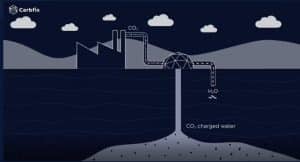
The Carbfix process is both simple and groundbreaking. First, carbon dioxide is captured from industrial sources or directly from the air. Then it is dissolved in water and injected into underground rock formations.
Source: Carbfix
In Iceland, natural basalt rock reacts with CO2 solution. This forms solid carbonate minerals that trap carbon permanently. Carbfix’s method is different from other carbon storage methods. Instead of keeping gas trapped under rock layers, it turns gas into stone. This process removes the risk of leakage in the long run.
Key features of the project include:
Location: The site is in Iceland, where volcanic basalt is plentiful and ideal for mineralizing CO2.
Technology: The CO2 reacts with minerals in the rock to form stable solids in under two years.
Safety: The National Energy Authority of Iceland (Orkustofnun) checked the project to ensure it follows EU safety rules for geological storage.
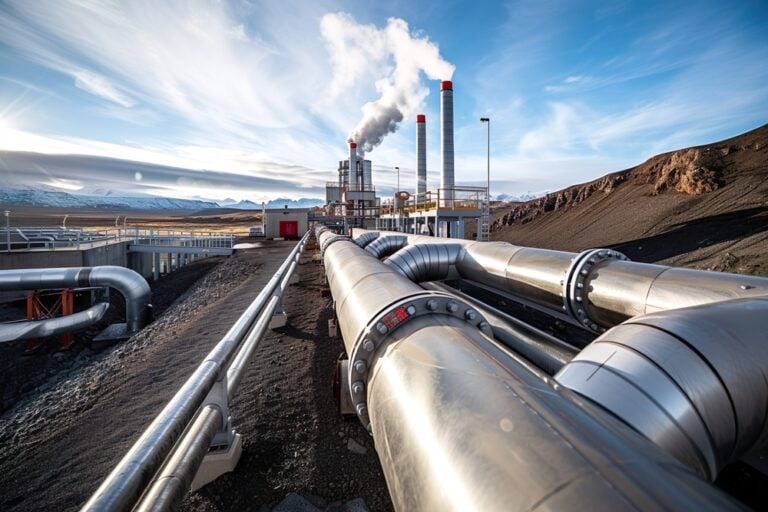
Carbfix’s innovative technology has already been used in smaller pilot projects in Iceland, including at the Hellisheiði geothermal power plant. Getting a permit under the EU’s tough rules is a major step for wider use in Europe.
Highlighting the growing importance of CCS technology in Europe’s climate strategy, Carbfix CEO, Edda Sif Pind Aradóttir stated:
“With this first onshore storage permit in Europe, Iceland also retains a certain leadership role in building a new industry that is essential to both the EU’s and IPCC’s climate goals.”
Why the EU Supports Carbon Capture and Storage
The European Union is focused on cutting greenhouse gases to fight global warming. Technologies like CCS play a key role in achieving this.
The European Commission’s Industrial Carbon Management Strategy says that by 2050, the EU will store around 250 million tonnes of CO2 each year. This will be in underground storage.
Total carbon capture could reach around 450 million tonnes yearly, which includes some CO2 that is used instead of stored. This could account for 7-8% of the region’s emissions.
Source: European Union
The EU’s climate plan encourages both public and private investment in carbon storage projects. Experts estimate that suitable sites in Europe could store up to 300 million tonnes of CO2 per year by 2030.
The European Climate Law requires net-zero emissions by 2050. This law pressures all sectors, including heavy industry, to cut or offset their emissions.
While the company is pioneering onshore CCS, most EU CCS capacity and projects focus on offshore storage, especially in the North Sea region.
By 2030, Europe might reach a storage capacity of 140 million tonnes per year. However, only about 66 million tonnes per year is expected in EU member states. Most of the onshore projects are small, mainly in Denmark and the Netherlands.
Source: Clean Air Task Force
Iceland’s Carbfix project is unique as an onshore basalt mineralization site. The Carbfix permit allows storage of up to about 106,000 tonnes of CO2 annually, totaling around 3.2 million tonnes over 30 years.
It proves that onshore CO2 storage is possible within the EU’s legal framework. It opens the door for similar projects in other member countries. By proving that this kind of storage is safe and effective, Carbfix is leading the way for other innovators to follow. It also opens opportunities for generating carbon credits.
The Growing Role of Carbon Markets
With more companies and governments trying to lower emissions, the demand for carbon credits is growing. These credits allow companies to pay for carbon reductions elsewhere if they cannot cut emissions directly.
Projects like Carbfix generate carbon credits by permanently removing CO2 from the atmosphere. This makes them especially attractive to buyers seeking high-quality, verifiable carbon offsets.
Recent projections indicate the average EU carbon price could reach about €92/t CO2e in 2025. It could rise to €130/t by 2026 and €195/t by 2030.
Analysts expect the global carbon market to more than double in size by 2030, possibly reaching $100 billion. More storage projects like Carbfix are starting up that can increase the supply of high-quality carbon credits. As a result, the market will stabilize and new investment opportunities will arise.
Carbon credit markets help create a circular carbon economy. In this system, captured emissions are reused or stored permanently, preventing them from entering the atmosphere. As countries strengthen their climate commitments, demand for such credits will likely increase.
A Model for Future Projects
Carbfix could serve as a model for future carbon storage projects across Europe and beyond. Other European countries are already exploring similar opportunities. Reports say that up to 10 new onshore storage projects might start in the next five years. This is especially true in areas with volcanic or sedimentary rock formations.
To support this growth, the EU is working on clearer rules and funding support for carbon capture projects. This includes easier permitting, better carbon pricing, and more public-private partnerships. The Innovation Fund and Horizon Europe are two major EU programs supporting climate technology, including CCS.
Experts agree that CCS must grow quickly to meet climate targets. Renewable energy and energy efficiency are vital. However, technologies like Carbfix can cut emissions in tough industries, which include cement, steel, and chemicals.
The Carbfix carbon storage permit marks the beginning of a new phase in Europe’s climate journey. As the EU looks to scale up CCS efforts, the success of onshore projects will be crucial. With the right policies and technologies in place, the region could become a global leader in carbon storage innovation.
L’Oréal is making bold moves toward a more sustainable beauty industry with its Sustainable Innovation Accelerator. Under the global “L’Oréal for the Future” plan, this initiative helps quickly develop technologies. These technologies aim to lower the environmental impact of cosmetics production and L’Oréal’s carbon footprint.
The beauty company aims to lower carbon emissions, reduce waste, and form eco-friendly partnerships. These efforts seek to change the beauty industry. They also aim to meet the growing demand for sustainable products.
By working closely with startups and scientific innovators, L’Oréal plans to push boundaries in green technology. Ezgi Barcenas, Chief Corporate Responsibility Officer at L’Oréal, remarked:
“This accelerator will help address the solution gap and help steer the catalytic adoption of breakthrough technologies.”
This marks a shift in how beauty companies think about growth—balancing performance with responsibility.
Innovation Engine: The Accelerator at Work
The €100 million Sustainable Innovation Accelerator helps boost new ideas that make cosmetics more sustainable. L’Oréal is directing substantial investment toward this initiative, focusing on two main goals: carbon emissions and waste reduction.
The program supports technologies that lower emissions throughout the supply chain. This includes everything from sourcing ingredients to packaging and delivery. It also encourages solutions that cut down on plastic, packaging waste, and excess materials in manufacturing.
L’Oréal has big green goals. By 2030, it wants to cut greenhouse gas emissions by 50% for each product. This is based on 2016 levels and follows science-based targets from the UN.
The accelerator doesn’t work alone. It builds partnerships with startups, researchers, and suppliers, creating a network of innovation. In 2023, L’Oréal helped over 70 startups. These startups worked on climate solutions, biotechnology, and sustainable packaging.
Carbon Goals: From Reduction to Net Zero
L’Oréal’s path to sustainability isn’t just about products—it’s about long-term responsibility. The company plans to be net zero by 2050. This means it aims to balance the emissions it creates with what it takes out of the atmosphere.
In 2023, L’Oréal’s Scope 3 emissions were about 11,406 thousand tonnes of CO₂ equivalent. The biggest sources were purchased goods and services, which accounted for 5,170 thousand tonnes. Also, the use of sold products contributed 4,297 thousand tonnes.
Source: L’Oréal
Despite the overall increase in emissions, L’Oréal managed to cut emissions from its operated sites (Scopes 1 and 2) by 74% since 2019. This was achieved even with a 12% rise in production during that time.
The company cut greenhouse gas emissions from product transport by 9.7%. It aims for a 50% reduction per finished product by 2030, using 2016 as a baseline.
Additionally, 83% of L’Oréal’s operated sites globally had reached 100% renewable energy by the end of 2023, up from 34% in 2019.
Source: Company report
To get to net zero, L’Oréal set clear science-based targets, including:
By 2025: All L’Oréal sites—including factories, distribution centers, and offices—will be carbon neutral.
By 2030: A 50% reduction in greenhouse gas emissions per finished product compared to 2016 levels.
By 2050: Net zero across the entire value chain, including suppliers and consumers.
To support these goals, L’Oréal is investing in renewable energy, green building design, and transportation alternatives. As of 2023, over 70% of its industrial sites had already achieved carbon neutrality by using solar, wind, biomass, or hydroelectric power.
In addition, L’Oréal has created a €50 million Climate Fund for Nature. This fund helps carbon offset projects. It supports reforestation, wetland restoration, and soil regeneration. These efforts absorb carbon dioxide and boost biodiversity.
L’Oréal partners with organizations like the Carbon Disclosure Project (CDP) and the Science-Based Targets initiative (SBTi). This helps ensure its progress is clear and accountable.
Biotech Breakthroughs: A Cleaner Chemistry
One of the most exciting frontiers in sustainable beauty is biotechnology. L’Oréal is using biotech to find new options. These alternatives can replace traditional ingredients that often harm the environment or use too many resources.
The Beauty Tech Challenge 2025—part of the accelerator’s broader mission—invites startups to submit ideas that use biotechnology to make skin and hair care products with lower emissions and waste. Biotech can make biodegradable ingredients from renewable sources like algae or yeast. This replaces chemicals that come from petroleum or rare plants.
One successful example of this is L’Oréal’s partnership with Genomatica, a U.S. biotech company. They are working together to create sustainable alternatives to palm oil. This ingredient is commonly used but is linked to deforestation. The partnership can lower the beauty industry’s environmental impact by making palm oil substitutes in labs using fermentation.
In 2023, L’Oréal launched a shampoo with biotech surfactants. These compounds clean hair gently, avoiding harsh chemicals. These new formulas are not only more sustainable but also gentler on skin and scalp, adding value for consumers.
Beauty Tech on the Rise
L’Oréal’s ambition goes beyond ingredients—it includes how products are made, delivered, and experienced. The company’s Big Bang Beauty Tech Innovation Program helps startups. It focuses on smart packaging, circular systems, and digital tools. These tools promote responsible consumption.
Examples include:
Smart refillable packaging. A startup supported by L’Oréal developed a system that tracks usage and reminds consumers to refill, reducing plastic waste.
AI-powered skin diagnostics. Tools that assist customers in selecting the right product for their skin. This helps cut down on waste and avoid unnecessary purchases.
3D printing for custom cosmetics. L’Oréal is experimenting with 3D printers that can create makeup on demand, minimizing inventory waste.
These innovations help L’Oréal cover the entire lifecycle of its products and cut carbon emissions where possible. This includes production, consumer use, and disposal. They also attract tech-savvy and eco-friendly buyers.
The company has also launched “SPOT” (Sustainable Product Optimization Tool), a system that measures the social and environmental footprint of each product. As of 2023, SPOT has evaluated over 95% of L’Oréal’s portfolio, helping the brand design cleaner, greener items.
A Green Future in Focus
The beauty market is booming. Analysts expect it to reach $750 billion globally by 2025. But this growth comes with responsibility. Consumers today are asking tough questions: Where do ingredients come from? Is the packaging recyclable? Does the brand support climate action?
Market research supports this shift. According to IBM’s Institute for Business Value, 58% of consumers are willing to change their buying habits to help the environment. Moreover, companies that adopt sustainable practices see long-term benefits. A study by NYU Stern found that sustainably marketed products grew 2.7x faster than their conventional counterparts.
The global sustainable beauty market could grow at an annual growth rate of 9.1% through 2030. That means demand for eco-friendly, ethically sourced products will only increase.
L’Oréal’s investments today position it to lead tomorrow. Its Sustainable Innovation Accelerator isn’t just a project. It’s a guide for beauty brands to grow and change. By combining biotechnology, smart packaging, and digital tools, the company is showing that beauty and sustainability can go hand in hand.
Bitcoin began as an idea shared by a small group of technology enthusiasts. In the last ten years, it has become a global digital asset. It draws interest from big investment firms, governments, and regular people.
Today, Bitcoin is not just a digital currency used for online payments. It is also seen as a new type of asset, similar to gold or stocks, that people can invest in. However, this transformation has come with significant challenges, particularly regarding energy use and environmental impact. As the Bitcoin mining industry matures, the focus is shifting toward more sustainable practices.
The Digital Pickaxe: How Bitcoin Mining Actually Works
In 2024, a major event for Bitcoin took place. The U.S. Securities and Exchange Commission (SEC) approved spot Bitcoin exchange-traded funds (ETFs). This decision made it much easier for regular investors and big institutions to buy and sell Bitcoin.
More companies and financial firms now offer Bitcoin to their clients. So, the digital asset is becoming more accepted in mainstream finance. Here’s how its market value compares with other cryptoassets and traditional assets.
Source: Cambridge Report
Bitcoin depends on a process called “mining” to keep its network secure and to create new coins. Mining is done by powerful computers that solve complex math problems. When a computer solves a problem, it adds a new “block” to the Bitcoin blockchain. The miner then gets new bitcoins and transaction fees as a reward.
This process is called “Proof-of-Work.” It is designed to make sure that no one can cheat the system or take over the network. The more computers, or “hashrate,” that are working to mine Bitcoin, the more secure the network becomes.
Mining has changed a lot since Bitcoin started. At first, anyone with a home computer could mine Bitcoin. Now, most mining is done by large companies using special machines called ASICs (Application-Specific Integrated Circuits). These companies often have mining farms with thousands of machines running day and night.
The Cambridge Digital Mining Industry Report states that a recent survey covered 49 mining companies. These companies control almost half of the total computing power for Bitcoin mining, and they operate in 16 countries.
Based on the report findings, the United States is now the biggest mining hub, accounting for over 75% of the mining activity surveyed.
Source: Cambridge Report
The Energy Debate: Powering Bitcoin
One of the biggest debates about Bitcoin is how much energy it uses. Bitcoin mining is a high-energy process. Because mining requires so much computing power, it also needs a lot of electricity. Some people worry this might hurt the environment. This is a concern, especially if the electricity comes from fossil fuels like coal or natural gas.
The Cambridge report estimates that Bitcoin mining uses about 138 terawatt-hours (TWh) of electricity each year. This is similar to the annual electricity use of a country like Sweden.
The mining activity also produces about 39.8 million metric tons of carbon dioxide (CO2) each year. However, this share of global emissions remained under 0.1%.
However, the report also shows that the energy mix for Bitcoin mining is changing. More than half (52.4%) of the electricity used by miners now comes from sustainable sources. This includes hydropower (23.4%), wind (15.4%), nuclear (9.8%), and solar (3.2%). Still, natural gas remains the single largest energy source at 38.2%, followed by coal (8.9%).
Source: Cambridge Report
Many mining companies are trying to use more renewable energy and to find ways to reduce their environmental impact. Some are even using energy that would otherwise be wasted, such as gas flaring from oil fields. These efforts are important as the industry faces growing pressure to be more environmentally friendly.
Meanwhile, the survey shows a possible scenario when miners want to offset the emissions of their activities by buying carbon credits. The chart below compares the cost of removing Bitcoin’s carbon emissions using two methods: nature-based solutions like planting trees, and high-tech solutions like direct air capture (DAC).
Source: Cambridge Report
Nature-based methods cost about $5 to $9 per ton of CO2, while DAC costs much more—between $134 and $344 per ton. Lower emissions mean lower total costs, and higher emissions mean higher total costs for offsetting.
Wall Street Meets Blockchain: Institutions Dive In
Bitcoin’s price has seen big changes in recent years. In early 2025, Bitcoin reached a new high of about $109,000 before dropping to around $74,000 in April. By May, it had recovered to about $95,000. These price swings show how quickly the market can change.
However, the broader market trend shows growing maturity:
Institutional adoption is rising. Major firms—including BlackRock, Fidelity, and MicroStrategy—have invested directly in Bitcoin or launched crypto-related products.
Spot Bitcoin ETFs approved in early 2024 have brought mainstream exposure, unlocking billions in capital inflows.
Bitcoin’s market cap briefly surpassed $1.5 trillion in early 2025, signaling continued investor interest even amid macroeconomic uncertainty.
Experts have different predictions for where Bitcoin’s price will go next. Some believe it could reach $150,000 or even $200,000 by the end of 2025, especially as more institutional investors enter the market.
The approval of Bitcoin ETFs has made it easier for large funds and retirement accounts to invest in Bitcoin. Even a small investment from these big players could have a big impact on Bitcoin’s price.
The growing interest from companies is also important. Some businesses, like MicroStrategy, have bought large amounts of Bitcoin as a way to store value. This shows that Bitcoin is being used not just as a currency, but as a financial asset.
These trends point to Bitcoin’s growing acceptance as both a store of value and a portfolio diversifier. This financial legitimacy is helping drive the push toward more sustainable and compliant mining practices. And one name stands out in this direction – American Bitcoin Corp.
Stars, Stripes, and Satoshis: The Rise of American Bitcoin
American Bitcoin Corp. is a majority-owned subsidiary of Hut 8 Corp., one of North America’s leading digital asset mining companies. In early 2025, Hut 8 teamed up with American Data Centers to launch American Bitcoin. This partnership includes investors Eric Trump and Donald Trump Jr. American Bitcoin will focus on large-scale Bitcoin mining and creating a strategic Bitcoin reserve.
Hut 8 serves as American Bitcoin’s exclusive infrastructure and operations partner. American Bitcoin uses Hut 8’s strong data center skills, energy setup, and large-scale operations. They do this through long-term business agreements.
Hut 8’s CEO, Asher Genoot, highlights that separating American Bitcoin helps it raise growth capital on its own. This move also keeps Hut 8 shareholders connected to Bitcoin’s potential gains.
Just recently, American Bitcoin announced a merger with Gryphon Digital Mining. This stock-for-stock deal will take them public. They plan to trade on Nasdaq with the ticker symbol “ABTC.” This move aims to scale American Bitcoin as a low-cost Bitcoin accumulation vehicle, unlocking new capital to expand mining capacity and Bitcoin holdings.
The combined company will be led by a board including Hut 8 CEO Asher Genoot and other key executives such as Mike Ho and Eric Trump. American Bitcoin aims to be the largest and most efficient Bitcoin miner globally. They plan to achieve over 50 exahashes per second (EH/s) of mining power. Their goal is also to maintain an average fleet efficiency below 15 joules per terahash (J/TH).
By combining Hut 8’s operational excellence and infrastructure with strategic capital and market access, American Bitcoin is positioned to lead the U.S. Bitcoin mining industry and build a robust Bitcoin reserve for long-term growth.
Hurdles on the Hashrate Highway
Bitcoin’s future hinges on overcoming several key challenges. Regulatory uncertainty is a big problem. Governments have different rules for digital assets, which makes it hard for mining companies to plan for the long term.
Energy costs are a big concern. Mining only makes money when Bitcoin’s price is higher than electricity and equipment costs. If energy prices keep rising, miners might lose and shut down.
Additionally, as more miners join, mining becomes harder and requires continuous equipment upgrades to remain competitive. Environmental impact remains a concern, but innovations like AI are improving efficiency.
Despite these challenges, Bitcoin mining continues to evolve, with new technologies emerging to enhance sustainability and possibly even support power grids. The balance between growth and these hurdles will shape Bitcoin’s future in the global economy.
Momentum for electric vehicles (EVs) is growing fast, but a major hurdle has appeared. Seventeen U.S. states, with California in the lead, sued the Trump administration. They want to restore $5 billion in federal funds meant for EV charging infrastructure.
Congress originally approved these funds. They are key to growing charging networks across the country and helping promote sustainable transportation.
States like New York, Illinois, and Minnesota are part of the lawsuit. They say freezing the funds slows down economic growth and harms renewable energy efforts. They believe the freeze blocks progress toward meeting important climate goals.
California Governor Gavin Newsom remarked that such a decision is illegal and can hurt thousands of jobs. Meanwhile, California Atty. Gen. Rob Bonta said:
“The President continues to roll back environmental and climate change protections, this time illegally stripping away billions of dollars for electric vehicle charging infrastructure, all to line the pockets of his Big Oil friends.”
The coalition views this funding as crucial. It helps keep the U.S. a leader in clean energy and ensures a sustainable transportation future.
Frozen Funds, Frozen Progress: Why the Lawsuit Matters
The lawsuit claims that halting access to the $5 billion fund creates serious problems for EV growth. Without a reliable network of chargers, many people might hesitate to switch from gas-powered cars to electric models.
Key points raised by the states include:
Economic Impact – Losing these funds could cost thousands of jobs in industries tied to building and maintaining EV infrastructure.
Climate Goals – Without a solid charging network, states may not meet their carbon reduction goals.
Public Support – Polls show most Americans support growing EV infrastructure as a step toward fighting climate change.
The states say that cutting this funding harms the environment. It also hurts local economies and makes it harder for everyone to access EVs.
Blocking these resources could slow down an EV market that experts expect to boom in the next few years. Analysts project that EVs could make up more than 60% of U.S. auto sales by 2030 if the right infrastructure is in place.
According to the International Energy Agency’s outlook, over a third of automobiles sold globally by 2030 could be EVs.
Taking the Fight to Court
The Trump administration defends the freeze on federal EV charging funding. They say the program is under review. This review aims to ensure it matches the administration’s priorities. These priorities focus on supporting fossil fuel development instead of expanding clean energy initiatives.
President Trump has expressed opposition to federal support for electric vehicles. He promised to roll back EV mandates. He will revoke pollution limits that help zero-emission vehicle sales and plans to eliminate federal EV tax credits.
The administration’s energy policy aims to declare a “national energy emergency.” This will boost domestic oil drilling and cut federal investment in EV infrastructure.
Some administration officials also say there’s a need to pause the program. They believe this will stop foreign competitors, like China, from gaining benefits. It will also help them check how well the funding meets U.S. energy and economic goals.
However, the states argue that this claim is misleading. They say that investing in local EV infrastructure boosts American industries, creates jobs, and strengthens energy independence.
Winning the lawsuit could do more than release the $5 billion. It could set a strong legal example for other renewable energy projects facing political challenges. Future green initiatives might be able to use this case to defend against funding cuts or delays.
At a time when global EV sales rose by 35% in 2023, reaching over 14 million units, according to the IEA, the pressure to keep moving forward is strong. The lawsuit is not just about chargers; it’s about protecting America’s role in a fast-growing, clean-energy future.
The electric vehicle market is already shifting rapidly. More drivers want EVs. They like the lower costs, care about the environment, and appreciate government incentives. However, building enough charging stations remains one of the biggest challenges.
In 2024, the U.S. electric vehicle (EV) market achieved a record high, with 1.3 million EVs sold, marking a 7.3% increase from the previous year. EVs accounted for about 8.1% of all new vehicle sales.
Notably, while Tesla’s sales declined by 5.6%, other automakers like General Motors and Honda experienced significant growth, introducing new models such as the Honda Prologue, which sold over 33,000 units in its debut year.
In April 2025, EV sales dropped by 5%. This decline came from high vehicle prices, fewer incentives, and worries about charging infrastructure.
On the infrastructure front, the U.S. expanded its EV charging network to nearly 204,000 Level 2 and DC fast charging ports by the end of 2024, doubling the number since 2020. This expansion has improved coverage along major corridors, with 59.1% now having DC fast chargers at least every 50 miles, up from 38% in 2020.
Currently, SAF (Sustainable Aviation Fuel) and renewable technologies are growing. However, EVs still need thousands of new public chargers to meet rising demand. Without the $5 billion in federal funding, many of these projects could be delayed or canceled.
Here are the major stakes involved in this legal fight:
Access and Equality. Without widespread charger coverage, rural and underserved communities could be left behind.
Speed of Adoption: The more chargers are available, the faster people will feel comfortable buying EVs.
State Leadership. California and other states want to ban new gas-powered vehicle sales by 2035. However, they need the right infrastructure to make this transition work.
What’s Next for EV Infrastructure and Clean Energy Goals?
This lawsuit reveals a larger issue: the clash between state climate efforts and federal policy changes. With governments and companies pushing to cut carbon emissions, strong legal protections for green projects are more crucial than ever.
The legal outcome could change EV infrastructure in the U.S. If the states win, it may lead to more investments in EV chargers and other renewable energy tech. This boost could help the green economy and create thousands of jobs.
If the lawsuit fails, it might delay EV adoption. This is especially true in states that depend on federal support for infrastructure projects. Analysts say that if infrastructure development doesn’t keep up, hitting net-zero emissions by mid-century will be much tougher.
In the coming months, as the case moves through the courts, the outcome may decide if America can keep up with global leaders in clean transportation. This legal battle will greatly impact the future of clean mobility, economic opportunity, and environmental leadership.
The global tech sector faces a growing challenge to power energy-hungry services, like AI and cloud computing, while cutting carbon emissions. Google, one of the world’s largest technology companies, is pushing ahead on both fronts.
The tech giant is making new investments in advanced nuclear energy. It is also taking strong steps to cut powerful greenhouse gases. These actions help Google become a leader in corporate sustainability.
This article looks at Google’s latest clean energy strategies — combining nuclear power, carbon removal, and superpollutant destruction — to support its long-term carbon-free goals.
A Big Bet on Advanced Nuclear Energy
Google has teamed up with Elementl Power to invest in 3 new advanced nuclear projects in the U.S. Each plant will produce at least 600 megawatts (MW) of electricity. This move supports Google’s goal to run its operations on carbon-free energy 24/7.
The collaboration focuses on small modular reactors (SMRs). These next-gen nuclear designs offer better safety, more flexibility, and lower costs than traditional nuclear plants. SMRs are modular, meaning they can be built in factories and assembled on-site more quickly and at lower risk.
Key facts about the projects:
Total capacity: At least 1,800 MW (600 MW each x 3)
Location: United States (specific sites not yet disclosed)
Expected benefits: Reliable, zero-carbon baseload power to complement intermittent wind and solar energy
By adding reliable, carbon-free power, Google hopes to support its growing energy needs while cutting emissions. Nuclear energy can provide steady electricity even when wind or solar power is unavailable. This is important as Google works toward running on 24/7 carbon-free energy by 2030. The project is also expected to create thousands of new jobs and boost local economies.
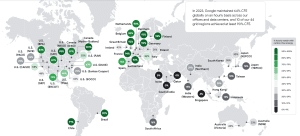
Google Carbon-Free Energy Map
According to the National Renewable Energy Laboratory (NREL), nuclear energy could provide up to 25% of U.S. electricity by 2050. This makes it a crucial player in the transition to a clean energy grid. In 2023, nuclear power was responsible for generating 100 GW of power in the country, per Bloomberg data.
Beyond decarbonization, the projects will create thousands of jobs during construction and operations. This will help boost local economies, in addition to decarbonization efforts.
Google’s investments in nuclear align with broader industry trends. Governments in the U.S., Canada, and Europe are ramping up funding for advanced reactors. The Trump administration has proposed billions in support for nuclear innovations.
The World Nuclear Association says about 440 reactors supply 10% of the world’s electricity now. They expect this to grow to 15% in the next ten years.
Alongside its nuclear push, Google is stepping up efforts to eliminate superpollutants. These gases trap far more heat than carbon dioxide (CO₂) per ton. These include:
Although short-lived, these gases contribute significantly to near-term global warming. The Intergovernmental Panel on Climate Change (IPCC) estimates they’ve caused nearly 50% of historical warming.
Google announced new partnerships with Recoolit and Cool Effect to target these superpollutants.
Recoolit, based in Indonesia, partners with HVAC technicians. They recover and destroy harmful HFC refrigerants from air conditioners. This process prevents leaks into the atmosphere.
Cool Effect, a U.S.-based nonprofit, supports a landfill project in Brazil, which helps destroy landfill methane. They install systems to capture and flare methane from waste as it decomposes. The company inspires businesses and individuals to take action against climate change by buying verified carbon credits.
Through these initiatives, Google aims to eliminate over 25,000 tons of superpollutants by 2030. This is equal to 1 million tons of CO₂ in long-term warming impact.
These programs build on Google’s other superpollutant work:
Partnering with the Environmental Defense Fund (EDF) on the MethaneSAT satellite to detect global methane leaks
Supporting the Global Methane Hub through grants
Using low-GWP refrigerants in Google’s own cooling systems
By targeting both long-lived CO₂ and short-lived superpollutants, Google is attacking climate change from many angles. As Randy Spock, Carbon Credits and Removals Lead at Google, noted,
“We can’t combat climate change without solving for superpollutants – and we’re eager to use every tool we have available to catalyze the range of solutions needed to address near-term warming…”
Google’s Broader Carbon-Free Strategy
These new initiatives fit into Google’s overarching goal of running on 24/7 carbon-free energy globally by 2030. This means using carbon-free sources for every hour of electricity consumption, not just offsetting yearly totals.
Source: Google
To date, Google has:
Signed contracts for over 7 gigawatts (GW) of renewable energy worldwide
Helped pioneer hourly clean energy tracking to measure real-time carbon-free electricity use
Invested in direct air capture, bioenergy with carbon capture and storage (BECCS), and other emerging carbon removal technologies
The company is also a founding member of Frontier, a $1 billion advanced market commitment that supports early-stage carbon removal companies. These efforts aim to eliminate Google’s operational emissions and its carbon footprint since 1998 by 2050.
Why Tech Companies Are Betting on Nuclear
Google isn’t the only one that views nuclear energy as a solution for the next-gen AI data centers. These centers need a lot of power, all day and night.
Other big tech companies in the U.S., such as Amazon and Microsoft, are also looking into nuclear power purchase agreements. They are also considering data center co-location with nuclear plants.
For example, Amazon acquired a data center campus powered by Pennsylvania’s Susquehanna Nuclear Plant. Moreover, Microsoft signed a 20-year nuclear PPA with Constellation Energy to restart a retired reactor.
Data center energy demand in the U.S. is set to rise by 19% each year until 2029, according to 451 Research. This makes reliable, carbon-free power sources like nuclear more appealing.
Google’s investments in nuclear energy and superpollutant destruction show a clear strategy: diversify its clean energy mix to deliver reliable, zero-carbon power while tackling the most potent climate pollutants.
Google leads in sustainable innovation by using advanced nuclear technology, carbon removal, and pollutant destruction. As energy demands grow and climate goals tighten, these bold moves could serve as a model for how major businesses can meet both their power needs and environmental responsibilities.
If successful, these efforts will cut Google’s carbon footprint. They will also speed up the technologies and markets needed for a sustainable global economy.
India made major progress in renewable energy in 2024. With record solar and wind capacity additions, strong government support, and growing domestic manufacturing, the country is moving steadily toward its clean energy goals for 2030.
Notably, India’s Ministry of New & Renewable Energy (MNRE) revealed that the country’s solar energy capacity reached 94.17 GW in 2024.
Source: Chart taken from SolarPower Europe Report
Solar Power Leads in Renewable Growth
Solar energy remained the main driver of renewable growth, making up 47% of India’s total renewable energy capacity.
2024 Solar Snapshot:
Exploring further, MNRE data showed that India added 24.5 GW of solar and 3.4 GW of wind energy —the highest ever in a single year. Solar capacity was more than double from 2023, while wind grew by 21%.
Utility-scale solar: India installed 18.5 GW of utility-scale solar projects, which was nearly 2.8 times more than in 2023. Rajasthan, Gujarat, and Tamil Nadu led this growth, together contributing 71% of these installations.
Solar Sector: The rooftop solar sector also saw strong momentum, adding 4.59 GW of capacity—an increase of 53% from 2023. A major factor behind this growth was the PM Surya Ghar: Muft Bijli Yojana, which helped 7 lakh homes install rooftop solar systems within ten months.
Off-grid solar: Also recorded strong growth. With 1.48 GW added in 2024, this segment grew by 182%, helping bring electricity to more rural areas.
India’s Solar Manufacturing in 2025 and Beyond (2030)
As of January 20, 2025, India’s total non-fossil fuel energy capacity reached 217.62 GW. The country is aiming for 500 GW of non-fossil fuel-based energy capacity 2030 by 2030, and these new additions are a strong step in that direction.
However, it is rapidly emerging as a solar energy powerhouse.
In February 2025, the country surpassed 100 GW of installed solar capacity, becoming the fourth nation worldwide to reach this milestone. More than half of this capacity was installed in just the past three years. It’s a remarkable leap from only 2.8 GW in 2014.
Looking ahead, India plans to expand its solar production capacity significantly. SolarPower Europe highlighted:
By 2030, solar module capacity is expected to reach 160 GW, while solar cell capacity is projected to hit 120 GW. This will strengthen India’s position as a renewable energy manufacturing hub.
Notably, with continued government support, the country plans to ramp up its module production capacity to 100 GW by 2030.
Modules: 80 GW (2025) → 160 GW (2030)
Cells: 15 GW → 120 GW
Wafers & Polysilicon: 6 GW → 100 GW each
These figures highlight India’s goal to reduce import dependency and build a fully integrated solar manufacturing ecosystem.
With record capacity additions last year and strong support from the government, India is on the right path to becoming a global clean energy leader. The Ministry of New & Renewable Energy (MNRE) played a key role in the sector’s progress. It focused on expanding domestic manufacturing of solar PV and wind turbines, which is essential to reduce import dependence and cut costs.
It also proposed major investments in power grid infrastructure, especially inter-state transmission lines. This will help transfer renewable power from energy-rich states like Rajasthan and Gujarat to other parts of the country.
Jawaharlal Nehru National Solar Mission (JNNSM)
Furthermore, policy interventions like the Jawaharlal Nehru National Solar Mission (JNNSM), launched in 2010, laid the groundwork for these advancements. This mission helped transition India from high solar tariffs of ₹10.95/kWh in 2010 to as low as ₹2.5-2.6/kWh by 2025 through competitive bidding and other reforms.
The Production Linked Incentive (PLI) scheme
The PLI scheme, worth ₹24,000 crore (~$3 billion), is playing a major role here. Policies like import duties on solar modules (40%) and cells (20%), Domestic Content Requirements (DCR), and approved lists for modules and cells (ALMM & ALCM) are all aimed at encouraging domestic production.
Teaming Up with the EU for a Greener Future
Many Indian companies are now preparing to meet rising demand not only from within India but also from other countries.
One of the most important goals is to turn India into a global export hub for solar technology, and solar panels will play a pivotal role here. This will boost both India’s energy independence and its role in the global clean energy shift
In this perspective, India is also teaming up with the European Union (EU) to strengthen solar manufacturing. A new alliance between the two aims to promote cooperation in green technology.
By sharing expertise and resources, India and the EU plan to speed up innovation, cut costs, and meet clean energy targets faster.
This partnership is expected to give India access to advanced solar technology and help boost its ability to produce high-quality solar modules and cells. As a result, exports of solar products from India are likely to grow rapidly with rising global demand and competitive prices.
What’s Next for India’s Solar Sector?
By 2030, experts say India’s solar industry could play a major role in helping the world meet climate goals. With plans to produce 160 GW of solar modules and 120 GW of cells, India is well on its way to becoming a key player in the global solar supply chain.
As the world moves toward cleaner energy, India’s leadership in solar technology could serve as a model for others. Its focused and forward-looking approach is positioning the country at the heart of the global energy transition.
United Airlines is taking a bold step toward cutting its carbon footprint by investing in Twelve, a California-based company that makes Power-to-Liquid (PtL) fuels. This move is part of United’s Sustainable Flight Fund, and it supports the airline’s goal of cutting aviation emissions by 90% by 2050. The fund is designed to back new ideas that can make air travel cleaner.
Turning CO2 into Jet Fuel: How Twelve’s Tech Works
Twelve has built a new way to make jet fuel that doesn’t rely on crops, waste oils, or fossil fuels. Their patented process takes carbon dioxide (CO2) captured from the air or factories and mixes it with renewable electricity (like solar or wind power). The result is a liquid fuel that works like regular jet fuel but with much lower emissions.
This carbon transformation method creates a closed-loop carbon cycle. That means the CO2 used to make the fuel is the same CO2 released when planes burn it — no extra carbon is added to the atmosphere. By closing this loop, Twelve’s process helps slow climate change and reduces the need to pump new fossil fuels from the ground.
It also fixes another problem. Many traditional types of Sustainable Aviation Fuel (SAF) use materials like used cooking oil, animal fats, or crops such as corn and sugarcane. These feedstocks are limited and can be hard to get in large amounts. They also raise ethical questions about using farmland for fuel instead of food.
Twelve’s technology skips these issues entirely, making it easier to grow the SAF supply in the long run.
United’s investment comes after Twelve raised $83 million in its recent Series C funding round. The company is also building its first commercial facility, called AirPlant™ One, in Moses Lake, Washington. The plant will start operating this year and will produce 50,000 gallons of sustainable aviation fuel each year.
Backing the Future: United’s Sustainable Flight Fund
United Airlines is serious about finding new ways to make flying greener. The airline launched the Sustainable Flight Fund in 2023, raising over $200 million so far. Partners in the fund include Air Canada, Boeing, JPMorgan Chase, and other major companies.
The goal of the fund is to help new SAF projects grow faster. By putting money into companies like Twelve, United hopes to build up the supply of cleaner fuels and cut emissions without relying heavily on buying carbon offsets.
United is also unique among U.S. airlines for its long-term SAF focus. The company has invested in over 5 different SAF developers, including Fulcrum BioEnergy and Cemvita Factory. With these moves, United aims to secure steady supplies of SAF for its future flights.
Andrew Chang, head of United Airlines Ventures, noted:
“Scaling the SAF industry is the major hurdle air travel needs to clear in order to increase the supply and reduce the price of lower carbon fuels. Twelve has differentiated themselves through the capital they have raised and the SAF contracts they have secured.”
The aviation industry is under pressure to cut emissions. Planes account for about 2.5% of global CO2 emissions today, and demand for flights is still growing.
The International Air Transport Association (IATA) says airlines used only 300 million liters of SAF in 2022, but demand could grow to 7 billion liters by 2030.
That’s a huge jump, showing just how important SAF is becoming. Some key facts to know about this jet fuel:
Today, SAF makes up less than 1% of all jet fuel used globally.
Experts think the SAF market could be worth over $15 billion by 2030.
SAF can lower lifecycle emissions by up to 80% compared to fossil jet fuel.
Annual SAF demand range over the main and accelerated cases compared with capacity potential, 2020-2026
Source: IEA
Even though SAF is good for the planet, it still costs 3 to 5x more than regular jet fuel. That’s why government policies are helping. For example, the U.S. Inflation Reduction Act (IRA) offers tax credits for low-carbon fuels, making SAF cheaper to buy. The European Union also passed rules requiring airlines to use increasing amounts of SAF starting in 2025.
Many believe that as technology improves and more SAF is made, costs will drop to match regular fuel prices by the early 2030s.
How Twelve Fits into the Bigger Picture
Twelve is one of the few companies working on Power-to-Liquid (PtL) SAF, which uses only CO2 and clean energy instead of crops or oils. This means their fuel can be scaled up faster without competing for food or farmland.
In 2023, Twelve opened its first demonstration plant in Moses Lake, Washington, to show that the technology works. Their long-term plan is to build bigger facilities that can produce millions of gallons of PtL SAF each year.
The U.S. Department of Energy has recognized PtL as a promising option for deep decarbonization. Studies show PtL fuels could cut aviation emissions by up to 90%, depending on how clean the electricity source is.
For United, working with Twelve is more than just cutting emissions — it’s about staying ahead of competitors. Many airlines still depend on buying carbon offsets to meet their climate goals. United wants to lead with direct emission cuts, which experts say is a stronger, more reliable strategy.
Delta Air Lines partnered with Gevo to buy 385 million gallons of SAF over seven years.
American Airlines signed a deal with Aemetis for 350 million gallons over 10 years.
Lufthansa, KLM, and British Airways are also working with SAF producers like Neste and Velocys.
However, most of these deals are focused on SAF made from used cooking oil, fats, and biomass — not PtL. United’s early and large investment in Power-to-Liquid SAF sets it apart from airlines still relying mostly on crop-based or waste oil SAF.
What’s Next? A Greener Future for Aviation
The future of flight is changing fast. Analysts predict that investments like United’s could speed up a major shift in aviation. As governments around the world set stricter rules on emissions and offer more support for low-carbon technologies, SAF use is expected to soar.
If SAF production grows as hoped, airlines could shrink their carbon footprints by 40% to 70% in the next 20 years.
United’s investment in Twelve and other clean fuel companies shows it’s not just following the trend — it’s trying to shape the future of sustainable travel. The airline’s plan is to use a mix of SAF sources, from waste oils to PtL fuels, to make sure it can meet rising demand.
Tencent, one of China’s largest technology companies, has made a significant move towards sustainability by forming a partnership with GenZero, a Temasek-owned investment platform. This partnership focuses on buying carbon credits and is part of Tencent’s plan to reach its environmental and climate goals.
Tencent is securing carbon credits to show its commitment to cutting its carbon footprint. This also helps the global fight against climate change.
The Key Elements of the Partnership
The partnership between Tencent and GenZero is formalized under a Memorandum of Understanding (MoU). Through this agreement, Tencent has the option to purchase 1 million carbon credits from GenZero. It will use these credits to offset residual emissions—the hard-to-abate emissions from both its operations and supply chain.
Credits should come from projects that lower greenhouse gas emissions or capture carbon in the air. Tencent’s involvement shows that big companies are increasingly investing in environmental sustainability. The specific volume of carbon credits and financial details are not disclosed.
GenZero plays a key role in the carbon market. It helps keep carbon credit transactions honest and clear. Their portfolio typically includes projects in reforestation, afforestation, biochar, and carbon capture technologies.
This partnership seeks to boost the carbon credit market’s credibility. It does this by backing projects that are effective and verifiable.
Growing Demand for Carbon Credits
The global carbon credit market is growing quickly. This growth is due to stronger regulations and more businesses committing to sustainability. With the world under pressure to reduce greenhouse gas emissions, carbon credits are now a valuable tool for companies to help offset their environmental impact.
Businesses can buy carbon credits to help projects that cut emissions or capture carbon. These projects include reforestation and renewable energy initiatives.
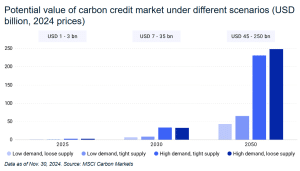
The carbon credit market is set to grow a lot in the next decade. Some projections say it could reach over $250 billion by 2050. This surge comes from stricter climate rules and rising demand. Companies want to meet their climate goals, and carbon credits are one option to consider.
Source: MSCI
Tencent’s Roadmap to Carbon Neutrality by 2030
In February 2022, Tencent shared its plan for carbon neutrality by 2030 as shown below. They also pledged to use 100% green electricity. The company’s targets—validated by the Science Based Targets initiative (SBTi)—align with the 1.5°C global warming goal.
Source: Tencent
To meet this goal, the company is focusing on three key strategies:
Offsetting unavoidable emissions through credible carbon credits.
In 2023, Tencent reported total greenhouse gas (GHG) emissions of 5,793,823.7 tCO2e, with the following breakdown:
Scope 1 (direct emissions) accounted for 4.75% of the total,
Scope 2 (emissions from purchased energy) made up 44.21%, and
Scope 3 (supply chain and other indirect emissions) represented 51.04%.
Tencent’s strategy prioritizes direct emissions reduction while minimizing reliance on carbon offsets. The tech company is boosting resource efficiency. They are reducing energy use per output unit. They do this by using high-performance servers, advanced cooling systems, and better server use.
Moreover, Tencent used artificial intelligence (AI) to run data center operations. This cut electricity use by about 5,000 MWh. It also helped avoid 2,851.5 tonnes of carbon emissions in 2023.
A major part of the plan involves expanding renewable energy use. Tencent actively participates in China’s green power trading market and has steadily increased green electricity consumption.
In 2023, it purchased 604,277.1 MWh of green power—up 79.6% from 2022—avoiding 344,619.2 tonnes of carbon emissions. It also increased rooftop solar installations at its data centers. By the end of 2023, total capacity reached 52.2 MW, a 166.3% rise from the previous year.
The share of renewable electricity in Tencent’s total energy mix rose from 7.2% in 2022 to 12.4% in 2023. For hard-to-abate supply chain emissions—such as from equipment procurement and building materials—Tencent plans to use carbon credits to meet its 2030 carbon neutrality goal. Accelerated action is also underway to reduce emissions from AI-driven cloud computing services.
The Future of Carbon Credits and Climate Finance
Tencent’s partnership with GenZero shows a growing trend. Companies across different sectors now see carbon credits as key to their environmental plans. As demand for carbon credits grows, the need for clear markets also increases. Companies want to invest in projects that reduce emissions.
GenZero knows carbon markets well. This will help Tencent and other companies make sure their investments lead to real, measurable environmental benefits.
The global carbon market is changing. Digital platforms and new monitoring technologies help companies access carbon credits more easily. These advances should lower transaction costs. They will also boost the efficiency of carbon credit trading, which will help the market grow.
For companies like Tencent, these platforms offer new chances to invest in emission reduction projects and help them meet their sustainability goals.
Tencent’s partnership with GenZero is an important step in the company’s ongoing efforts to achieve its sustainability goals. By purchasing carbon credits, the Chinese company is taking responsibility for its own emissions. It is also contributing to the larger global effort to combat climate change.
This collaboration also highlights the growing role of the private sector in climate finance. As companies around the world begin to recognize the financial and reputational benefits of sustainability, it is likely that more businesses will follow Tencent’s lead by engaging in the carbon credit market. By doing so, these companies can not only reduce their own environmental impact but also support the global transition to a low-carbon economy.
Removall, the France-based carbon project developer, and Sumitomo Corporation have launched a joint venture called Summit Removall. This venture will co-invest in high-quality, nature-based carbon credit projects globally. It combines Removall’s carbon project development skills with Sumitomo’s strong global presence, especially in Asia. Together, they aim to increase access to premium carbon credits and support climate goals.
This venture will fund and manage certified carbon projects that remove and reduce greenhouse gases. The two companies will also handle the sales of carbon credits to their customers. They will balance their efforts across Europe, Asia, and the Americas.
Yusuke Kinoshita, General Manager of Carbon Solution Business Unit at Sumitomo Corporation, added:
We are thrilled to collaborate with Removall on this significant venture, and we are genuinely excited about what we can achieve together. This partnership aligns perfectly with Sumitomo Corporation’s commitment to sustainability and our goal to contribute to nature-positive and our corporate message ”Enriching Lives and the World”. By investing in high-quality carbon projects like Mozblue, we are not only supporting ecological restoration but also enhancing our capabilities to deliver impactful environmental solutions on a global scale. We deeply appreciate Removall’s expertise in carbon credits, which will enable us to make an even greater impact”.
Removall is a certified carbon project developer that helps companies and organizations meet their climate goals. They enable them to support, fund, or invest in high-quality carbon projects that deliver real environmental impact.
Flagship Investment: Africa’s Largest Mangrove Restoration Project
Summit Removall’s first big investment is MozBlue Phase 1. This project begins Africa’s largest mangrove restoration project in Mozambique. Developed by Blue Forest and Removall, it aims to restore 5,116 hectares of mangrove forests.
MozBlue Phase 1 began operations in November 2024.
It expects to generate about 2.5 million tons of blue carbon credits over 40 years.
The project will use CCB and VCS VM0033 methods. This will help meet high environmental and social standards.
Mangroves are highly effective carbon sinks. They absorb more CO₂ than tropical forests. They also protect coastlines, support biodiversity, and improve local water quality.
Source: Sumitomo Corporation
In an EXCLUSIVE INTERVIEW with Jérôme Beilin, CEO and Co-Founder of Removall, he has shared his valuable insights with CarbonCredits.com
CC: What strategic goals do Removall and Sumitomo Corporation aim to achieve through the creation of Summit Removall?
Jérôme Beilin: Removall and Sumitomo Corporation both aspire to become key carbon market players in the coming years.
Removall, as a project developer, investor, and carbon credit retailer working with premium corporate end-users, intends to grow its investing capacities thanks to Summit Removall, and develop its commercial presence in Asia.
Thanks to this joint venture, Removall will grow its existing portfolio of 6 projects through a portfolio of 15+ projects in the next couple of years.
Sumitomo Corporation is willing to enter the carbon markets with investments in top-quality, high-integrity, and rare blue carbon projects, as well as securing premium carbon credits for their customers across several industries.
The platform’s goal is to invest in multiple international projects that deliver significant medium- and long-term carbon removal from the atmosphere.
CC: Why was the MozBlue Project in Mozambique chosen as the first investment?
Jérôme Beilin: MozBlue was chosen as the first investment for this Joint Venture between Removall and Sumitomo Corporation for several reasons:
First, this is the 1st phase of the largest mangrove restoration initiative in Africa, with 5 200 hectares to be restored in the 1st phase, but more than 40 000 hectares potential. And we are looking for mangrove restoration at scale.
Second, the project is led by Blue Forest. Blue Forest is a pioneering developer of community-led ecological mangrove restoration projects in Africa and around the world. The UAE-based company specializes in large-scale initiatives and aims to restore natural ecosystems while generating co-benefits for local communities and creating long-term value.
Indeed, the phase 1 of the the MozBlue project is developed by Removall together with Blue Forest and a very strong consortium of partners such as the Mozambican branch of Eden Reforestation (a US based NGO specialized in ecosystem restoration with a solid expertise on mangrove restoration), Silvestrum (a US based environmental consulting firm having developed the VCS mangrove methodology VM00033), Terra-Firma, and Avante, two Mozambican consulting firms experts in community-based approach and local communities engagement.
CC: What makes mangrove restoration a compelling climate solution?
Jérôme Beilin: Mangroves are among the world’s most effective carbon sinks, playing a crucial role in the fight against climate change. They absorb significantly more CO₂ than tropical forests, making them vital for climate change mitigation. Additionally, mangroves support biodiversity conservation and provide essential benefits to local communities.
Despite their importance, only a small fraction of the approximately 5,400 certified carbon credit projects worldwide focus on mangrove-related carbon sequestration with biodiversity co-benefits.
By investing in Mozambique’s MozBlue Project — the largest mangrove restoration initiative in Africa — Removall and Sumitomo Corporation are helping to expand the supply of rare blue carbon credits.
The MozBlue project will deliver such co-benefits. In addition to supporting the growing global market for decarbonization, these projects will also create employment opportunities for local communities involved in mangrove plantation, improve livelihoods, and contribute to nature-positive efforts such as providing habitats for living creatures and water purification.
CC: How will Summit Removall ensure the integrity and certification of the carbon credits generated from its projects?
Jérôme Beilin: The MozBlue Project is listed under the Verified Carbon Standard (VCS), using the most recent methodology for Blue Carbon Project: the VM0033 (Methodology for Tidal Wetland and Seagrass Restoration v2.1).
As the program shows incredible biodiversity and social impacts, the MozBlue Project will be double certified through an additional CCB certification (Climate, Community and Biodiversity).
This dual certification will establish the project as environmentally and socially responsible, providing transparency and accountability in reporting.
The quality of the project has been thoroughly studied by our expert team and through our risk management process.
Best-in-Class MRV methodology procedures (including remote sensing and field surveys) will be followed and will also be completed through regular field visits by our team. Regarding additionality, the project is developed in a Least Developed Country.
As for the carbon potential of the project, we use very conservative estimations to calculate the carbon credit emissions, including conservative assumptions on the project baseline. The project carbon curve and baselines, as well as the PDD, are done by the world best carbon expert for Blue Carbon projects. Moreover, Blue Forest is taking a very conservative approach on carbon calculations sheets which strengthen the project robustness.
CC: How will local communities in Mozambique benefit from the MozBlue Phase 1 project in terms of employment and ecosystem services?
Jérôme Beilin: In addition to its decisive environmental impact, the first phase of the project will create over 700 direct jobs and multiple indirect jobs, reaching over 50 local communities, representing more than people.
Through an innovative and ambitious benefit-sharing scheme, the project will also fund income-generating community activities such as the cultivation of alternative wood to mangroves, fishing, farming, livestock, and beekeeping.
CC: Looking ahead, what types of carbon removal projects and regions will Summit Removall prioritize for future investments?
Jérôme Beilin: Removall and Sumitomo Corporation are mainly looking for any Nature Based Solutions removal projects as of today. We can also evaluate carbon avoidance projects, especially on clean water access and clean cooking in emerging countries.
As we don’t have geographical restrictions, we are open to any geography. In fact, we are currently evaluating other investment opportunities in Africa, Asia, Latin and Central America.
Why Blue Carbon Projects Matter
Despite their benefits, mangrove restoration projects are rare in the carbon market. Of 5,400 certified carbon credit projects worldwide, only a few focus on mangroves. With increasing demand for blue carbon credits, which relate to ocean-based carbon removal, projects like MozBlue are essential.
By investing in this Mozambique initiative, Removall and Sumitomo Corporation are increasing the limited global supply of blue carbon credits. They are also:
MozBlue is just the beginning of this climate initiative. Blue Forest aims to restore and protect up to 155,000 hectares of mangroves in Mozambique in the coming years. Future phases will plant native mangrove species. This will help climate and biodiversity in the long term.
Summit Removall, Removall, and Sumitomo Corporation will look for high-quality, nature-based carbon credit investments worldwide. This joint platform will focus on projects that make high-quality carbon removal credits. These credits will be sold to companies in Europe, Asia (like Japan), and the Americas.
Africa’s Growing Role in the Carbon Credit Market
In 2024, the global market produced about 290 million tons of carbon credits. Africa contributed 20%, or 59 million tons. By 2030, Africa could produce as much as 2.4 billion tons of carbon credits each year. This shows significant growth potential.
Thus, Removall and Sumitomo Corporation will work together in this growing market and tap every opportunity to boost the carbon credit market.
To provide the best experiences, we use technologies like cookies to store and/or access device information. Consenting to these technologies will allow us to process data such as browsing behavior or unique IDs on this site. Not consenting or withdrawing consent, may adversely affect certain features and functions.
Functional
Always active
The technical storage or access is strictly necessary for the legitimate purpose of enabling the use of a specific service explicitly requested by the subscriber or user, or for the sole purpose of carrying out the transmission of a communication over an electronic communications network.
Preferences
The technical storage or access is necessary for the legitimate purpose of storing preferences that are not requested by the subscriber or user.
Statistics
The technical storage or access that is used exclusively for statistical purposes.The technical storage or access that is used exclusively for anonymous statistical purposes. Without a subpoena, voluntary compliance on the part of your Internet Service Provider, or additional records from a third party, information stored or retrieved for this purpose alone cannot usually be used to identify you.
Marketing
The technical storage or access is required to create user profiles to send advertising, or to track the user on a website or across several websites for similar marketing purposes.