Microsoft Buys 60,000 Soil Carbon Credits from Indigo’s Largest Carbon Crop

In a major step toward scaling soil-based carbon removal, Microsoft has purchased 60,000 soil carbon credits from Indigo Ag. The credits come from Indigo’s fourth and largest carbon crop, officially issued in April by the Climate Action Reserve (CAR).

This latest transaction follows Microsoft’s initial 40,000-credit purchase last June, strengthening its long-term commitment to high-integrity carbon removal.

Dean Banks, CEO, Indigo Ag, said,

“When Microsoft, recognized as the major driver behind the carbon removals market, invests in Indigo’s carbon credits, it affirms their confidence in our science, team, and technology. Our microbial and sustainability portfolio spans 20 million acres across 15 countries, and this deal underscores the trust in farmers’ hard work to create a healthy and resilient agri-food system.”

Indigo Ag: Backing Regenerative Farming with Carbon Revenue

Indigo Ag’s carbon program continues to grow at scale. The press release says, so far, it has delivered nearly one million tonnes of verified carbon impact and helped prevent over 64 billion gallons of surface water runoff across the U.S. agricultural landscape.

The company’s newest issuance is funneling tens of millions in private capital toward regenerative farmers. Per Indigo’s model, 75% of carbon credit revenues are paid directly to growers who implement regenerative practices, such as cover cropping and reduced tillage.

This not only incentivizes sustainable agriculture but ensures climate impact is both measurable and long-lasting.

Verified, Permanent, and Additional Carbon Removal

The soil carbon credits purchased by Microsoft are issued under the Soil Enrichment Protocol developed by CAR, one of the most respected registries in the market. Each credit is:

  • Registry-Issued: Third-party verified under strict methodologies by CAR or Verra
  • Real: Quantified using robust accounting for emissions sources, sinks, uncertainty, and leakage
  • Additional: Tied to practices that go beyond conventional farming—no “business-as-usual” allowed
  • Permanent: Assessed over a 100-year horizon and protected with insurance buffers
  • Uniquely Claimed: Each credit is tracked from creation to retirement with no double-counting
  • Co-Beneficial: Delivers added environmental and community benefits

These standards are backed by peer-reviewed research and Indigo’s in-house measurement, reporting, and verification (MRV) tools, which follow IPCC best practices. The MRV ensures long-term monitoring and scientific accuracy.

Furthermore, “Carbon by Indigo” has now become one of the few large-scale ag soil credit programs to demonstrate scalability, scientific integrity, and financial returns for farmers. Other recent buyers include HubSpot, which secured credits via climate platform Watershed.

Microsoft is Leading the Way in Scalable, Soil-Based Removals

Microsoft’s new purchase shows growing confidence in soil carbon as a credible removal pathway. With increasing scrutiny on carbon markets, deals like this demonstrate how agricultural credits, when rooted in rigorous science, can provide reliable, durable carbon storage.

Brian Marrs, Senior Director of Energy and Carbon Removal, Microsoft, noted,

“Indigo’s work to create resilient farms and secure watersheds across the U.S. delivers measurable climate benefits as well as improved soil and water health and new economic development opportunities in rural communities. We conduct extensive due diligence when choosing projects for our portfolio, and are pleased to support this project as part of Microsoft’s broader portfolio of high-quality carbon removal solutions. The collaboration aims to protect the economic security of our agri-food system with a measurable and scalable approach to nature-based carbon removal.” 

Progressing Toward Net-Zero Goal

Microsoft aims to be carbon negative by 2030 and to cut all its past carbon emissions by 2050. To achieve this, it also needs reliable ways to remove carbon from the atmosphere. This is why carbon removal plays a key role in their sustainability map.

microsoft net zero

As seen before and now, the tech giant is heavily investing in nature-based solutions like biochar, soil carbon credits, ARR, and ERW methods to manage its emissions.

By investing in verified, high-quality removals, Microsoft is building a diversified portfolio that includes nature-based solutions alongside engineered technologies, key to meeting its 2030 carbon negative goal.

Code Meets Climate: Verra and Hedera Team Up to Digitally Transform Carbon Markets

A new partnership between carbon standards body Verra and blockchain technology platform Hedera Guardian sets the stage for a more transparent and scalable future for global carbon markets. The collaboration seeks to update how carbon credit projects are managed, monitored, and verified. This will make the process quicker, easier, and more aligned with environmental goals.

The partnership brings Hedera’s open-source tools into Verra’s Project Hub. This helps carbon projects submit and process digital information more easily. This move could mark a big change in the carbon credit market’s digital growth. It has faced challenges from complicated manual tasks for a long time.

Bridging the Digital Gap in Carbon Markets

Verra is the first big standards group in the carbon market to connect with Hedera Guardian. This platform uses blockchain tech and is open-source. It’s great for managing environmental assets, such as carbon credits.
The partnership boosts Verra’s digital setup. It also helps project developers use digital methods and tools. So far, most carbon credit projects have dealt with broken systems for reporting, verifying, and issuing credits. With Hedera’s integration, projects can now “speak digitally.”

Users can submit design documents, check emissions reductions, and find updated methods all in one system. This simple method speeds up reviews. It also makes project data more consistent and reliable. The video explains Hedera’s solution to the carbon market’s transparency issues.
Among the benefits of the integration are:

  • Digitally updated methodologies are available in real time.
  • Simplified and secure project data management.
  • Easier adoption of digital monitoring, reporting, and verification (dMRV).
  • Faster processing and issuance of credits.

RELATED: Northern Trust Revolutionizes Carbon Credit Market with Blockchain-Powered Platform

Supporting Scalable Climate Action

A key project benefiting from this integration is the ALLCOT ABC Mangrove Restoration Project in Senegal. It aims to get registered with Verra’s Verified Carbon Standard (VCS) and Climate, Community & Biodiversity (CCB) programs.

The project used the digital VM0033 Methodology for tidal wetland restoration. It submitted its documents via the new Hedera-integrated Verra Project Hub.

This “digital-first” submission shows a possible future for carbon market participation. It focuses on nature-based solutions in places like Africa. There, a strong digital infrastructure can improve access to climate finance.

Alexis Leroy, CEO of ALLCOT, highlighted this saying:

“This is the beginning of a new era where boots on the ground efforts translate seamlessly into digital trust, speed, and global impact.”

Open Source Innovation and Financial Incentives

The Hedera Foundation will invest for five years. Developers can earn up to $5,000 by helping digitalize more carbon methods. These incentives are part of the DLT Earth Bounty Program, which aims to expand Hedera Guardian’s library of open-source tools.

Verra plans to use this funding to digitize at least 20 more methodologies by the end of 2025. The larger goal is to bring as many projects as possible into a digital ecosystem that can be trusted, audited, and scaled globally.

Wes Geisenberger, Vice President of Sustainability and ESG at the Hedera Foundation, emphasized that digital transparency is now essential. He said that “this integration makes dMRV scalable for every project and methodology.”

Why Digitalization Matters in Carbon Markets

Digitalization in carbon markets addresses several long-standing challenges. Traditional systems for checking carbon credits face criticism. They are often too slow, unclear, and hard to audit. Manual processes and mixed data formats can slow down credit issuance. They also lead to doubts about the accuracy of climate claims.

The move to platforms like Hedera Guardian introduces:

  • Immutable, timestamped data records through blockchain.
  • Real-time access to project updates and status.
  • Automated checks for methodology compliance.
  • Transparent supply chains for carbon credit lifecycle tracking.

These features make carbon credits easier to verify. They help stop problems like double-counting or inflated emissions reductions, issues that hurt public and investor trust in the market.

carbon credit lifecycle
Carbon Credit Lifecycle: Source: Morgan Stanley Research

When carbon credits are made digital and tracked on a blockchain, everyone can see important details right away—like where the credit came from, who has owned it, and what kind of environmental benefit it provides. This clear, easy-to-check information helps build trust and makes carbon offset claims more believable.

A report from the Taskforce on Scaling Voluntary Carbon Markets (TSVCM) says that boosting transparency and trust is essential. This will help attract more money for climate solutions. Market participants want clear impact metrics. And this demand grows as regulators and environmental watchdogs pay more attention.

A Broader Push to Digitize Environmental Markets

The Verra-Hedera partnership shows a bigger trend in the industry. Digital measurement, reporting, and verification systems are on the rise. dMRV systems help check emissions data faster and on a larger scale. They work across various projects and locations.

A World Bank study urges governments to support the setup and use of dMRV systems by creating policies and conditions that help these systems work effectively.

digitalization in carbon credit market
Source: World Bank study

Moreover, many global efforts aim to create reliable digital systems for climate markets. For instance:

  • The Climate Action Data Trust (CAD Trust) is a global project led by the World Bank. It is looking into blockchain technology to improve carbon data sharing.
  • Companies like ClimateCheck, Puro.Earth, and Sylvera are using AI and satellites to enhance verification accuracy.
  • The Integrity Council for the Voluntary Carbon Market (ICVCM) is working on guidelines. These aim to enhance credit quality and ensure that standards can be compared easily.

Verra’s tie-up with Hedera puts this movement ahead. It leads the way in making climate finance efficient, credible, and scalable.

Next Up: A Smarter Carbon System

The digital transformation of carbon markets is just starting. However, initiatives like this are laying the groundwork for future growth. Verra and Hedera are making project submission, verification, and tracking easier. This change will cut down friction, boost data transparency, and build trust in the market.

As more organizations digitalize methodologies and more projects enter the system, stakeholders, including developers, investors, and regulators, will benefit from faster credit cycles and more accurate tracking of environmental impacts.

Mandy Rambharos, CEO of Verra, summed up the significance of the collaboration:

“This represents a significant advancement in Verra’s digitalization strategy. Integrating Hedera Guardian with the Verra Project Hub is a meaningful step toward improving the way we serve our stakeholders…”

The Verra-Hedera partnership is both a tech upgrade and a strong move to build a more open, scalable, and reliable carbon market. The initiative modernizes how teams develop, verify, and track projects, addressing both practical challenges and systemic trust issues. As such, it shows a new way to scale climate solutions in the digital age. 

Could Solar Surpass Nuclear as the World’s Top Clean Energy Source?

Solar power truly stole the spotlight last year. It helped push clean energy to a record-breaking milestone—supplying over 40% of the world’s electricity for the first time. As global demand soared, driven by extreme heat, solar stepped up as the fastest-growing energy source. Let’s study what top research reveals about this newly set solar record.

Solar Takes the Spotlight as Clean Energy Smashes Records

Ember’s Global Electricity Review 2025 showed how big this shift was in 2024. Clean power additions soared to a record high in 2024, with renewable sources adding 858 TWh of electricity. It’s 49% more than the previous high in 2022.

As said before, solar power stood out, contributing over 50% of the increase.

  • In 2024, solar power generated a total of 2,131 TWh, with 474 TWh added that year alone.

solar power

Wind added another 180 TWh, and hydro rebounded with a 190 TWh boost after weather-related declines in 2023.

For the first time, combined wind and solar output surpassed hydropower. Still, hydro remained the single largest clean power source at 14.3% of global electricity.

  • Quite shockingly, nuclear contributed 9%, though its share slipped to a 45-year low due to slower growth relative to other technologies.

Other low-carbon sources, including bioenergy and geothermal, made up just 2.6% of the mix. On the fossil side, coal remained the largest single source, generating 34.4% of global electricity, followed by natural gas at 22%. Overall, fossil fuels’ share dropped to 59.1%—its first dip below 60% since the 1940s.

Solar Meets 44% of New Energy Demand

IEA’s Global Energy Review 2025 highlighted that global electricity demand grew by a massive 1,080 TWh in 2024. It’s nearly 2X the average increase over the last decade.

Notably, China was the main driver, accounting for more than half of the new demand. Other major economies, including India, the U.S., and parts of Southeast Asia, also saw significant upticks.

  • Now talking about the share, renewables covered about 77% of this growth. Solar alone met 44% of the increased demand.

Wind also grew, but at a more modest pace of 8%—its lowest rate in two decades due to supply chain bottlenecks and permitting delays, especially in Europe.

Hydropower saw a strong recovery after poor rainfall in 2023, particularly in Brazil, India, and parts of Sub-Saharan Africa. Nuclear output also ticked up by 4%, supported by new plants and restarts in France and Japan.

Annual change in global electricity generation by source, 2023-2024

global electricity
Source: IEA

Read more about the solar boom happening worldwide: 

  1. India Hits 100 GW Solar Milestone, Eyes Global Solar Export Hub with EU Partnership 
  2. MENA’s Renewable Energy Boom: Solar Capacity to Hit 180 GW by 2030 
  3. South Korea Eyes Solar Power Supremacy by 2035: Can This Shift Outshine Nuclear in Just a Decade? 

Solar PV and Rooftop Solar Additions

  • Solar PV has now doubled its output every three years since 2016.

This made it the world’s fastest-growing electricity source for the 20th consecutive year. It was backed by huge capacity additions of 585 gigawatts (GW) in 2023 and 2024 combined. New installations rose 86% year-on-year in 2023 and jumped another 30% in 2024.

Rooftop solar and small-scale installations also played a major role. Ember pointed out that underreporting remains a challenge, especially in markets like India and parts of Southeast Asia, where rooftop deployment is growing rapidly but not always captured in official statistics.

From this data, one can infer that solar has had the best growth so far.

In the United States, solar capacity hit 128.2 GW by end-2024, due to 38.4 GW of new additions. Battery storage expanded by a record 14.9 GW, bringing the total to 30.9 GW. Residential solar continued to boom, with attachment rates rising from 14% to 25% in one year.

SOLAR PV

One such company that grabbed this momentum in the United States was SolarBank Corporation. Recently, it signed a new deal with a California-based renowned real estate and infrastructure investor, CIM Group. This deal provides project-based funding of up to $100 million and will support solar projects with a combined capacity of 97 megawatts (MW) across the country.

The company has significantly strengthened its position in community solar projects and is also stepping into the battery energy storage market.

Solar Bank’s community solar achievements: 

  1. 7.2 MW North Main Community Solar Project in New York 
  2. Expands Community Solar in New York with 14.4 MW Project
  3. Commences its First 4.99 MW BESS Project in Ontario 

Are Coal and Gas Still in the Game?

The Ember report further disclosed that despite the expansion of renewables, fossil generation rose by just over 1% in 2024. Gas-fired electricity increased by 2.5%, driven by cheaper gas prices and growing cooling needs during intense heat waves. Coal power rose by less than 1%, half the pace of growth seen in 2023.

However, the emissions impact was significant. Power sector CO₂ emissions rose to 14.6 billion tonnes. That’s 228 million tonnes more than in 2023, undermining global decarbonization targets. Ember warns that unless electricity demand is better managed, extreme climate events could continue to drive up fossil use even as clean power grows.

Solar Growth Set to Soar Through 2034

The Solar Energy Industries Association (SEIA) reported a 51% growth in the U.S. solar market in 2023. Projections suggest that annual deployments could rise 17% by 2034 under a high-growth scenario if current trends continue.

solar future

From this analysis, we can conclude that clean energy hit new highs in 2024, with solar powering much of the growth. Yet, heat-driven demand pushed fossil use and emissions up. The path ahead needs not just more renewables, but smarter grids and better demand management to stay on track for climate goals.

The Battery Shift: How Energy Storage Is Reshaping the Metals Market with LFPs Taking Charge

The energy transition is accelerating, and battery storage is at the center of the shift. With more solar and wind energy on national grids, storing power is key. The world needs to save energy during peak production and release it when demand is high. Lithium iron phosphate (LFP) batteries are at the forefront: they are cheaper and more reliable than older battery types.

According to UBS, total global storage capacity needs to grow eightfold by 2030 and 34 times by 2050 to keep up with renewable energy expansion. Notably, energy storage growth now outpaces electric vehicle (EV) sales.

In 2024, battery storage demand jumped 85% from the previous year. Most of the new installations came from utility-scale projects, as reported by the International Energy Agency (IEA). By 2030, energy storage is expected to make up about 20% of the total battery market. And this means LFP batteries are becoming essential.

The Rise of LFP Batteries

LFP batteries are less expensive and do not rely on nickel or cobalt, two metals traditionally used in battery chemistries. In the last 18 months, LFP battery costs have fallen by almost 50%. This makes them very appealing for large energy storage projects.

Battery pack prices
Source: IEA Report

Fidra Energy’s Thorpe Marsh project in the UK will install LFP batteries on a 55-acre site. This facility will become Europe’s largest energy storage facility. These batteries are not only cheaper but are now lasting longer, with improved lifespans of up to 20 years.

LFPs are also being embraced by Chinese EV makers like BYD, which surpassed Tesla in 2024 as the world’s largest EV seller. Their lower cost and safety profile make them ideal for grid storage and increasingly popular for EV applications.

  • According to the IEA, LFP batteries now make up nearly 50% of the global EV battery market, up from under 10% in 2020.

In a separate forecast by energy transition consultancy Rho Motion, the battery energy storage projects will grow tremendously in 2030. As such, the rise of LFP negatively impacts other metals, especially nickel and cobalt.

battery energy storage project growth 2030
Source: Reuters

Nickel and Cobalt Losing Ground

For years, nickel and cobalt were seen as critical for high-performance batteries. But the recent shift to LFPs has changed that. CRU (Commodity Research Unit) reports that nickel intensity in battery demand fell by almost one-third from 2020 to 2024. Cobalt intensity dropped even more, by two-thirds.

The change is already impacting markets. Benchmark nickel prices have halved over the past three years, and cobalt prices have fallen by 60%. Much of the oversupply comes from producers scaling up in response to older forecasts of sustained demand from the EV sector.

Environmental and ethical concerns are also pushing the shift. Nickel mining, especially in Indonesia, carries a high carbon footprint. Cobalt mining in the Democratic Republic of Congo raises serious concerns. It is linked to child labor and human rights abuses. This issue worries both companies and consumers.

The IEA says that switching to LFP chemistries has cut cobalt demand forecasts by over 10% compared to previous estimates.

Lithium Gains Importance — But Faces Risk

While demand for nickel and cobalt wanes, lithium remains critical. Even though lithium prices have dropped another 20% this year due to oversupply, experts see growing long-term demand due to energy storage.

Iola Hughes from Rho Motion said that stationary storage is now a bigger part of lithium demand. This is happening, especially as EV sales slow down. Companies like Norway’s Morrow Batteries, which plans to manufacture one gigawatt-hour of battery cells annually, are preparing for this shift.

According to the IEA, lithium demand is expected to grow fivefold by 2040 under its Stated Policies Scenario (STEPS). Graphite and nickel demand are projected to double, while cobalt and rare earth elements are forecast to grow by 50–60%.

Lithium Demand and Mining Requirements 2040

lithium demand outlook and mining requirements
Source: IEA

However, lithium mining also faces scrutiny. Environmental and indigenous rights concerns in top-producing countries like Chile, Argentina, and China could affect supply and project timelines.

The IEA warns that global supplies of copper and lithium could be 30% and 40% lower by 2035. This is despite many new mining announcements. And so, more projects need to be developed and funded to avoid this shortfall.

China’s Lead and Global Challenges

China currently dominates the global battery supply chain. More than 90% of U.S. energy storage batteries come from China. Companies like Sungrow Power Supply supply batteries for key projects in Europe, such as Fidra’s Thorpe Marsh.

The IEA report confirms that China holds dominance across both LFP and nickel-based battery supply chains, from raw material mining to battery manufacturing. It will continue to do so until 2035. This reinforces global reliance on Chinese exports.

refined metal production dominated by China
Source: IEA

While the U.S. and Europe are trying to localize battery production, challenges remain. U.S. President Donald Trump’s administration has imposed a 41% tariff on Chinese battery imports during a 90-day trade truce. This has led to uncertainty, which may slow short-term growth in U.S. energy storage deployment.

European leaders are also concerned about dependency on Chinese battery technologies. However, industry experts like Fidra CEO Chris Elder say that working with China is often necessary to meet net-zero targets quickly and affordably.

A Metal Market in Transition

While LFP batteries dominate for now, new technologies are emerging. Sodium-ion batteries, which do not require lithium, nickel, or cobalt, are gaining attention. These batteries use common minerals like sodium and manganese. This helps create stronger and more diverse supply chains, as noted by the IEA.

Still, the global pivot toward LFP batteries and energy storage is reshaping energy policy and investment. Governments worldwide are recognizing the critical role of storage in meeting clean energy targets.

The IEA’s Global Critical Minerals Outlook 2025 says that demand for lithium, copper, and rare earth elements will keep increasing. This rise is due to their importance in clean technologies.

Investors are also shifting strategies. As EV demand softens, companies like LG Energy Solution are changing U.S. factories. They are now making LFP batteries for storage. Meanwhile, Morrow Batteries is expanding production in Europe, signaling that the energy storage sector is becoming a major force on its own.

National grids are also getting smarter. Energy storage helps stabilize the electricity supply. It reduces blackout risks, like the recent one in Spain. With energy storage increasingly tied to grid resilience, its value is no longer just economic but strategic.

The global shift to energy storage, led by the rapid adoption of LFP batteries, is transforming the battery metals landscape. Lithium, despite price volatility, remains central, with demand projected to grow fivefold by 2040. As new technologies evolve and markets mature, those who stay ahead of these shifts will help shape the future of global energy.

Trump’s New EOs Revive Nuclear: Fast Reactors, Big Promises, and a Race Against Time

President Donald Trump has signed a set of executive orders aimed at reviving and reshaping the U.S. nuclear energy industry. The orders, signed on May 23, 2025, are designed to speed up reactor development, reduce regulatory hurdles, boost domestic uranium production, and overhaul the U.S. Nuclear Regulatory Commission (NRC).

These actions occur as global competition for energy increases. There are also concerns about national security. Plus, the world needs more low-carbon power sources for data centers and defense infrastructure. The administration and industry leaders praised the move, but some scientists and safety groups are worried.

Michael Kratsios, White House Office of Science and Technology Director, remarked:

“…Today’s executive orders are the most significant nuclear regulatory reform actions taken in decades. We are restoring a strong American nuclear industrial base, rebuilding a secure and sovereign domestic nuclear fuel supply chain, and leading the world towards a future fueled by American nuclear energy. These actions are critical to American energy independence and continued dominance in AI and other emerging technologies.”

Fast-Tracking a Nuclear Comeback

Trump’s executive orders aim to “usher in a nuclear renaissance,” according to the White House. One of the core goals is to remove regulatory bottlenecks that have slowed down the construction of nuclear reactors for decades.

Key changes include:

  • Accelerating testing of advanced reactor designs at the Department of Energy (DOE) national laboratories.

  • Allowing the DOE and Department of Defense (DOD) to build reactors on federal lands—including military bases—to have at least one new reactor operational at a domestic military installation by September 30, 2028.

  • Mandating the NRC to approve new reactor licenses within 18 months, a sharp reduction from the current process, which can take up to a decade.

  • Launching a pilot program to build new reactors within two years, focusing on advanced technologies like small modular reactors (SMRs) and microreactors

Trump said in the Oval Office, “We’re signing big executive orders today. They will make us the real power in this industry.”

The orders aim to quadruple U.S. nuclear capacity by 2050, increasing it from 100 gigawatts to 400 gigawatts. To achieve this, they will use new reactor technologies, like modular and microreactors, and expand the domestic fuel cycle.

Modernizing and Rewiring the NRC

One of the most controversial changes involves reforming the Nuclear Regulatory Commission. The NRC, which oversees nuclear safety and licensing, will undergo what the White House calls a “substantial reorganization.”

The executive order says the NRC’s staffing and structure are “misaligned” with its mission. It also criticizes the agency for being too cautious about risks. It directs the NRC to revise its guidelines within 18 months and adopt “science-based radiation limits.”

The new order also allows for high-volume licensing of microreactors and modular reactors through standardized applications. Moreover, it will create expedited pathways for advanced reactor designs that the DOE or DOD has safely tested.

Critics argue this could weaken the agency’s independence and compromise safety. Edwin Lyman, the nuclear safety director at the Union of Concerned Scientists, warned that the orders may lead to a serious accident. He believes they promote ways that bypass normal safety reviews.

Despite these concerns, industry groups support the reforms. The Nuclear Energy Institute said these orders would help create a “reliable, affordable, and cleaner energy system.”

Boosting Domestic Fuel and Security

Another order focuses on rebuilding the U.S. nuclear fuel supply chain, especially uranium mining and enrichment. The U.S. has relied on foreign sources, especially Russia, for enriched uranium. This supply has been stopped since the invasion of Ukraine.

US uranium source 2023
Source: Elements

Additionally, the International Energy Agency (IEA) has warned that the recent surge in global nuclear development is “heavily reliant” on Chinese and Russian technologies. Since 2017, 92% of all newly started reactor construction projects worldwide have used designs from China or Russia.

Meanwhile, countries like France are falling behind, facing challenges in updating older reactors and financing new projects that often encounter delays and budget overruns. While the U.S. is not even included in the list.

nuclear power capacity under construction
Chart from Semaflor

And thus, Trump’s new orders call for:

  • Restarting domestic uranium mining and enrichment
  • Expanding conversion and enrichment capacity
  • Supporting small modular reactors to power military bases and AI data centers

Interior Secretary Doug Burgum linked these steps to broader strategic goals. He emphasized the connection between energy independence and national defense.

Defense Secretary Pete Hegseth supported the move, saying small nuclear reactors could make U.S. military operations more reliable globally.

Industry Reaction: Optimism with Caution

The U.S. nuclear industry has broadly welcomed the executive orders. Joseph Dominguez, CEO of Constellation Energy, runs the largest nuclear fleet in the U.S. He said the administration is taking “common sense initiatives.” These will modernize regulations and encourage investment.

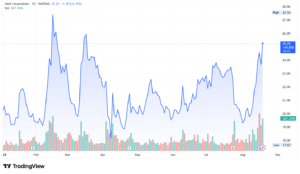
Constellation plans to spend billions to relicense its plants. They aim to boost output by up to 1,000 megawatts. The company’s stocks skyrocketed following Trump’s EO announcement. 

Constellation Energy Stocks Rally

Constellation Energy stocks
Source: MSN

Other industry groups, such as the U.S. Nuclear Industry Council, praised the orders. They welcomed the changes for speeding up permits and boosting fuel production.

However, not all responses were positive. Judi Greenwald, CEO of the Nuclear Innovation Alliance, expressed concerns that staffing cuts and overlapping mandates could disrupt progress.

“The NRC is already making progress on reform,” she said, referencing the 2024 ADVANCE Act, which set modernization goals for the agency.

What’s on the Horizon for U.S. Nuclear?

The White House sees nuclear power as key to providing electricity for defense, AI computing, and climate resilience. The move also reflects a push to gain a competitive edge in nuclear technology exports.

But the plan’s success depends on balancing innovation with public trust and safety. The Union of Concerned Scientists warned that rushing deployment without good oversight could backfire. This may harm the industry’s long-term reputation.

The NRC has said it is reviewing the executive orders and will work with the DOE and DOD on implementation. The agency added that it will continue to enforce safety requirements even as it modernizes.

Trump’s administration aims to begin testing and deploying new reactors within his current term. The timeline shows quick policy action, especially if pilot projects start on federal lands in the next two years.

Meanwhile, nuclear energy remains a central part of U.S. energy and security conversations. With help from the DOE, defense agencies, and private companies, these executive orders might start a new era for American nuclear power.

Whether these moves spark a true “nuclear renaissance” or stir public debate will depend on how the orders are implemented—and how stakeholders respond in the coming months.

India-Europe Hydrogen Highway: AM Green and Rotterdam Join Forces to Drive $1B Green Fuel Trade

In a major step toward global energy transition, AM Green and the Port of Rotterdam Authority have signed a Memorandum of Understanding (MoU) to create a green energy supply chain linking India and Northwestern Europe. The collaboration will use the Port of Rotterdam — Europe’s largest energy port and a key entry point for hydrogen carriers — to transport green fuels from India.

The partnership aims to support the supply of sustainable bunkering fuels and Sustainable Aviation Fuels (SAFs). It also includes plans to assess infrastructure needs for terminals in Rotterdam and along the broader European supply chain.

Anil Chalamalasetty, Founder of AM Green and Greenko Group said,

“This partnership is part of our ambitious global growth strategy in green fuels including 5 MTPA of green ammonia and 1 MTPA of SAF. This collaboration marks a significant milestone in establishing a global carbon-free energy ecosystem. It will enable the seamless movement of green molecules and fuels from India to Europe, reinforcing AM Green’s position as a global clean energy transition platform and accelerating industrial decarbonization globally.”

Why India Is Betting Big on Green Hydrogen?

India’s Green Hydrogen Revolution report reveals that the country spends over USD 90 billion each year to meet more than 40% of its energy needs from other countries.

Thus, India is focusing on green hydrogen to reduce its dependence on imported fuels and cut carbon emissions. Furthermore, domestic production would also be cost-effective.

green hydrogen India

Reaching Emission Goals

India is the world’s third-biggest carbon emitter, responsible for nearly 7% of global CO₂ emissions. Earlier, it had promised to reduce its emissions intensity by 33–35% under the Paris Agreement. Now, the goal is even higher—45% by 2030.

India also aims to be energy independent by 2047 and reach net-zero emissions by 2070. To get there, green hydrogen will play a major role. It’s clean, renewable, and can help the country meet its climate targets while supporting industries.

Notably, green hydrogen is made using renewable energy like solar and wind. It can help power industries and vehicles while lowering the need for imported fossil fuels.

National Green Hydrogen Mission

To support this vision, the Indian government launched the National Green Hydrogen Mission in January 2023. This mission provides a full action plan to grow the green hydrogen sector in India. It includes steps to attract investments, build the needed infrastructure, and promote research and development.

Many countries have already introduced hydrogen strategies as part of their clean energy plans. By moving early, India hopes to become a global leader in green hydrogen production and exports.

With this mission, India is working toward a future that’s cleaner, greener, and more energy secure.

AM Green’s Clean Energy Vision

AM Green, backed by the founders of the Greenko Group, is at the forefront of India’s clean energy revolution. It builds on Greenko’s experience in managing renewable assets and large-scale pumped storage projects that provide affordable round-the-clock clean power.

The company is focused on producing:

  • Sustainable Aviation Fuel (SAF)
  • Green Hydrogen
  • Green Ammonia
  • Green Chemicals
  • Biofuels

The company plans to produce 5 million tons of green ammonia annually by 2030, which equals around 1 million tons of green hydrogen. This ambitious target could meet 20% of India’s and 10% of Europe’s green hydrogen goals — a major boost for global decarbonization and India’s net-zero aspirations.

Rotterdam’s Green Gateway Role

The Port of Rotterdam plays a crucial role in energy security and trade for the Netherlands and all of Europe. Thanks to its strategic location, top-tier infrastructure, and excellent inland connections, Rotterdam is a powerhouse for global commerce. The Port Authority is deeply committed to sustainable development, safe port operations, and efficient logistics.

Their long-term goal is to transform Rotterdam into a climate-neutral, future-ready logistics and industrial hub, aligning economic strength with environmental responsibility.

Boudewijn Siemons, CEO of the Port of Rotterdam Authority, stated,

“We are delighted to collaborate with AM Green BV to further strengthen our commitment to the energy transition. This agreement marks an important step towards establishing a robust supply chain for low-carbon fuels and chemicals. With India’s vast potential for green hydrogen production, combined with Rotterdam’s strategic location and advanced infrastructure, the collaboration will lead to a robust and sustainable green energy supply chain between the two regions.”

Powering the EU’s Net-Zero Target

The European Union plans to become climate-neutral by 2050. This means it will cut greenhouse gas emissions to zero or remove what’s left using clean technologies or nature. The EU made this goal legally binding under the European Climate Law.

By 2030, it aims to reduce emissions by at least 55% from 1990 levels. By 2040, it wants to reach a 90% cut. These steps are part of the European Green Deal to fight climate change and protect the planet.

eu net zero
Source: EU
Strengthening Hydrogen Infrastructure and Trade
This partnership also includes joint efforts to develop port infrastructure critical to handling and safely distributing hydrogen-based fuels and products. The collaboration will help link India’s Net Zero Industrial Clusters with key European markets.
  • The supply chain has the potential to export up to 1 million tons of green fuels annually, supporting trade valued at around $1 billion.

Initial production is expected to begin in Kakinada, India. Meanwhile, the Port of Rotterdam will continue its role as Europe’s hydrogen gateway, already handling about 13% of the continent’s energy demand.

Together, AM Green and the Port of Rotterdam are setting the stage for a clean energy corridor that supports India’s National Green Hydrogen Mission and helps Europe hit its climate goals.

South Korea Eyes Solar Power Supremacy by 2035: Can This Shift Outshine Nuclear in Just a Decade?

South Korea is on track for a major clean energy milestone. Solar power is expected to become cheaper than nuclear energy between 2030 and 2035. Rapid improvements in solar panel efficiency and lower installation costs are driving this change. By 2035, solar is projected to lead the nation’s power generation. This shift supports a national goal of 80% renewable energy, aligning climate priorities with energy security and economic growth.

South Korea’s Power Mix in 2024: Heavy on Fossil Fuels, Light on Renewables

Think Tank Ember Group’s analysis showed that in 2024, low-carbon sources generated 40% of South Korea’s electricity, nearly matching the global average of 41%.

As the world’s 7th largest electricity consumer, South Korea still leans heavily on fossil fuels, which supply 60% of its electricity.

Nuclear energy is the country’s largest source of clean power, accounting for 30% of the mix. However, solar and wind together made up just 6%, less than half the global average of 15%.

Despite rapid economic growth and rising power demand over the last two decades, South Korea’s power sector emissions peaked in 2018. This turning point came as solar and nuclear began to edge out coal. Still, emissions remain high, at around 5 tonnes of CO₂ per person. It’s nearly three times the global average.

Looking ahead, South Korea is targeting 20% renewable electricity by 2030. That figure, though a step forward, falls far short of the 60% global renewables share envisioned in the IEA Net Zero Emissions scenario for that year.

South Korea renewables solar
Source: Ember

Why Solar Power Is Outpacing Nuclear?

The country’s energy model is shifting, supported by strong policies and rising investments in solar. A report titled “Assessing the Levelized Cost of Energy in South Korea” shows that solar’s levelized cost of energy (LCOE) may drop by 50% in the next decade. In contrast, nuclear’s LCOE could rise by 15% due to aging reactors and increased maintenance costs.

Solar’s declining costs give it a clear advantage over coal, nuclear, and natural gas. The report estimates that solar could supply over 60% of South Korea’s electricity by 2035, up from about 10% in 2020.

Growth will come from rooftop solar in cities and large-scale solar farms in rural areas. Thus, South Korea is seeing solar become the smartest and most sustainable energy option.

Boosting Energy Independence

EIA revealed that, “South Korea relies on imports to meet almost 98% of its fossil fuel consumption as a result of insufficient domestic resources.

This dependence exposes the economy to global risks and price fluctuations. Transitioning to solar and other renewables aims to reduce this reliance and boost national energy security.

The country’s National Carbon Neutrality Plan links expanding clean power to building national resilience. By increasing domestic renewable energy sources, South Korea lowers its vulnerability to international supply chain issues. The plan also outlines key steps to enhance clean power, upgrade transmission networks, and expand battery storage, strengthening the grid against disruptions.

South Korea clean energy
Source: A clean energy Korea by 2035

Cutting Emissions and Cleaning the Air

As of 2023, fossil fuels provide 62% of South Korea’s electricity, giving it one of the highest per-person carbon footprints in the G20. Replacing coal and gas with renewables like solar will significantly lower emissions by 2035.

The A Clean Energy Korea by 2035 study shows that expanding solar and wind, along with a target of 10 GW of storage by 2030, can reduce fossil fuel use without building new coal plants. This shift will cut emissions, improve air quality, and help South Korea meet its climate commitments.

Kim Seo-Young from the Korea Energy Agency stated,

“Clean energy isn’t just about reducing emissions—it’s about improving public health and creating a stronger economy.”

Market Transformation Underway

South Korea’s electricity market is changing. New infrastructure and investment are making solar and wind more affordable. Analysts expect a 28% to 41% drop in the LCOE of solar and wind by 2035, while nuclear costs are likely to keep rising.

Nuclear currently makes up about 30% of power generation, but solar is set to overtake it in the next decade. Government plans include adding up to 14.5 GW of renewable energy each year from 2030 to 2035.

A $30 billion investment will support large solar projects and urban rooftop installations.

Private companies are also getting involved. As regulations change to support cleaner energy, local firms invest in solar development. New pilot programs and battery storage projects are beginning in industrial areas, with support from public R&D funding. This growth could create up to 400,000 green jobs by 2035.

These jobs will be in renewable tech, grid management, and clean manufacturing. This shift benefits both the planet and the economy.

Will South Korea Hit Its 2035 Clean Energy Target?

Reaching 80% clean electricity by 2035 depends on how quickly South Korea scales up. Current trends show that, without stronger action, renewables might only reach 21–33% of power by 2038. This is much lower than what other advanced economies expect.

Public, industry, and international partners are pushing for faster action. Sectors like AI and chip manufacturing are growing, and their energy demands are high.

If they continue to rely on fossil fuels, the country might lose its competitive edge. Thus, speeding up the rollout of renewables is essential for climate goals and maintaining relevance in the global economy.

South korea renewable
Source: A Clean Energy Korea by 2035

Solar’s rapid growth, driven by affordability and smart policies, makes it South Korea’s leading energy source. No longer an add-on, solar is now central to the clean energy revolution. The next decade will challenge the system’s flexibility and resolve. The path ahead is clear: solar is leading the way.

Building Cleaner: Microsoft and Carbon Direct Launch EAC Guide for Concrete and Steel

One of the industries that faces high pressure to reduce carbon emissions is construction. The materials at the heart of construction—concrete and steel—are essential but carbon-intensive. Together, they contribute to approximately 13% of global CO₂ emissions.

In response, Carbon Direct and Microsoft have launched a unique guide. It’s called Criteria for High-Quality Environmental Attribute Certificates (EACs) in the Concrete and Steel Sectors. This guide helps companies reduce supply chain emissions. It also speeds up the decarbonization of built environments by tackling its significant emission source: embodied carbon. 

The Problem with Embodied Carbon

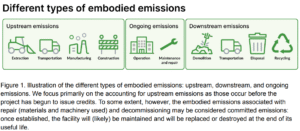
Embodied carbon is different from emissions from energy use. It refers to emissions released when producing and transporting building materials. Concrete and steel are two of the biggest contributors to this problem.

As of 2025, cement production remains a major source of global carbon emissions, accounting for about 7–8% of total CO₂ output. The most recent data from the World Economic Forum estimates that the industry emitted around 1.6 billion metric tonnes of CO₂ in 2022 alone.

cement carbon emissions 2022

About 60% of these emissions come from decarbonating limestone, called process emissions. The remaining 40% comes from burning fossil fuels to heat cement kilns.

The industry has a big climate impact, but it has made some progress. From 2020 to 2022, it cut carbon intensity by 2.2% per tonne of cement.

However, more aggressive action is needed to stay on track for global climate goals. Without major changes, cement production emissions might nearly double. They could hit 3.8 billion tonnes a year by mid-century. This rise is fueled by increased construction demand in developing countries and fast urbanization around the globe.

With the global construction sector expected to double in size by 2060, the demand for these materials will keep rising. Yet the supply of truly low-carbon alternatives remains limited and difficult to source. This disconnect has created a gap between corporate climate goals and real procurement strategies.

Many companies aim to cut their supply chain emissions. However, tools and systems for this are still being developed, especially for concrete and steel. This is where Microsoft and Carbon Direct’s partnership comes in. 

Environmental Attribute Certificates: A Flexible Solution

Environmental Attribute Certificates (EACs) offer a promising way forward. EACs work like Renewable Energy Certificates (RECs). Companies can still enjoy the environmental perks of low-carbon concrete and steel, even if they don’t use them in their supply chain. This flexibility helps companies with complex or global construction projects. They often can’t source green materials directly.

The new guide from Carbon Direct and Microsoft outlines how EACs can be used as a credible tool to bridge this gap. It uses strict criteria to make sure EACs cut emissions for real. This way, they won’t just move emissions around but will help lower carbon emissions in production.

Decarbonization opportunities in the cement and concrete supply chains
Source: Carbon Direct-Microsoft guide

The report is designed to support procurement teams, sustainability officers, and material suppliers in navigating the emerging EAC market with climate integrity.

What Makes an EAC High-Quality?

For an EAC to drive meaningful decarbonization, it must meet specific standards. The guide identifies several critical quality criteria:

  • Additionality:
    EACs must represent real emissions reductions that go beyond business-as-usual. The projects should not already be financially viable without the EAC revenue.

  • Catalytic Impact:
    EACs should promote systemic change by encouraging broader market shifts, technological innovation, or policy adoption that accelerate decarbonization in concrete and steel.

  • Procurement Flexibility:
    EACs are designed to decouple environmental benefits from the physical material, enabling companies to support low-carbon production even when direct procurement isn’t feasible.

  • Quantifiable and Verifiable:
    Emissions reductions must be measurable and verified through transparent, third-party processes. Reporting frameworks should follow established methodologies.

  • Robust Safeguards:
    Projects issuing EACs must meet environmental and social safeguards, avoiding harm to local communities, ecosystems, or other sustainability criteria.

  • No Leakage or Double Counting:
    EAC systems must prevent double claims or emissions leakage, ensuring that claimed reductions are unique and not offset by emissions elsewhere.

These criteria help build trust in carbon markets. This is important as worries about greenwashing and double-counting emissions claims increase.

For the sector-specific requirements, the guide specifically identified:

Concrete Requirements

  • GCCA Low-Carbon Cement Criteria:
    EACs for concrete should meet thresholds defined by the Global Cement and Concrete Association (GCCA), including benchmarks for clinker ratios, alternative binders, and emissions intensity.

  • Project Types:
    Eligible concrete-related EACs may include carbon capture and storage (CCS), use of supplementary cementitious materials (e.g., fly ash), or alternative fuels in kilns.

Steel Requirements

  • ResponsibleSteel Certification Alignment:
    Steel EACs should align with ResponsibleSteel standards, especially around emissions intensity and renewable electricity use in electric arc furnace (EAF) processes.

  • Project Types:
    Steel-related EACs may support green hydrogen-based steelmaking, direct reduced iron (DRI) methods, and scrap-based steel production using clean energy.

Growing Demand for Low-Carbon Materials

Market trends signal a growing appetite for decarbonized materials. A 2024 report from McKinsey & Company says green steel demand might hit 50 million metric tons a year by 2030. This would be 10–15% of all steel demand.

In another estimation by Grand View Research, the green steel market could grow at 6% from 2025 to 2030.

green steel market 2030
Source: Grand View Research

Similarly, low-carbon concrete markets could grow 13% each year until 2032, says Transparency Market Research.

Regulatory pressure is also playing a role. The U.S. government’s Buy Clean initiative and the Inflation Reduction Act help buy low-carbon construction materials. In Europe, the Green Deal Industrial Plan promotes sustainable construction and materials innovation. These policies drive demand and set clear expectations for transparency. So, verified tools like EACs are now more important than ever.

Microsoft Walks the Green Talk

Microsoft’s involvement reflects its broader climate commitments. As part of its pledge to become carbon negative by 2030, the company is taking a supply chain-first approach. It has invested in carbon removal.

Now, the tech giant views EACs as a way to cut Scope 3 emissions. These emissions come from suppliers and purchased goods, like construction materials.

Julia Fidler, Fuel and Materials Decarbonization Lead, Microsoft, stated:

“EACs have the potential to address a number of the most critical challenges to scaling deep decarbonization solutions, not least by providing financial certainty. By setting a high bar for EACs, we’re ensuring that our investments drive real, additional, and scalable emissions reductions as we invite the industry to join us in shaping a credible, high-impact market for low-carbon building materials.”

Microsoft’s partnership with Carbon Direct shows how companies can take real steps to decarbonize. The new guide serves as a model for measurable action. Their joint efforts aim to reduce emissions, wanting to create a market for environmental integrity in material procurement.

Toward a Climate-Aligned Materials Market

While still in its early stages, the market for EACs in concrete and steel could mature rapidly. The guide is released as investors and regulators push companies to show and cut emissions throughout their value chains.

Emissions from buildings and infrastructure keep increasing, and concrete and steel are tough to decarbonize. Tools like Environmental Attribute Certificates can help the industry build in a climate-friendly way.

Carbon Direct and Microsoft’s new guide defines high-quality EACs. It shows how to use them for real, measurable decarbonization that can allow companies to match their buying power to their climate goals.

MIT’s Nanotech Breakthrough Supercharges Carbon Capture And May Cut Costs by 30%

A team of engineers at MIT has developed a new type of nanofiltration membrane that could make carbon capture and storage (CCS) systems six times more efficient. Their innovation addresses one of the biggest technical challenges in carbon capture: when the ions used in the process mix together, they create water and reduce efficiency.

Current CCS systems rely on two key chemical reactions. The first pulls diluted carbon dioxide (CO₂) from the air; the second releases that CO₂ in pure form for long-term storage. But when the positively and negatively charged ions used in both steps combine, they produce water. This not only weakens the chemical reactions but also wastes energy.

MIT’s new membranes act like tiny barriers that separate the ions. This prevents them from reacting with each other too early. As a result, the CCS process uses less energy, improves output, and could cut costs by up to 30%.

CCS Is Getting a Boost from Innovation

This breakthrough comes at a time when CCS technology is growing quickly. The International Energy Agency (IEA) said global CO₂ capture and storage capacity hit over 50 million metric tons in early 2025. The IEA expects this number to climb to 430 million metric tons by 2030.

Announced and operational CCS by iEA

The MIT team’s membranes could help reach those goals faster. Making carbon capture cheaper and more efficient makes it more appealing to industries that emit a lot of CO₂.

Nano But Mighty: What Makes the Membrane Different

MIT engineers offer a key carbon capture innovation: nanofiltration. This method uses membranes with tiny holes. These holes can filter out ions while allowing other molecules to pass. These filters keep the key ingredients for CCS from mixing too early, which prevents them from forming water and weakening the reaction.

Before this technology, many CCS systems had to deal with a trade-off between reaction speed and purity. The faster the process ran, the more the ions would combine in unwanted ways. That led to higher energy use and lower CO₂ capture rates.

With the new filter, reactions can run faster without losing performance. That could make CCS more practical for real-world use—not just in research labs, but in factories, power plants, and even ships or mobile units.

MIT nanofiltration CCS
Source: MIT study by Rufer, S. et al., 2025

The better process helps smaller companies and countries use CCS. This is great for those who didn’t have the resources before. If used widely, this membrane could ease a big hurdle in carbon removal projects around the world.

As the IEA predicts, major CCUS projects will launch this year, including the world’s largest cement capture site in Norway and the biggest DAC plant in the U.S. North America and Europe still dominate, holding 80% of the projected 2030 capacity.

However, China and the Middle East are rising players, with over 15 Mt of capacity under construction—more than Europe. Supply chain challenges are emerging as demand for custom-built equipment grows. This creates opportunities for countries and companies that can scale up mass manufacturing for capture technologies.

Major tech companies are especially interested in supporting CCS growth.

Why Big Tech Cares About Carbon Capture

Big Tech companies are now key players in the fight against climate change. They want to protect the environment and meet their own sustainability goals.

As companies create more energy-demanding data centers for AI, cloud services, and digital storage, their carbon footprints are increasing quickly, alongside their growth, as shown below. Rising energy use leads companies like Microsoft, Apple, and Google (the hyperscalers) to seek reliable ways to balance their emissions. Carbon capture and storage offers one of the most promising tools for this.

capex estimates for major tech companies
Source: Sherwood

CCS is different from traditional offsets like tree planting. It removes carbon dioxide from the air and stores it underground or in stable materials. This is key for Big Tech. Their climate goals often need removal-based offsets. These offsets actively take CO2 out of the air. They can’t just rely on avoidance methods that cut future emissions.

According to expert analysis, tech firms rely on carbon removal offsets more than other industries, such as oil, gas, or aviation. Their growing reliance on carbon removal aligns with the surge in demand for new CCS technologies.

MIT’s carbon capture nanofiltration membranes are a great innovation. They could make CCS six times more efficient and cut costs by 30%. This is exactly what companies need.

The team’s analysis revealed that current systems cost a minimum of $600 per ton of carbon dioxide captured. However, by adding the nanofiltration component, the cost drops to around $450 per ton.

Simon Rufer, one of the authors of the study, noted: 

“People are buying carbon credits at a cost of over $500 per ton. So, at this cost we’re projecting, it is already commercially viable in that there are some buyers who are willing to pay that price. It’s just a question of how widespread we can make it.”

As pressure mounts from investors, customers, and regulators, Big Tech needs scalable, science-backed solutions. That’s why they’re not only buying carbon credits. They’re also investing in science and engineering for the next generation of carbon removal.

Carbon Markets Are Booming, Driving CCS Growth

The carbon market is growing fast. Here, companies buy and sell credits to offset emissions. Carbon removal credits are key to this growth.

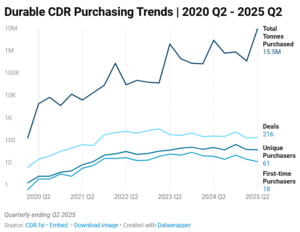
In 2024, the volume of newly contracted carbon removal credits increased by 74%, according to Bloomberg. These credits let companies reduce their emissions. They do this by funding projects that capture or remove CO2 from the air. This includes nature-based projects like reforestation as well as advanced carbon capture and storage systems.

The market is expected to further grow in 2025, driven largely by demand from major corporations. Microsoft made up almost two-thirds of new carbon removal contracts last year. That’s about 5.1 million credits, followed by Google. These figures show how seriously companies are taking climate commitments. Many aim for net-zero emissions within the next two decades.

CDR Top10 Purchasers 2024

CCS technologies, like those from MIT, are boosting interest. They help meet demand by providing high-quality removal solutions.

In the coming years, carbon markets will likely become even more important. They offer a flexible way for companies to meet climate goals while supporting innovation in emissions reduction. 

Carbon capture is no longer just a scientific idea—it’s becoming a major industry. And innovations like MIT’s carbon capture nanofilters could help it scale faster than expected. As countries and companies face pressure to reach net-zero emissions, CCS offers a critical solution for sectors that can’t easily go fully green.

ARR Carbon Credits: The Next Gold Rush Backed by Google and Microsoft

Tech giants like Google and Microsoft are boosting demand for quality carbon removals through ARR (Afforestation, Reforestation, and Revegetation) projects. These projects restore degraded land, store carbon, and support biodiversity.

ARR projects are becoming the new gold rush in the voluntary carbon market as the market shifts to durable, transparent credits.

Greening the Planet: What Are ARR Projects?

ARR projects help remove carbon dioxide by planting trees and vegetation in areas lacking green cover. They aim to restore ecosystems and increase biomass, which stores carbon.

ARR differs from REDD+, which prevents deforestation. ARR focuses on creating new green areas, especially where natural forests can’t grow back.

Three Key Ways to Restore Green Cover

  • Afforestation: Planting trees where forests didn’t naturally exist, like grasslands.

  • Reforestation: Rebuilding forests lost to farming, logging, or land-use changes.

  • Revegetation: Regrowing woody plants and shrubs on damaged lands, not just tall trees.

All three methods aim to pull more carbon from the air and store it in the soil and plants.

Why Do They Matter Now?

Forests capture about 7.6 billion metric tonnes of CO₂ each year—more than the total emissions of the U.S. Yet, deforestation accounts for around 11% of global emissions, and this trend is worsening. ARR projects can reverse this by adding carbon-storing vegetation where it was absent.

These projects benefit the climate and support local wildlife and soil health. When done properly, they also provide long-term gains for nearby communities. Using native species and involving locals can improve crops, boost incomes, and build resilient communities.

Unlocking ARR Carbon Credits 

ARR carbon credits represent the carbon stored by growing new trees and plants. Project developers estimate how much carbon the land would absorb without the project. They then compare this to actual growth over time, often using biomass data to calculate total CO₂ stored.

Since ARR targets degraded land, the natural carbon removal baseline is low. This means new growth from ARR activities provides a real benefit. These projects usually last for decades unless disrupted by wildfires or pests.

According to Sylvera’s State of Carbon Credits 2024 report, buyers typically pay about $5 more for higher-rated ARR projects.

arr price
Source: Sylvera

This shows buyers are willing to invest more for credits with lower risks, like better permanence or additionality. The higher prices also reflect the cost of developing better-quality projects. However, prices vary widely. Some buyers may pay extra for biodiversity benefits, while others could overpay for similar credits.

Microsoft and Google Boost Demand for High-Quality ARR Credits

ARR carbon credits are gaining traction, especially those linked to reforestation and biodiversity. The DGB Group reports that tech companies like Microsoft and Google back premium ARR projects, sometimes paying up to $70 per tonne of CO₂. These higher costs reflect buyers’ expectations for clear environmental benefits, long-term durability, and high transparency.

Some key projects in this sector are:

Brazil’s Mombak

These high prices are not the norm. Most projects sell for less, but developers like Brazil’s Mombak are setting new standards. By planting up to 50 native tree species in remote areas, they boost biodiversity but also raise costs compared to simpler tree farms.

Panamanian Project by Ponterra

Microsoft recently bought credits from Ponterra’s Panamanian project, reportedly paying close to $70 per tonne. Buyers like Microsoft and Google now seek detailed cost breakdowns and future pricing forecasts to ensure high-quality projects that become more affordable over time.

The Symbiosis Coalition

The Symbiosis coalition, including Google, Meta, Microsoft, Salesforce, and McKinsey, pays around $50–$55 per credit as it aims for 20 million tonnes of carbon removals by 2030.

Newer credits are being validated under stricter standards like Verra’s VM0047. Yet the ARR market remains scattered, with no fixed price guide.

So currently, 12 ARR projects are under review, with first selections expected in late 2025 or early 2026.

annual ARR credit issuance
Source: Sylvera

The ARR Carbon Credit Market Shifts

The same Sylvera report reveals significant changes in the voluntary carbon market (VCM) over the past year. Verra still leads with 63% of credit retirements, but its share of new issuances has dropped to 36% as many REDD+ projects delay credits.

Gold Standard and other registries like Puro and Isometric are gaining traction, particularly in durable carbon removal (CDR).

The market is shifting toward removal-based credits, but it’s unclear which methods or registries will dominate, especially for nature-based solutions like ARR.

ARR carbon credits
Source: Sylvera

Supply Drops But Demand Holds

OPIS (Oil Price Information Service), a Dow Jones Company, explained the supply and demand relationship of ARR carbon credits. The report said that despite strong demand for ARR credits, issuances have sharply declined.
The figure below shows: from a high of 37.9 million in 2021, credits fell to 9.2 million in 2022, 7.8 million in 2023, and just 6.1 million so far in 2024. And only 770,111 ARR credits were issued in Q3 2024.
ARR CARBON CREDITS
Source: OPIS
Aforementioned, ARR projects replant trees on degraded land to absorb carbon. However, unlike REDD+ or forest management projects that manage existing trees, they require significant upfront investment and take years to show results.

Prices Split by Project Type

ARR credit prices vary widely. Projects with diverse native trees can reach $60 per ton, but these are rare and often tied up in long-term deals.

Conversely, projects planting fast-growing, non-native trees like eucalyptus are cheaper, selling for under $5 per ton.

Experts warn that faster credits may come with environmental trade-offs. Eucalyptus, for instance, drains water quickly and may harm local ecosystems.

Challenges in ARR Credit Issuance

ARR (Afforestation, Reforestation, and Revegetation) credit issuances lag due to several challenges.

  • Slow Tree Growth: Newly planted trees take years to absorb enough carbon, limiting early credit generation.

  • High Upfront Costs: Unlike projects managing existing forests, ARR projects need major investments and long commitments.

  • Verification Delays: Complex third-party monitoring and registry approvals slow credit issuance.

  • Landowner Hesitation: Farmers resist switching from crops to forests due to uncertain financial returns.

  • Ecological Trade-Offs: Native trees grow slowly but have higher value; faster-growing non-native species issue credits quicker but risk harming ecosystems.

ARR: A Long-Term Investment

Developers say ARR is more than planting trees; it’s a major land-use shift. U.S.-based GreenTrees partners with landowners to convert old crop fields into forests. This transition demands time, money, and a long-term vision.

Chestnut Carbon, a U.S. firm launched in 2022, is growing slowly to ensure quality. In 2025, it signed a deal with Microsoft for more than 7MT of carbon credits over multiple phases. Credit delivery will begin in 2027. The collaboration enables Chestnut to expand its ARR portfolio to 500,000 acres by 2030.

Interest in ARR and durable carbon removals is growing. Scaling these credits takes time. Demand is increasing for clear, eco-friendly, and long-lasting ARR credits. This trend is strong among big tech buyers. The market is moving toward higher-quality credits, which will take significant time.